REVIEW · AMSTERDAM
Amsterdam: 3 Course Dinner in the Dark
Book on GetYourGuide →Operated by Ctaste - dining in the dark · Bookable on GetYourGuide
The world tastes different when lights go out. That’s the whole trick of Amsterdam: 3 course dinner in the dark at Ctaste, where you’re led into a pitch-black dining room and served by blind or visually impaired staff trained to keep the evening calm, clear, and comfortable. I love how much the experience relies on your other senses instead of your eyes, turning a normal dinner into a real exercise in attention.
I also love the practical side: you get a private table and a structured flow, with 2 amuse bouche plus a full 3-course dinner, so you’re not left guessing what’s coming next. For proof of how kind the team can be, names like Michael and Gladys show up in recent feedback as especially professional and helpful. The main drawback to consider is that the room can feel cold, and a couple people also noted it can be hard to flag staff quickly in the dark.
In This Review
- Key things that make this dinner in darkness memorable
- Why Amsterdam’s Dinner in Darkness Works
- The light lounge setup: coats checked, phones locked, then off you go
- Entering the pitch-black dining room (and what that does to your meal)
- Your 2 hours in sequence: amuse bouche, then the 3 courses
- The staff: blind waitstaff, calm guidance, and real names you may hear
- Food rules and menu boundaries you should know
- Getting there: Amsteldijk 55 and the simple transit options
- Who should book this dinner in the dark?
- Should you book? My take on the $58 value
- FAQ
- FAQ
- Where is the meeting point?
- How long does the experience last?
- What is included in the price?
- Are drinks included?
- Are phones or cameras allowed during the dinner?
- Where are the restrooms?
- Is the experience wheelchair accessible?
- Are pets allowed?
- Is smoking allowed?
- What is the cancellation policy?
- What languages are used?
- Final call: book it or skip it?
Key things that make this dinner in darkness memorable
- You eat without sight, so smell, texture, and sound suddenly matter more than usual
- Specially trained blind waitstaff guide you with reassurance, not pity
- Private-table pace, so the focus stays on your meal and your group
- Phones and cameras locked away, which keeps the “dark” actually dark
- Restrooms are in the light, so you plan ahead before you get seated
Why Amsterdam’s Dinner in Darkness Works
This is not a gimmick where you stare into space and hope for the best. The concept is simple: you trade the usual visual cues for a full sensory challenge, then you get a proper 3-course dinner on top of it. The result is surprisingly relaxing, because the staff know exactly how to handle the awkward first minutes.
The value here is that the experience is doing something most dinners don’t: it forces you to slow down. When sight is gone, you notice micro-details. Is the dish warm or cool? Is the sauce smooth or grainy? Does the flavor hit fast or linger? You’re basically tuning your “taste settings,” whether you want to or not.
A few more Amsterdam tours and experiences worth a look

The light lounge setup: coats checked, phones locked, then off you go
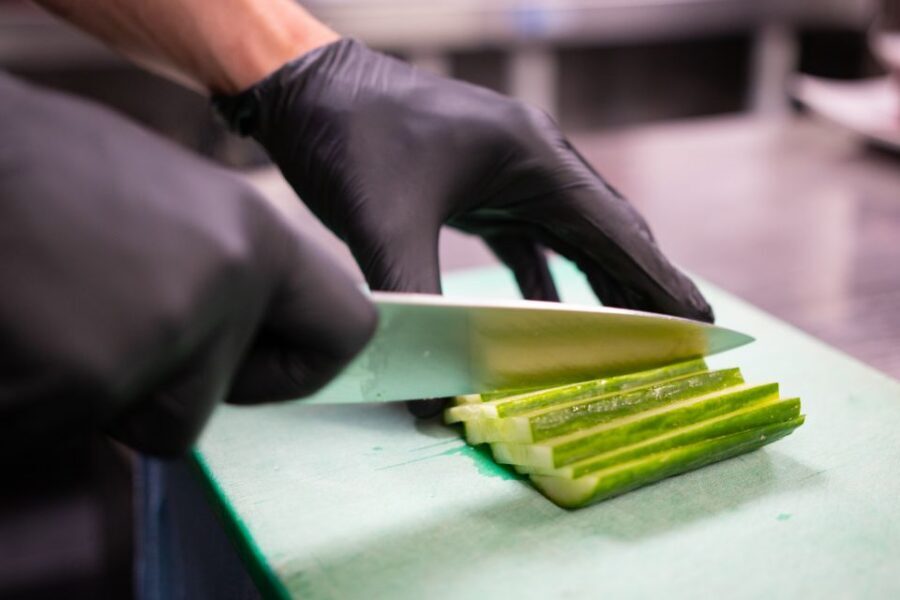
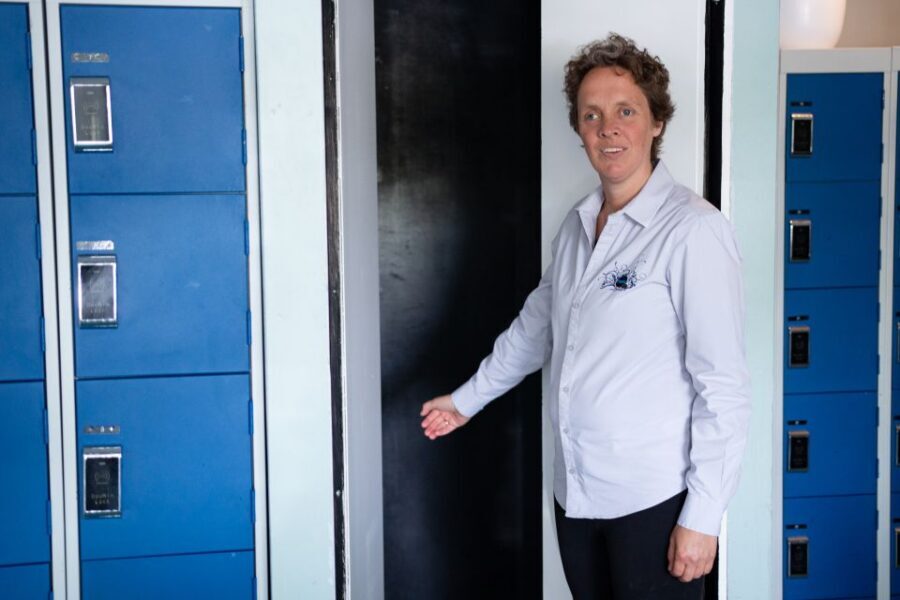
Before the dark part starts, you land in a lighted lounge area where you can get your bearings. You’ll check your coat or bag in the cloakroom because the idea is to leave you only with what you need for the meal. You’ll also order before you’re guided in, which matters because once you’re in the dining room, you don’t want extra interruptions.
One detail I like for peace of mind: mobile phones and cameras are kept in a personal locker. That means people aren’t scrolling through the world while you’re trying to disappear into it. You should also assume you’ll want to keep your hands free, since you’ll be using touch and smell more than normal.
If you want an aperitif, there’s time for it. If you’d rather just get to the menu, you can. Either way, the pacing is designed so you don’t feel thrown in headfirst.
Entering the pitch-black dining room (and what that does to your meal)

This is the moment that flips the whole evening. The staff guide you into a pitch-black dining room, and that first minute can be a little disorienting for anyone. It’s also why good guidance matters: the team is trained for exactly this transition, and the duty managers can see and hear as well.
Once you’re seated, you’re served in the dark. You won’t be relying on visuals to identify the food, the plating, or even whether a dish looks “done.” Instead, you’ll get clues through aroma, temperature, texture, and the way flavors build.
A small planning tip: you’re advised not to wear white clothes just in case. That sounds trivial, but when you’re eating slowly while focused on sensory cues, minor spills can happen. This is still a dinner, not a science lab, but you’ll be glad you thought about it.
Your 2 hours in sequence: amuse bouche, then the 3 courses
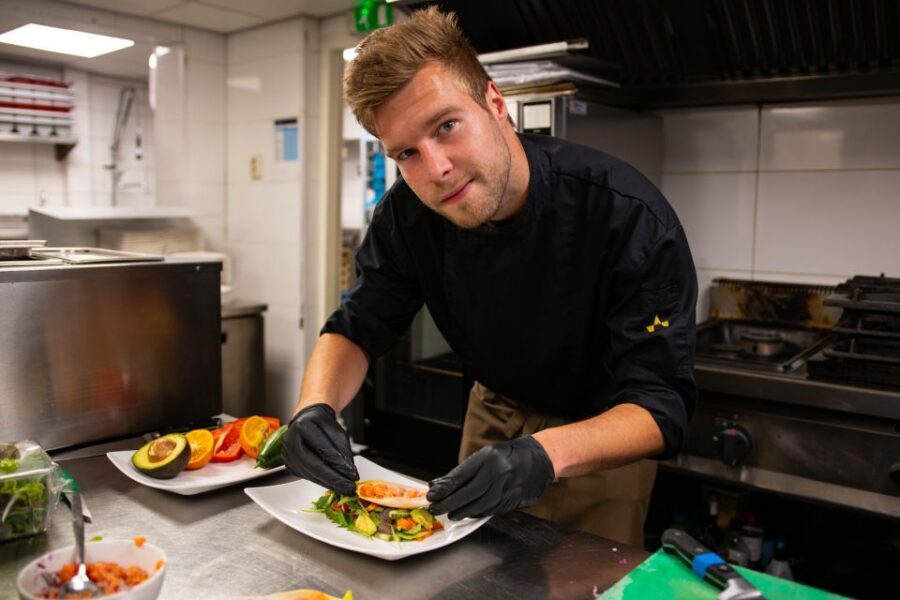
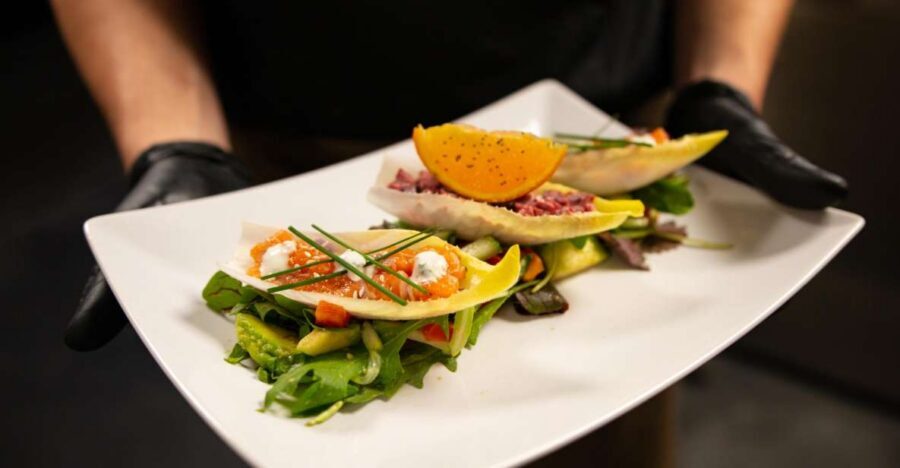
The experience runs about 2 hours, and the structure is part of the comfort. You start with 2 amuse bouche, which are perfect for warm-up. They help you adjust to the dark and learn how the flavors will feel before the main courses arrive.
After that comes your 3-course dinner. Because the meal is served in total darkness, your brain tries to do pattern recognition without sight. That can be fun, and it can also make you more aware of things you’d normally ignore, like how the sauce spreads over food or how different bites carry different aromas.
Two practical notes based on real-life feedback:
- Some people found parts of the menu cooler than expected, so if you’re sensitive to that, eat slower and pay attention to temperature cues.
- A couple reviews mentioned the room being chilly, so a light layer is a smart move even in Amsterdam.
Also, expect there to be a candle as part of the setup. The vibe is still darkness-forward, but the candle is not optional, so treat it as part of the atmosphere.
The staff: blind waitstaff, calm guidance, and real names you may hear
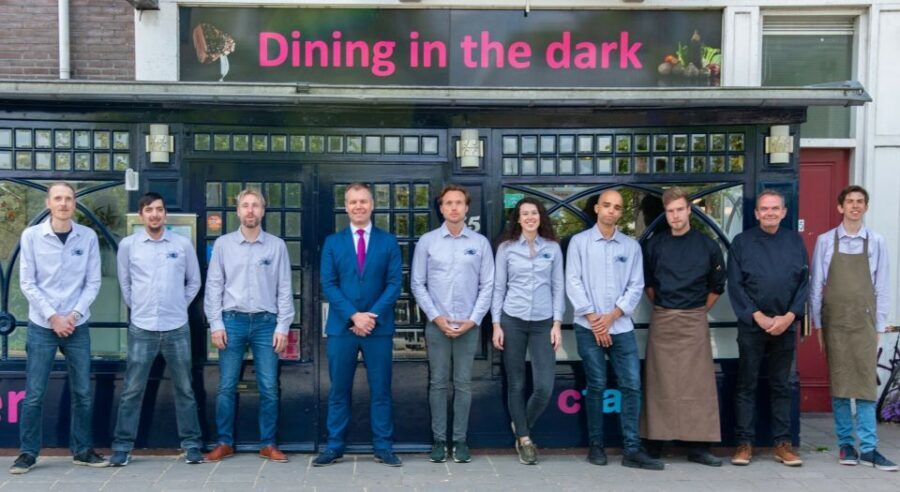
What separates this dinner from a novelty night is the service style. The wait staff are blind or visually impaired, and they’ve been specially trained to serve in the dark. The best descriptions of the experience focus on how patient and friendly the team is, especially when you’re adjusting.
In recent accounts, Michael (noted as blind) is mentioned as professional, calm, and attentive. Gladys is also specifically named for being helpful and kind. You shouldn’t treat those names as a guarantee for your evening, but they’re strong signals about the service tone: supportive, not awkward.
Here’s the key: the staff guide you when you need it, but you still get autonomy. You’re not being led like a child. You’re being supported while you do something genuinely different.
A few more Amsterdam tours and experiences worth a look




Food rules and menu boundaries you should know
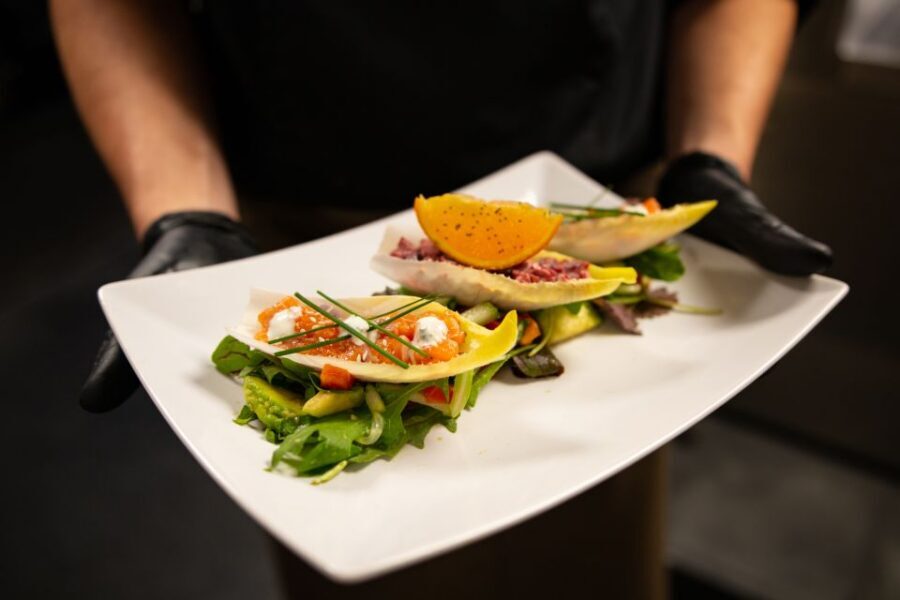
The menu is built around comfort and practical limits. Organs, bones, fat, insects, or other extreme ingredients are never served. That’s an important reassurance if you’re curious but don’t want the menu to wander into shock-food territory.
Extra courses like sorbet or a cheese plate aren’t included. In other words, you should view the included 3 courses as the full experience, then plan to add anything else only if you choose to later.
Portions are one of the mixed points you’ll see. Most people praise the food, but a few mention it feels a bit small. Since the experience is also the show, the format leans more toward quality and sensory impact than oversized plates.
Getting there: Amsteldijk 55 and the simple transit options
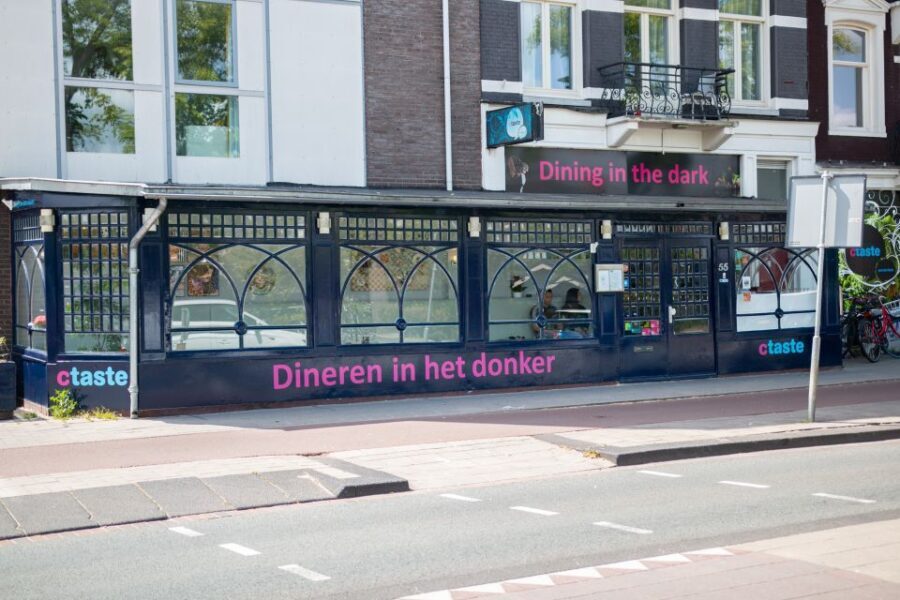
Meeting point is at Amsteldijk 55, 1074 HX, Amsterdam. Public transit is easy here. Trams 3 and 4 stop close by, and the nearest metro station is Wibautstraat. If you’re coming by train, Amsterdam Amstel is about a 10-minute walk away.
If you’re already near Munt Square, it’s around a 25-minute walk, or you can bike along the Amstel River for a quicker option. The good news: this is the kind of activity where being a little early helps, since you’ll have time in that light lounge before the dark begins.
Who should book this dinner in the dark?
This is best for people who like experiences that teach you something without lecturing. If you enjoy food, sensory challenges, or just swapping your usual Amsterdam routine for something unusual, you’ll probably love it.
It also works well if you’re traveling solo. The evening is quiet and private-table focused, so you’re not stuck in constant group chatter. That said, going with one friend can make the adjustment feel easier, since you can react and decompress together once you’re back in normal light.
It may not be ideal if you have strong claustrophobia or anxiety around feeling trapped or cut off. The dark room is pitch-black, and the start can feel intense for some people. If you’re unsure, think about how you handle dark, enclosed spaces in everyday life.
Should you book? My take on the $58 value
At $58 per person for a 2-hour outing, you’re paying for two things at once: a real restaurant dinner and a guided sensory experience. Drinks aren’t included, and water isn’t included either, so budget for that if you like to sip during meals. The good part is that the core price covers the 2 amuse bouche and the full 3-course dinner, plus the private-table setup.
In plain terms, this is good value if you want more than a meal. It’s also a smart buy in Amsterdam because many unique experiences come with a hefty premium, while this includes food as part of the program. If you only care about eating, you might find it less cost-efficient than a traditional restaurant. If you want the story, the challenge, and the sensory focus, it’s worth it.
FAQ
FAQ
Where is the meeting point?
The restaurant meeting point is at Amsteldijk 55, 1074 HX, Amsterdam.
How long does the experience last?
The dinner experience lasts about 2 hours.
What is included in the price?
It includes a 3-course dinner in the dark, 2 amuse bouche, and a private table.
Are drinks included?
No. Drinks are not included, and water is also not included.
Are phones or cameras allowed during the dinner?
Mobile phones and cameras are kept in a personal locker.
Where are the restrooms?
All rest rooms are in the light.
Is the experience wheelchair accessible?
Yes, it is wheelchair accessible.
Are pets allowed?
No, pets are not allowed.
Is smoking allowed?
No, smoking is not allowed.
What is the cancellation policy?
You can cancel up to 24 hours in advance for a full refund.
What languages are used?
The host or greeter uses Dutch and English.
Final call: book it or skip it?
Book it if you want an unusual Amsterdam night where your meal becomes the lesson. Skip it if you strongly dislike pitch-black spaces or need a warm, easygoing environment without any sensory uncertainty.