REVIEW · AMSTERDAM
Amsterdam : Anne Frank Tour in EN/DE/IT/ES
Book on Viator →Operated by Amsterdamliebe · Bookable on Viator
Anne Frank’s Amsterdam starts on the sidewalk. This 2-hour Jewish Quarter walk threads together early Jewish life, WWII terror, and remembrance, with a guide who brings the story to street level. I especially love the way the tour uses Anne Frank diary extracts at key moments and the fact that you end at the Holocaust Name Monument, not at some random landmark.
Two more things I like: the stops are arranged so you start with context and then move toward the memorial sites in a clear arc, and the guides I’ve heard of—Deborah, Valentina, Antonia, Joschka, Kaya, Linn, Maya, and Chantal—are consistently described as passionate storytellers who answer questions. The one drawback to plan around: this tour is not an Anne Frank House ticket. It also focuses on major sites from the outside (people who expect to enter the Portuguese Synagogue or the Jewish Museum can feel disappointed).
In This Review
- Key highlights
- Why this 2-hour Jewish Quarter walk feels different
- Waag to Nieuwmarkt: starting where the city’s story begins
- Rembrandt’s home, plus the South Church and the Black Death cemetery
- Auschwitz Monument to the Joods Museum: learning WWII through place-based facts
- Portuguese Synagogue and why exterior viewing still helps
- Holocaust Name Monument finale: the brick search moment
- Anne Frank House next day? How to plan the perfect flow
- Price, duration, and the small-group pace that makes it workable
- Who should book this, and who should think twice
- Should you book the Anne Frank Jewish Quarter tour?
- FAQ
- How long is the Anne Frank walking tour in Amsterdam?
- What languages are offered?
- Does this tour include entry to the Anne Frank House?
- Where do I meet the guide and where does the tour end?
- Does the tour run in bad weather?
- How big is the group?
- Can I cancel for a full refund?
Key highlights
- Stops mapped to the story, from Nieuwmarkt and Rembrandt’s neighborhood to the Holocaust memorials
- Diary excerpts used in the narration, including moments meant to feel personal, not just historical
- Small-group feel with a practical pace that works even when you’re standing still a lot
- Holocaust Name Monument finale, with time to search for names among 102,000 bricks
- Outside viewing emphasis at several sites, which keeps the route moving but means no museum interiors
- Weather-proof scheduling, because it runs in all conditions—bring an umbrella
Why this 2-hour Jewish Quarter walk feels different
This is the kind of tour you do when you want more than photos and a vague timeline. In two hours, you’ll cover a tight slice of Amsterdam where multiple eras overlap: Jewish settlement, Nazi occupation, and the way the city remembers after the fact. The guide’s job is to connect the dots so the streets don’t feel like they’re just “historic.”
I also like the value math here. At about $35.68 per person for a 2-hour walking tour with a licensed guide, you’re paying for interpretation—someone making sense of what you’d otherwise miss while moving along on your own. And since all fees and taxes are included, you’re not stuck playing “what do we pay for next?” on the street.
One more practical plus: the tour ends at the National Holocaust Names Monument, which is easier to build into the rest of your day than ending back at a starting café. You can keep walking, grab food nearby, or continue sightseeing with a clear head.
You can also read our reviews of more tours and experiences in Amsterdam.
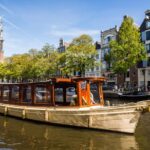

Waag to Nieuwmarkt: starting where the city’s story begins
The walk kicks off near Restaurant-Café In de Waag (Nieuwmarkt 4), and the first stretch sets your orientation fast. You start at The Waag, where you get a quick foundation and a sense of why this area mattered. The route then moves to Nieuwmarkt, and the guide explains why the first Jewish population chose this strategic place to settle in Amsterdam.
This matters more than it sounds. If you only visit big memorials, you miss the normal life that existed before it was ripped apart. By starting with settlement logic—why a location made sense—you understand that this was a community integrated into the city, not a footnote.
Timing here is short: plan on about 5 to 10 minutes per stop in this early phase. That’s intentional. You’ll spend your longer attention later where it’s needed.
Rembrandt’s home, plus the South Church and the Black Death cemetery
Next comes Museum Het Rembrandthuis. You don’t just hear that Rembrandt lived in the Jewish quarter—you hear why his home was situated there and how his location connected to his work. Even if you already know Rembrandt’s name, it’s a helpful change of angle. Amsterdam wasn’t one neat theme park. It was layered, mixed, and changing.
Then you move to the South Church, where the guide talks about the former Black Death cemetery. This is a surprisingly powerful shift: you go from a famous artist’s neighborhood to the evidence of plague-era burial practices. The point isn’t shock for shock’s sake. It’s that Amsterdam’s streets absorbed disaster, and people responded in ways that left traces in the city.
Because this section is about 10 minutes per stop, you’ll want to come ready to listen. If you start the tour half-distracted, you’ll miss the small connections the guide is making.
Auschwitz Monument to the Joods Museum: learning WWII through place-based facts
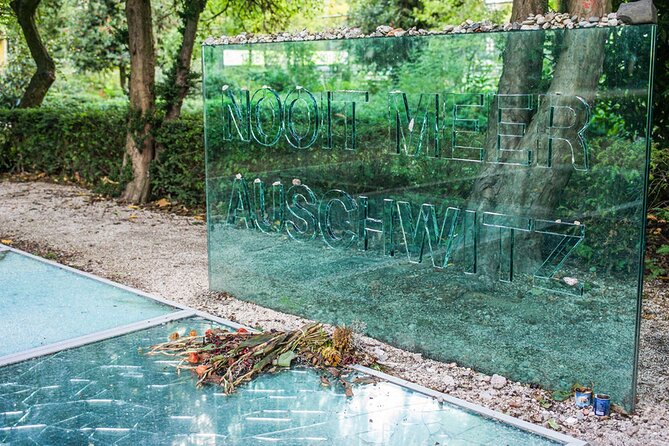
One of the most serious stops is the Auschwitz Monument. You take a moment to learn about remembrance of Holocaust victims in Amsterdam. This is not a long detour into trauma; it’s a structured pause within the walk.
After that, you visit the area connected to Joods Museum—and here’s the key detail: you’re not visiting the interior of the museum. You’ll learn how Nazi Germany implemented their deportation system, tied to what happened to Jewish residents in Amsterdam. The guide uses the surroundings to explain the mechanism, not just the outcome.
This exterior-only approach can work well if you treat it like a guided “route lesson.” You’re not there to read every label at a pace of your own. You’re there to understand the sequence of events and why this quarter became part of the deportation machinery.
Still, it’s worth being clear with yourself. If you want museum rooms, ticketed galleries, and full indoor pacing, this specific tour won’t satisfy that itch.
Portuguese Synagogue and why exterior viewing still helps
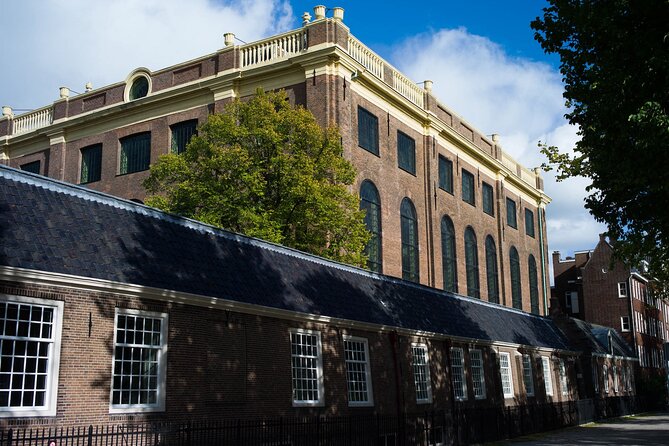
The tour includes Portugese Synagoge, and the guide explains the important role Amsterdam’s oldest synagogue played during WWII. You’ll get the story, and you’ll likely see the synagogue’s setting in its neighborhood context.
But this is where expectations can go wrong. Some people join assuming they’ll enter the synagogue and step inside museum spaces. In practice, this tour is set up for exterior viewing at key sites. If you’re the type who wants the feeling of standing in a room where things happened, you may prefer a different ticket that includes interior access.
On the other hand, the exterior focus has a benefit: it keeps you moving through the area so you can picture what people saw and walked past. It can also make later parts of the tour land harder, because you’ve already built a mental map of where you are.


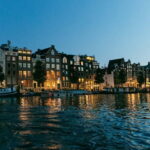


Holocaust Name Monument finale: the brick search moment
The highlight for many people is the final segment: the Holocaust Namenmonument. You get about 15 minutes here, which is the right amount of time to slow down. The guide also points you toward the task of spotting Anne’s name on the 102,000 brick stones.
That brick count sounds like a trivia fact until you see it in person. The monument is built to make anonymity impossible. You don’t just read about victims—you experience the scale through repetition, names, and the physical field of memory.
After that, the tour includes a short outside stop at the Anne Frank House. It’s only around 5 minutes, and the tour format prefers spending more time in the Jewish Quarter because there’s not much to see from the exterior. This is good to know. If you want the full Anne Frank House experience, you’ll need a separate visit.
Anne Frank House next day? How to plan the perfect flow
This tour is a strong prequel to an Anne Frank House ticket—especially if you’re the sort of person who likes to “arrive prepared.” When you understand the surrounding neighborhood story first, the Anne Frank House visit can feel less like a single famous address and more like the last stop in a longer chain of events.
Here’s my practical advice: book this tour as your setup day and keep your Anne Frank House entry for another time with enough energy. The name monument finale already pulls a lot emotionally. You don’t want to cram the Anne Frank House right after in a way that makes you rush through something important.
Also remember: this tour does not include Anne Frank House entry. So if Anne Frank House tickets are your must-do, treat this as the context builder, not the replacement.
Price, duration, and the small-group pace that makes it workable
At 2 hours total, you get an efficient hit of guidance without losing a whole day. The tour is priced at $35.68 per person, and the value comes from three places: a licensed guide, small-group format, and included fees. In other words, you pay for someone to steer you through a meaningful route.
The group size can matter on a walk like this, and here it’s capped at a maximum of 100 travelers. That upper limit doesn’t guarantee a tiny group, but it signals this isn’t a massive crowd stampede. You should still expect time spent standing and listening at several stops.
You’ll also receive a mobile ticket, which makes last-minute logistics simpler. And because it runs in all weather conditions, pack like you mean it. If it rains, bring an umbrella so the tour stays comfortable.
One more logistics note: there’s no transfer to the meeting point included. Plan your own way to Restaurant-Café In de Waag at Nieuwmarkt 4. The good news is it’s near public transportation.
Who should book this, and who should think twice
This tour is ideal for you if you want a guided walk through the Jewish Quarter that connects places to the WWII story and Holocaust remembrance. It’s also a great choice if you’re curious about how Amsterdam’s Jewish life looked before the violence—and how memory is handled afterward.
You should think twice if your priority is entering the Portuguese Synagogue or museums as part of the ticket. This route is set up for learning through the neighborhood and memorial sites, with exterior viewing emphasis at key stops. And if Anne Frank House interior is your main goal, you’ll need a separate booking for that.
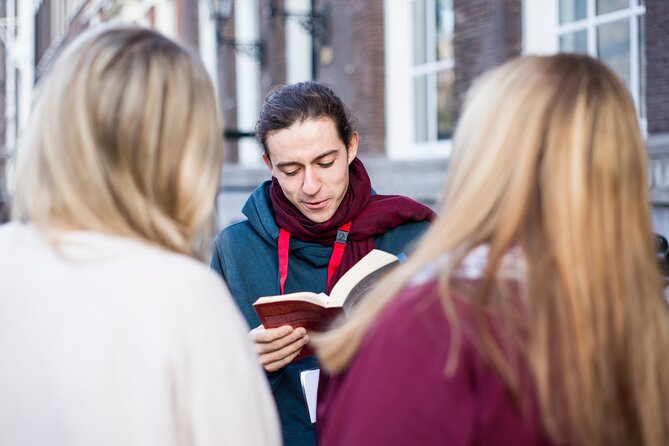
If you like human storytelling, you’ll likely enjoy this. The guides mentioned in the tour feedback—like Deborah reading from Anne Frank’s diary extracts, Valentina’s storytelling style, Antonia’s compassionate and compelling narration, and Joschka’s diary-linked framing—are repeatedly described as making history feel personal and understandable.
Should you book the Anne Frank Jewish Quarter tour?
Yes, if you want the story in the streets, with a guide who ties together multiple locations and uses diary excerpts to add a human thread. The big payoff is the ending at the Holocaust Name Monument, where you’re given time to look for Anne’s name among the bricks.
Just book it with clear expectations: this is not an Anne Frank House entry tour. It’s a powerful context walk first—so if you also plan to visit the house, treat this as your setup and schedule accordingly.
FAQ
How long is the Anne Frank walking tour in Amsterdam?
It lasts about 2 hours.
What languages are offered?
The tour is offered in English and German.
Does this tour include entry to the Anne Frank House?
No. The tour does not visit the Anne Frank House interior. You only see the house from the outside.
Where do I meet the guide and where does the tour end?
You start at Restaurant-Café In de Waag, Nieuwmarkt 4, 1012 CR Amsterdam. The tour ends at the National Holocaust Names Monument, 1018 DP Amsterdam.
Does the tour run in bad weather?
Yes. It takes place in all weather conditions. Bring an umbrella in case of rain.
How big is the group?
The tour has a maximum of 100 travelers.
Can I cancel for a full refund?
Yes. You can cancel up to 24 hours in advance for a full refund. If you cancel less than 24 hours before the start time, the amount paid is not refunded.