REVIEW · AMSTERDAM
Amsterdam Countryside and Villages Bike Tour
Book on Viator →Operated by Yellow Bike Tours & Rental · Bookable on Viator
Cycling north turns Amsterdam into a day trip. You get a city-to-country ride in one easy block, with a ferry crossing and classic Dutch villages that are hard to reach if you only rely on public transit. I like the balance of “real sights” right away (the oldest streets and Central Station) and then a fast fade into farmland and dikes.
I also like that it’s a morning tour, so you’re not stuck watching the clock all afternoon. One thing to consider: you’ll need moderate fitness, and the route can feel like a proper ride rather than a gentle pedal around the canals.
In This Review
- Key highlights worth caring about
- Why this bike tour works so well (especially if it’s your first Amsterdam trip)
- The small-group vibe and guide attention you’ll actually feel
- Starting in the oldest parts of Amsterdam: Nieuwezijds Kolk to Centraal Station
- Ferry time over the IJ: the quick route to North Amsterdam
- Noord-Hollandskanaal roads: where the city slows down for real
- The windmill photo stop at Krijtmolen d’Admiraal
- Polders and reclaimed marshland: Buikslotermeerdijk and the water lesson
- Waterland villages and cows: your break from center-city crowds
- Ransdorp: the old village with a church tower linked to Rembrandt
- Durgerdam and the dike-side fisher village views
- What the biking actually feels like (and who should choose it)
- Weather reality: plan for wind and rain, not just sunshine
- Price and value: why $54.01 can make sense
- Practical tips before you go
- Should you book Amsterdam Countryside and Villages?
- FAQ
- How long is the Amsterdam Countryside and Villages Bike Tour?
- What time does the tour start?
- Where does the tour meet and where does it end?
- Is the tour offered in English?
- How big is the group?
- Is bike use included in the price?
- What fitness level do I need?
- Are there admission tickets required for stops?
- Is lunch included?
- What happens if weather is bad?
- Is free cancellation available?
Key highlights worth caring about
- Small group (max 13): you’re less likely to get lost in the crowd and more likely to get answers to questions.
- Ferry ride over the IJ: bikes on a ferry adds a real sense of place in North Amsterdam.
- Water management stories: reclaimed land (polders) and long-used water control show up in how you ride and what you see.
- Historic village stops with photo time: windmill, church tower art, and scenic dike views give you moments to slow down.
- A guide who explains Dutch culture: you’ll hear history tied to the spots you pass, not just facts on a sign.
- Lunch as an optional break: you can grab something quick at a characteristic café during the built-in break.
Why this bike tour works so well (especially if it’s your first Amsterdam trip)
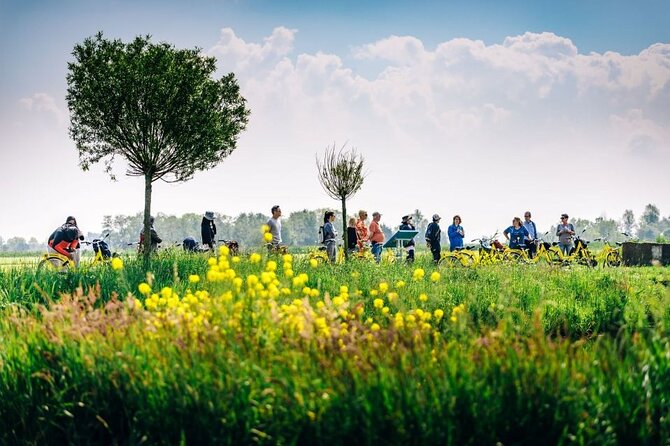
Amsterdam is packed. Even when you plan well, you end up bouncing between a few “must-see” districts. This tour changes the pace fast. You start in central Amsterdam, then push north so the city noise fades into farmland, village streets, and open water.
The big advantage here is speed with context. In about 3.5 hours, you’re not only seeing more, you’re also getting meaning. The guide’s job is to connect the places on the route to Dutch culture and how the country shaped itself around water, trade routes, and settlement patterns.
Also, the morning timing is practical. A 10:00 am start means you can treat this as your main “active” block and still have plenty of energy for later plans. If you’re the type who likes one great thing and then wandering on your own, this fits.
On the value side, you’re paying for the experience structure: guided interpretation plus bike use. Most entrance costs on the specific stops are listed as free, and lunch is optional rather than built into the price. That’s exactly how you want it if your appetite or budget varies day to day.
You can also read our reviews of more tours and experiences in Amsterdam.
The small-group vibe and guide attention you’ll actually feel
The tour caps at 13 people, which matters more than it sounds. With that size, you’re more likely to stay together, hear explanations, and get a clear sense of the route. It’s also easier for the guide to notice who’s struggling or who’s unsure about how to handle the bikes in busy areas.
Guide names show up in the kind of feedback you want to see. People have specifically praised guides such as Willem / William and David for being upbeat, organized, and good at sharing information in a way that keeps the ride moving. That combination is important on a bike tour: you need both momentum and context, and this format tends to deliver.
If you’re on an e-bike, you’ll likely appreciate how the pace is managed. Reviews include that the ride can be comfortable on e-bikes and still feel like a real outing. If you’re a strong cyclist, you get freedom to focus on scenery and stops. If you’re less confident, the guide’s encouragement helps.
Starting in the oldest parts of Amsterdam: Nieuwezijds Kolk to Centraal Station
You begin at Nieuwezijds Kolk 29 in the oldest part of the city. Starting here is smart because it immediately gives you an Amsterdam foundation before you head outward. You’re not just “leaving the center,” you’re starting with a sense of how the city formed and where people have gathered for centuries.
A stop near Nieuwezijds Kolk also sets a gentle mental tone: the ride starts at street level, where Amsterdam feels human-sized rather than postcard-wide. Since the tour’s 10:00 am start is early-ish, you often get calmer conditions than you’d see later in the day.
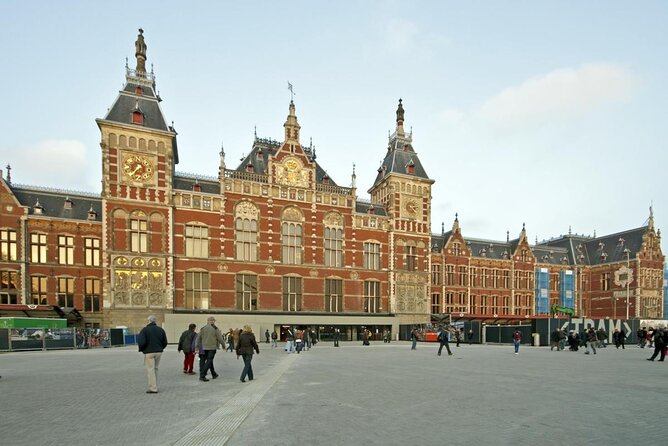
Next, you reach Centraal Station, built between 1881 and 1889 and designed in a neo-Gothic-Renaissance style by P.J.H. Cuypers. You don’t need an architecture degree to enjoy this. The station’s decorative sculptures give you something to look for even while you’re briefed about why it matters.
Practical note: even though you’re only stopping briefly, this is a great “orientation” moment. After you see the station area once, you’ll have a better sense of the city’s grid and how the north-south routes connect.
Ferry time over the IJ: the quick route to North Amsterdam
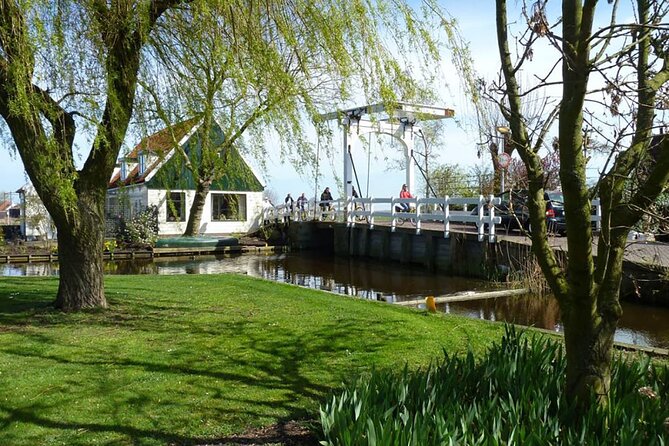
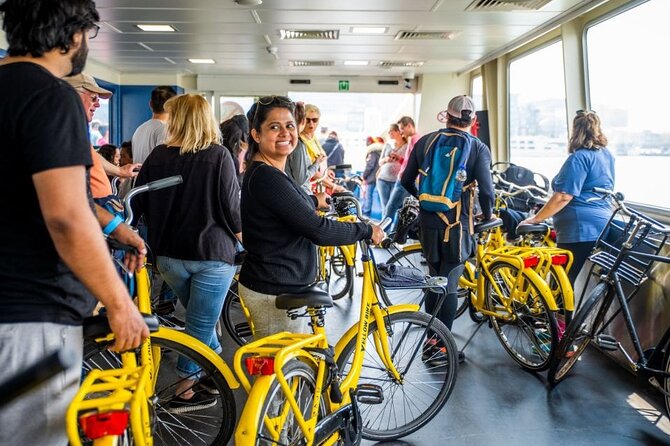
Then comes one of the best “only-in-this-city” moments: the Buiksoterweg ferry crossing the IJ. This isn’t just transportation. It’s a change of scenery mid-ride, and it adds variety to what can otherwise feel like nonstop cycling.
Crossing by ferry does two things for you:
- It breaks the physical rhythm so the rest of the ride feels easier.
- It forces you to look up and out, which makes the views feel more intentional.
If it’s windy (Amsterdam can be that way), the ferry crossing can also be a good time to decide how you’ll dress for the rest of the outing. One review specifically mentioned blustery conditions and rain at times, and the trip still worked because the route and stops are built to keep you engaged even when weather isn’t perfect.
Noord-Hollandskanaal roads: where the city slows down for real
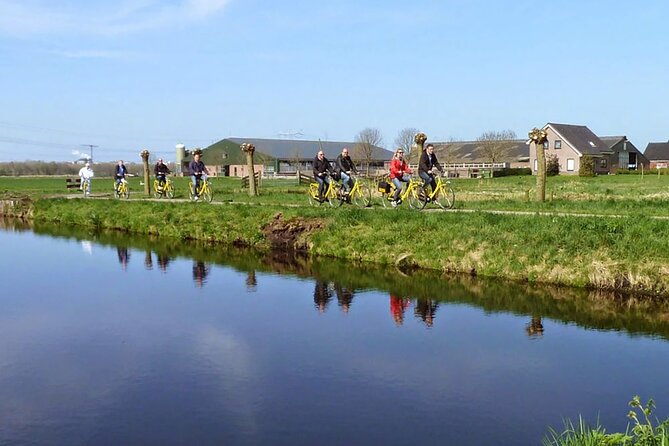
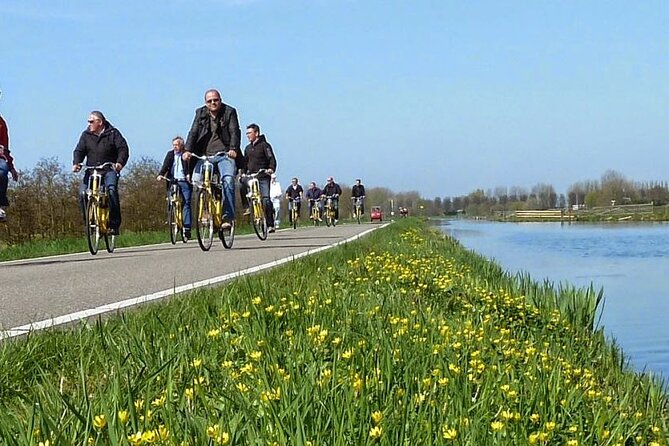
After the ferry, you roll along the Noord-Hollandskanaal. This stretch is where you start to feel the trip turning into countryside rather than a city loop.
I like this part because it’s a transition zone. It’s not empty and it’s not farmland paradise either. You see canal life and working water routes, which is very “Netherlands” in a grounded way. It also helps you settle into biking rhythm before you reach the more scenic village stops.
This segment is usually where some people first realize they chose the right tour type. You’re not only seeing places. You’re learning how the Dutch use waterways as roads and boundaries.

The windmill photo stop at Krijtmolen d’Admiraal
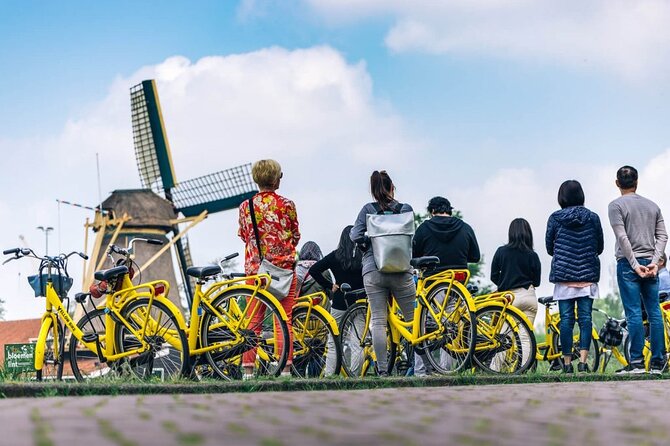
Next is Krijtmolen d’Admiraal, a historic typical Dutch windmill. The stop is short, but it’s timed for that simple human reason: you want a clear photo and enough time to actually look.
Windmills show up across the Netherlands, but seeing one here during a countryside ride makes it feel less like a museum prop and more like a working memory of how communities managed land and water before modern pumps and infrastructure.
If you like details, keep an eye on how the windmill fits into the surrounding route. Stops like this are best for people who enjoy small detours that add variety without swallowing your whole morning.
Polders and reclaimed marshland: Buikslotermeerdijk and the water lesson
Then you reach Buikslotermeerdijk, described as reclaimed marshland. This is where the tour’s “how the Dutch manage water” message becomes practical.
The idea is simple: many lakes in the Waterland area were pumped dry, and a reclaimed area is called a polder. That’s not just a definition. It explains why villages sit where they do, why dikes and water-control systems matter, and why the countryside looks the way it does.
Even if you don’t remember the word polder later, you’ll probably remember the feeling of the place once you understand the logic. The Dutch didn’t just live alongside water. They negotiated with it for centuries, and cycling through reclaimed areas makes that negotiation feel real.
Waterland villages and cows: your break from center-city crowds
You then enter Waterland, described as a way to escape the bustle of central Amsterdam. This is the part you’ll notice most: quiet roads, wider views, and that open, rural rhythm where you’re not always dodging cyclists and pedestrians.
This stop is also where the tour’s pace feels right for most people. A 15-minute window is enough to absorb without making you feel stuck. You can take a few photos, look toward the water system, and breathe.
I also like how this portion frames the Netherlands beyond bikes and canals. Yes, you’re still biking, but the setting is different. It helps you understand why people talk about Dutch flatness and water management in the same breath.
Ransdorp: the old village with a church tower linked to Rembrandt
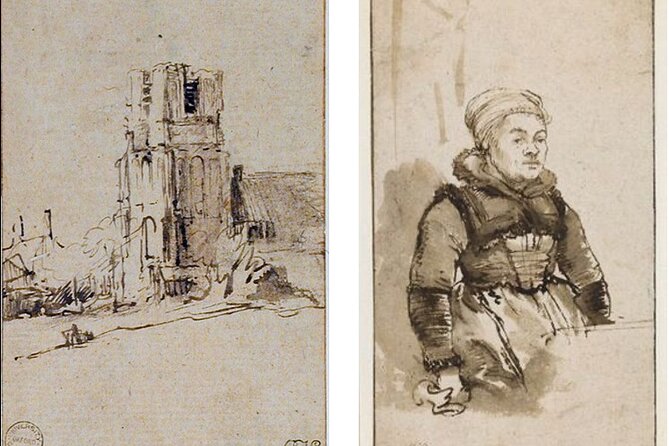
The next major stop is Ransdorp, an old village with a notable church tower. The tower is said to be painted by Rembrandt, and the stop includes about a 30-minute break.
This is a smart design feature of the tour. When the route starts to feel longer, you get time to regroup. It also gives you a real “pause” moment that keeps the ride from becoming one long blur of scenery.
You have options during the break. A café stop is built in for ordering lunch, typically around 30 to 40 minutes depending on how you manage your time. If you want a light lunch, this is easy. If you want a sit-down meal, you can do that too—just keep an eye on the group timing so you’re back ready to roll.
A small drawback: if you’re the kind of traveler who doesn’t like waiting for a group, build a little patience into your morning. The break is the right length, but it’s still part of a shared schedule.
Durgerdam and the dike-side fisher village views
The final village stop is Durgerdam, described as an old fisherman’s village. You bike along the waterside over the dike, and that’s where you get the best panoramic “this is why you came” feeling.
Dike-side cycling changes the whole feel of the ride. Your horizon opens up, and even when you’re tired, the views help you keep going.
You also get a sense of how settlements relate to water access. Fisher villages need proximity, protection, and routes that make everyday work possible. Even without a long speech, the setting teaches you the logic.
After Durgerdam, the tour ends back at the meeting point, so you don’t have to navigate a one-way route across town on your own.
What the biking actually feels like (and who should choose it)
The tour is listed for moderate physical fitness, and that’s exactly the right way to describe it. You’re riding for long enough that you can feel it in your legs, but it’s not presented as an all-day endurance challenge.
Some reviews mention the journey can be around 25 km. If you’re used to riding daily, that’s a manageable morning. If you mostly walk when traveling, you might find the distance takes more planning. This is especially true if weather is poor and roads are slick or windy.
Good news: the ride seems to work well on e-bikes. If you want the countryside without paying for it with aching calves, an e-bike is a sensible choice here.
Who will love this most:
- You want an Amsterdam day with less museum time and more moving-through-the-city energy.
- You like Dutch history told through places, not through long classroom explanations.
- You want a structured morning but freedom afterward.
Who might want to think twice:
- If you hate group timing and prefer totally independent pacing.
- If moderate cycling feels like a stretch for you, even with an e-bike option.
Weather reality: plan for wind and rain, not just sunshine
This tour requires good weather, and the experience is set up to run when conditions cooperate. That said, one review mentioned a blustery day with rain at times, and the group still had a great time.
My advice: dress for layers and bring rain protection. Even a light shower can change how comfortable your ride feels, especially on open canal stretches and dike-side sections.
If the tour does need to be changed due to weather, you’ll typically be offered another date or a refund. In practice, that means you should still book with optimism, but keep flexibility in your schedule.
Price and value: why $54.01 can make sense
At $54.01 per person for about 3 hours 30 minutes, the math depends on what you value.
You get:
- Bike use included
- A guided ride with cultural and historical explanations
- Multiple stops with free admission listed for each point
- A lunch break slot (where you can buy your own food)
Lunch not included is a plus for many people, because it lets you choose what fits your appetite and diet. And since admission is free at the listed stops, you’re not paying extra at each location like you sometimes do with other tours.
Compared to hiring bikes independently and trying to figure out a route to Waterland villages, the guided structure saves you effort and adds context. You’re also capped at 13 people, which usually leads to a smoother experience than larger “scooter” or “bus plus bikes” formats.
Practical tips before you go
Here are the small choices that make the biggest difference:
- If you’re unsure about distance comfort, choose an e-bike if that option is available when you book.
- Wear layers. Morning rides can start cool, then warm up as you pedal.
- Bring something for photos, but also keep your hands free for biking safety.
- If lunch matters, decide what kind of meal you want before you arrive at the café stop. The break is long enough, but you don’t want to freeze in the ordering line.
Finally, keep your expectations realistic: this is a moving tour with stops. It’s not a slow walking “look at every building” route. If you go with the rhythm of a bike ride, you’ll have the best time.
Should you book Amsterdam Countryside and Villages?
If you want a memorable Amsterdam morning that reaches beyond the canal zone, I think this is a strong pick. The best part is that it’s not just countryside for the sake of scenery. You’re seeing Dutch water logic and village history while you ride, and the ferry crossing plus windmill stop make it feel like more than a basic bike rental.
Book it if:
- You’re in Amsterdam for a short stay and want maximum variety fast.
- You like small-group experiences and you enjoy explanations you can relate to the road in front of you.
- You want a lively ride with a relaxed break for lunch.
Skip or reconsider if:
- You’re very sensitive to cycling distance, even with support.
- You want a totally independent day with no group timing and no shared stops.
If you want an efficient, meaningful way to feel North Amsterdam, this tour has the right ingredients: bike time, village time, and a guide who connects it all.
FAQ
How long is the Amsterdam Countryside and Villages Bike Tour?
The tour is about 3 hours 30 minutes.
What time does the tour start?
The start time is 10:00 am.
Where does the tour meet and where does it end?
It meets at Nieuwezijds Kolk 29, 1012 PV Amsterdam, and the tour ends back at the meeting point.
Is the tour offered in English?
Yes, it’s offered in English.
How big is the group?
The maximum group size is 13 travelers.
Is bike use included in the price?
Yes. Bicycle use is included.
What fitness level do I need?
The tour is listed for travelers with moderate physical fitness.
Are there admission tickets required for stops?
The listed stops have admission tickets marked as free.
Is lunch included?
Lunch is not included in the price. There is a break of about 30 to 40 minutes at a characteristic lunch café where you can order food.
What happens if weather is bad?
The experience requires good weather. If it’s canceled due to poor weather, you’ll be offered a different date or a full refund.
Is free cancellation available?
Yes. You can cancel up to 24 hours in advance for a full refund.