Street art meets bike lanes in Amsterdam North. This 3-hour tour mixes industrial history, modern design, and public art so you get a real feel for the city beyond the canals. You also get ferry views that make the route feel bigger than it is on paper, plus a small-group pace that lets your guide actually answer questions.
I love how the ride is built for getting around fast without feeling rushed. You’re on a proper bicycle with a helmet and rain jacket, and you’ll cover areas like Oud-West, Westergas, and the NDSM wharf zone in one smooth loop. A second thing I like: the route leans into street art culture, including a dedicated graffiti experience, not just a drive-by photo moment.
One consideration: it’s not a sit-and-watch tour. The guide will check if your biking skills are good enough for safety, so if you’re wobbly or hate pedal time, you’ll want to think twice.
In This Review
- Key things to know before you pedal off
- The value: how $59.13 makes sense here
- Meeting up and starting strong at A Bike Vondelpark
- Oud-West on wide streets: an easy warm-up before the creative zones
- Westergas: old gas factory turned into a Culture Park
- Westerpark: calmer biking with strong public-art energy
- Pontsteiger and the Houthavens ferry crossing: architecture with momentum
- NDSM Wharf: street art at full size (and the graffiti experience)
- Faralda Crane Hotel: the most unusual reuse you’ll see all day
- Amsterdam North bike paths and the Eye film theater
- The final ferry by Amsterdam Central Station: learning Amsterdam’s cycling culture
- Who this tour fits best (and who should skip it)
- What to bring (and how to make the most of street art stops)
- Tips on timing and group energy
- Should you book Mike’s Amsterdam Hidden street art bike tour?
- FAQ
- How long is the Amsterdam street art bike tour?
- What is the price per person?
- How many people are in the group?
- Where does the tour start?
- What is included in the tour price?
- Is food or drinks included?
- Does the tour run in bad weather?
- What age and fitness level do you need?
Key things to know before you pedal off
- Small group, fast pace: up to 12 riders, and the tour doesn’t wait more than 5 minutes
- Ferries included for views: you’ll cross the river and bike through Amsterdam North’s new waterfront
- Culture Park at Westergas: an old gas factory turned into a public culture space
- NDSM Wharf street art focus: old shipbuilding grounds now known for wall-to-wall street art
- Architecture stops with context: Houthavens, Pontsteiger, and Faralda Crane Hotel aren’t random photo pins
- Built-in gear for weather: bicycle, helmet, and a rain jacket are included
The value: how $59.13 makes sense here
At $59.13 per person for about 3 hours, this isn’t a budget “just rent a bike” situation. What you’re paying for is a guide-driven route plus gear plus ferry time, all aimed at helping you see the city in less time than doing it solo.
You get:
- A professional guide (and in a group capped at 12, you’re not one face in a crowd)
- Use of a bicycle and helmet
- A rain jacket (Amsterdam weather has a way of writing its own schedule)
- A graffiti experience, which is the closest thing to a theme-based “activity,” not just sightseeing
- Local taxes included
The biggest value is how the tour stacks multiple areas that are usually spread out: Oud-West, Westergas, Westerpark, the shipyard zone at NDSM, and the Amsterdam North side. If you’ve ever tried to piece that together on your own, you know the cost of lost time and wrong turns adds up quickly.
You can also read our reviews of more tours and experiences in Amsterdam.
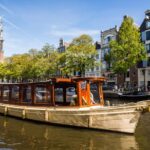
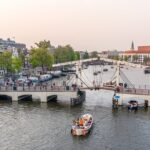
Meeting up and starting strong at A Bike Vondelpark
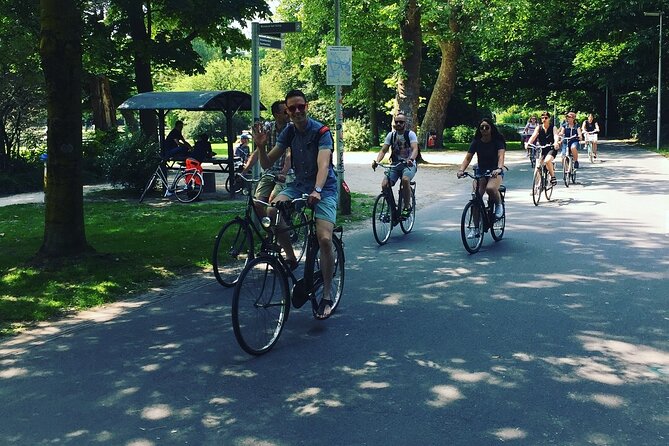
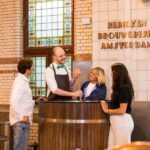
The tour starts at Mike’s Bike Tours Amsterdam at Oosterdoksstraat 106 (near public transport). From there, you head to the launch point at A Bike Vondelpark where bikes are set and everyone gets ready to ride.
This matters more than it sounds. Bikes are central to Amsterdam, but not every visitor is instantly comfortable with Dutch lane behavior. Getting your bike squared away at the start, with helmet and rain gear on hand, means you spend your first minutes learning the rhythm instead of scrambling.
And then you’re out: a city that’s easy to walk but much faster to bike. In 3 hours, you’re going to want that speed.
Oud-West on wide streets: an easy warm-up before the creative zones
Your first stretch heads through Amsterdam Oud-West, which is laid-back and very “day-to-night” in feel. You’ll ride along wider streets lined with trendy bars, restaurants, and concert venues.
What I like about starting here is that it eases you into the city’s energy before you reach the more industrial, art-heavy areas. It’s a good warm-up for your legs and for how you’ll hold your line among Amsterdam cyclists.
A practical note: this section can feel more lively simply because it’s full of places people actually go. If you’re the type who prefers quiet back roads, you may want to keep your eyes up for moving doors, pedestrians stepping toward the curb, and the occasional busier sidewalk.
Westergas: old gas factory turned into a Culture Park
Next comes Westergas, built around an old gas factory that became a culture park in 2003. This stop is short, but it’s the kind of place where you get quick context. You’re not just looking at a building; you’re seeing a story of how industrial spaces can become public spaces for art and events.
If you like your city tours with a little explanation—why something changed, not just what it looks like—this is a good moment. It also sets up what you’ll see later at NDSM: the pattern of repurposing old infrastructure into creative spaces.
Westerpark: calmer biking with strong public-art energy
From there you ride through Westerpark, a 19th-century park that’s known for being one of the calmer green spaces in Amsterdam. The route is short here too, but it’s a breather: green space while still feeling like you’re in motion.
This is also where you might catch the unexpected. In one review, the most memorable moment wasn’t even an artwork stop—it was a pony sighting in the park. That’s the upside of parks: they add small surprises to a ride that’s otherwise very architecture-and-street-art driven.
If you’re traveling with kids or you just like people-watching, keep your camera ready for moments like that.
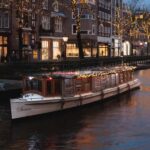
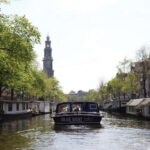
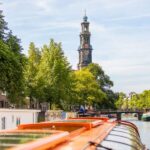
Pontsteiger and the Houthavens ferry crossing: architecture with momentum
Now you shift into Houthavens area vibes, where the mix of modern buildings and older harbor structures shows up together. You’ll cycle toward Pontsteiger, a modern pontsteiger building, and then take a ferry to reach the other side of the river.
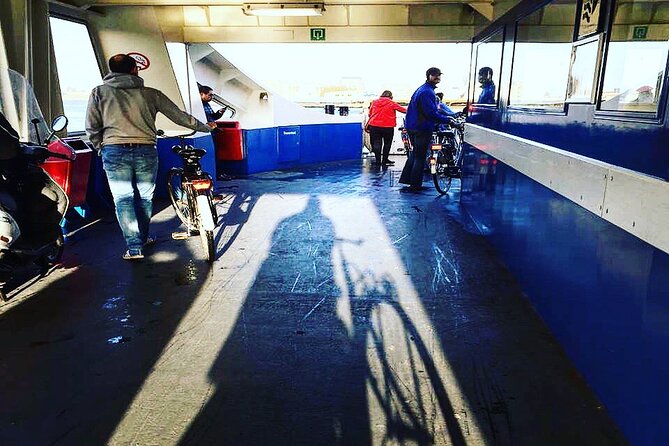
This part is valuable because it breaks the “only-land riding” feeling. The ferry gives you moving skyline views that you can’t easily replicate by bike alone. Plus, it resets the route: you come off the ferry and keep pedaling with that fresh sense of space.
One more plus: ferry time often helps keep a group together without stressing about traffic patterns. If Amsterdam traffic makes you nervous, you’ll appreciate any built-in segment that’s simply scenic.
NDSM Wharf: street art at full size (and the graffiti experience)
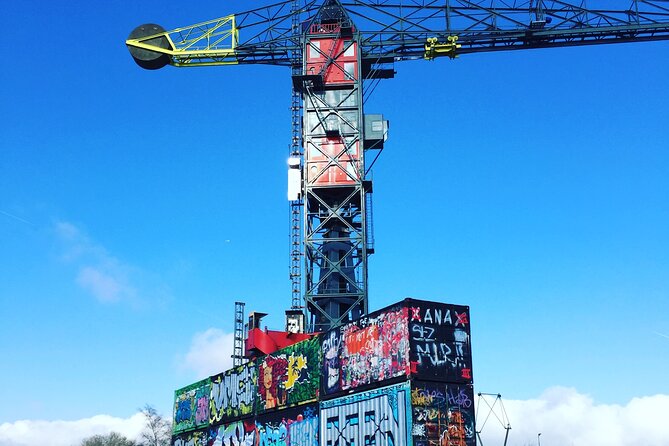
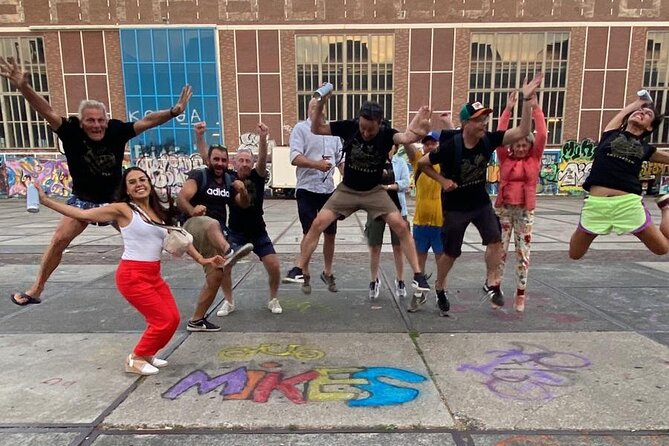
This is the stop most people are here for: NDSM Wharf. This area connects to shipbuilding history—big ships were made here until the 1980s. You’ll see large halls, ramps that once supported ship movement, and an old crane.
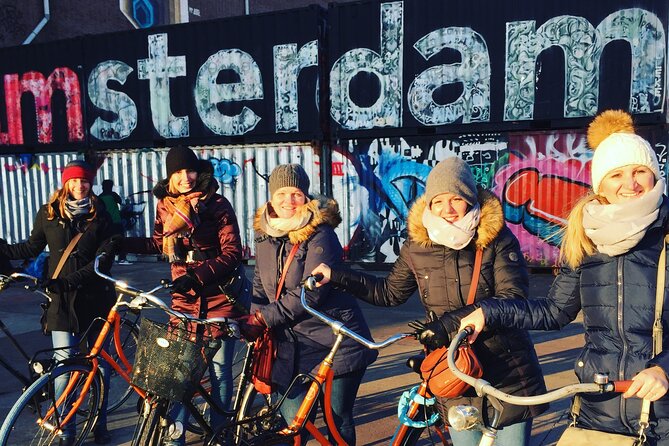
Then comes the modern chapter. The terrain is famous for street art, and it shows up as you ride through the zone and look at what’s on the walls and structures. This is where the tour’s street art focus feels most real, not staged.
You’ll also have a chance to grab a drink at one of the bars in the area, though beverages aren’t included. If you want a break that still feels on-theme, this is the right moment. The industrial setting makes even a casual drink feel like part of the experience.
Also, remember: the tour includes a graffiti experience. Based on the way these areas are used today, you should expect guidance on street art culture—how it’s read in public space and why these walls matter to the city’s creative identity. It’s not just a photo route.
Faralda Crane Hotel: the most unusual reuse you’ll see all day
From the wharf, you’ll spot Hotel Faralda, built in an old crane. It’s one of those Amsterdam architecture ideas that looks impossible until you see it in person.
This stop is brief, but it’s worth paying attention. It’s a great example of a bigger Amsterdam theme: taking leftover industrial bones and giving them a new job in the modern city.
If you’re the type who loves design, you’ll probably start spotting this pattern everywhere after this tour—repurposed structures, reused materials, and buildings that clearly keep their past visible.
Amsterdam North bike paths and the Eye film theater
After Faralda, you’ll cycle over bike paths in Amsterdam North. The feel changes here: you get more industrial and more modern architecture mixed into the streetscape.
You’ll pass by the Eye film theater, which adds a cultural landmark moment without turning the day into a museum march. The building is recognizable from its modern style, and even if you’re not planning to go inside, it helps you map where the city shifted from old to new.
This is also a good section to settle into the ride. By now you’ve warmed up, you know your bike, and you can spend more attention on what’s around you instead of how to keep balance.
The final ferry by Amsterdam Central Station: learning Amsterdam’s cycling culture
To finish, you’ll take another ferry and then cycle next to Amsterdam Central Station. This is where the tour’s “how locals move” theme comes into focus.
You don’t just ride; you get talk time about cycling culture—how Amsterdam manages bike flow, why riders behave a certain way, and what to expect as a visitor when you’re back in the city center.
Why this matters: if your goal is to explore the city after the tour, understanding the cycling rules and norms makes you less stressed. You’ll know how to think like a rider, not a pedestrian with a rental bike.
Who this tour fits best (and who should skip it)
This tour is ideal if you:
- Want street art with real context, not a quick “snap and go”
- Like biking and can handle a continuous ride for about 3 hours
- Enjoy architecture, industrial design, and modern neighborhoods
- Prefer a maximum 12-person group so you can ask questions
A review even mentioned two riders in their seventies who were in pretty good shape and found the ride to be doable. That’s a useful hint: the tour can work for older travelers when biking comfort is there.
Who should reconsider:
- If you’re uncomfortable on a bike, shaky at turns, or easily stressed by traffic, ask yourself honestly if you’re ready. The guide may decide based on skills for safety.
What to bring (and how to make the most of street art stops)
Amsterdam can switch weather fast, so the included rain jacket is a win. Still, I’d pack like this:
- Wear shoes you trust on bike pedal surfaces and wet sidewalks
- Bring a small bag that won’t snag handles
- If you’re planning photos, plan for changing light as you move from parks to industrial walls
For the street art and graffiti stops, don’t just aim your camera at the biggest pieces. Look at how the art interacts with the industrial shapes—cranes, ramps, walls. That’s where the meaning hits hardest: the art feels less like decoration and more like a conversation with the space.
Also, give yourself permission to slow down visually. The tour pace is active, but you’ll want a moment to read what’s painted and see how different styles show up across the wharf zone.
Tips on timing and group energy
The ride is about getting in a lot of places without exhausting yourself. With a maximum of 12 people, the group stays manageable, and the guide can keep an eye on bike spacing.
One rule to take seriously: they do not wait longer than 5 minutes. If you’re late, you risk losing the start and the flow. Build in buffer time.
If you’re the kind of person who likes calmer roads, it can help to avoid peak times in central areas. A review even noted lighter traffic during a Sunday run, which made the ride feel easier. You might find the same effect depending on day and hour.
Should you book Mike’s Amsterdam Hidden street art bike tour?
I’d book this if you want Amsterdam with speed and attitude—street art in industrial spaces, plus ferry views, plus a guide who keeps the ride moving and understandable.
You might skip it if you’re not comfortable on a bike or you’re hoping for a slow, mostly walking-style tour. Also, if you only want classic canals and postcard views, this route is more about modern neighborhoods and creative zones than it is about sitting still by the water.
The bottom line: for $59.13, you’re buying a well-paced mix of transport, gear, and themed stops that are hard to stitch together on your own in a few hours.
FAQ
How long is the Amsterdam street art bike tour?
The tour lasts about 3 hours.
What is the price per person?
The price is $59.13 per person.
How many people are in the group?
The tour has a maximum of 12 travelers.
Where does the tour start?
The tour starts at Mike’s Bike Tours Amsterdam, Oosterdoksstraat 106, 1011 DK Amsterdam, Netherlands.
What is included in the tour price?
Included are local taxes, a professional guide, bicycle use, helmet use, rain jacket, and a graffiti experience.
Is food or drinks included?
No. Food and drinks are not included. You may have time to stop for drinks during the ride, but you pay for them yourself.
Does the tour run in bad weather?
It operates in all weather conditions, and you should dress appropriately. Rain gear is provided.
What age and fitness level do you need?
The minimum age is 16. You should have a moderate physical fitness level and a reasonable biking skill, since the guide may check bike skills for safety.