REVIEW · NETHERLANDS
e-Scavenger hunt Enschede: Explore the city at your own pace
Book on Viator →Operated by Qula · Bookable on Viator
Enschede turns into a puzzle trail. This e-Scavenger hunt is a mobile-ticket city walk built around the Qula app, so you can set your own tempo as you hop between landmarks and learn bits of history. I love the self-guided pace and how it keeps sightseeing fun instead of stiff.
I also like that it’s made for teams up to six and runs as a private experience for your group. You can work as a team on the answers, then move on when you’re ready, not when a stranger’s watch tells you to.
One real drawback to plan for: it’s phone-dependent. You need your own smartphone and data, and if GPS or the app gets cranky, you may feel a little stuck at a waypoint. Some English question quirks and occasional waypoint numbering hiccups can add friction too, so bring a charged device.
In This Review
- Key things to know before you start
- Price and Logistics: what this costs and what you bring
- Getting started with Qula: pace, GPS, and keeping the game moving
- Stop-by-stop: the Enschede clue route that mixes beer, art, faith, and memory
- Grolsche Bierbrouwerij: the swing-top bottle and the story behind the brand
- Rijksmuseum Twenthe: the museum of imagination
- Volkspark (founded 1872): oldest “Volkspark” in the Netherlands
- Prinsenstraat synagogue: surviving war, remembered community
- Grolsch Veste: FC Twente stadium opened in 1998
- Museumfabriek: participating, not just watching
- Holland Casino Enschede: city-center entertainment energy
- St. James Church: octagonal shape, curves, and light
- University of Twente: tech plus social sciences
- St. Joseph Church: a basilica just outside the center
- Grote Kerk on Oude Markt: a medieval core in the main square
- The city fire monument (May 7, 1862): remembering a disaster
- Enschede town hall: Delft School style, built 1930 to 1933
- How much walking you’ll actually do (and where you can skip)
- Who this Enschede e-Scavenger hunt is best for
- Should you book this e-Scavenger hunt?
- FAQ
- What is the group size for the e-Scavenger hunt Enschede?
- How long does the hunt take?
- What does the price include?
- Do I need a smartphone?
- Is there an English version?
- Where does the hunt start and end?
- Is it available all day?
- Is it easy to find public transportation near the meeting point?
- Is it accessible for people with hearing impairments and service animals?
Key things to know before you start
- You choose the order of clue stops and you can skip a few without ruining the whole hunt
- Team-friendly format with private group play (up to 6 people per booking)
- Enschede history shows up close and specific, including synagogue memory and the May 7, 1862 city fire
- Twente culture is built into the route, with Grolsch Brewery and FC Twente’s Grolsch Veste
- Mix of classic sights and modern stops, from churches and parks to Museumfabriek and the University of Twente
- Mostly walkable city-center routing, though a couple waypoints can feel farther than the rest
Price and Logistics: what this costs and what you bring

This is $37.33 per group, and your group can be up to 6 people. That price point is the best part if you actually fill the group. Split it five ways and you’re looking at roughly eight bucks per person for a 2 to 4 hour city adventure with a built-in way to learn.
You’re buying a mobile-ticket experience, offered in English, and it runs using a Qula smartphone app. Duration is listed as about 2 to 4 hours, which is a sweet spot for a city walk where you still have time to wander afterward without feeling rushed.
You’ll start at Roomweg 79, 7523 BL Enschede, and the hunt ends back at the same meeting point. It’s also near public transportation, and it’s private, meaning only your group participates.
What you need to plan yourself: a smartphone with data. Smartphone and data are not included. So charge your battery, turn on data (or whichever method you’ll rely on), and make sure GPS is ready. The hunt is “easy until it’s not,” and phone issues are the main thing that can turn easy into annoying.
You can also read our reviews of more tours and experiences in Netherlands.



Getting started with Qula: pace, GPS, and keeping the game moving
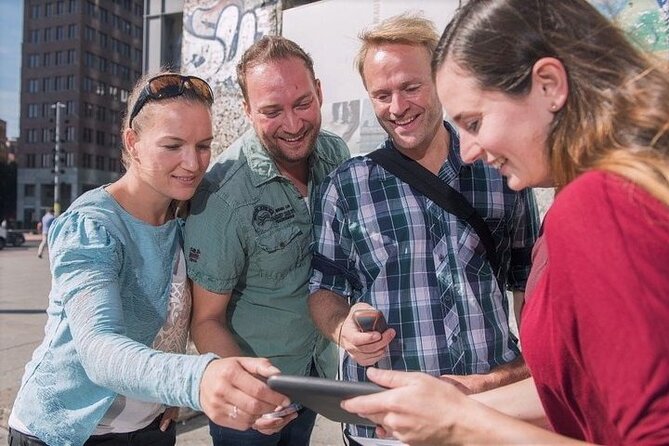
The structure is simple: you walk, locate the next stop, then answer the clue questions in the app. The key practical advantage is that the experience is flexible. You’re not locked into a strict tour schedule where you have to match a guide’s pace.
You can also choose your order of points yourself. That sounds like a small detail, but it matters if your crew wants a slower day, has kids, or has mobility needs. One useful tip for wheelchair users is that you can plan around stairs by picking the order of stops that fits your route.
Navigation is where you want to be a little organized. A common problem is the “my phone can’t find the waypoint fast enough” moment. Turning on GPS before you start can save time, because the app login and locating can take a moment. If you notice the hunt getting slow, stop thinking and just fix the basics: GPS on, data on, phone brightness up, and give it a minute.
Also, keep an eye on app progress. If you pause during a break (lunch, coffee, “we need a rest”), the game may not always resume exactly how you expect, depending on the phone settings. On the practical side, don’t jump between apps too aggressively, and if it looks like the session didn’t save, restart the app and check the status in the Qula flow. In short: treat the phone gently.
Stop-by-stop: the Enschede clue route that mixes beer, art, faith, and memory
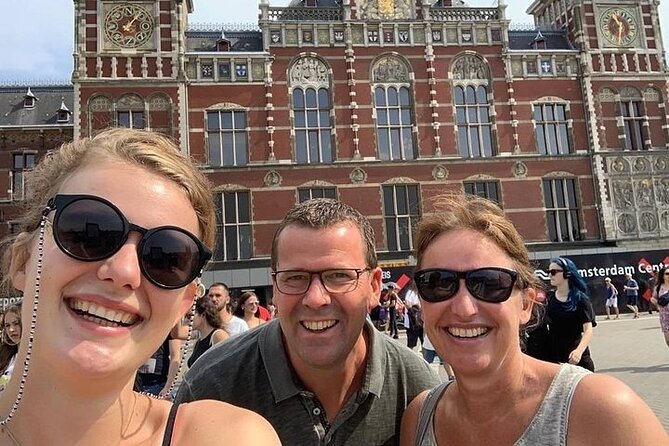
The hunt uses a set list of clue stops. You don’t have to treat them like museum homework. Think of them as “mini chapters,” each one nudging you to notice something specific in the real city.
Grolsche Bierbrouwerij: the swing-top bottle and the story behind the brand
Your first clue stop leans into something very Dutch: beer packaging culture. You’ll be looking at the unique swing-top bottle and the “typical commercials” angle that points you toward how brands show up in everyday life. Even if you’re not a beer person, this is a fun way to start because it’s quick, visual, and recognizably Enschede.
What to watch for: signage, bottle details, and how the place explains its identity. The trivia-style questions here are meant to get your eyes working, not to test your beer knowledge.
Possible drawback: if you’re short on time, you may feel pressure to move on fast. It’s easy to spend more time than planned if you’re the type who likes to read every label.
Rijksmuseum Twenthe: the museum of imagination
Next up is Rijksmuseum Twenthe, described as a museum of the imagination, with changing exhibitions and a large collection. This stop works well if you like art and design but don’t want to commit to hours and hours inside a museum.
Expect clues that steer you toward specific ideas or exhibits rather than making you wander blindly. That’s useful when you’re traveling with mixed ages, because the app gives structure.
A practical consideration: a changing-exhibition museum can mean some areas feel more “active” than others depending on what’s on during your visit. If you want a deeper museum experience, set aside extra time beyond the 2–4 hour hunt.



Volkspark (founded 1872): oldest “Volkspark” in the Netherlands
Then you get a breather: Volkspark, a park in Enschede founded in 1872 and noted as the oldest Volkspark in the Netherlands. The fact that it was founded after an English example is a nice little nugget because it hints at how ideas about public parks traveled across Europe.
Use this stop to reset. The questions here tend to make you notice what you’d otherwise stroll past: paths, open spaces, and how parks shape a city’s daily rhythm.
If it’s rainy or windy, parks can be less fun. On those days, keep moving and treat the park as a quick “lungs break” between heavier history stops.
Prinsenstraat synagogue: surviving war, remembered community
The route doesn’t shy away from serious history. You’ll stop at the Prinsenstraat synagogue area, tied to evidence that Jews lived in Enschede from the middle of the seventeenth century onward. The key detail here: the synagogue came through the war undamaged.
Today, its vestibule contains a plaque remembering more than 700 Jews of Enschede and surroundings who were murdered during the war. This is the kind of clue stop that turns a spot on a map into something emotionally real, fast.
Take your time here if your group is sensitive to memorials. It’s one of the moments where you’ll probably want a slower pace, even though the rest of the hunt can feel game-like.
Grolsch Veste: FC Twente stadium opened in 1998
Next is sports architecture at Grolsch Veste, the stadium of FC Twente. The stadium opened in 1998 to replace Stadion Het Diekman. If your crew likes football, you’ll probably appreciate how the clue ties the stadium to a specific timeline rather than vague “home of the team” fluff.
Even without a match day vibe, this stop can be a strong visual moment. Stadiums are designed for crowds, and that scale makes it easier to spot what the app wants you to notice.
Practical drawback: depending on where your route order puts it, you might feel you’re walking farther than at other points. If you’re short on energy, this is a good place to decide whether to skip or adjust your order.
Museumfabriek: participating, not just watching
Museumfabriek is described as innovative and built around participation, not passive viewing. That’s a helpful distinction because some museums feel like you’re reading plaques at slow speed. Here, you’re more likely to be nudged into doing something.
Expect clues that push you to interact with the space, or at least think about it differently. For kids and teens, this is often the kind of stop that makes a city game feel like more than a “walk and answer.”
Possible consideration: if you prefer quiet, purely observational museums, participation-based setups can feel busy. Still, it’s one of the most “active” parts of the route.
Holland Casino Enschede: city-center entertainment energy
At Holland Casino Enschede (in the center), the theme is about night-out excitement with friends, family, or colleagues. In the context of a daytime scavenger hunt, you’re likely using the location as a clue about how Enschede offers entertainment and social life, not as a guarantee you’ll sit down and play for hours.
This stop can be fun because it’s about atmosphere. Even if you just do it as a quick waypoint, it breaks up the more historic stops with a modern, city-center vibe.
Practical note: you’ll want to follow what’s possible on your actual visit time. The hunt itself is available broadly, but the casino’s operations can still vary.
St. James Church: octagonal shape, curves, and light
Then comes one of the prettiest and most distinctive stops on the route: St. James Church. It’s known for the beauty of its octagonal shape, with curves, nooks and crannies, and special light. It’s described as one of the most beautiful churches in the east of the Netherlands.
This is a great stop for slowing down and actually looking. The clue questions here tend to reward observation, like noticing the building’s form rather than relying on a single obvious feature.
One consideration: churches can be photogenic in any weather, but lighting changes quickly. If you’re there at a flat, gray moment, give it an extra minute and watch how shadows move.
University of Twente: tech plus social sciences
Next is the University of Twente (UT), described as a Dutch university for technical and social sciences in Enschede. This stop is useful if your group likes to learn how a modern city is shaped by research and education.
You’ll likely get clue prompts that connect the university to Enschede’s present-day identity. It’s a different flavor from the older church and market-square stops, so it keeps the whole hunt from feeling like one long history lecture.
Possible drawback: some campus areas may feel less “tourist-friendly” if you wander off into restricted zones. Stay where the clue directs you and keep your route tidy.
St. Joseph Church: a basilica just outside the center
St. Joseph Church is described as a basilica just outside the center of Enschede. It’s first and foremost a house of prayer, and excursions are possible.
This waypoint works well as a “pause from the streets” stop. Churches are also naturally good for the kind of clue answers that depend on looking closely at architecture details and symbols.
Practical consideration: because it’s just outside the center, your walking distance may feel longer depending on your chosen order. If you’re feeling time-crunched, rearrange your stop order to keep this one comfortable.
Grote Kerk on Oude Markt: a medieval core in the main square
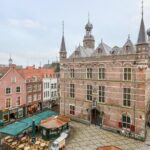
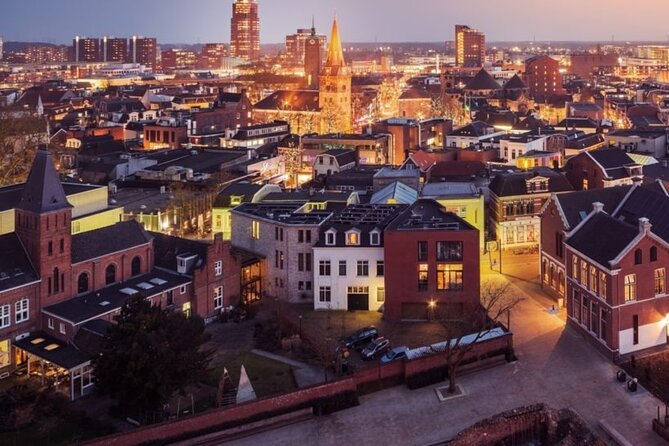
Back into the heart of the city: Grote Kerk on Oude Markt. The original church dates back to the Middle Ages. This kind of stop matters because it anchors the city’s story in a place locals still use daily.
Your clue questions here likely connect to the church’s long timeline and the fact that Oude Markt is still the social center. It’s a good spot for souvenir-level sightseeing without needing a full guided tour.
Potential drawback: main squares get busy. If your group doesn’t like crowds, plan to do this stop at a quieter moment or be ready to wait a few minutes for space to read and answer.
The city fire monument (May 7, 1862): remembering a disaster
On the Oude Markt you’ll also find the Monument of the city fire on May 7, 1862. This stop is memorable because it’s specific: a date, a place, and the fact that the city’s history includes tragedy that shaped what came next.
Clue questions here are usually designed to make you notice commemorative details and connect them to the broader city story. It’s not just “look at a stone.” It’s about why a city keeps reminders around.
Take a steady pace. This is the kind of stop where rushing can make the facts feel cold instead of meaningful.
Enschede town hall: Delft School style, built 1930 to 1933
Your final big architecture waypoint is the current town hall of Enschede, built between 1930 and 1933 in the style of the “Delft School.” That’s a great detail because it gives you a lens for what you’re seeing: not just pretty building, but a specific architectural style tied to a period.
This stop often feels like the “wrap-up” moment of a city walk. You’ve already seen churches, museums, and memorials; now you see how civic life looks in the early 1930s.
Practical consideration: if you’re tired by the end, make this one quick. Get one good look, answer the clue, and then head back to Roomweg 79.
How much walking you’ll actually do (and where you can skip)
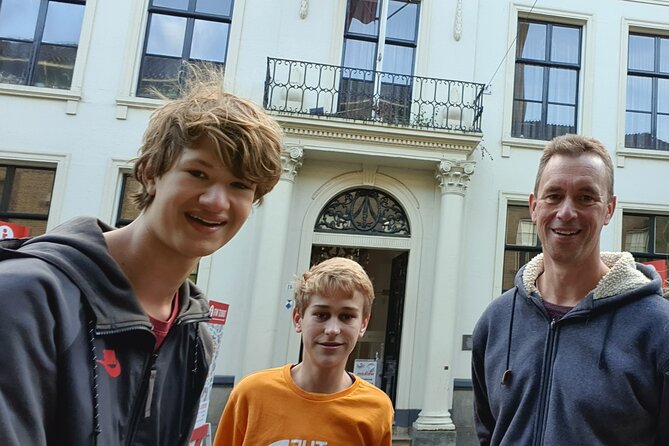
The route generally works as a city-center walk, and it’s designed so you don’t have to visit every single stop to finish the experience. That’s a real advantage for families and for anyone who likes control over time.
You might still notice that some waypoints feel farther than others. If your group reaches a stretch and feels done, skip what’s next and adjust your order. The self-guided nature is the point.
For wheelchairs and anyone navigating uneven ground, the “choose your order” feature is your friend. Pick the sequence that avoids stairs when you can. For most people, this hunt is walkable and straightforward once you’re oriented.
Who this Enschede e-Scavenger hunt is best for
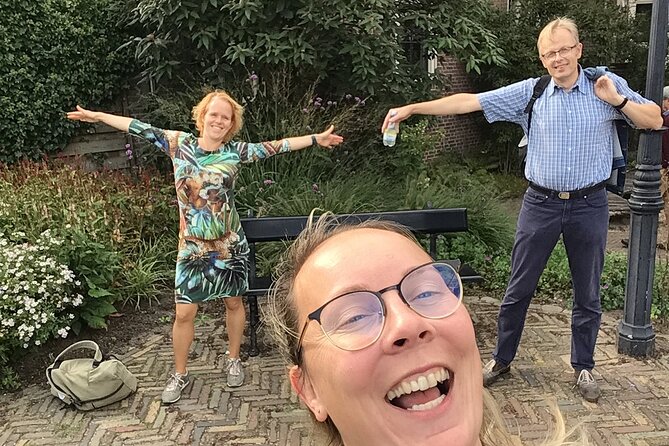
This is a good fit if you want a lighthearted way to see Enschede without committing to a timed guided tour. It’s especially useful when your group has mixed interests because the stops cover beer culture, museums, parks, faith landmarks, stadium life, and city architecture.
It also works well for teens and for multi-age groups since the questions create a shared task. If your group includes someone who wants to talk and someone who wants to move, the format can satisfy both.
Consider skipping it if you dislike phone-based activities. If your travel style is pure wandering with no app work, this may feel like homework. But if you enjoy turning a walk into a game, it’s exactly the kind of city experience that pays off.
Should you book this e-Scavenger hunt?
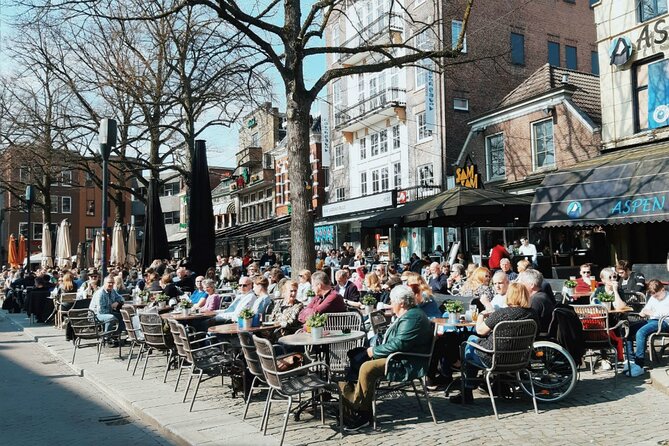
Yes, if you want an English-friendly, self-paced Enschede walk that mixes well-known landmarks with concrete, teach-you-something clues. It’s also good value when you can book a full group of up to six.
I’d think twice if your smartphone battery life is always a struggle, because the hunt runs on your device. Also plan for the possibility that one or two clue points may be harder than you expect, especially if you’re relying on English wording.
If you go in with a charged phone, GPS turned on, and a willingness to skip a waypoint or two, this can turn a simple walk into a satisfying Enschede day.
FAQ
What is the group size for the e-Scavenger hunt Enschede?
The experience is for a team of up to 6 people, and it’s private, so only your group participates.
How long does the hunt take?
It takes about 2 to 4 hours.
What does the price include?
The price includes the city trail experience for your team and access to a free Qula app for your smartphone.
Do I need a smartphone?
Yes. A smartphone is required for the mobile ticket and to use the Qula app, and you’ll also need data because smartphone and data are not included.
Is there an English version?
Yes, it’s offered in English.
Where does the hunt start and end?
It starts at Roomweg 79, 7523 BL Enschede, Netherlands, and ends back at the meeting point.
Is it available all day?
The activity is shown as available Monday through Sunday from 12:00 AM to 11:59 PM.
Is it easy to find public transportation near the meeting point?
The meeting point is near public transportation.
Is it accessible for people with hearing impairments and service animals?
The experience is described as user-friendly for hearing impaired travelers, and service animals are allowed.