REVIEW · AMSTERDAM
Entry ticket to Museum of Illusions Amsterdam
Book on GetYourGuide →Operated by Museum of Illusions Amsterdam · Bookable on GetYourGuide
If you trust your eyes, this place politely disagrees. At the Museum of Illusions Amsterdam, you walk into playful exhibits where perception and reality clash fast, and you come out laughing and learning how your brain builds what you see.
I really like that it is not just picture-taking. Each area includes educational explanations that connect the visual tricks to simple ideas about contrast, motion, perspective, and how the brain fills in missing details.
One thing to keep in mind: it is an experience that packs a lot into about 1.5 hours, so if you want extra time in front of each illusion (or you go slowly with photos), plan for a little bit of a sprint.
In This Review
- Key highlights you will feel right away
- Finding the Museum of Illusions Amsterdam on Keizersgracht
- What 1.5 hours inside feels like (and why it works)
- The illusions that mess with space, depth, and balance
- How your brain gets fooled: contrast, motion, perspective, and gaps
- Photo-friendly rooms: how to get the shot and still learn
- Small group setup: up to 5 and a low-stress visit
- Who this museum fits best in Amsterdam
- Price and value: is $23 for illusions worth it?
- Practical tips before you go (food rules included)
- Should you book the Museum of Illusions Amsterdam?
- FAQ
- How long is the Museum of Illusions Amsterdam ticket valid for?
- What does the entry ticket include?
- Where is the Museum of Illusions Amsterdam located?
- Is food and drink allowed inside the museum?
- Do children need tickets?
- What languages are available for the host or greeter?
- Is free cancellation available?
Key highlights you will feel right away

- Walk into rooms that break space and depth, so balance and distance look different than you expect
- Hands-on science that shows how your brain processes visual information like contrast, motion, and perspective
- Photo-ready installations where the best shots come from doing the trick, not just watching it
- Helpful staff who can explain what is happening and help you get a great photo
- Small group format (up to 5), which keeps the energy friendly and lets you ask questions
Finding the Museum of Illusions Amsterdam on Keizersgracht

You will find the Museum of Illusions Amsterdam in the former Nieuwe Waalse Kerk on Keizersgracht, one of Amsterdam’s classic canal streets in North Holland. The building has a historic façade, and the museum signage makes it easier to spot than you might expect in a city full of similar-looking streets.
The meeting point is basically your cue: show up at the former church by the canal and follow the signs into the museum. If you like starting with a clear landmark, this location is a solid win because Keizersgracht is easy to navigate by foot once you know what direction you are heading.
Also, because it is in a reused church building, the atmosphere feels more like a real place you are visiting than a generic mall attraction. That matters, because you will spend your time looking upward, stepping into setups, and moving around—so a venue that feels built for an experience helps.
A few more Amsterdam tours and experiences worth a look



What 1.5 hours inside feels like (and why it works)
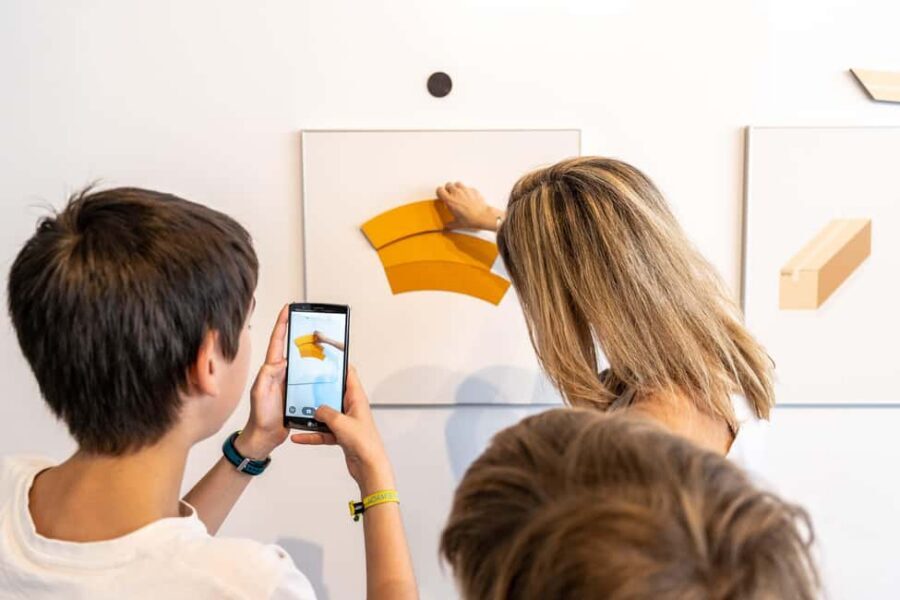
This is a 1.5-hour visit, and that timing is part of the design. The museum takes you through a sequence of interactive spaces where your brain gets tricked, then nudged into understanding why. You are not supposed to read everything like a museum of paintings; you are supposed to test the idea by doing it.
You will start encountering installations right away, and you will keep moving. Many exhibits are built to disrupt your sense of space, depth, and balance, so it is a physical experience as much as a visual one. Expect to walk, reposition, look from different angles, and sometimes pause to let your eyes catch up.
If you are going with kids or you just want fun, you will probably enjoy the momentum. If you are the type who wants to fully digest each explanation, you can still do it—you just may need to accept that you will not have unlimited time in every room.
The illusions that mess with space, depth, and balance

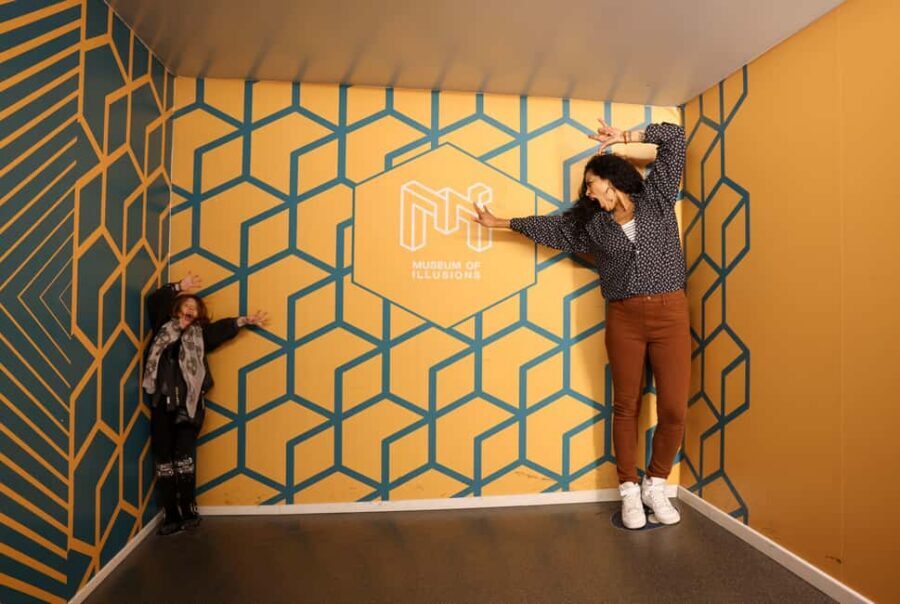
A big part of what makes the Museum of Illusions Amsterdam fun is how directly it targets core visual instincts. You will encounter mind-bending setups that make distance feel wrong, walls feel like they are doing something they cannot possibly do, and your sense of depth become unreliable.
What I like is that these illusions do not rely on complicated tech. They rely on the way your visual system builds a 3D world from 2D input. So even when something looks impossible, it still makes sense once you understand the trick behind it.
For your visit, the best approach is simple: slow down in the moment you feel confused. If you try to power through, you might miss the exact point where your brain switches from confident to uncertain. And that is usually when the best photo opportunities happen, because you can pose while your viewpoint is actively being challenged.
A practical tip: watch how the room changes when you step to a different spot. Many illusions are angle-sensitive, so if you only stand in one position, you only get one version of the trick. Moving a few steps often turns a boring photo into a wow photo.
How your brain gets fooled: contrast, motion, perspective, and gaps
This museum is playful, but it is not random. The exhibits include clear explanations about how your brain processes visual information, including contrast, motion, and perspective.
Here is the idea you will keep seeing: your brain does not just record the world like a camera. It interprets. It also fills in missing information so you can function without constantly stopping to analyze every detail. That is helpful in everyday life, but it is exactly why illusions work.
You will also learn why your eyes and your brain can end up disagreeing with reality. Sometimes the trick is about what your eyes actually detect; other times it is about what the brain predicts to create a stable picture. Either way, you walk out with a different relationship to what looks normal.
If you like science that does not feel like homework, this is a good fit. The explanations are there to make the experience smarter, but the museum still stays light and fun. It is basically psychology you can play with, and you will feel that more than you will read it.
Photo-friendly rooms: how to get the shot and still learn
The Museum of Illusions Amsterdam is designed for photos, but you will get better results if you treat it like an interaction first and a snapshot second. The exhibits are built to trick your senses, so the camera angle and your body position matter.
I also appreciate that the staff help with this part. One of the stand-out bits from the experience is the way staff explain the illusion first and then assist with taking photos that match the effect. That is a big value point, because it saves you from the common problem of getting a blurry image of something you cannot quite understand.
What to do while you are there:
- Take a photo, then repeat the move once more from a slightly different angle
- Let the explanation sink in before you pose again
- If you want a group shot, coordinate who stands where before the click
And one more note: the museum experience is meant to be hands-on, so be ready to move. If you spend too long setting up a perfect photo without trying the illusion, you might feel like the museum is repetitive. It is not. It is just interactive, and you get what you put in.
You can also read our reviews of more museum experiences in Amsterdam





Small group setup: up to 5 and a low-stress visit
The small group format matters more than you might think. With a maximum group size of 5 participants, it stays easy to move around without that crowded, shoulder-to-shoulder feeling. It also helps staff keep track of what you are trying to do—especially if you want help with the photo angle or want a quick explanation.
The host or greeter supports Dutch and English, so you can expect guidance in those languages. If you are an English speaker, you will not feel lost. If you are Dutch, you get the option to switch into the local language.
This setup is also great if you are traveling with a partner or small family. Everyone gets space to react to the illusions, and you are not competing for the same viewing spot with a big tour crowd.
Who this museum fits best in Amsterdam
This is a strong choice for couples, curious adults, and families. The mix of interactive fun and simple science makes it workable even if not everyone in your group is equally into “museum stuff.” Kids can get the wow factor fast, and adults can enjoy the explanation side without it turning into a lecture.
Kids up to 4 years old enter for free, which makes planning easier if you have little ones. For older kids, this is the kind of place where they do not just look—they experiment with what their eyes and brains predict.
If you dislike being rushed, aim to stay aware of the 1.5-hour timeframe. You can still have a relaxed visit, but I would not plan to treat this as a slow wander through dozens of exhibits. It is more like a guided circuit of mind-bending rooms with just enough time to do it well.
This also works well as a rainy-day activity, since a good chunk of the fun happens indoors with interactive stations. And because it is photogenic, it pairs nicely with the rest of an Amsterdam day where you want activity plus memories.
Price and value: is $23 for illusions worth it?

At $23 per person, this is not a budget museum. But you are paying for something specific: interactive exhibits, educational explanations throughout, and staff assistance during your visit. You also get access to the museum shop, and the price includes local taxes and fees.
So the real question is value for time and engagement. You spend about 1.5 hours moving through installations designed to trick perception. That is long enough to do multiple illusions thoroughly, especially with the small group size and staff guidance.
Where the price really feels justified is the combination:
- You get the playful effect of illusion rooms
- You get the science explanation behind them
- You often get practical help with photos
If you want a museum experience where you are actively participating the whole time, this price can feel fair. If you want a quiet, long-form museum where you sit with art and read at your own pace for hours, you may find it short for the money.
Practical tips before you go (food rules included)
A few practical details will help you enjoy the visit without friction.
Food and drinks are not allowed inside. That means you should plan to eat before you arrive or after you leave, so you are not thinking about snacks while you are trying to focus on the illusions.
Wear shoes you can move in. You will step around and reposition to catch the effects, and comfortable footwear makes it easier to enjoy the rooms instead of thinking about your feet.
If your group includes kids, keep expectations clear: this is not a quiet play space. It is an interactive museum where curiosity is part of the process, and kids do best when you give them a simple mission like try to make the illusion look “more wrong” from another spot.
Finally, based on the fact that one booking showed a closed-door message, it is smart to double-check your timing before you go. Opening hours can change, and it only takes a moment to confirm your visit time so you do not waste the walk.
Should you book the Museum of Illusions Amsterdam?
Yes, if you want an indoor Amsterdam activity that is hands-on, funny, and still grounded in how your brain actually works. The best reason to book is the mix: you get mind-bending rooms plus explanations, and you have the chance for staff help that can level up your photos.
Book it if:
- You like interactive museums where you participate, not just observe
- You want great photo spots without needing special gear
- You are traveling with kids (and you have at least one person who loves visual surprises)
- You prefer small-group energy for guidance and space
Skip it only if:
- You want a slow, quiet museum visit with lots of reading time
- You hate situations where you might have to move around and reposition repeatedly
- You are looking for a traditional art or history museum experience
If you match the vibe—active, curious, and ready to question your eyes—this one is a strong fit for Amsterdam.
FAQ
How long is the Museum of Illusions Amsterdam ticket valid for?
The visit duration is about 1.5 hours.
What does the entry ticket include?
Your ticket includes access to all interactive exhibits and installations, educational information at each exhibit, staff assistance and guidance, opportunities for mind-bending photos, and access to the museum shop (plus local taxes and fees).
Where is the Museum of Illusions Amsterdam located?
It is located in the former Nieuwe Waalse Kerk on Keizersgracht.
Is food and drink allowed inside the museum?
No, food and drinks are not allowed.
Do children need tickets?
Children up to 4 years old do not require a ticket and can enter for free.
What languages are available for the host or greeter?
The host or greeter provides Dutch and English.
Is free cancellation available?
Yes. You can cancel up to 24 hours in advance for a full refund.