REVIEW · AMSTERDAM
Amsterdam: Red Light District Tour in DE/EN/IT/ES/FR
Book on GetYourGuide →Operated by Amsterdamliebe · Bookable on GetYourGuide
Neon lights, hard facts, and debate. This Amsterdam Red Light District tour mixes street-level sights with a critical look at sex work, plus Amsterdam’s coffeeshop politics and culture.
What I like most is the way the guide keeps the tone respectful while still being honest about how the district functions. I also like the bonus thread on coffeeshops, explained through a real stop at Coffeeshop The Jolly Joker and why the city treats them like both a solution and a headache.
The main drawback is that you’ll want the right mindset: cameras are not allowed, you can’t take photos of sex workers, and the content isn’t kid-friendly (no one under 14). If you want a light sightseeing stroll only, this is not that.
In This Review
- Key things worth knowing before you go
- Dam Square start: how this tour keeps you oriented fast
- Condomerie stop: the contraception angle you might not expect
- Oude Kerk: a photo stop with real paradox
- Entering the Red Light District: money, negotiations, and women’s security
- Warmoesstraat to Dancing Houses: where the story turns into postcard Amsterdam
- Amsterdam Centraal and Chinatown: the neighborhood context shift
- Coffee shop stop at The Jolly Joker: blessing and curse, with politics included
- Nieuwmarkt Square wrap-up: how to keep exploring without crossing lines
- Price and value: why $28 can actually make sense
- Who should book this, and who should skip it
- Quick tips to make the 90 minutes smoother
- Should you book the Amsterdam Red Light District + coffeeshop tour?
- FAQ
- How long is the Amsterdam Red Light District tour?
- Which languages are available?
- Where does the tour start and where do you end?
- Does the tour include an inside visit to a coffeeshop?
- Can I take photos or videos during the tour?
- Is the tour suitable for children?
- Is the tour canceled if it rains?
- What’s included in the price?
- Is alcohol or drugs allowed during the tour?
Key things worth knowing before you go
- Multilingual guides (DE/EN/IT/ES/FR, not bilingual): pick your language carefully
- No photos of sex workers, and no cameras: you’ll focus on the story, not your screen
- Windows-access rules since 2020: the route avoids standing right in front of the red windows
- A sharp look at money and safety: you’ll learn how income, expenses, and security work
- Coffeeshop history + politics in 90 minutes: including a stop at The Jolly Joker
- Timing matters on weekends: Friday and Saturday can feel packed, especially in winter evenings
Dam Square start: how this tour keeps you oriented fast
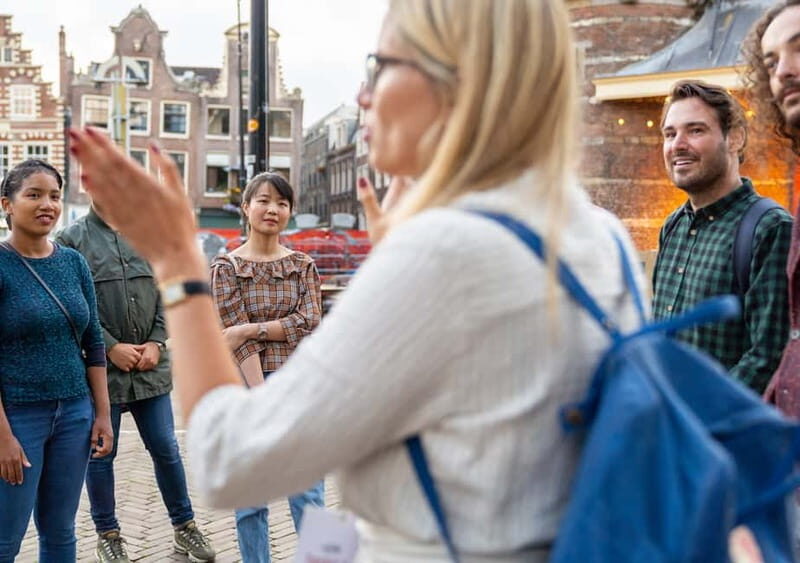
Most walks through Amsterdam’s Red Light District start with you feeling a bit lost—streets twist, alleys funnel you, and neon does half the explaining. This one starts at Dam Square near the National Monument, which is smart. You get to anchor yourself before you enter the maze of small streets around the district.
The whole walk is about 1.8 km / 1.2 mi at an easy pace in 90 minutes. That matters because you’re covering a sensitive topic and a compact area; slow enough to ask questions, but structured enough that you’re not left wandering with no context.
You’ll also notice early that the guide’s job isn’t just “show you the sights.” It’s framing what you’re seeing in human, political, and practical terms—how sex work operates here, how the city governs it, and why Amsterdam’s coffeeshop culture sits in the same conversation about harm reduction and public order.
One extra detail I think you’ll appreciate: guide energy is a big part of success. Names like Francesco and Leonie show up often in guides’ styles—keeping groups moving even when it’s cold, and answering questions without turning the tour into a debate club.
You can also read our reviews of more tours and experiences in Amsterdam.
Condomerie stop: the contraception angle you might not expect
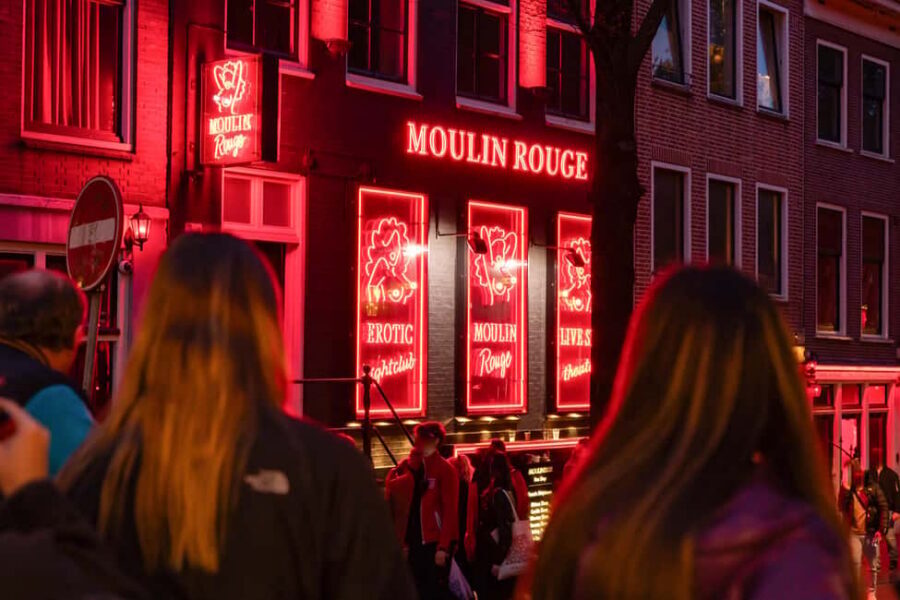
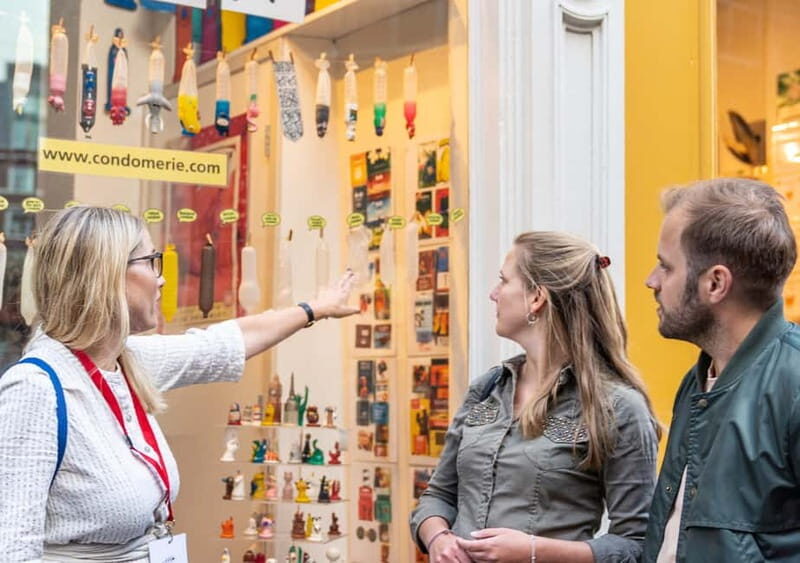
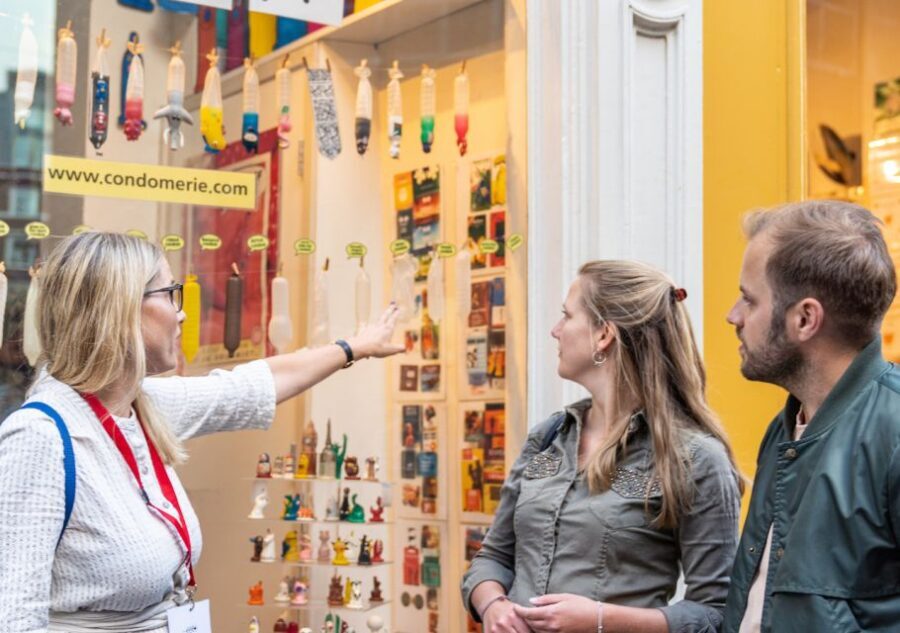
After the first orientation, you head toward Warmoestraat area, with a stop at the Condomerie. It sounds playful—and it is—but it’s also a shortcut into Amsterdam’s long-running public health story.
Why it works: the Red Light District isn’t just “sex as spectacle.” It’s also a place where public policy, health, and adult behavior collide. The tour uses the Condomerie to connect today’s street-level reality to Amsterdam’s contraception history, which helps you understand the city’s approach: pragmatic, sometimes messy, usually focused on reducing harm rather than pretending risk doesn’t exist.
You’ll get a quick guided look here (about 10 minutes), so don’t expect a museum-style stop. Think of it as a clever warm-up—fact-based, slightly goofy, and very on-theme.
Practical note: since cameras aren’t allowed, this stop is more about listening and absorbing than capturing images.
Oude Kerk: a photo stop with real paradox
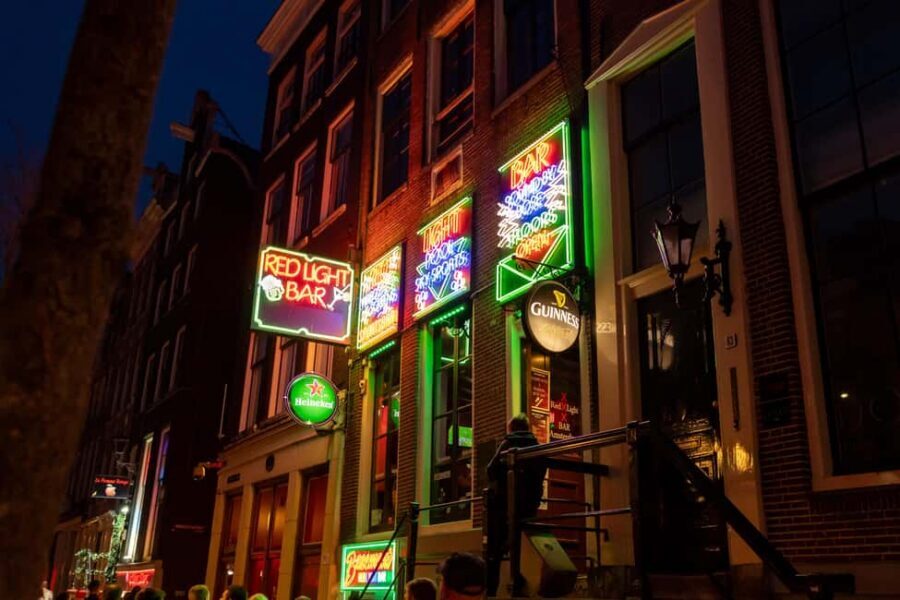
Next up is Oude Kerk, the oldest church in Amsterdam. It’s brief—around 15 minutes with a photo stop and a guided bit of context—but it lands.
The paradox is the point: you’re standing in a historic religious building while the district behind it carries modern commerce, adult services, and constant political pressure. The guide uses that contrast to frame the district as part of Amsterdam’s everyday city fabric, not a sealed-off tourist fantasy.
This is one reason the tour feels balanced. You’re not just learning street gossip. You’re being guided toward how the same neighborhoods can hold centuries-old institutions and contemporary adult industries side by side.
Entering the Red Light District: money, negotiations, and women’s security
The heart of the tour is the district walk itself (about 15 minutes of guided focus), where you’ll learn the mechanics behind what you see.
Here’s what the guide covers:
- How sex workers earn a living (including average earnings per night)
- How many customers they may have per shift
- Which sexual acts tend to pay the largest sums
- The negotiation process between customers and sex workers
- Income vs. expenses, including topics like room rental and taxes
- Women’s security, and the risks the system tries to manage
This is where you’ll feel the tour’s “critical perspective” most clearly. It isn’t designed to sell you a fantasy version of the district. Instead, it shows the district as work—legal gray zones, bargaining realities, and the city’s long-term struggle to regulate something that exists anyway.
Also, there’s a very specific rules-based reality you’ll encounter: since 2020, tourism restrictions mean tours can’t stand directly in front of the red windows. The route is adapted, and you’ll still get to see the windows later at your own pace in the heart of the district, but the guide won’t lead you to a spot where crowds linger right at the windows.
If you’ve only seen the district through photos, this will reset your expectations. The tour’s strength is turning a visual stereotype into a set of policy and human-problem facts you can actually use.
And a crucial etiquette note: it’s forbidden to take photos of the sex workers. This isn’t a “be respectful” suggestion—it’s an explicit rule. You’ll want to treat the whole walk as an information experience, not content hunting.
Warmoesstraat to Dancing Houses: where the story turns into postcard Amsterdam
The route then curves toward Warmoestraat, a famous street with a well-known LGBTQ+ presence. You’ll have a quick photo stop and a guided bit of context (about 5 minutes).
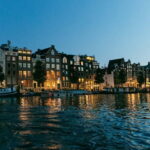
From there, you stop at Dancing Houses, one of Amsterdam’s most recognizable, picturesque spots. Another short photo stop and guided time (around 5 minutes).
Why include this? Because the Red Light District doesn’t exist alone. It sits inside a larger neighborhood where the city’s creative identity and long-standing community culture show up in the streetscape. You’re meant to leave with a fuller sense of place: not just the adult windows, but also the broader Amsterdam that tourists often forget is right next to it.
These stops also make the tour feel humane. When you’re learning about sex work and policy, you need moments to shift gears. The photos give your brain a break without losing the connection to the area.
Amsterdam Centraal and Chinatown: the neighborhood context shift
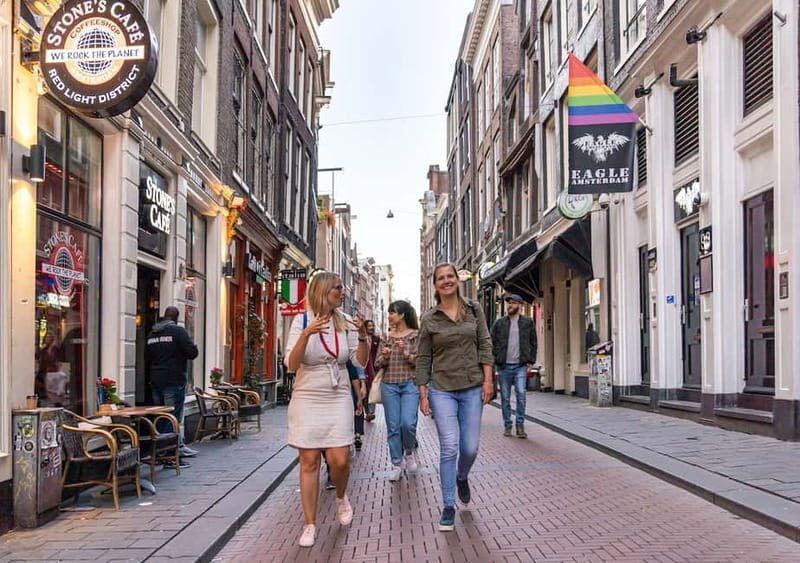
After the district sights, you move toward Amsterdam Centraal Station with a photo stop and guided explanation time (about 10 minutes). Then you continue to Amsterdam Chinatown for roughly 10 minutes of guided tour time.
I like this part because it prevents tunnel vision. The Red Light District can swallow your sense of where you are in Amsterdam. By shifting your view to major landmarks—Centraal—and then to Chinatown, the guide helps you understand this zone as a slice of the city, not a single-topic attraction.
You also start to notice how Amsterdam tourism works: the city packages everything, but it also keeps each neighborhood’s identity intact. That’s a useful lens when you return later on your own.
Coffee shop stop at The Jolly Joker: blessing and curse, with politics included
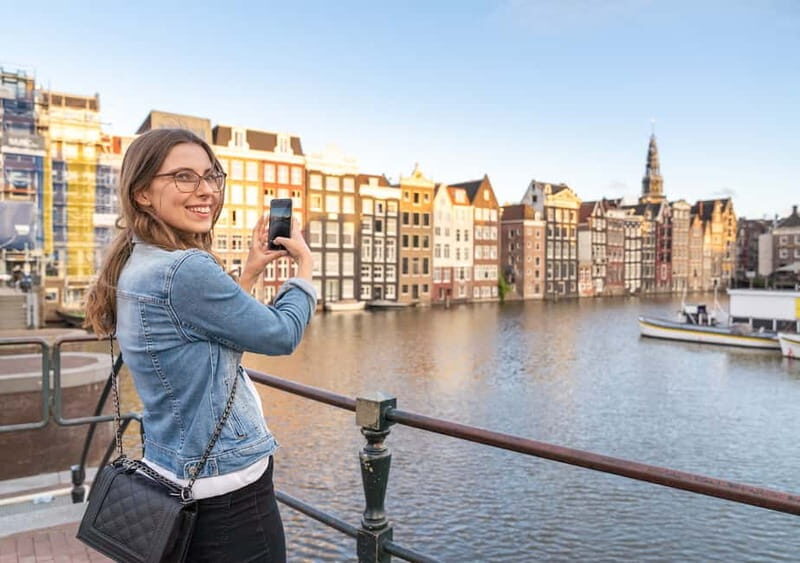
Now we hit the second big theme: coffeeshops. The tour includes a guided stop tied to Coffeeshop The Jolly Joker (about 15 minutes).
Important: the tour does not include an inside visit of a coffeeshop. So don’t plan on sitting down or going in for a product experience. Instead, the guide uses this stop as a teaching moment—how coffeeshops were established, what Amsterdam tries to balance, and what the city still struggles with.
The guide frames coffeeshops as both:
- a blessing, in the sense that policy tries to manage harm and keep certain activities out of darker corners
- a curse, in the sense that tourism pressure and regulation headaches create political friction
This part is where the tour really connects back to the Red Light District. Both topics are about regulating behavior that exists, trying to reduce harm, and drawing lines that satisfy residents, politics, and law enforcement—all while tourists show up with curiosity and assumptions.
So if you came to Amsterdam thinking it’s all bikes, canals, and coffee smells, this tour gives you the governance side. And it’s taught in an everyday way, not as a lecture.
Nieuwmarkt Square wrap-up: how to keep exploring without crossing lines
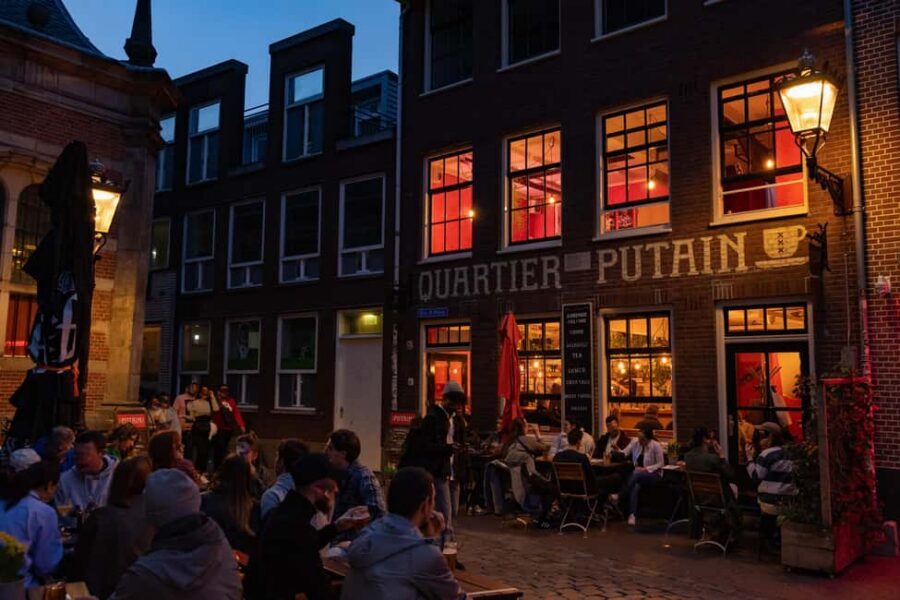
You end at Nieuwmarkt Square, with about 10 minutes of guided time there. Then you’ll have drop-off options at Nieuwmarkt or back near National Monument.
This ending matters because it gives you a practical “what now” moment. You’ll get recommendations from your guide for how to keep exploring the area at your own pace, with key reminders about boundaries and respectful behavior.
One specific follow-up the guide gives: tips for visiting a 70s peepshow, which you can experience on your own after the tour. That’s a very Amsterdam contrast—adult history presented as a niche, vintage entertainment format rather than only a transactional service.
I also recommend using your guide’s guidance for timing. On Fridays and Saturdays, the Red Light District gets heavy with tourists. If you want the experience to feel more human and less like a crowd crush, choose another day.
Price and value: why $28 can actually make sense
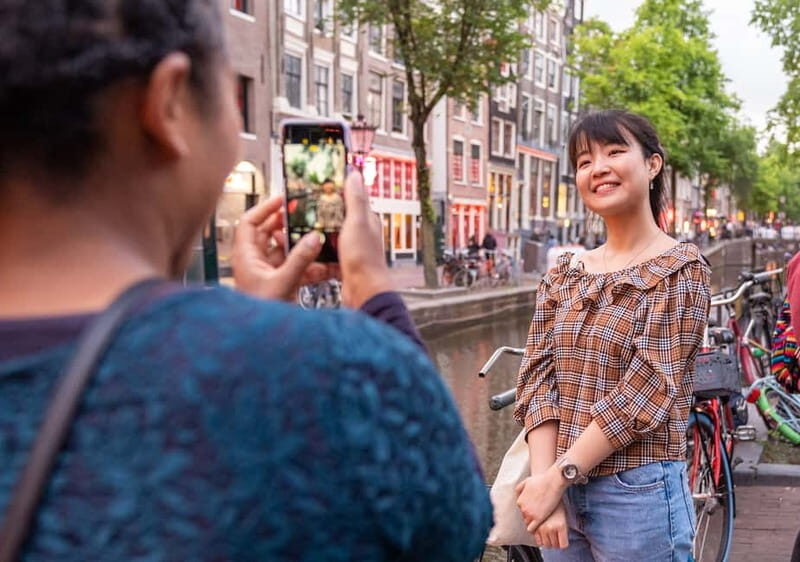
At $28 per person for 90 minutes, this isn’t a bargain-bus tour, and it isn’t a luxury experience either. The value sits in the structure and the context.
You’re paying for:
- a guided walk (not just a map)
- a critical framing of sex work and city policy
- a second theme (coffeeshop history and politics) in the same block of time
- language options (DE/EN/IT/ES/FR)
- a route that responds to post-2020 window-access rules
You’re also not spending extra time hunting down facts yourself. With sensitive topics, a guide is often the difference between curiosity and confusion.
And the tour doesn’t promise “entertainment.” It’s informative, and that is exactly why it can feel worth it.
Who should book this, and who should skip it
You’ll likely love this tour if you:
- want a context-first Amsterdam experience, not just photos
- like asking questions and hearing a guide connect the dots between policy, culture, and street life
- want both the Red Light District story and the coffeeshop governance story without doubling your schedule
You should skip it if:
- you’re uncomfortable with adult-industry topics, even when handled with care
- you expect lots of sightseeing photography (again: no cameras, and no photos of sex workers)
- you’re traveling with kids under 14 (not suitable)
Quick tips to make the 90 minutes smoother
- Choose your language option carefully. This tour is not bilingual, and you don’t want to realize that mid-walk.
- Bring an umbrella. The tour runs in any weather.
- Consider timing. In winter, an early evening start might mean less activity in the windows.
- Go in with an open mind, and a respectful one.
Should you book the Amsterdam Red Light District + coffeeshop tour?
If you want Amsterdam in full context—adult industry, public policy, and the coffeeshop compromise—this tour is a strong fit. The best part isn’t the shock value; it’s that the guide keeps the focus on how the system works, what it costs, and what it means for safety and governance.
Book it if you can handle sensitive content and follow the rules (no cameras, no photos of sex workers). Skip it if you’re looking for a simple sightseeing loop or you’re hoping to “just watch” without learning why the district exists and how Amsterdam debates it.
FAQ
How long is the Amsterdam Red Light District tour?
It lasts 90 minutes.
Which languages are available?
The tour is offered in German, English, Italian, Spanish, or French. It’s not bilingual, so you should choose the language option you want.
Where does the tour start and where do you end?
The meeting point is near Dam Square / the National Monument (starting point options may vary by booking). You drop off at Nieuwmarkt or National Monument.
Does the tour include an inside visit to a coffeeshop?
No. It does include a guided stop connected to Coffeeshop The Jolly Joker, but it does not include an inside visit of a coffeeshop.
Can I take photos or videos during the tour?
Cameras are not allowed, and it’s also forbidden to take photos of the sex workers.
Is the tour suitable for children?
It is not suitable for children under 14.
Is the tour canceled if it rains?
No. The tour happens in any weather, so bring an umbrella if needed.
What’s included in the price?
You get a guided Red Light District tour and an English/German/Italian/Spanish/French-speaking city guide.
Is alcohol or drugs allowed during the tour?
No. Alcohol and drugs are not allowed during the tour.