REVIEW · MAASTRICHT
Maastricht Private Walking Tour With A Professional Guide
Book on Viator →Operated by Global Guide Services · Bookable on Viator
Maastricht has a way of grabbing you fast. This private walking tour turns the city into a clear story, from Roman origins to the Maastricht Treaty. I like that it stays an easy pace for a short visit, and you can ask questions as you walk instead of waiting for group tour chatter.
My favorite part is the way the guide keeps things understandable and focused, even when the history covers a wide stretch of centuries. You also get real flexibility, because the route can be adjusted on the spot to match what you care about most.
One thing to think about: you are paying for a private group experience, and entrance fees for any stops inside buildings are not included—so plan for a bit extra if you want to go in.
In This Review
- Key Reasons This Tour Works So Well
- Walking Through Maastricht’s Time Machine (Without Getting Lost)
- Price and What You Really Get in 2 Hours
- Starting at Markt 52: Your Route Begins in the Middle of Things
- City Hall, the Street Market, and the Power of Civic Life
- Dominicans Church and St. Servatius Church: Faith That Shaped the City
- Museum Aan Het Vrijthof and St. John’s Church: Culture in a Central Square
- Hendrik van Veldeke and Onze-Lieve-Vrouwekerk: Language, Legend, and Meaning
- Helpoort and the Stories of Borders and Conflict
- Pieke oet de Stokstraot and Sint Servaasbrug: Local Flavor Meets the River
- Maastricht’s Big Timeline: From Romans to the Euro
- What the Tour Feel Is Like on the Ground
- Who This Tour Is Best For
- A Note on Service Reliability (And How to Protect Your Day)
- Should You Book This Maastricht Private Walking Tour?
- FAQ
- Where does the tour start?
- How long is the walking tour?
- Is this tour private?
- How many people can be in a group?
- Can the tour be customized to our interests?
- Do we need to bring a ticket?
- Are entrance fees included?
- Is the tour near public transportation?
- Is the tour suitable for most travelers?
- What is the cancellation policy?
Key Reasons This Tour Works So Well
- Private guide just for your group (up to 15 people)
- A fast, easy overview of Maastricht’s big eras
- Customizable route based on your interests
- Historic sights you can actually connect to the story
- Comfortable, practical walking duration (about 2 hours)
Walking Through Maastricht’s Time Machine (Without Getting Lost)
If you like old cities but hate the confusion that can come from seeing them alone, this is a smart approach. Maastricht can feel like a jumble of churches, lanes, gates, and squares—until somebody links it all into a timeline you can follow. On this tour, you’re not just looking at buildings. You’re learning what changed, why it mattered, and how it shaped daily life.
The private format is a big part of the value. You’re with your guide and your group only, which makes it easier to ask practical questions on the spot. It also helps if your group moves at slightly different speeds—because the guide can pace you.
You can also read our reviews of more tours and experiences in Maastricht.



Price and What You Really Get in 2 Hours
This tour costs $275.65 per group for up to 15 people, for about two hours. That price isn’t trying to be cheap—it’s built around the fact that you’re buying time with a licensed professional guide rather than sharing one guide across a crowd.
Where the math tends to work in your favor is when you’re traveling with family or friends and want a guided sweep instead of piecing together a self-guided route. In other words, you’re paying for clarity and convenience: a structured walking plan, a guided explanation at each stop, and the ability to steer the conversation toward what you want to understand.
Also note what is and isn’t included: you get the guide and private tour, but entrance fees are not included. If you want to go into churches or museums in addition to seeing them from the outside, you’ll likely pay separately.
Starting at Markt 52: Your Route Begins in the Middle of Things
You meet at Markt 52 in Maastricht, and the tour ends back at the meeting point. That back-to-back convenience matters in a short walking experience, because you’re not spending your time negotiating transport or walking back across the city.
From the start, you’re set up for an orientation walk. You’ll learn how to read the city visually: where power sat, how people gathered, and how trade and belief shaped the streets you see today. The guide’s job here is simple but useful—help you connect the buildings to the story so you can keep exploring after the tour.
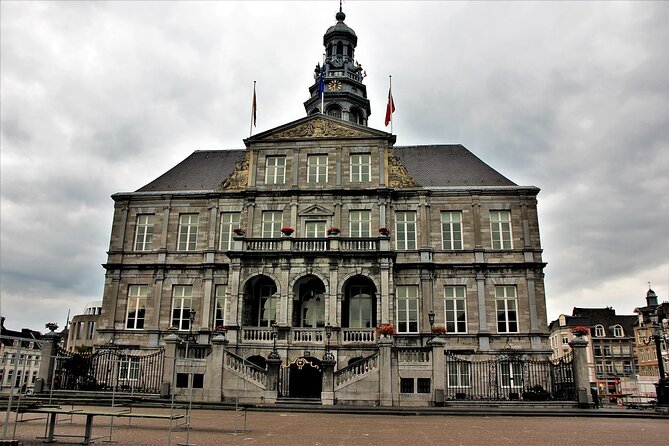
City Hall, the Street Market, and the Power of Civic Life
Early on, you’ll visit City Hall (Stadhuis). Even if you’re not the type who gets excited about municipal architecture, this is a helpful anchor point. Civic buildings explain how a city organized itself, how decisions were made, and why the center of town mattered.
Next comes the Street Market. This is where the tour becomes more than timeline homework. You get a sense of how Maastricht functioned as a place where goods and people moved. In a city with a long history, markets are often the “real-world” connection between past and present.
A small consideration: a walking tour like this is concentrated. If you expect lots of deep time for lingering photos, you might feel a bit rushed. The upside is that you still get a strong overview in just a couple hours.
Dominicans Church and St. Servatius Church: Faith That Shaped the City
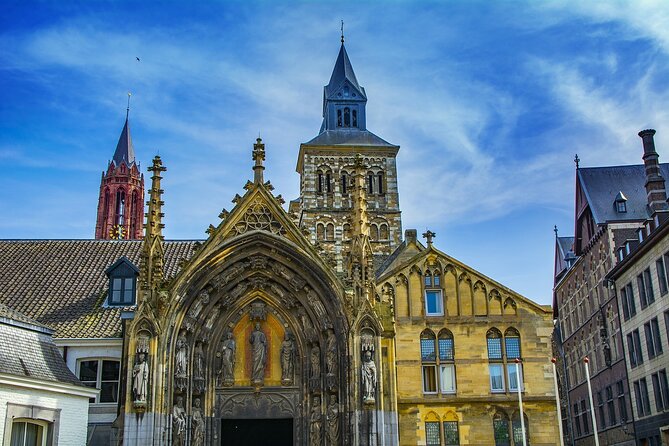
Two major religious stops do a lot of heavy lifting on this tour: Dominicans Church (Dominikanerkerk) and St. Servatius Church. These aren’t just pretty facades. You’ll connect them to the role of religion in Maastricht’s long history, including how legends and belief influenced identity.
You’ll also hear the legend of Saint Servatius, which helps explain why the name keeps showing up around the city. When you understand that kind of cultural anchor, landmarks stop feeling random. They become meaningful.
If your group includes people who like architecture, churches can be a joy because they often reflect different phases of city growth. If your group is less into architecture, the benefit is still there: these stops help you understand the city’s values and conflicts, especially when the tour moves into the religious wars of the 16th and 17th centuries.






Museum Aan Het Vrijthof and St. John’s Church: Culture in a Central Square
At Museum Aan Het Vrijthof, you’re standing in a place that fits the way Maastricht grew: a public setting where culture, learning, and conversation overlap. Even if you don’t go inside (entrance isn’t included), the guide can help you understand why this area matters and what it represents in the city’s development.
Then you’ll head to St. John Church (Sint-Janskerk). This stop supports the tour’s bigger theme: Maastricht didn’t only evolve through politics and economics. It developed through belief, art, and community life too.
One practical tip: if you’re traveling with mixed interests, this is a great section because it balances visual highlights with story-driven explanation. You’ll get something even if you only care about one or the other.
Hendrik van Veldeke and Onze-Lieve-Vrouwekerk: Language, Legend, and Meaning
You’ll pause for Hendrik van Veldeke, a name that adds texture to Maastricht beyond dates and rulers. Cultural figures help you see a city as more than a sequence of events—they show how people created identity through language and story.
Next is Church of Our Lady (Onze-Lieve-Vrouwekerk). This is another major landmark where the guide can tie together faith and historical change. Maastricht is a city shaped by eras of shifting control and competing priorities, and religious buildings often show those pressures in their role and significance.
I like that this section doesn’t treat history like a list. The guide’s explanation is designed to connect the dots: who influenced the city, what the people valued, and how that showed up in the places you’re standing.
Helpoort and the Stories of Borders and Conflict
Then you’ll see Helpoort, a gate that helps you understand Maastricht as a fortified city—built to manage risk, control movement, and protect interests. Gates are great teaching tools because they sit right at the boundary between everyday life and larger political forces.
This part of the tour lines up with the heavier historical themes you’ll learn about: the religious wars of the 1500s and 1600s, the experience of later conflicts, and the way the city’s position made it strategically important.
A friendly reminder for short tours: Helpoort is worth it, but this is also where you’ll want to keep moving. The story is more gripping as you walk between sites rather than spending long breaks. If your group wants extra time for photos, you may want to save it for right after the tour ends.
Pieke oet de Stokstraot and Sint Servaasbrug: Local Flavor Meets the River
You’ll also visit Pieke oet de Stokstraot. This is one of those Maastricht spots that adds personality to the tour. It helps you feel the city as a living place, not just a museum of old buildings.
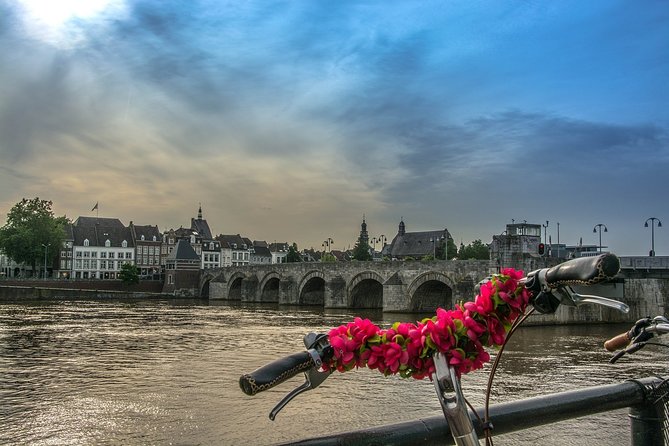
The tour ends with a strong landmark finish at Sint Servaasbrug. A bridge stop is useful because it gives you perspective. You see how the city’s layout interacts with the river and how movement across water connects neighborhoods and history.
You’ll also learn about the big historical turning points that help explain why Maastricht became what it is today. That includes the industrial-era economic turnaround, the Napoleonic period, and later changes under the Kingdom of the Netherlands. Standing on or near major crossings like this is often where the guide’s timeline suddenly feels real.
Maastricht’s Big Timeline: From Romans to the Euro
One of the best things about this tour is that it gives you a coherent sweep of eras, instead of random trivia.
Here are the historical themes you’ll hear about as you walk:
- Roman origins of the city
- Middle Ages and the Carolingian Empire
- The legend of Saint Servatius
- Religious wars in the 16th and 17th centuries
- The economic turnaround during the industrial revolution
- The Napoleonic era
- The Kingdom of the Netherlands and the hard integration of Maastricht
- World War I as a haven for refugees
- World War II German occupation
- Post-war rebuilding and change
- The Maastricht Treaty, tied to the European Union and the Euro
Why this matters for you: Maastricht is small enough that history feels close, but long enough that it can be overwhelming alone. This tour prevents the overwhelm by giving you a storyline you can carry with you after you leave.
And it’s not only about conflict. You also get the arc of economic shifts and political change—how Maastricht’s role in Europe grew, which is exactly what makes the final lessons feel relevant rather than stuck in the past.
What the Tour Feel Is Like on the Ground
This is designed to be practical. It’s a walking tour with a duration of about two hours, so you won’t be stuck all day. The pace is built around seeing multiple key landmarks without turning the walk into an endurance test.
The private guide format also helps your experience feel more personal. In your group-only setting, the guide can adjust explanations and answer questions without repeating themselves to strangers. That kind of patience and clarity makes the history easier to remember.
Also, you get a mobile ticket, which cuts down on stress. You’re not scrambling for printouts. You can keep everything on your phone and focus on the city.
Who This Tour Is Best For
This tour is especially strong if you’re:
- Visiting Maastricht for the first time and want a structured overview
- The type who likes history, but wants it explained in plain language
- Traveling with a group where you’d rather share one guide than split up
- Limited on time and want a dense, useful walking experience
It may feel less ideal if you’re already a Maastricht history expert and want extremely deep museum-level detail. But for most people, the mix of landmark variety and timeline storytelling makes it a great first pass.
A Note on Service Reliability (And How to Protect Your Day)
There was at least one operational issue where a guide wasn’t present as expected due to a mix-up on the day. That’s not something you can fully predict, but you can reduce the risk by being ready to go at the meeting point on time and keeping your booking confirmation handy.
If the guide is delayed, don’t just stand around. Use your confirmation details to contact the provider right away so your day doesn’t keep slipping.
Should You Book This Maastricht Private Walking Tour?
I’d book it if you want a clear, guided introduction to Maastricht that links the city’s landmarks to the history you’re actually seeing. The biggest selling points are the private, group-only guide, the easy walking format, and the way you walk through eras from Romans to the modern European story without getting lost in details.
I would hesitate only if your group wants mostly indoor time, because entrance fees are not included, or if you already planned a fully detailed self-guided history route. For a short visit, though, this tour gives you the best kind of value: you leave with understanding, not just photos.
If you like the idea of a guide who can explain big themes at a pace you can handle, this is a strong fit.
FAQ
Where does the tour start?
The tour starts at Markt 52, 6211 CK Maastricht, Netherlands.
How long is the walking tour?
It runs for about 2 hours.
Is this tour private?
Yes. It is a private tour/activity, and only your group participates.
How many people can be in a group?
The price is per group up to 15 people.
Can the tour be customized to our interests?
Yes. There is possible customizing on the spot with your local guide.
Do we need to bring a ticket?
You receive a mobile ticket.
Are entrance fees included?
No. Entrance fees are not included.
Is the tour near public transportation?
Yes, it is near public transportation.
Is the tour suitable for most travelers?
Most travelers can participate.
What is the cancellation policy?
You can cancel for a full refund up to 24 hours in advance of the experience’s start time.