REVIEW · MAASTRICHT
Maastricht: 2-Hour Walking Tour with Local Historian
Book on GetYourGuide →Operated by Roaming History · Bookable on GetYourGuide
Maastricht tells stories fast. In just two hours, you’ll walk a tight route that links Roman power, medieval strategy, and even the birth of the European Union.
I love that the tour is led by Marcy, a Maastricht local with a master’s degree in history who explains the city with real narrative flow. I also like how the stops aren’t random postcard points; they’re chosen to show how Maastricht mattered, again and again.
One thing to plan for: it’s a real walking tour—about 3 km on foot—so comfy shoes aren’t optional.
In This Review
- Key Points You’ll Care About
- A Two-Hour Walking Tour That Explains Why Maastricht Matters
- Getting Oriented at Vrijthof Square (and Why That Start Works)
- How the 3 km Route Builds a Roman-to-EU Timeline
- Vrijthof Square: Start With Daily Life, Then Watch It Turn Historical
- St. Servaas and the Church-Sized Clues in the City
- St. Servaas Bridge and Hogebruge: Where Movement Becomes History
- Dominican Bookstore and Markt: A More Human Scale of History
- Dinguis and Op de Thermen: City Clues That Reward Looking
- Helpoort: The Gate That Makes the Past Feel Close
- Pieter Vink Tower, Vief Köp, and Lion’s Mill: Details You’ll Want to Re-See
- French Monument: Closing on a Modern Layer
- Price and Value: Is $53 Worth Two Hours?
- Who This Tour Fits Best (and Who Might Skip It)
- Practical Tips to Get the Most From the Walk
- Should You Book This Maastricht Walking Tour?
- FAQ
- Where is the meeting point for the tour?
- How long is the Maastricht walking tour?
- How far do you walk?
- What languages are offered?
- Is the tour private or group-based?
- What are some of the main stops on the route?
- Is food or drinks included?
- Are museum entry fees included?
- What should I bring?
- Who is the tour not suitable for?
Key Points You’ll Care About
- Marcy’s history master’s training makes the explanations feel like a guided story, not a facts dump.
- Roman-to-EU storyline: you’ll connect ancient roots to modern European identity.
- Iconic landmarks on the route, including Helpoort and St. Servaas Basilica.
- Strategic location theme: you’ll see why Maastricht kept getting attention through the centuries.
- A compact 3 km loop that fits well into a half-day plan.
A Two-Hour Walking Tour That Explains Why Maastricht Matters
This is the kind of tour that helps you look up and understand what you’re seeing. Maastricht doesn’t just have old buildings. It has layers of decisions—military, religious, political—that left physical traces in stone, gates, bridges, and squares.
You start with the feeling that the city is already talking. Then Marcy puts names and meaning to what you notice. You’ll hear connections that range from Roman legions to the EU’s birth, plus story threads like the key to Heaven and the death of the Musketeer D’Artagnon. The result is a walk where the timeline keeps moving, even when you’re standing still at a landmark.
You can also read our reviews of more walking tours in Maastricht

Getting Oriented at Vrijthof Square (and Why That Start Works)
The meeting point is the corner of Vrijthof Square next to McDonald’s. It’s an easy anchor in a city center that’s made for strolling, and you’re not scrambling to find a museum entrance or a hidden alley.
Vrijthof is a good place to begin because it gives you context right away: this is where daily life and historic significance overlap. From there, Marcy’s approach makes sense—she’ll use what you can see now to explain why the city took the shape it did.
If you like tours that start with orientation and then turn into a story, this works. If you hate walking before you get the “main sights,” you might feel a slow burn at the start. But you’ll quickly see why the walk is planned the way it is.
How the 3 km Route Builds a Roman-to-EU Timeline
The tour covers about 3 km total and takes around 2 hours. That’s a manageable distance for most adults, but it’s not the style of tour where you stop every 90 seconds. You’re moving at a steady walking pace, with explanations timed to what you’re looking at.
The clever bit is the structure: you’re not just collecting landmarks. You’re learning how Maastricht’s role changed over time:
- Early on, Roman-era power is part of the city’s foundation.
- Then you get the medieval and religious weight—big architecture, key routes, and fortified thinking.
- Later, the story pulls forward into what Maastricht means in the wider European project.
Marcy has room to adjust where you want the focus. One of the strongest themes from past guests is that she’ll be flexible if you care more about certain eras than others. That matters because history tours can feel rigid if you want to ask questions or steer the theme toward what you personally find interesting.
Vrijthof Square: Start With Daily Life, Then Watch It Turn Historical
Vrijthof Square isn’t just a place to pass through. It sets the tone for the whole experience.
Think of it like this: before you talk about gates and basilicas, you need to see where people gather. Squares explain how cities function. And when a guide ties present-day gathering points to older patterns of importance, everything clicks faster.
This is one reason I like this tour format. You get modern Maastricht first, then you understand what made the city worth protecting, building, and governing.
St. Servaas and the Church-Sized Clues in the City
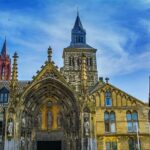
A major stop is St Servaas—including the St. Servaas Basilica area on the route. This is the kind of landmark that turns architecture into evidence. Marcy can point out what matters about its position and why religious buildings weren’t just spiritual centers. They were also major anchors in a city’s identity and power.
When a tour uses a church stop well, you don’t just admire the building. You learn how it fits into movement—who traveled where, how the city connected, and what mattered enough to build something solid and visible.
A possible drawback: if you prefer only outdoor sights and hate church interiors or longer standing pauses, this stop may feel like more time than you’d like. But it’s also one of the most meaningful points on the timeline.





St. Servaas Bridge and Hogebruge: Where Movement Becomes History
Next you’ll walk through the area around St Servaas bridge and Hogebruge. Bridges are perfect for history storytelling because they’re practical objects with political consequences. Control a crossing, control a route.
On this tour, bridges help connect the dots between the “strategic importance” theme and the real shape of the city. You’re essentially learning how Maastricht’s geography influenced decisions—centuries before anyone used the words strategic importance.
You’ll feel it most when Marcy ties the bridge locations into what the city was defending and how people moved through town over time.
Dominican Bookstore and Markt: A More Human Scale of History
Two stops that change the pace are Dominican Bookstore and the Markt.
I like adding places like this to a history walk because it reminds you that history lived in everyday routines. A bookstore stop can turn the past into something you can almost touch—words, learning, and civic life rather than only stone walls and monuments.
The Markt works as a counterbalance too. Markets are where authority meets daily need. They’re also where you can easily picture different eras of Maastricht as layers rather than a single blur of old-time tourism.
If you enjoy history that includes culture and ordinary life, these stops are a win. If you’re strictly into fortifications and dates, you may want Marcy to focus the explanation more on strategy and timelines during these segments.
Dinguis and Op de Thermen: City Clues That Reward Looking
The tour includes Dinguis and Op de Thermen. These aren’t just quick checkmarks—they’re part of the way the walk threads ancient roots into your understanding of the city’s structure.
Op de Thermen is especially interesting because the name points you toward a Roman connection. Marcy’s storytelling helps you connect that idea to what you can see in the urban layout, even if you’re not in a museum setting.
These stops also work well if you’re the type who likes small, specific details over broad generalizations. With a tight walking route, the guide has to make each stop count, and these are the kinds of points where careful explanation pays off.
Helpoort: The Gate That Makes the Past Feel Close
Now for one of the standout sights: Helpoort.
A gate is never just a decorative doorway. It’s an operational decision. It says who had access, what paths mattered, and what the city needed to protect.
On this tour, Helpoort is a moment where the centuries compress. Marcy’s style (clear, friendly, and focused on making the story make sense) helps you treat this gate like a piece in a bigger system rather than a lone photo opportunity.
If you’re a visual learner, this is the stop. Seeing the structure while hearing how Maastricht’s importance shifted gives you a “mental map” you’ll carry even after the tour ends.
Pieter Vink Tower, Vief Köp, and Lion’s Mill: Details You’ll Want to Re-See
The tour continues with Pieter Vink Tower, Vief Köp, and Lion’s Mill. This section is great for people who like a variety of historic objects: towers for defense and visibility, distinctive markers for identity, and mills as reminders of production and daily economics.
Here’s why I think these stops are valuable: they round out the story. Maastricht isn’t only a political timeline. It’s also a place where people worked, supplied food, built and maintained infrastructure, and marked identity in visible ways.
One practical note: because the route is compact, these are likely shorter explanation moments compared with Helpoort or St Servaas. You’ll still get the meaning, but don’t expect every stop to be a long lecture. If you want more time at one location, this is where asking Marcy a direct question can pay off.
French Monument: Closing on a Modern Layer
The walk ends at the French Monument. I like finishing with a site like this because it shifts the tone from medieval and ancient clues into something that feels more connected to later European developments.
This matters because the tour’s storyline isn’t stuck in the past. It reaches forward toward the idea of Europe—matching the promise to connect Roman roots with the EU birth. Even if you don’t treat the end stop as “the final word,” it gives your brain a place to hang the modern meaning.
If you’re someone who likes tours that don’t cut off just before the story becomes relevant, this ending is a good fit.
Price and Value: Is $53 Worth Two Hours?
At $53 per person for a 2-hour guided walk, the value comes down to two things: guidance quality and how much meaning you want out of Maastricht’s highlights.
This tour isn’t just a sightseeing loop. With Marcy’s history background and her ability to adapt the emphasis—something that came up clearly in guest feedback—the price starts to make sense. You’re paying for the human skill that turns a pile of monuments into a coherent story.
Also, private group format helps. You’re not forced to listen through other people’s headsets or compete for questions. If you’re the type who likes asking why a landmark is where it is, that can make the time feel more efficient.
The main “cost” isn’t money—it’s your willingness to walk 3 km and pay attention. If you want a low-effort, high-pass photo stroll, you’ll likely feel you paid for explanation you didn’t ask for.
Who This Tour Fits Best (and Who Might Skip It)
This tour is a smart match for:
- Adults who want Maastricht explained in plain language with a timeline thread
- History-minded travelers who like context tied to visible landmarks
- People who enjoy local guides and appreciate when a guide is able to shift focus to what you care about
- First-time visitors who want to build a mental map fast
It’s not a great match if:
- You need wheelchair-friendly or mobility-accessible routes (it’s not suitable for wheelchair users or people with mobility impairments)
- You’re traveling with kids under 10
- You want a food-and-drinks tour (food and drinks aren’t included)
Practical Tips to Get the Most From the Walk
- Wear comfortable shoes. You’re walking about 3 km, and the tour is only 2 hours.
- Go in with a small question. Examples: Why did Maastricht matter strategically? How does Roman influence show up in the city? Marcy’s master’s background is strongest when you steer the conversation toward what you want.
- Don’t overpack. You’ll be on foot for most of the tour, and you’ll want easy movement for questions and photos.
- If you’re sensitive to longer standing stops at landmarks, plan to rest briefly during transitions. The tour keeps a steady pace, but you still get stops where you’ll pause.
Should You Book This Maastricht Walking Tour?
Yes, if you want a high-signal history walk where landmarks feel connected. The combination of Marcy’s master’s-level history training, the clearly planned route, and the focus on Maastricht’s strategic importance makes this a strong value for a short visit.
Skip it if your idea of a good tour is mostly photos with minimal talking, or if mobility limitations make a 3 km walking loop unrealistic.
If you’re on the fence, here’s the simplest decision rule: if you like understanding why places look the way they do, this is your kind of two-hour story.
FAQ
Where is the meeting point for the tour?
Meet at the corner of Vrijthof Square next to the iconic McDonald’s.
How long is the Maastricht walking tour?
The tour lasts about 2 hours.
How far do you walk?
It covers about 3 km total.
What languages are offered?
The live tour guide speaks English.
Is the tour private or group-based?
It’s a private group.
What are some of the main stops on the route?
Stops include Vrijthof Square, St Servaas (and St Servaas bridge), Dominican Bookstore, the Markt, Dinguis, Op de Thermen, Hogebruge, Helpoort, Pieter Vink Tower, Vief Köp, Lion’s Mill, and the French Monument.
Is food or drinks included?
No. Food and drinks are not included.
Are museum entry fees included?
No. Entry to any museums is not included.
What should I bring?
Bring comfortable shoes.
Who is the tour not suitable for?
It’s not suitable for children under 10, people with mobility impairments, or wheelchair users.