REVIEW · MAASTRICHT
MetropolisGo: The Betrayal of Maastricht
Book on Viator →Operated by MetropolisGo: 'The Betrayal of Maastricht' ~ Award winning, illustrated, tablet tour · Bookable on Viator
Maastricht feels different when you chase a story. MetropolisGo: The Betrayal of Maastricht turns a normal walk into a self-paced route led by Sjengske, a digital guide who mixes landmarks with an ongoing tale as you go. You’re free to pause, look, and snack without worrying about matching anyone else’s pace.
I especially like the way it steers you through real places that matter in daily Maastricht life, not just photo backdrops. You’ll hit Market Square, Vrijthof, and the old wall gate at Helpoort, with clear prompts for what to notice and when to move on. One drawback to consider: a couple of the church stops have access limits (one is no longer accessible beyond a chapel), and the Town Hall is only sometimes open—so expect to enjoy the outside and context even if interiors are closed.
In This Review
- Quick hits before you walk
- How the Sjengske tablet tour actually feels in Maastricht
- Price and value: $41.85 per group (up to 3) makes sense here
- Starting at Grote Gracht: a smart launch point for the old center
- Market Square and the Town Hall: what to watch even if it’s closed
- Boekhandel Dominicanen: when a church becomes a bookshop (and a drink stop)
- Vrijthof: the main square where churches, theater, and terraces share space
- Onze Lieve Vrouw Sterre der Zee: candle-lighting even when the main church is closed
- De Bisschopsmolen: an artisanal bakery break that fits the route
- Old Franciscan Church and the 17th-century dinghuis story
- City Park and the Five Heads view: a built-in rest moment
- Helpoort: Maastricht’s old wall and gate in up-close detail
- De Mestreechter Geis: when origins stories compete
- Timing and pace: about 2h45, but flexible enough to breathe
- Should you book MetropolisGo The Betrayal of Maastricht?
- FAQ
- How long is MetropolisGo: The Betrayal of Maastricht?
- Is this tour private?
- What do I get for the tour?
- Where does the tour start and end?
- Are there any paid admissions on the route?
- Can I enter Onze Lieve Vrouw Sterre der Zee Basiliek?
- Is free cancellation available?
Quick hits before you walk
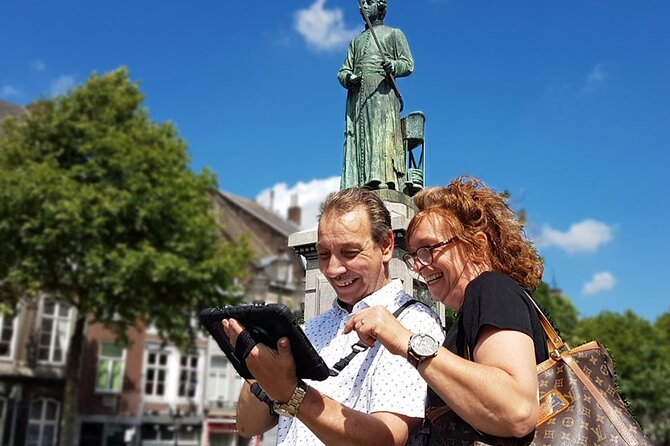
- Sjengske, the digital guide: story-led and designed for your pace, not a fixed group schedule
- Walkable highlights in one sweep: Market Square, Vrijthof, Helpoort, and City Park within about 2h45
- Free-to-check-in stops: the listed sights are marked free, including the Town Hall when it’s open
- Food and rest built into the route: a traditional bakery stop plus a park pause that’s perfect for snacks
- Legends you can verify (or question): the De Mestreechter Geis statue origins get explained in a playful way
- Small-group value: private for your group of up to 3, priced per group at $41.85
How the Sjengske tablet tour actually feels in Maastricht
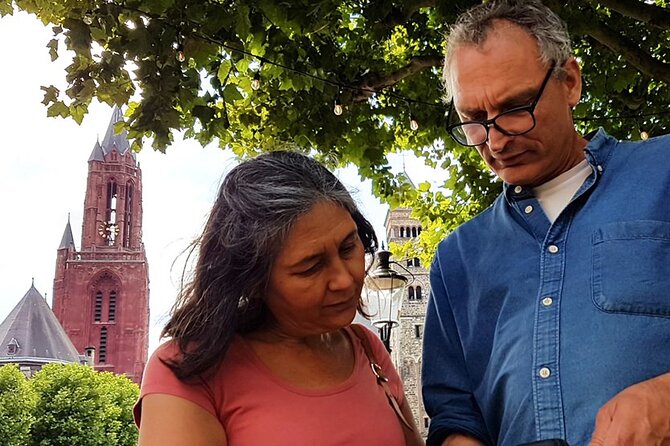
This is a mobile, self-guided experience. You don’t get stuck in a big group, and you’re not waiting around for a live guide to finish a paragraph. Instead, you’re handed a tablet and follow Sjengske as you walk, with a story thread running alongside the sights.
That matters more than you’d think. Maastricht is made for wandering—tiny streets, sudden squares, and buildings that look one way from one corner and completely different from another. With Sjengske, you can slow down when something catches your eye, then speed up when you’re ready to move.
The route also feels purposely built for attention. You’re not just told where to go; you’re told what to look for at each stop—church-turned bookshops, main squares with multiple churches and a theater, old fortification details, and a statue that comes with competing origin stories.
You can also read our reviews of more tours and experiences in Maastricht.



Price and value: $41.85 per group (up to 3) makes sense here

At $41.85 per group for up to 3 people, this is priced like a normal city tour—but it behaves more like a flexible mini-excursion. The value is strongest if you’re traveling as a small group (two or three), because you’re splitting the cost while still getting a private experience.
You’re also not paying extra for each sight on the route. The stops are marked free admission ticket free in the plan (with one notable note: the Town Hall is only occasionally open, so you may or may not step inside). In practical terms, you’re buying time and guidance, not entry fees.
If you’re a solo traveler, it can still be good value, but you’ll want to be honest with yourself: you’re paying for structure and storytelling. If you already know Maastricht well and hate any kind of screen-based guidance, you might prefer a pure wandering day. If you like turning a walk into a guided mission, it’s a sweet spot.
Starting at Grote Gracht: a smart launch point for the old center
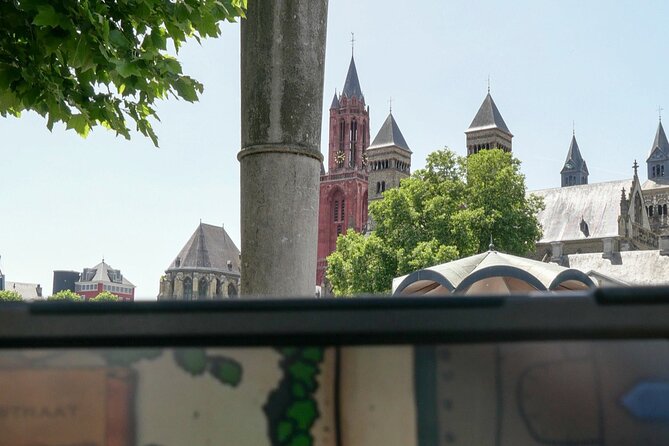
The walk starts at Grote Gracht 7 in central Maastricht, and you end back there. That “out and back” style helps you keep your bearings. You don’t need to plan a new endpoint or worry about how to get home from a different side of town.
From a walking perspective, this is a classic old-city setup. You’re close to the medieval core, so you can reach major squares and gates without long detours. And because the tour is private, your group can keep moving the way you like—no pressure to match strangers’ walking pace.
Market Square and the Town Hall: what to watch even if it’s closed
Your first main stop is Market Square, where you’ll see the Town Hall. The plan notes that the Town Hall is occasionally open, so treat “inside access” as a bonus, not a guarantee.
Even without entering, this kind of start works well. Town squares are where the city’s energy shows up first—open space, strong architecture, and a natural place to begin asking what kind of place Maastricht is. In a story-led route, this also sets the tone: you’re grounding the tale in the city’s most central public room.
Tip for getting the most out of this moment: take a few seconds to look at the building from the edges of the square. Many historic façades read differently depending on your angle, and Sjengske’s prompts help you notice that instead of rushing straight ahead.
Boekhandel Dominicanen: when a church becomes a bookshop (and a drink stop)

Next comes Boekhandel Dominicanen, a church turned into a book store. The concept alone is worth it: you get the solemn shape of a church and the everyday clutter of browsing books, plus a bar area for drinks and food.
This stop is a great example of why a guided route adds value. It’s easy to walk past a converted space and think it’s just a themed storefront. Sjengske nudges you to see the building as a transformation—how a structure keeps its bones while the city’s habits move in around it.
If you like small pauses, this is the place. It’s not just “look and go.” You can take a breather, check out the bookshop vibe, and decide whether you want a drink or bite before you continue toward the big square energy of Vrijthof.






Vrijthof: the main square where churches, theater, and terraces share space

Vrijthof is Maastricht’s main square, and it’s the kind of stop that rewards a slow glance. Here you’ll see the Saint Servaas Basilica, Saint Jans church, and the theater, plus the terraces where people tend to linger.
This is also where the self-paced format shines. Squares like this can be overwhelming if you treat them like a checklist. If you give yourself a couple minutes to look left, look right, then step to a new angle, you start catching patterns—how religious buildings, performance spaces, and casual seating all live side by side.
Practical move: pick one spot to stand for a minute, then relocate. Maastricht’s sightlines shift quickly, and you’ll get more “wow” per minute that way.
Onze Lieve Vrouw Sterre der Zee: candle-lighting even when the main church is closed

At Onze Lieve Vrouw Sterre der Zee Basiliek, the plan clearly sets expectations: the church is no longer accessible. But visitors can enter the chapel and light a candle if desired.
That’s a good way to think about this stop. You’re not being sold a perfect interior tour. You’re being offered a meaningful alternative: a chance to step into the part that’s still open, and do something simple and quiet if that fits your travel style.
If your priority is interior access, go in with flexible expectations. You’ll still learn the context through Sjengske, and the chapel access means the stop doesn’t feel like a dead end. If you want a short reflective moment, this is one of the better options on the walk.
De Bisschopsmolen: an artisanal bakery break that fits the route

Now for a pause that’s actually useful: De Bisschopsmolen, described as one of Maastricht’s finest traditional and artisanal bakeries.
This kind of stop is more than a snack. It breaks up the walking rhythm, and it also helps you connect with the city through something tangible—smell, texture, and local baking culture. If you’re the type who wants to experience a place with your senses rather than just your phone camera, this stop delivers.
If you plan to eat, keep it simple and time-aware. This is a short stop (around a few minutes in the plan), so grab something small enough that you can keep moving without turning it into a second lunch.
Old Franciscan Church and the 17th-century dinghuis story
You’ll also encounter the Old Franciscan Church. The plan doesn’t load you with a technical description here, but it keeps the story thread going with a place that helps explain the city’s shifting identity over time.
A key storytelling moment also lands in the 17th century: the dinghuis used to be one of Maastricht’s most important buildings, and Sjengske explains what you need to know, including the people who worked there.
Even if you don’t consider yourself a “history person,” these story stops are valuable because they answer the big question: how did this city function? A church conversion, a main square, and a fortification gate all tell you what the city valued. The dinghuis adds the human layer—who showed up, what their work meant, and why that mattered for daily life.
City Park and the Five Heads view: a built-in rest moment
About mid-tour, you reach City Park. Sjengske will show you the park area where you can sit and rest, and the plan calls out a view of the Five Heads, a key location.
This is one of the smartest parts of the experience because it gives you permission to take a breather. Walking in Maastricht can add up fast if you’re hopping from one point to another. A park pause also gives you a way to recharge without spending money or hunting for a café at the last minute.
Bring a small snack if you can. The plan explicitly notes that the moment is perfect for packed snacks and drinks. Even if you don’t eat, you’ll get better photos and clearer thinking after a few minutes off your feet.
Helpoort: Maastricht’s old wall and gate in up-close detail
Next is Helpoort, the old city wall and gate. The plan highlights viewing it in marvelous detail, and this is a stop that works whether you love architecture or just like the feeling of stepping into the past.
A wall gate is different from a cathedral. It’s functional design, meant for defense and control. So when you look at Helpoort, you’re seeing a city system, not just an artistic façade.
For the best experience here, slow down and let your eyes do the work. Fortifications reward careful looking—angles, materials, and how the gate fits into the surrounding street geometry. Sjengske’s prompts help you focus on the details that might otherwise be easy to miss.
De Mestreechter Geis: when origins stories compete
At De Mestreechter Geis, you’re told that the statue embodies Maastricht culture—or at least, that’s what the legends suggest. The fun part is the origin puzzle: Sjengske explains how this statue came about and which of the competing origin stories are actually true.
This is one of the tour’s most “keep your attention” moments. Instead of treating local lore as one neat fact, it sets up the idea that legends evolve, people repeat stories, and only some versions hold up.
If you enjoy trivia you can actually use when you talk about a place later, this stop is a winner. And if you’re traveling with someone who cares less about monuments, you can still get value because the story is built for conversation.
Timing and pace: about 2h45, but flexible enough to breathe
The total duration is around 2 hours 45 minutes. The stops are short—many are roughly 5 to 10 minutes, with bigger anchors like Vrijthof and City Park giving you more breathing room.
Because it’s self-paced, you can adjust. If you’re a slow walker and you love looking at façades, don’t rush Vrijthof or Helpoort. If you’re the practical type and you prefer to keep moving, you can still enjoy each stop without turning it into an all-day ordeal.
What you’ll likely appreciate most is that you’re not forced into “stand in one place until the group moves” mode. You control the rhythm.
Should you book MetropolisGo The Betrayal of Maastricht?
Book it if you want a private, story-led walk that helps you see Maastricht through squares, churches, and street-level landmarks without dragging a human guide behind you. It’s especially worth it when you’re traveling with up to two people, because $41.85 per group suddenly feels like a bargain compared with paid-guided experiences.
Skip it (or rethink it) if you strongly prefer a live guide, deep indoor museum time, or you dislike tablet-guided walking. A couple sites are limited—one church is no longer accessible beyond its chapel, and the Town Hall is only sometimes open—so don’t expect every stop to be an interior visit.
If your goal is to get your bearings fast and still end the walk with a sense of how Maastricht works, this is a good fit. You’ll get a creative, modern way to learn a city you might already think you know.
FAQ
How long is MetropolisGo: The Betrayal of Maastricht?
It takes about 2 hours 45 minutes.
Is this tour private?
Yes. It’s private, and only your group participates.
What do I get for the tour?
You receive a tablet and a digital guide named Sjengske for your self-paced walk.
Where does the tour start and end?
The tour starts at Grote Gracht 7, 6211 SR Maastricht, and it ends back at the same meeting point.
Are there any paid admissions on the route?
The listed sights are marked free with admission ticket free, though the Town Hall is only occasionally open.
Can I enter Onze Lieve Vrouw Sterre der Zee Basiliek?
The church is no longer accessible, but you can enter the chapel and light a candle if you want.
Is free cancellation available?
Yes. You can cancel up to 24 hours in advance for a full refund.