REVIEW · ROTTERDAM
Rotterdam: Art and Architecture Highlights Walking Tour
Book on GetYourGuide →Operated by Walk Rotterdam · Bookable on GetYourGuide
Rotterdam tells its story in steel and paint. This 2.5-hour walking tour gives you key architecture stops—from Central Station to the Markthal—plus the why behind them, especially how art and rebuilding shaped what you see today. I especially like the way the route stitches together planning, design, and public art into one walkable lesson.
Two things I really enjoy: you get a first-time-friendly overview of Rotterdam’s modern icons, and the tour doesn’t treat art like an add-on. Instead, you’ll walk through open-air works tied to the city’s past and its creative comeback, then finish somewhere designed to mix architecture and culture. One thing to consider: it runs rain or shine, so you’ll want comfortable shoes and weather-ready layers.
In This Review
- Key highlights you’ll remember
- Starting at Central Station Rotterdam: your 2.5-hour compass
- The Calypso building and Theater square: modern icons with context
- Museum Quarter hits: Kunsthal, the New Institute, and the Boijmans Depot
- Rotterdam’s open-air art trail: street art plus WWII memory
- Witte de Wit: the artsy street that changes the pace
- Cube Houses: futuristic geometry you can actually stand next to
- Markthal: where art and architecture combine in one dramatic finish
- Price and value: is $65 worth it for architecture?
- Who should book this Rotterdam art and architecture walk?
- Should you book this tour?
- FAQ
- How long is the Rotterdam Art and Architecture Highlights Walking Tour?
- What does the tour cost?
- Where do I meet the guide?
- What is included in the price?
- Is the tour only indoors?
- Is entry to museums included?
- What language is the tour guide?
- Is the tour wheelchair accessible?
- Is it suitable for visually or hearing-impaired visitors?
- What should I bring, and what is not allowed?
Key highlights you’ll remember
- Central Station as the starting point: a powerful anchor for understanding Rotterdam’s modern reboot
- WWII-and-rebuilding art in public spaces: the route connects design choices to the city’s story
- Museum Quarter hits: the Kunsthal area plus the Boijmans Depot, Rotterdam’s new rising icon
- Witte de Wit’s street-art energy: a guided walk down the city’s most artsy street
- Cube Houses: futuristic-looking, instantly photogenic geometry—up close
- Markthal finish: a dramatic architectural stop where art feels built into the walls
Starting at Central Station Rotterdam: your 2.5-hour compass
Most architecture tours start with buildings. This one starts with meaning—and it begins at Central Station Rotterdam, right by the main entrance under the station’s clock. That’s smart. If you’re new to Rotterdam, the station is the quickest way to understand the city’s personality: modern, direct, and shaped by big decisions.
This stop matters because the walk uses Central Station to set the tone. You’re not just looking at impressive design. You’re learning how Rotterdam thinks in layers—transport, public space, and design as part of everyday life. In one account, a guide named Diana is praised for explaining the city’s postwar planning and how the new main station fits into that larger picture. That kind of clear, practical framing is exactly what makes the rest of the tour click for you.
Even if you’re not an architecture nerd, you’ll still benefit. You’ll start noticing how the city directs your movement—where it pulls people in, where it opens up views, and where it uses design to steer how you experience the waterfront-and-center mix.
You can also read our reviews of more walking tours in Rotterdam
The Calypso building and Theater square: modern icons with context
After Central Station, the walk brings you past other recognizable anchors, including the Calypso building and Theater square. These aren’t just scenic stops. The guide uses them as waypoints to explain how Rotterdam’s identity grew out of rebuilding and reinvention.
Here’s the practical value: the tour helps you stop seeing buildings as isolated objects. You’ll start reading them as part of a bigger plan—how districts connect, where public life happens, and how architecture signals what the city wants to be now.
The quick way to get the most out of these stops is to keep your eyes moving. Don’t stare at one facade for too long. Watch how the square feels at human scale: sight lines, how the street pulls you forward, and how the open public space changes the mood compared with the more monumental structures.
Museum Quarter hits: Kunsthal, the New Institute, and the Boijmans Depot
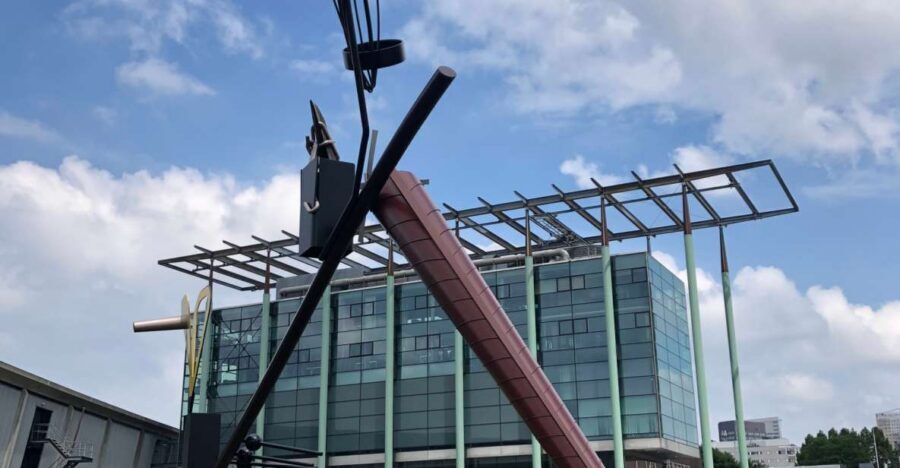
One of the strongest sections of the tour focuses on the Museum Quarter, including the Kunsthal, the New Institute, and the guide’s attention on the city’s new rising icon, the Boijmans Depot. This last one gets special mention because it’s described as the first accessible museum depot in the world—so you’re seeing how Rotterdam is rethinking what a museum can be.
Why this matters to you: most visitors bounce between “see it from outside” and “go inside if you have time.” This tour gives you a third option—understanding the building as part of the museum experience itself. A museum depot that’s accessible changes how you think about art storage and exhibition. It’s architecture with a purpose beyond the postcard.
You also get the feeling that Rotterdam treats art like city infrastructure. The depot and museum buildings are part of the urban rhythm, not a separate world. If you’ve ever visited a big cultural campus and felt lost, this guided sequence helps you keep your bearings.
Tip for photos: in this area, you’ll likely get your best shots when you let the guide point out angles and sight lines first. The building shapes can be dramatic, but the context—where you stand and what you align—makes the difference between a random skyline photo and something that actually tells the story.
Rotterdam’s open-air art trail: street art plus WWII memory
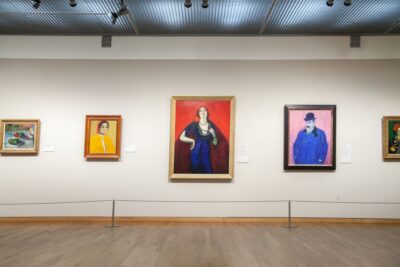
A huge part of this tour’s appeal is the art you encounter as you walk. You’ll explore Rotterdam’s open air art collection, including a series of art dedicated to the drama of the bombarded city. The guide also weaves in a fresh mix of street art, so you’re seeing multiple layers of creativity, not just one style or one era.
You’ll also hear names that carry weight in the art world—Henry Moore, Roden, Picasso, and Van Lieshout. Even if you only recognize a couple, the effect is the same: the tour shows you that Rotterdam’s public art scene isn’t small-scale decoration. It’s an ongoing conversation in the streets.
What I like most is the balance. The tour doesn’t swing only toward tragedy or only toward trendy street murals. It frames public art as a living response to what happened to the city—and to what the city became afterward. That gives you a better “set of eyes” for what you’d otherwise gloss over while walking independently.
Practical advice: slow down for the art moments. Don’t rush just to cover ground. If you take 20 seconds to read the vibe—materials, scale, and placement—you’ll understand why the guide keeps pointing out certain pieces.
Witte de Wit: the artsy street that changes the pace
Then comes one of the most fun segments: a walk along Witte de Wit, widely treated as Rotterdam’s most vivid and artsy street. This isn’t a passive stop. The guide brings you through the neighborhood’s creative energy and helps you connect street art choices to the city’s broader relationship with art.
This is also where the tour feels most human. Squares and big buildings can be impressive, but street art is where you see what people actually respond to. You’ll notice how the walls become a canvas for quick ideas, bold visuals, and local voices.
For your own enjoyment, keep your expectations flexible. You’re not chasing one famous landmark. You’re collecting impressions. If you like walking tours where you come away with a sense of a place’s attitude, Witte de Wit delivers.
If you’re the kind of visitor who only cares about “major museums,” this might still win you over. Why? Because the guide makes the link between art and architecture. The street feels like a bridge between the formal museum quarter and everyday city life.



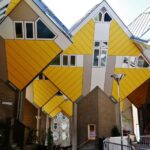
Cube Houses: futuristic geometry you can actually stand next to
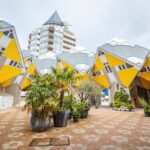
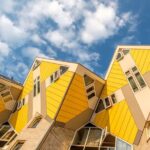
The tour moves into the area of the Cube Houses—a Rotterdam icon built on a concept you instantly recognize: houses as tilted, interlocking shapes. You don’t need a technical background to get it. You just need the ability to look closely and accept that architecture can be playful.
The value here is perspective. From a distance, these buildings can feel like a single visual trick. Up close, you start noticing how the design affects movement, entrances, and the overall spatial feel. The guide helps you interpret what you’re seeing instead of treating it like a novelty.
Practical tip: pause longer than you think you should. These are the kind of buildings where your first glance is only the beginning. Take a small step around the complex and let the forms change in front of you. You’ll leave with photos that look real, not just snapshots.
Markthal: where art and architecture combine in one dramatic finish
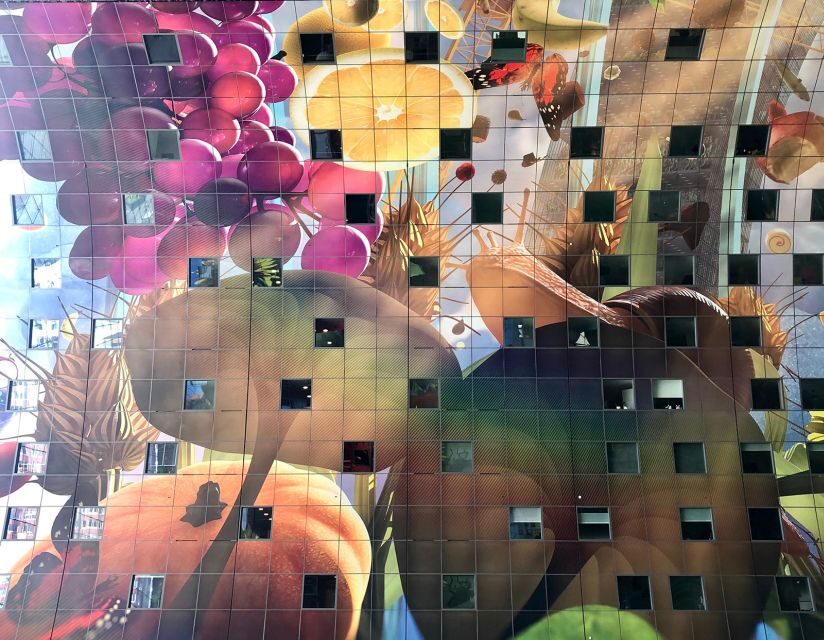
The tour ends at the Markthal, which the walk frames as a spectacular blend of art and architecture. This is a smart finale. By the time you reach it, you’ve already learned the city’s theme: Rotterdam uses design as storytelling—sometimes through major buildings, sometimes through public art, and sometimes by making the entire space feel like one big artwork.
At Markthal, you’ll understand the payoff of the earlier stops. You’re no longer just absorbing sights. You’re reading a place. The architecture helps shape how you experience art, and the art helps make the architecture feel alive.
If you’re planning what to do next, the timing works well. After 2.5 hours of city context, Markthal is a perfect place to slow down. You’ll know what you’re looking at, why it’s there, and what it reflects about Rotterdam’s creative mindset.
Price and value: is $65 worth it for architecture?
This tour costs $65 per person for 2.5 hours with a live English-speaking guide. You don’t get entry tickets, food, or transportation included, so this is really about guided walking and interpretation—not museum access or a long sitting-down experience.
That said, the value is strong if you want a high-signal first pass at Rotterdam. For a flat price, you’re covering major architecture moments (Central Station, Cube Houses, Markthal) plus a less obvious layer: the open-air art collection and the specific connection to the bombarded city’s drama. That interpretive layer is where guided tours often justify their cost. Without it, you can still see the buildings—but you might miss the thread that connects them.
If you’re on a tight time budget and you want your photos to come with meaning, this walk makes sense. If you already have a deep interest and plan to research every building yourself, you might feel the tour is more of a curated overview than a technical deep study.
Who should book this Rotterdam art and architecture walk?
This tour is a great fit if you:
- want a first-time overview that helps you look at Rotterdam with better context
- enjoy architecture but also care about how art shows up in public spaces
- like walking tours where the guide explains the why behind the wow
It may not be the best fit if you:
- need a tour designed for visual or hearing impairments (this one specifically isn’t suitable for those needs)
- don’t handle outdoor walking well, since it runs rain or shine
- expect museum entry tickets or indoor time beyond the walking stops
One small common-sense note: the tour doesn’t allow oversize luggage, and unaccompanied minors aren’t permitted. If you’re traveling light, you’ll feel more comfortable.
Should you book this tour?
Yes, if your goal is to get your bearings fast and see Rotterdam as a city where architecture and public art work together. The tour’s biggest strength is how it explains the city’s modern design choices through story and art, not just sightseeing.
Skip it only if you’re looking for a museum ticket included experience, or if walking outdoors in changing weather would be a problem for you. Otherwise, this is a smart way to turn a normal afternoon walk into an informed, memorable introduction to Rotterdam’s most iconic design moments.
FAQ
How long is the Rotterdam Art and Architecture Highlights Walking Tour?
It lasts 2.5 hours.
What does the tour cost?
The price is $65 per person.
Where do I meet the guide?
Meet by Central Station Rotterdam, next to the main entrance, under the station’s clock.
What is included in the price?
The price includes a live tour guide.
Is the tour only indoors?
No. It is a walking tour and takes place rain or shine.
Is entry to museums included?
No. Entry tickets are not included.
What language is the tour guide?
The tour is in English.
Is the tour wheelchair accessible?
Yes, it is wheelchair accessible.
Is it suitable for visually or hearing-impaired visitors?
No, it is not suitable for visually impaired people or hearing-impaired people.
What should I bring, and what is not allowed?
Bring comfortable shoes and weather-appropriate clothing. Oversize luggage is not allowed, and unaccompanied minors are not permitted.