If you want The Hague fast, this is the start. You’ll walk where buses don’t go, guided by local stories and real landmarks. I like that it’s built around palaces and power in a short loop, plus a small-group feel that keeps the pace relaxed. The tour also ends right where it begins, so you can keep the day moving.
What I really like is the mix of stop types: art-adjacent history at Mauritshuis, then royal and government sites (Noordeinde Palace, the Binnenhof, and the Ridderzaal), and finally a long on-foot stroll through streets that feel more lived-in. I also appreciate the easy practicality—English mobile ticket, service animals welcome, and short time slices at each major photo stop.
One thing to consider: guides’ styles can vary. The overall theme is history, culture, and architecture, and if you want only broad storytelling (and not architectural detail), you may want to choose your guide carefully. Also, parts of central areas can be under construction at times, which can limit views or photo angles.
In This Review
- Key highlights you’ll feel during the walk
- Starting at Mauritshuis: the easy orientation anchor
- Haagse Harry and the Hagenaars vs Hagenezen detail
- Noordeinde Palace: royal frontage, balcony timing, and gardens
- Binnenhof and Ridderzaal: government history you can see
- Grote Kerk: the late-medieval skyline marker
- The 50-minute city-centre walk: streets beyond buses and boats
- Price and value: why $3.61 can still make sense
- Who this tour fits best (and who should reconsider)
- What to expect about walking, timing, and group flow
- Should you book this The Hague 2-Hour Walking Tour?
- FAQ
- How long is the The Hague 2-Hour Walking Tour?
- Where does the tour start?
- What is the tour price?
- Is the tour offered in English?
- Do you enter museums during the tour?
- How big is the group?
- Is it easy to get to with public transport?
- Can I get a refund if I cancel?
Key highlights you’ll feel during the walk
- Small-group touring: kept tight (and never huge), so questions actually get answered
- Mauritshuis first: a perfect orientation point, with a chance to visit the museum after
- Royal + political in one loop: palaces, gardens, the Binnenhof courtyard, and the Ridderzaal area
- Local identity stop: Haagse Harry brings out the Hagenaars vs Hagenezen angle
- A longer on-foot city-centre segment: about 50 minutes where big vehicles can’t easily fit
- Practical, low-pressure pacing: short stops, lots of looking, and a return to the start
Starting at Mauritshuis: the easy orientation anchor
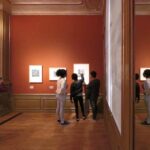
Your tour starts at MauritshuisPlein 29, right by the Mauritshuis building. Even though you do not enter the museum during the tour, this is a smart opening move because the place sits at the edge of the historical center and sets the tone: The Hague isn’t just courts and canals—it’s also art, power, and the Dutch Golden Age.
You’ll get about 15 minutes here. The building is tied to Count Johan Maurits, and it helps frame the idea of the city as a “capital of influence,” not just a place to pass through. If you want to continue after the walk, the Mauritshuis museum halls are available for you to visit afterward, including well-known works connected to Rembrandt and Vermeer.
Why this matters for you: starting with a landmark like Mauritshuis makes the rest of the route feel logical. When you later see palaces and parliament buildings, you’ll understand how art patronage, government, and royal life all feed the same story.
You can also read our reviews of more tours and experiences in The Hague.


Haagse Harry and the Hagenaars vs Hagenezen detail
Next up, you stop at the Standbeeld Haagse Harry statue. This is a quick photo stop, but it’s also one of those “small local fact” moments that make a city feel less like a checklist.
The theme here is language and identity: what makes Hagenaars different from Hagenezen, explained through the figure of Haagse Harry from the city’s comic tradition. You’ll also get a moment to step back and actually look at how the character is represented in public space—statues like this are a kind of street-level storytelling.
Practical tip: if you want photos, do them early. The stop is short, and the guide will move the group on quickly.
Noordeinde Palace: royal frontage, balcony timing, and gardens
The route then shifts to royalty at Noordeinde Palace. You’ll spend about 15 minutes here, walking in the royal orbit. The palace is the Dutch royal family’s residence, and you may catch the sort of moment that makes you feel you’re watching history unfold in real time—like seeing royals wave from a balcony if timing lines up.
This is also where the tour’s theme becomes clearer: The Hague is where the country’s leadership lives and works, and royal symbolism is part of that daily geography.
Afterward, you move into the palace gardens for a stroll/picnic moment. The tour gives you time to simply slow down. Even if you don’t picnic, it’s a nice break from the “look, photo, move” rhythm of a walking tour.
Why you’ll like this part: gardens are a practical win in any city walk. They give you shade, breathing room, and a chance to absorb architecture from a calmer angle instead of only street-level viewpoints.
Small drawback to note: if it’s windy or rainy, garden time can feel like extra weather exposure. Bring a light layer.
Binnenhof and Ridderzaal: government history you can see
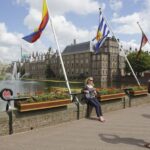
The next major stop is the Binnenhof & Ridderzaal area. You’ll walk through the Binnenhof courtyard, which is where the Dutch government holds parliament. You get about 15 minutes here, and the guide explains the origin in a way that stays grounded—how it formed, why it endured through centuries, and how politics is literally built into the city’s layout.
One detail I love in this stop is that it’s not just “here’s a building.” You’ll learn small, human signals of how the place operates—like parliament members riding bicycles to their offices. It’s a reminder that governance isn’t only ceremonial; it’s also routine.
The Ridderzaal (Hall of Knights) is described as accessible through a guided tour you can do after this walking tour. So the walk gives you context, then offers you a next step if you want to go deeper once you’ve got the big picture.
What to watch for: courtyard layouts can limit sightlines in crowds, and groups move in bursts. If you want the clearest views for photos, stand slightly to the side and aim for wide angles rather than trying to photograph through the densest cluster.
Grote Kerk: the late-medieval skyline marker
From the political heart, you head toward Grote Kerk. This is a short stop (about 10 minutes), but it helps you understand how the city’s older bones still steer your sense of direction.
The Grote Kerk dates to the late Middle Ages, and it’s the kind of church you can spot from many parts of the city center. That’s useful because it turns into a mental landmark while you walk the rest of The Hague.
Why this works: when a tour adds at least one “big visual” stop, your brain keeps mapping while you’re outside. Later, if you wander on your own, you’ll still remember where you are relative to the skyline.




The 50-minute city-centre walk: streets beyond buses and boats
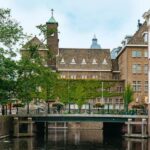
One of the best parts is the long segment where you explore the city centre on foot. After the major landmark stops, you get about 50 minutes to walk with the guide through areas tour buses and boats can’t reach easily.
This is the portion that tends to feel the most “local,” because it’s less about one famous postcard view and more about how neighborhoods connect. The guide’s job here is storytelling plus navigation: how to see The Hague like a real Hagenees—what to notice, where to look, and how the city’s culture shows up in small details.
You’ll feel the difference between a guided stroll and a self-guided wander. With a good guide, you stop at the moments you’d otherwise miss.
What can affect this section: construction in the city centre can change sightlines or force detours. If you see scaffolding or temporary barriers, don’t assume the tour is “wrong.” It just reflects the real, lived-in nature of the route.
Price and value: why $3.61 can still make sense
This tour is priced around $3.61 per person for about 2 hours and uses a mobile ticket. That price is strikingly low for a guided, multi-stop route that touches major sites like a prominent art museum building, a royal residence area, and the Binnenhof courtyard.
So what’s the value equation?
- You’re paying for context: how everything connects—art patronage, monarchy, and government—so you don’t just “see buildings.”
- You’re paying for time efficiency: in two hours, you cover several top-of-mind areas without getting stuck planning.
- You’re paying for a guided pace: short stops mean you spend less time at dead ends and more time absorbing the right facts in the right places.
One more practical point: you can often add on museum time afterward. Mauritshuis is there at the start, and Ridderzaal options are also mentioned as something you can do after.
How to use the value: if you want more than a walking introduction, treat this as the warm-up act. After, pick one follow-up: Mauritshuis for art or a guided visit connected to Ridderzaal, depending on what you’re most curious about.
Who this tour fits best (and who should reconsider)
This tour is a strong fit if you:
- want a first-time introduction to The Hague that’s more than a single museum
- like short stops with photo moments and story-based context
- prefer a small group (max cap is listed at 20, and the experience is framed as no more than 10)
- are traveling in English and want an easy, straightforward guide style
It may be less ideal if you:
- want only broad, simplified narratives and not architectural or detail-heavy explanation
- are extremely sensitive to guide personality. Some tours can feel lively and funny with certain guides, while others may feel more focused on one angle.
Based on the names that show up in the strongest feedback—Taco, Ronald, Niels, and Oscar/Oskar—you’re likely to get entertaining storytelling when the guide leans into humor and pacing. But the tour’s structure can still feel detail-oriented if your guide focuses that way.
What to expect about walking, timing, and group flow
The whole experience runs about 2 hours and starts at 10:30am. You’ll hit a series of stops ranging from 10 to 15 minutes, with the longer stretch (around 50 minutes) spent exploring the city centre on foot.
Two practical notes:
- If you’re late, you can’t catch up with the group. You’ll need to book a new time slot.
- The tour ends back at the meeting point, so you’re not forced into a “get-yourself-home” shuffle.
Also, the tour is offered in English and you’ll receive a confirmation at the time of booking. Service animals are allowed, and the route is near public transportation, which is useful in a compact city where tram and stop timing can save you time.
Should you book this The Hague 2-Hour Walking Tour?
Yes, if you want a low-stress, highly efficient way to understand how The Hague works: royal life here, government power there, plus art context at the start. The route is built around the places that define the city, and the pacing is short enough that even one or two missed details won’t wreck the whole experience.
I’d book it especially if:
- it’s your first day in town
- you like guided storytelling more than reading plaques
- you want to leave with a map in your head, not just photos on your phone
I’d think twice if you:
- strongly prefer a single narrow theme (only art, only architecture, only politics)
- need a very hands-on, personalized pace adjustment from the guide
Bottom line: for the time and price, this is a smart “get your bearings fast” tour—then you can choose what to go back for. If you end up adding Mauritshuis after, you’ll turn a good intro into a memorable half-day plan.
FAQ
How long is the The Hague 2-Hour Walking Tour?
It lasts about 2 hours.
Where does the tour start?
The meeting point is MauritshuisPlein 29, 2511 CS Den Haag, Netherlands.
What is the tour price?
The listed price is $3.61 per person.
Is the tour offered in English?
Yes, it is offered in English.
Do you enter museums during the tour?
At Mauritshuis, the tour meeting is there, but you do not enter the museum during the walk. The tour notes that museum halls can be visited after the tour.
How big is the group?
The experience is described as a small group of no more than 10 people, and the overall maximum is listed as 20 travelers.
Is it easy to get to with public transport?
It’s described as being near public transportation.
Can I get a refund if I cancel?
Yes. Cancellation is free up to 24 hours in advance for a full refund. If you cancel less than 24 hours before the start time, the amount paid won’t be refunded.