REVIEW · THE HAGUE
The Hague: Mystery Figures Walking Tour
Book on GetYourGuide →Operated by Mystery Figures Tours · Bookable on GetYourGuide
The Hague can feel like a place for courts and canals, but this Mystery Figures walking tour turns the city into a live classroom, using math and science clues you solve as you go. I especially liked the way you’re guided through standout stops like the Binnenhof and the Escher Museum area, and then asked to make sense of the science behind them. One thing to consider: it’s a 90–120 minute walk at a steady pace, so bring comfortable shoes.
You meet in front of the Escher in Het Paleis museum, then move through central neighborhoods on a roughly 3-kilometer route. The tour runs in English or Dutch, and it uses tablets with photos, videos, and simulations to help you see what you’re looking at—no calculator needed.
In This Review
- Key things I’d circle before you go
- Meeting at Escher in Het Paleis: starting your science clues in the right place
- How the “mystery figures” format works (and why it’s not just trivia)
- Stop-by-stop: from Voorhout and the Paleistuin to the Binnenhof
- Voorhout (guided introduction)
- Paleistuin (small setting, big idea)
- The Binnenhof (where the stories gain weight)
- Chinatown and the sense of global thinking in a Dutch city
- Finishing at Amare: leaving with a code and a reason to remember
- Famous figures, number systems, and instruments: what the science angle actually means
- Guide style and pacing: where Rowdy’s flexibility really helps
- Price and value: is $29 worth it for a 2-hour puzzle walk?
- Who should book this tour, and who might skip it
- Quick practical advice so you enjoy every stop
- Should you book The Hague Mystery Figures Walking Tour?
- FAQ
- Where does the tour start?
- How long is the walking tour?
- What’s the walking distance?
- Do I need a calculator?
- What languages are available?
- Is it suitable for young children?
Key things I’d circle before you go
- Code-cracking souvenir: You finish by solving a numerical code and getting a unique takeaway.
- Tablets with visuals: Photos, videos, and simulations (including 3D views in some presentations) keep the facts grounded in real places.
- 10 interactive stops: You’re not just sightseeing; you’re doing small science tasks along the route.
- Famous names, real locations: Expect stories tied to figures like Fahrenheit, Spinoza, and Huygens.
- Math and instruments on the street: You’ll connect number systems, scientific instruments, and discoveries to what you see in The Hague.
- Two guides for Dutch or English tours: The format uses experienced specialists, with flexibility in pacing.
Meeting at Escher in Het Paleis: starting your science clues in the right place
The tour begins outside Escher in Het Paleis, a smart starting point because it sets the tone: this isn’t only about dates and buildings. It’s about patterns—numbers, models, measuring, and the ideas that shaped scientific thinking. After you gather, the guides set expectations quickly so you understand how the day’s “mystery” works: you’ll learn through short explanations, then use clues to solve a code.
This matters for your enjoyment because the tour doesn’t rely on you already knowing math or science. It’s built for curious people who want an approach that feels like a game, not a lecture.
Also, you’re walking in the city center, so you won’t waste time figuring out transport or meeting spots around town. Just show up at the front of the museum and get moving.
You can also read our reviews of more walking tours in The Hague


How the “mystery figures” format works (and why it’s not just trivia)
Here’s the core idea: you’re guided through a 10-stop route where each stop adds a piece to a larger puzzle. Some parts are story-driven—about people who influenced science and philosophy. Other parts are practical: learning how to read or interpret features you encounter, including sundials and number systems.
The tour uses tablets with photos, videos, and simulations of the places you’re visiting. That’s a big deal if you’re the type who thinks, I get the idea, but I want to see it. In at least one version, the presentation includes 3D images of The Hague from centuries ago, which helps you connect the “then and now” without needing museum tickets.
Practical tip for you: listen for the exact detail the guide points out, because that’s usually where a later clue comes from. You don’t need to be a math person. You do need to pay attention when the guide points to a specific symbol, pattern, or explanation.
And yes, there’s a catch—at the end you crack a numerical code to earn a unique souvenir. That final step gives the tour a satisfying finish, not just a walk that ends with, Thanks for coming.
Stop-by-stop: from Voorhout and the Paleistuin to the Binnenhof
The route is about 3 kilometers total and runs roughly 90 to 120 minutes depending on pace. You’ll make frequent stops, take photos, and get the occasional “look closer” moment rather than marching non-stop.
Here’s what you can expect from the named anchor points:
Voorhout (guided introduction)
Voorhout is an early stop that helps you get oriented. Expect a short guided segment where the guide connects the surrounding setting to how math and science show up in the city—often through markings, layouts, and references you’d normally miss.
This is where you’ll start forming the “pattern” the tour uses: the city isn’t random. It’s full of deliberate choices, like you’re seeing an old map drawn with scientific thinking.
Paleistuin (small setting, big idea)
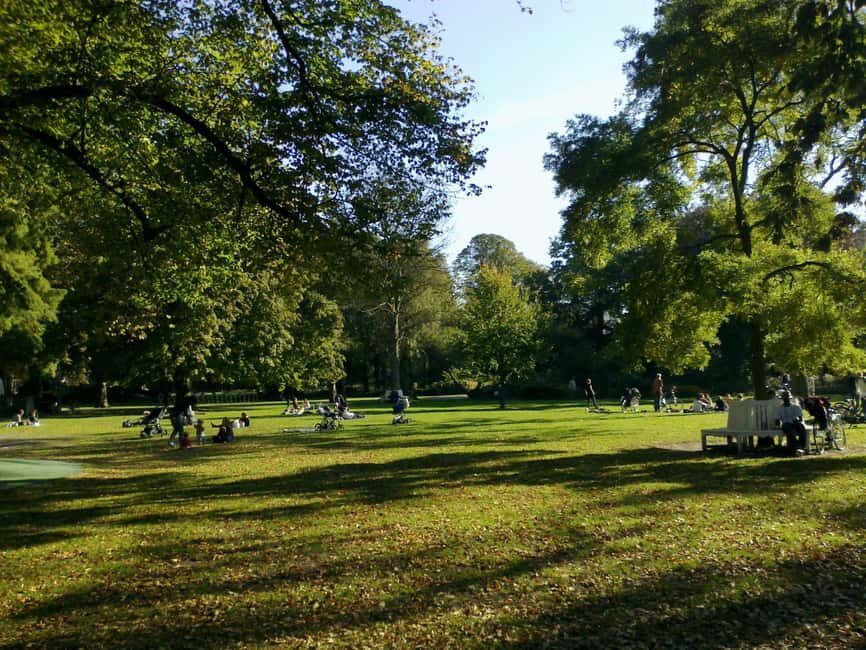
Next comes the Paleistuin, another stop built for short attention and clear explanations. The guides use the space to explain concepts tied to science and measurement—things you can’t fully understand just by walking past.
If you’ve ever felt that European cities move too fast and the details blur together, this stop helps reset your pace. You learn to slow down just enough to notice what’s actually there.





The Binnenhof (where the stories gain weight)
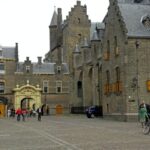
At the Binnenhof, the tour leans into relevance. This area is a key civic and historical spot, so the guide can connect ideas about science, philosophy, and the people tied to The Hague with the feeling of place.
The value for you is that it doesn’t stay abstract. You’re not only hearing names; you’re seeing the kind of setting where intellectual ideas could take hold, meet power, and influence daily life.
You’ll likely take extra time here because it’s one of the stops that naturally draws questions. The guide’s job is to keep those questions tethered to the tour’s overall puzzle.
Chinatown and the sense of global thinking in a Dutch city
One of the most interesting parts of the route is the stop at Chinatown, The Hague. Even though this is a very different-looking neighborhood than a palace garden or government complex, it fits the tour’s theme: science and math travel with people.
The guide uses the shift in scenery to connect the idea of systems—numbers, instruments, and discoveries—to how knowledge spreads across cultures and communities. For you, that makes the tour feel broader than a single-district “history walk.”
It also breaks up the experience nicely. After several stops that feel traditional and formal, Chinatown adds contrast and keeps the tour from becoming one long, similar vibe.
Finishing at Amare: leaving with a code and a reason to remember
The tour ends at Amare, a clear finish point that helps you avoid the usual end-of-tour scramble. By then, the clues you collected along the way should snap into place, and you’ll solve the numerical code.
That ending does two practical things:
- It gives you a concrete takeaway you can hold onto.
- It turns everything you learned into something you actively used, not just heard.
If you like tours that feel like a “story with a solution,” this format will click. If you prefer passive sightseeing only, you might find yourself wanting more free time—but the structure is built to keep you engaged.
Famous figures, number systems, and instruments: what the science angle actually means
This tour is framed around mathematics and science, but it’s not science class. It’s science as something people used to live with—ways to measure time, organize numbers, build instruments, and make discoveries that affected life.
The guide weaves in stories and anecdotes tied to figures such as Fahrenheit, Spinoza, and Huygens. That combination matters because it connects different modes of thinking: empirical measurement, philosophy, and practical scientific innovation.
You’ll also learn about:
- number systems and how they shape how people compute and record ideas
- scientific instruments and what they were for
- scientific discoveries and how they link to everyday observations
- how to read sundials, so you’re not only hearing about time—you’re learning how it’s interpreted
One practical benefit for you: this makes it easier to “see” The Hague differently afterward. You’ll start spotting patterns and symbols rather than treating the city like a backdrop.
And another benefit: the tour is designed for ages 12 and up, so it doesn’t talk down. If you’re traveling with teenagers, this is a solid way to keep them engaged without turning the whole trip into screens.
Guide style and pacing: where Rowdy’s flexibility really helps
One of the best parts of this tour format is how the guide uses tools and timing to match the group. In the English-language version, the guide’s style can include being friendly, enthusiastic, and able to keep both fast walkers and slower walkers involved. For example, Rowdy is highlighted as a guide who blends knowledge with energy and adapts when schedules shift.
You’ll also see this in how the tablet visuals are used. Instead of the guide showing a picture and moving on, the tablet supports what you’re standing next to. It’s basically: look here, then visualize what it would have looked like or how it worked.
That can be especially reassuring if you’re traveling with parents or someone who doesn’t want a strict pace. The tour is educational, but it doesn’t feel like you’re being dragged.
Price and value: is $29 worth it for a 2-hour puzzle walk?
At $29 per person, this is priced like a serious “activity,” not a simple strolling tour. What makes it good value is that you’re getting multiple layers:
- a local expert in math and science
- a 10-stop interactive route
- tablet-based visuals that help you understand what you’re seeing
- and a finished souvenir earned through a numerical code
The time commitment is also reasonable: it’s listed as about 2 hours, typically 90–120 minutes depending on pace. It’s long enough to feel like you did something meaningful, short enough that it doesn’t steal your whole day.
If your travel style is “I want context, not just photos,” you’ll probably feel the value quickly. If your style is “I want the freedom to wander with no structure,” you might prefer something more open-ended.
Who should book this tour, and who might skip it
This tour works best if you’re:
- curious about science and how it shows up in city life
- interested in puzzles and codes
- traveling with teens who like hands-on engagement
- the type who enjoys short stops and photos without rushing
It’s not suitable for children under 12, so plan your family schedule accordingly. If you’re traveling with younger kids, you might want a different kind of city walk.
Because the route is about 3 kilometers and wheelchair accessible, it can fit more mobility needs than you might expect for an “interactive walking tour.” Still, it’s built around walking with stop-and-go segments, so consider your own endurance.
Quick practical advice so you enjoy every stop
- Wear comfortable walking shoes. You’ll cover about 3 kilometers with frequent pauses.
- Bring your attention, not a calculator. The tour is designed so you don’t need one.
- Expect photos. The format includes time for them at stops.
- If you’re in a group that moves slower, tell the guide early. This tour’s pacing works best when the guide can adjust to your rhythm.
Should you book The Hague Mystery Figures Walking Tour?
If you want a The Hague experience that mixes streets, stories, and actual mental work, I think you should book it. The combination of 10 interactive stops, tablet visuals, and an end-of-tour code souvenir is a rare blend of education and play—especially at a straightforward price.
Skip it only if you strongly prefer passive sightseeing or you don’t want any puzzle element. Otherwise, this is one of the more memorable ways to get under the surface of the city.
FAQ
Where does the tour start?
The meeting point is in front of the Escher in Het Paleis museum.
How long is the walking tour?
The tour lasts about 2 hours, typically taking between 90 and 120 minutes depending on pace.
What’s the walking distance?
The tour is about 3 kilometers long.
Do I need a calculator?
No, a calculator is not needed.
What languages are available?
The tour is offered in Dutch and English.
Is it suitable for young children?
It’s not suitable for children under 12 years.