REVIEW · AMSTERDAM
Amsterdam Anne Frank: Small-Group Walking Tour & Local Guide
Book on GetYourGuide →Operated by 360 Amsterdam · Bookable on GetYourGuide
Anne Frank’s story comes alive on foot. I love how the route ties her diary to real streets and buildings, especially the Portuguese Synagogue start, and I love the guide-led storytelling that connects Anne Frank’s family life to Dutch Resistance details. One catch: you won’t enter the Anne Frank House on this tour, so you’re looking at the outside façade only.
This is a 2-hour small-group or private walking tour that works well even if you’ve visited Amsterdam before. You’ll move through Jewish-quarter landmarks and Holocaust memorials with an expert guide, and you can choose from Spanish, French, English, German, Italian, Dutch, or Portuguese.
In This Review
- Key things to notice before you go
- A 2-Hour Walk That Puts Anne Frank in Amsterdam Context
- Where You Start: The Portuguese Synagogue and 3 Meeting Options
- The Jewish Cultural Quarter Story: How a Neighborhood Changes Over Time
- Anne Frank’s Life Through Family Details and the Diary
- Dutch Resistance: Following the Hiding-Place Idea Street by Street
- Memorial Stops: Auschwitz Monument and the Names Monument
- More Than the Big Names: Jewish Historical Museum and Nearby Landmarks
- Anne Frank House: What You See Here vs. What You’ll Need to Book
- Practical Stuff That Actually Makes the Tour Easier
- Who Should Book This and Who Might Prefer Something Else
- Should You Book Amsterdam Anne Frank: Small-Group Walking Tour & Local Guide?
- FAQ
- How long is the Amsterdam Anne Frank walking tour?
- Is the Anne Frank House entrance included?
- Where does the tour start?
- Can I choose a small-group or private tour?
- What languages are available?
- What should I bring and wear?
- Are large bags allowed?
- Are kids allowed?
Key things to notice before you go
- Start at a still-active synagogue: you begin at the 17th-century Portuguese Synagogue of Amsterdam (Sephardic) outside, with a local-guide framing.
- Anne Frank’s life, not just the headline: the focus is her family dynamics, the move from Germany, and life in hiding, plus what her father did after the war.
- A WWII thread you can follow: you’ll hear about the Dutch Resistance and the idea of secret hiding places, explained as you walk.
- Memorial stops with real weight: the tour includes the Auschwitz Monument and the National Holocaust Names Monument.
- See more than one “Anne Frank point”: you also pass by the Jewish Historical Museum and other major nearby sights that help you understand the city layout.
A 2-Hour Walk That Puts Anne Frank in Amsterdam Context
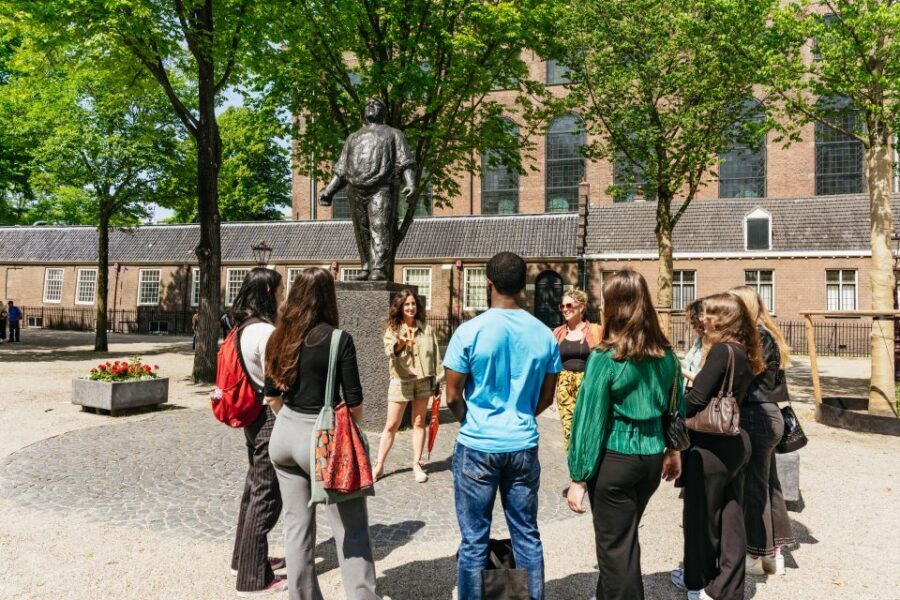
Two hours sounds short until you realize what Amsterdam gives you: a dense pocket of history where you can connect dots fast. This tour is designed for exactly that. You’re not just hearing facts in one place—you’re walking through the Jewish Quarter area and letting the streets do some of the teaching.
I like that the experience stays focused on the human scale. You get Anne Frank’s story alongside the wider WWII setting that shaped what people could and couldn’t do. It’s not a long bus lecture where your brain checks out. It’s steady, on-foot interpretation—good for first-timers who want grounding, and also solid for repeat visitors who feel like they’ve only seen a highlight reel.
The pace also matters. From what people describe, guides keep it from feeling rushed, and they build in moments to answer questions. If you care about the why behind the story—why the neighborhood developed the way it did, why hiding became a desperate, dangerous reality—this format tends to land well.
You can also read our reviews of more walking tours in Amsterdam



Where You Start: The Portuguese Synagogue and 3 Meeting Options

You start outside a major landmark: the Portuguese Synagogue of Amsterdam. That’s not a random choice. It’s a 17th-century Sephardic synagogue that still functions as a synagogue today, which gives the whole tour a grounded opening. You’re not beginning in a museum bubble; you’re beginning in a living historical context.
Depending on what you book, your meeting point can vary. Your start location is one of these options:
- Nieuwe Amstelstraat 1
- Portuguese Synagogue of Amsterdam
- Mr. Visserplein 3
If you’re picky about timing, pick the option closest to where you’re already planning to be that day. Amsterdam is great, but walking around searching for a meeting spot while your tour time ticks away is a special kind of annoyance.
The Jewish Cultural Quarter Story: How a Neighborhood Changes Over Time
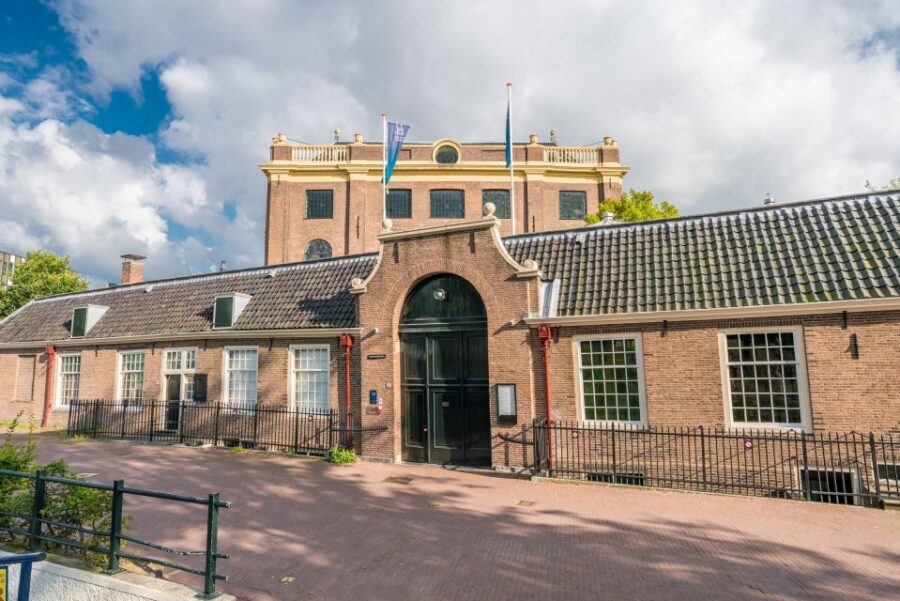
After you begin at the Portuguese Synagogue, the guide shifts into neighborhood history. You’ll learn how the Jewish Quarter developed over centuries, not just how it looked during the war years. That matters because it stops the story from feeling like a single tragic moment frozen in time.
The guide also frames the area’s evolution as something you can recognize while walking—streets, institutions, and the general geography of where community life clustered. You get a sense of continuity before you get the rupture of occupation and persecution.
In my mind, this is one of the smartest ways to do Anne Frank content. If you only hear about hiding, the story can feel like it starts at catastrophe. Here, you get a fuller setup: community life, growth, and then the brutal WWII shift.
Anne Frank’s Life Through Family Details and the Diary
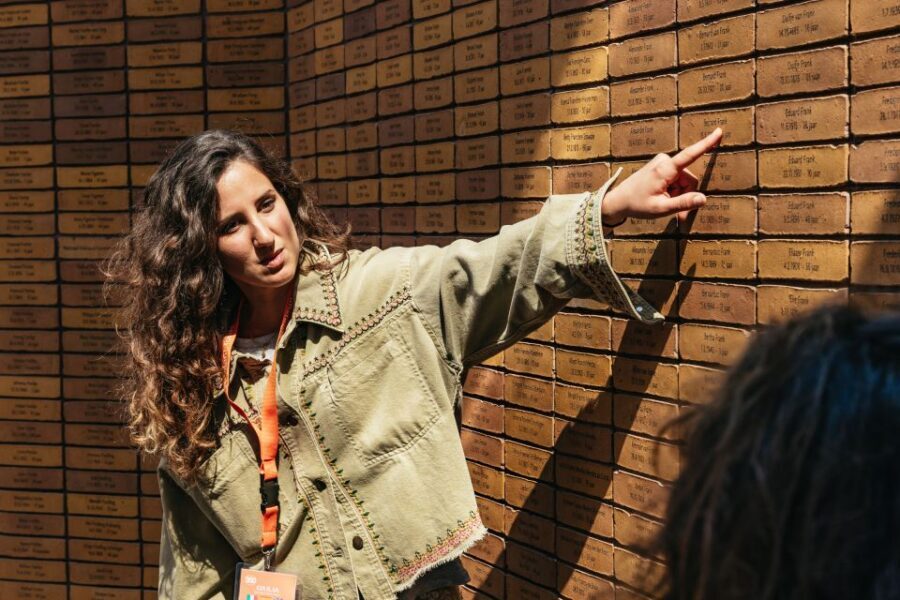
The centerpiece is Anne Frank’s life story—woven into the streets and major nearby sites. The tour doesn’t treat her diary as a distant literary artifact. It uses the diary to explain her world: her love of writing, her inner life, and how that writing grew out of real circumstances.
Expect the guide to cover:
- the Frank family dynamics
- their move from Germany to Amsterdam
- the time in hiding in 1930s and 1940s Amsterdam
- how her father’s life continued after the war
This is where the quality of the guide really shows. People consistently describe certain guides—like Peter, Patrick, and Manuel—as especially compelling when they turn biography into a scene you can picture. Manuel is specifically noted for including diary-style extracts, which can be an emotionally jarring but meaningful touch if you’re comfortable with that.
One practical tip: if you want the most out of the storytelling, keep your phone charged and ready. You may want to take quick notes or save a couple of places to revisit later—especially if you’re pairing this with the Anne Frank House afterward.
Dutch Resistance: Following the Hiding-Place Idea Street by Street
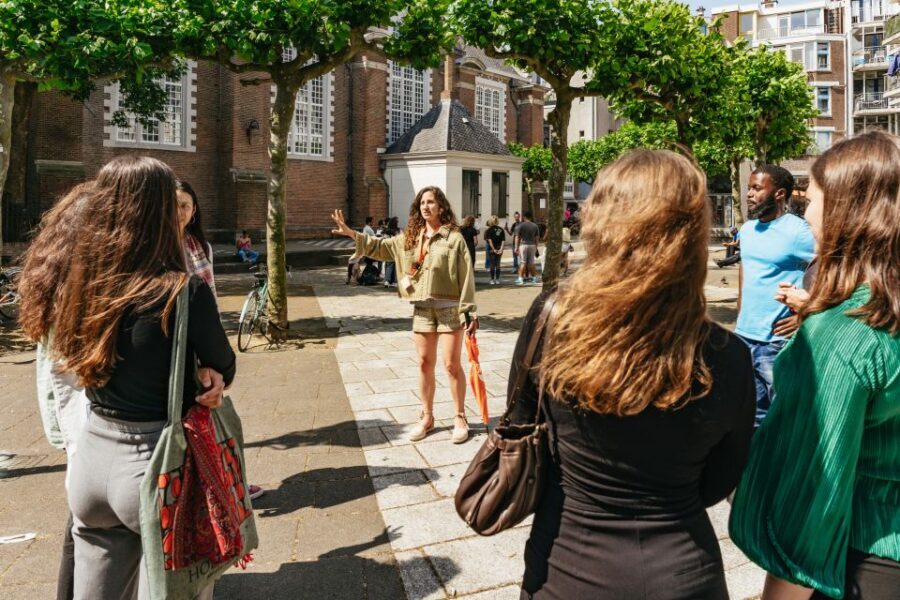
This tour doesn’t stop at Anne Frank herself. It pulls you into the bigger WWII machinery by focusing on the Dutch Resistance.
As you walk, your guide explains Dutch Resistance activity and points to where secret hiding places were located. You’re not getting a video-game map; you’re getting interpretation tied to Amsterdam’s physical layout. That’s valuable because the hiding places weren’t magic locations. They were embedded in real buildings, real routines, and real risk.
There’s also a subtle learning benefit here. You start to see how people survived by using connections, secrecy, and timing. It helps you understand why ordinary neighbors and helpers mattered—without turning the story into melodrama.
If you’re the type who likes “how could this possibly work?” questions, bring them. The format works best when you engage. Guides on this tour are described as friendly and open to questions, and that can turn a good history walk into a memorable one.
You can also read our reviews of more guided tours in Amsterdam





Memorial Stops: Auschwitz Monument and the Names Monument
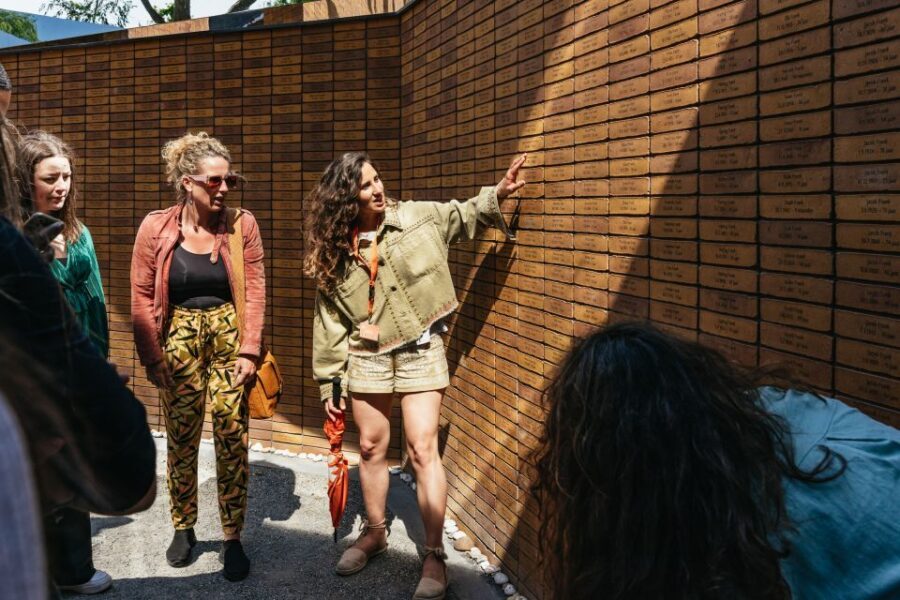
Half the power of this tour is what it does with the Holocaust memorial sites. You’ll see the Auschwitz Monument, plus you’ll stop at the National Holocaust Names Monument.
These aren’t just photo moments. The tour guides are set up to explain what you’re looking at and why it matters. The Names Monument, in particular, is often singled out by visitors as moving, and that response makes sense. It’s a shift from story-as-text to story-as-record—names and the reality behind the numbers.
If you’re sensitive to heavy topics, treat this portion like you would a cemetery visit: slow down mentally, don’t rush for photos, and let yourself absorb. You don’t have to force tears. Just don’t let your brain stay in “tour mode” the whole time.
Also, quick note on behavior: this tour is built around respect. Keep your voice down near memorial areas and avoid loud phone videos. It’s not just politeness; it keeps the experience meaningful.
More Than the Big Names: Jewish Historical Museum and Nearby Landmarks
You’ll pass by several major sights that help you understand the “why here, why now” side of Amsterdam’s WWII story.
Your walk includes:
- the Jewish Historical Museum (a guided stop of about 5 minutes)
- The Dokwerker (a guided stop of about 10 minutes)
- Rembrandt House (guided stop)
- Zuiderkerk (guided stop)
- the National Monument, Amsterdam
- the Royal Palace, Amsterdam
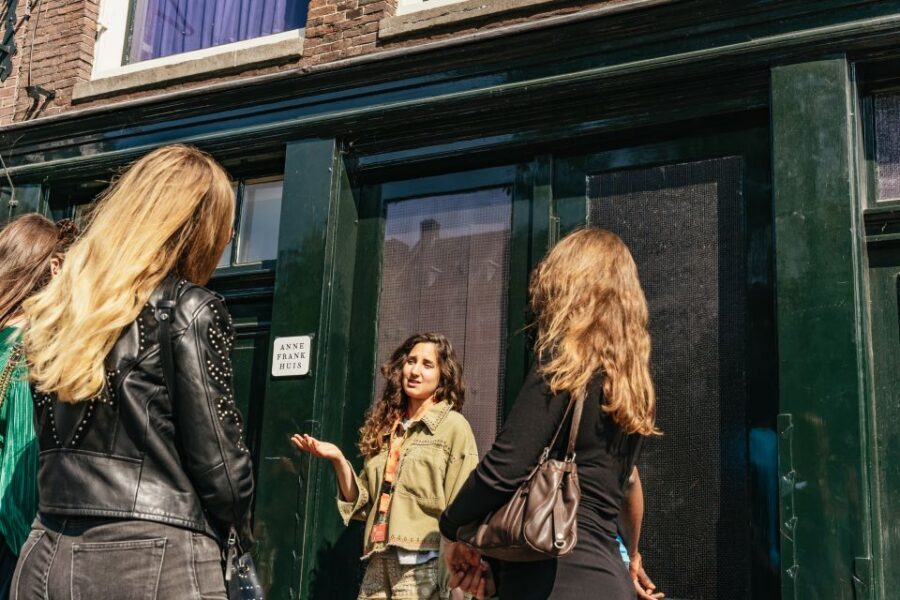
- the Anne Frank House façade (outside)
The big advantage of including these stops is orientation. Anne Frank’s story can feel concentrated, but this tour reminds you the neighborhood was part of a functioning city. Churches, civic monuments, and cultural institutions all show up along the way, which helps you connect the historical narrative to daily streets.
A potential drawback: not every stop will feel like a major “deep lecture.” Some are short guided looks. That’s normal for a two-hour walk. If you want a site-by-site museum day, you’ll likely need a separate visit to the places that interest you most.
Still, if your goal is to see the structure of the city and how the story threads through it, this mix tends to work. People even describe it as stretching across a large part of the city while still staying focused on Jewish history and WWII themes.
Anne Frank House: What You See Here vs. What You’ll Need to Book

Important for planning: this tour does not include entrance to the Anne Frank House. You’ll see the outside façade as part of the route.
If you also want to go in, you’ll need to book tickets for the Anne Frank House separately. The advice is clear: tickets often sell out in advance, so reserve a few months ahead if you can.
Here’s how I’d pair it for best timing:
- If your House tickets are timed later, do this tour in the morning or earlier in the day so you arrive with context.
- If your House tickets are on another day, do this tour first so you know what you’re looking at when you return.
This combo turns the walk into a prequel-and-then-the-main-event experience. You’ll leave the tour with questions you’ll actually want to answer inside.
Practical Stuff That Actually Makes the Tour Easier

This kind of walking tour lives or dies on comfort. Bring:
- comfortable shoes
- water
- a charged smartphone
Large luggage or big bags aren’t allowed. That’s worth remembering if you’re doing Amsterdam like a pack-mule and relying on rolling suitcases. I’d plan to travel light for this day.
Group types are flexible. You can choose either a small-group guided tour or a private option. Private can be great if you want a calmer pace or to ask more questions without balancing a larger group.
One more planning detail: languages are available in Spanish, French, English, German, Italian, Dutch, and Portuguese, but shared group and private options don’t always offer the same language setup. So double-check language when you book.
Who Should Book This and Who Might Prefer Something Else
This tour is a strong fit if:
- you want Anne Frank’s story tied directly to Amsterdam’s streets and Jewish Quarter context
- you’re short on time but want multiple memorial and neighborhood stops in one outing
- you value guides who tell the story with clear pacing and room for questions
- you’re dealing with Anne Frank House ticket sell-outs and want a meaningful alternative that still points you toward the right sites
It may not be the best fit if:
- you specifically want to enter the Anne Frank House as part of the tour (this one doesn’t include admission)
- you prefer museum-style viewing where you can linger for long periods inside buildings
Should You Book Amsterdam Anne Frank: Small-Group Walking Tour & Local Guide?
Yes, I think you should book it if you want the story in its real setting. The biggest reason is structure: you get a guided connection between Anne Frank’s family life, life in hiding, the wider WWII environment, and the memorial sites that carry the weight of the Holocaust.
It’s also solid value at $29 per person for a 2-hour guided walk that includes multiple major stops around Jewish history and WWII themes. The price feels fair because it’s not just a single-site experience; it’s an organized path through key places plus the guide’s interpretation—especially helpful when the Anne Frank House itself needs separate ticket planning.
If you can’t get Anne Frank House entry, don’t treat that as a loss. This tour is built to give context and meaning right where it happened. If you can get tickets, pair them. That’s the sweet spot.
If you want my simple decision rule: book this when you want context and a guided narrative. Book something else when you want to spend most of your time inside one specific museum.
FAQ
How long is the Amsterdam Anne Frank walking tour?
It lasts 2 hours.
Is the Anne Frank House entrance included?
No. The tour does not include entrance tickets to the Anne Frank House. You’ll see the outside façade.
Where does the tour start?
The meeting point can vary depending on the option you book. It may be at Nieuwe Amstelstraat 1, Portuguese Synagogue of Amsterdam, or Mr. Visserplein 3.
Can I choose a small-group or private tour?
Yes. You can pick either a small-group or a private guided experience.
What languages are available?
The live guide is available in Spanish, French, English, German, Italian, Dutch, and Portuguese.
What should I bring and wear?
Wear comfortable shoes, bring water, and keep your smartphone charged.
Are large bags allowed?
No. Luggage or large bags aren’t allowed.
Are kids allowed?
Children up to 3 years old can participate for free.