REVIEW · AMSTERDAM
Amsterdam: Red Light District Tour in English or German
Book on GetYourGuide →Operated by Trigger Tours · Bookable on GetYourGuide
Red lights, old streets, real life, and a guide who explains it all. This 2-hour walk is one of the most direct ways to understand Amsterdam’s Red Light District beyond the headlines. You’ll see the famous red-tinted windows and learn how the area became what it is today.
I love that the tour is led by a professional guide and built for real questions, not just pass-by sightseeing. I also love the mix of stops: red-lit windows, historic Old Town streets, and anchored moments like the canal area and Oude Kerk.
One consideration: this is a sensitive neighborhood with a working side, so you’ll want to keep your expectations respectful and your focus on the story the guide tells.
Key things I’d plan for
- Two hours on foot means you’ll get a tight, focused orientation without feeling rushed
- Red-tinted windows and neon signs are part of the route, with explanations of legal and cultural context
- Historic anchors like Oude Kerk and the canal-belt area help you place the district in Amsterdam’s bigger story
- You may not see every single window up close, but the guide’s pacing helps you still leave with clarity
- Small-group or private options can make it easier to hear the guide and ask questions
- Guides praised for style and discretion, with names like Ben, Robin, Sophia, Adam, Pilar, Jay, Andrea, and Aarre showing up in recent feedback
In This Review
- Why This Tour Works in Amsterdam’s Old Town
- The 2-Hour Route You Can Expect: windows, canals, and landmark stops
- The Red Light District Moment: what you’re really seeing in those windows
- Under-the-Radar Context Stops that make the walk feel smarter
- Guide style and how you’ll feel walking the streets
- Price and value: is $34 for 2 hours fair?
- Who this tour is for, and who should skip it
- Should you book the Amsterdam Red Light District tour?
- FAQ
- How long is the Amsterdam Red Light District walking tour?
- What does the tour cost?
- Which languages are available?
- Where do I meet for the tour?
- What is included in the price?
- Is food or drinks included?
- Can I cancel for free?
- Is the tour suitable for mobility impairments?
Why This Tour Works in Amsterdam’s Old Town
Amsterdam’s Red Light District is easy to misunderstand from a distance. The tour is valuable because it gives you structure: where this area fits in the city, how rules shape what you see, and why the street culture has changed over time.
What makes it feel different from a typical “see the sights” walk is that the guide talks about the legal and cultural aspects of the trade, not just the shock factor. You’ll walk narrow streets and alleys while hearing stories and anecdotes about past and present controversies, with context aimed at helping you interpret what’s in front of you.
This is also where being with a guide matters. Without guidance, it’s hard to know what you’re looking at, what’s allowed, and what’s better approached with distance and respect. With a guide, you get a calmer way to experience a place that can feel tense or awkward when you’re alone.
The 2-Hour Route You Can Expect: windows, canals, and landmark stops
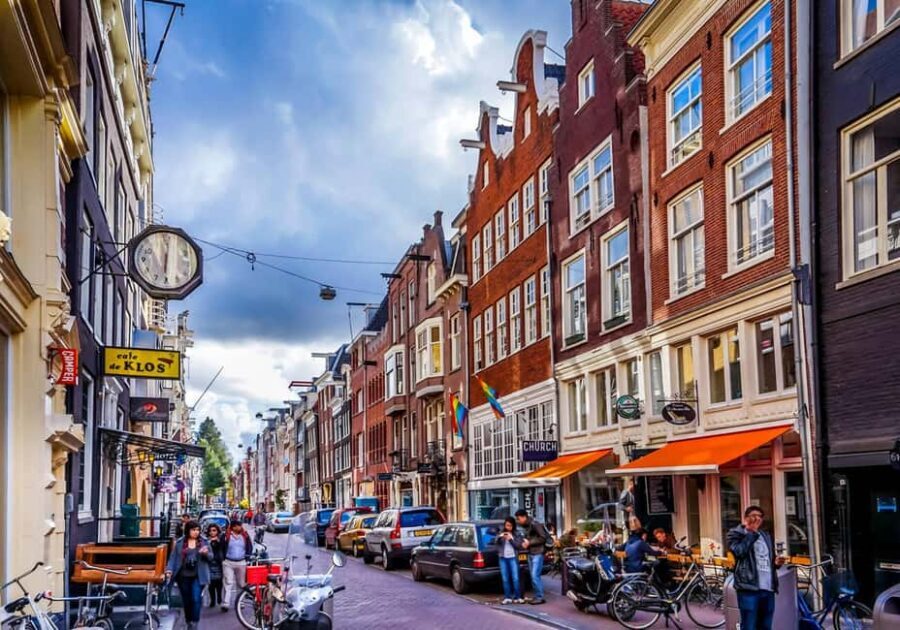
Even though meeting points can vary, the tour’s rhythm is consistent: start near the city’s center and work through Old Town lanes, with the Red Light District as a core section. You’ll then continue through nearby historic areas until the tour finishes around Dam Square.
Here’s the kind of path you can expect, in plain terms:
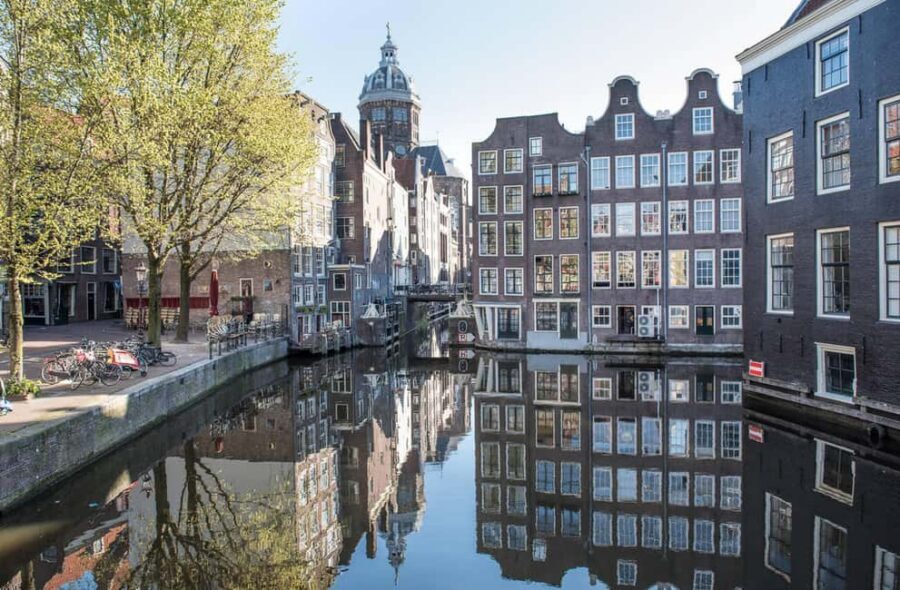
You begin at one of the listed starting points around the central waterfront area (like Prins Hendrikkade near Basilica of Saint Nicholas or the Voyager Hotel). The opening minutes are about orientation—how the area connects to the rest of Amsterdam and where the walk is heading.
Then you move through major hubs that frame the experience. Dam Square is often the anchor point where you get context on the city’s layout and daily flow. From there, the route works smaller streets and stops tied to the district’s surrounding layers.
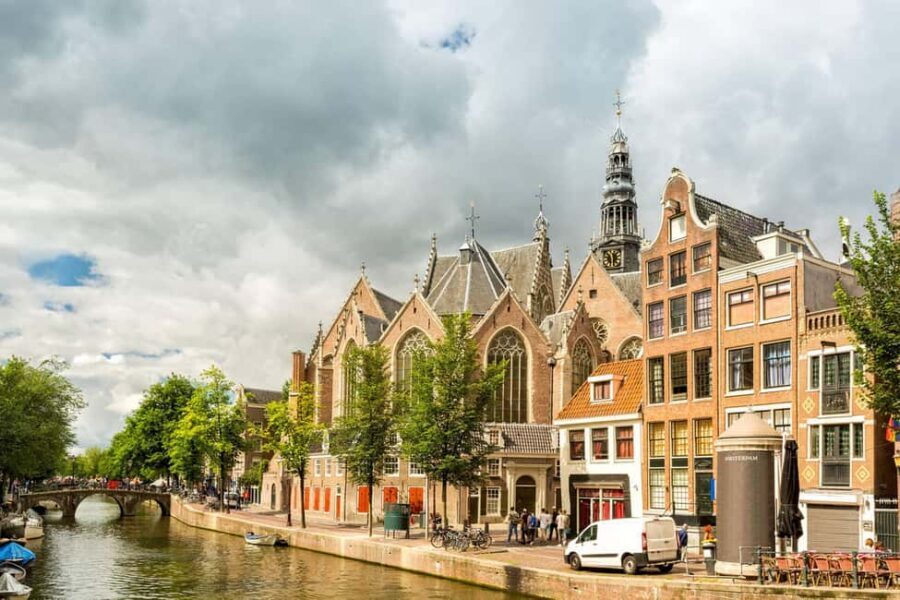
One notable stop is Oude Kerk. The tour highlights seeing the oldest building in Amsterdam, and Oude Kerk is the named stop that gives that “you’re really in Old Amsterdam” feeling. Even if you don’t go inside, the setting helps you see that the Red Light District is not floating in a vacuum—it sits inside an older city structure of canals, churches, and tightly packed housing.
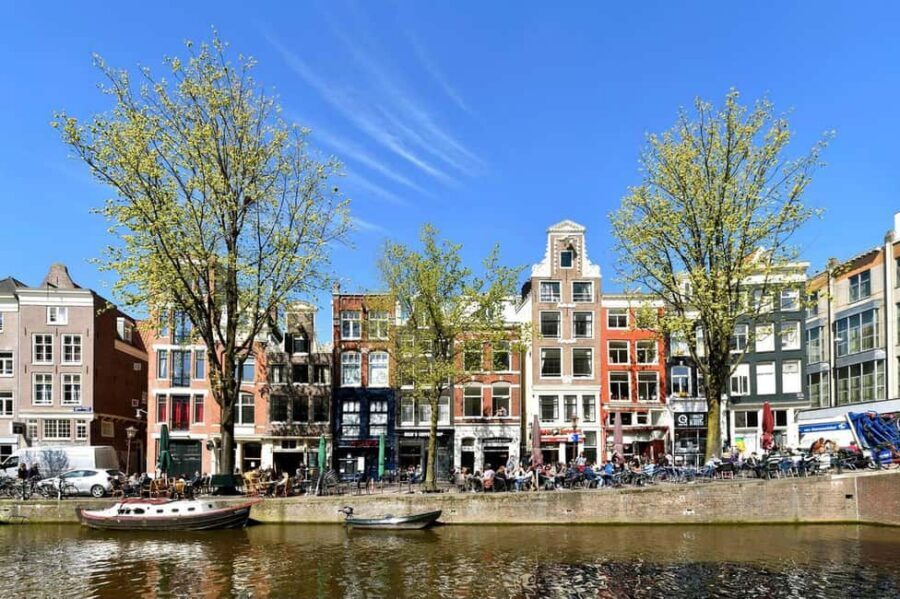
You’ll also spend time around the canal belt area (Grachtengordel), with the tour mentioning canals and old houses. This part is important because it puts the neighborhood into Amsterdam’s true language: water, bridges, and streets that were built long before modern nightlife culture arrived.
The walk also passes through areas like Amsterdam Chinatown and the Flower Market, plus Nieuwmarkt Square. These stops matter because they show how the city’s diverse pockets overlap with the central entertainment zone. If you only focus on one street scene, you miss how Amsterdam actually functions at street level.
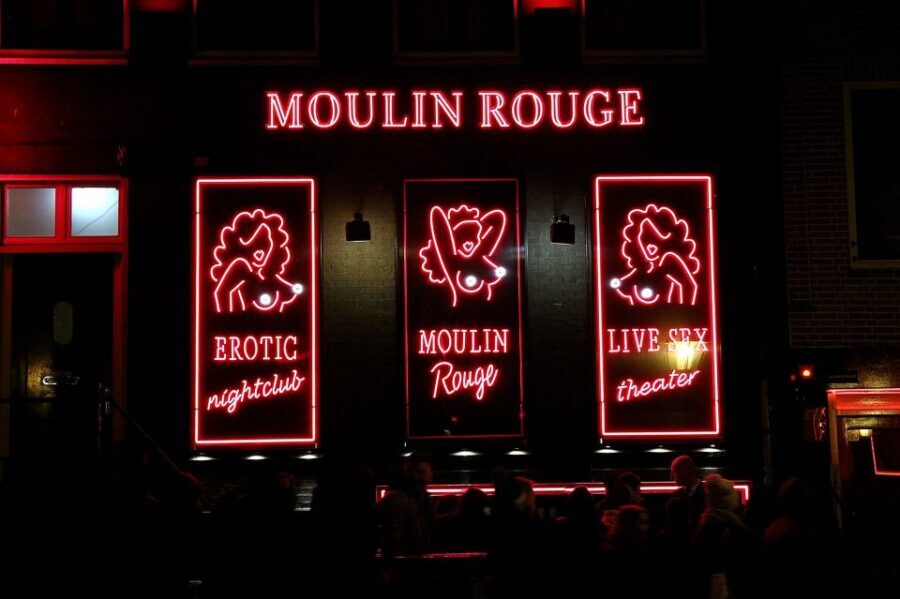
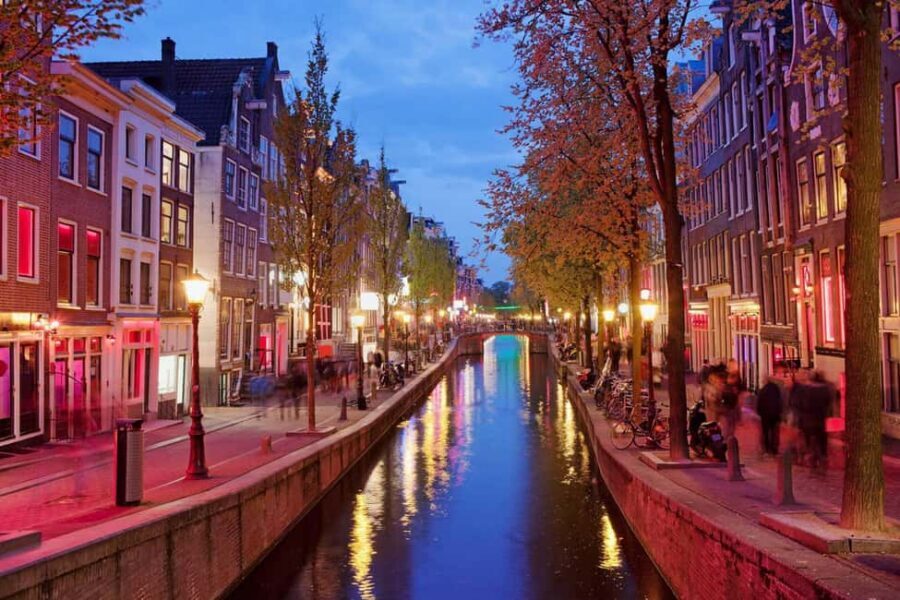
Finally, you get the core Red Light District moments: the famous red-lit windows and the street-side neon atmosphere. The tour also includes a walk past the narrowest street in Amsterdam and the first coffeeshop. That combination is clever: it links two kinds of Amsterdam culture through history and policy, not just signage.
You can also read our reviews of more tours and experiences in Amsterdam.



The Red Light District Moment: what you’re really seeing in those windows
The headline image is the red-tinted window displays, and you will see them as you walk through the district. But the guide’s role is what turns that from a photo-op into understanding.
You’ll learn how the district works within Amsterdam’s legal framework and how the city’s culture shaped the space. The tour explanation also covers why the area is often misunderstood, then walks you through the daily life of people who live and work in the neighborhood. That part is key. It helps you read what you’re observing without treating the place like a circus act.
The tour also mentions learning about the district’s history and culture while walking the narrow alleys. That matters because the Red Light District didn’t appear out of nowhere. It’s connected to centuries of Amsterdam trade, urban planning, and evolving rules for what’s permitted in public space.
One practical tip that comes through clearly in guide feedback: pacing can make or break a walk in cold or crowded conditions. A review notes that even in January, the later tour was a better option for the day’s comfort. If you’re visiting in chilly months, plan for layers and consider the time of day as part of your experience.
Under-the-Radar Context Stops that make the walk feel smarter
The Red Light District section is the obvious draw. The reason this tour gets consistently high marks is that it doesn’t stay stuck there.
The route includes historic buildings and cultural landmarks that often get ignored when people only hunt for windows and nightlife photos. Oude Kerk gives you a heavyweight anchor, while the canal-belt area helps you understand the city’s older bones.
You’ll also pass through areas connected to other parts of central Amsterdam, like Amsterdam Chinatown and Nieuwmarkt Square. That might sound like extra walking, but it does a useful job. It shows you how the Red Light District sits next to other social and cultural spaces, all within a compact city center.
Then there’s the “two Amsterdam traditions” angle: the walk includes the first coffeeshop in Amsterdam. You’re not just hearing about coffee-shop culture as a stereotype. You’re getting it in the context of policy, history, and neighborhood development, which is exactly what makes this kind of guided stop worth your time.
One more useful reality check: the tour may not show every window closely. That’s not a failure; it’s how a lived-in neighborhood and a tight two-hour route work. The value is that the guide helps you understand what you can see and how it all connects.
Guide style and how you’ll feel walking the streets
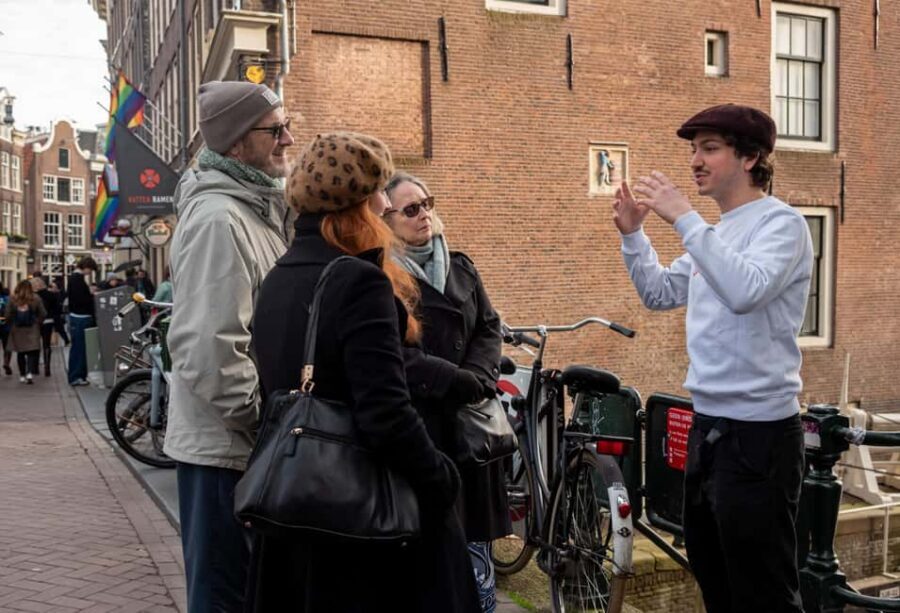
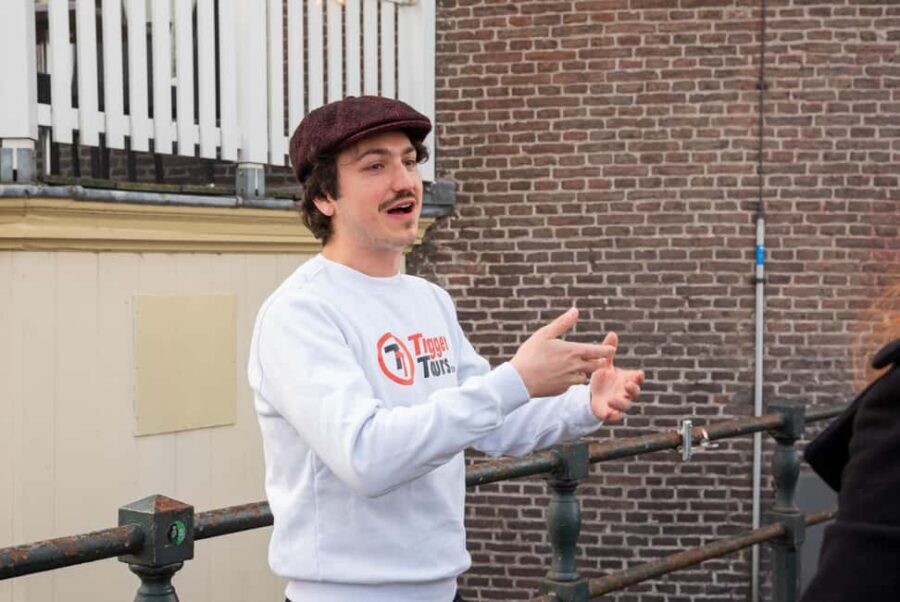
The biggest praise in recent feedback is not just about facts. It’s about how guides teach.
Names that come up often include Ben, Robin, Sophia, Adam, Pilar, Jay, Andrea, and Aarre. Across those comments, the pattern is similar: the guides are friendly, keep a good pace, and are willing to answer questions without rushing you.
Discretion also matters here, and that shows up in the reviews. The best version of this tour feels respectful: you learn the story while keeping the focus on interpretation, not staring. If you’re nervous about being in a sensitive area, a guide who maintains that tone can make you feel more comfortable moving through it.
If you take photos, keep it restrained. The tour’s framing makes it clear that this is not a stage. I’d treat it like a walk through a neighborhood first, and a sightseeing stop second.
Also, because the meeting point can vary, it helps to arrive early and look for your guide. One review suggests the guide should have something brighter so people don’t get lost in a crowd, which is a good reminder for you: give yourself time to find the right group before you start.
Price and value: is $34 for 2 hours fair?
At $34 per person for 2 hours, you’re paying for two things: a guided walking route and a local explanation that would take you much longer to piece together on your own.
This tour has built-in value because it covers multiple layers of central Amsterdam in a short time. You’re not just looking at one street. You’re moving through Old Town anchors like Dam Square, passing key city landmarks, and learning how the district relates to wider city history and culture.
It also helps that the tour is offered in multiple languages—English and German, plus Spanish and Dutch—which can make it easier for mixed-language groups to stay together. And because private or small-group options exist, you can sometimes get a better experience per dollar if you prefer a quieter, more conversational pace.
Finally, you’re not buying food or drinks with this price. That’s normal for a walking tour. You’ll save money by planning your meals separately, and you’ll stay flexible about where to eat afterward.



Who this tour is for, and who should skip it
This is a great choice if you want an organized first look at the Red Light District with context. It’s especially useful when you’re curious about how Amsterdam’s neighborhoods work: the mix of legal frameworks, daily life, and changing controversies over time.
It’s also a good fit if you appreciate “walk-and-ask” style experiences. Many guides are praised for responding to questions and keeping a relaxed flow, which is exactly what you want in a place where you’ll probably have questions you didn’t even know you had.
It may not be the right match if you need accessibility support. The tour is not suitable for people with mobility impairments, so plan accordingly.
If you’re expecting a party-focused night out, this is more about interpretation than nightlife energy. You’ll still see the sights, but the focus stays on history, law, and cultural context.
Should you book the Amsterdam Red Light District tour?
If you want the simple answer: I think it’s a strong booking for first-timers who want clarity and respect in equal measure.
Book it if:
- You’d rather understand what you’re seeing than just screenshot it
- You want a guide who can answer questions and keep the tone thoughtful
- You like walking city centers where historic places like Oude Kerk, canals, and squares all connect to the main story
Skip or switch plans if:
- You need wheelchair-friendly access
- You’re not interested in legal/cultural context and would rather do a different Amsterdam experience that matches your comfort level better
FAQ
How long is the Amsterdam Red Light District walking tour?
The tour lasts 2 hours.
What does the tour cost?
The price is $34 per person.
Which languages are available?
The live tour guide is available in English, German, Spanish, and Dutch.
Where do I meet for the tour?
The meeting point can vary depending on the option you choose. Starting points include locations around Prins Hendrikkade (near Basilica of Saint Nicholas and the Voyager Hotel).
What is included in the price?
Included is a 2-hour walking tour with a professional guide.
Is food or drinks included?
No. Food and drinks are not included.
Can I cancel for free?
Yes. You can cancel up to 24 hours in advance for a full refund.
Is the tour suitable for mobility impairments?
No. It is not suitable for people with mobility impairments.