REVIEW · AMSTERDAM
Amsterdam: Traditional Dutch Blue Tile Painting Workshop
Book on GetYourGuide →Operated by We Are Amsterdam · Bookable on GetYourGuide
Blue tiles, calmer than the crowds. In this Delft Blue workshop in central Amsterdam, you sit with brushes and a blank ceramic tile while an English-speaking local instructor walks you through what makes Delftware such a recognizable Dutch craft. I like that it’s hands-on and unpretentious, so you can create something you actually want to hang or gift.
Two things I especially appreciate: you get practical guidance the whole time (so beginners aren’t guessing), and the workshop feels relaxed thanks to the small group vibe plus tea, coffee, and stroopwafels at the end. Martina, Erna, and Peyaswani are among the names you might meet, and the tone is patient and encouraging. One consideration: the session is just 75 minutes, so if you’re chasing perfectly slow, ultra-sharp lines, you may feel a little time pressure near the end.
In This Review
- Quick takeaways for your Delft Blue tile session
- Why paint a Delft Blue tile in Amsterdam?
- The 75-minute flow: from the front door to a finished tile
- Delftware storytelling that stays practical (not lecture-y)
- Stencils, brush technique, and how you get crisp results
- The workshop vibe: small groups, patient hosts, real guidance
- What you take home: your tile, plus little extras
- Price and value: is $25 worth it?
- Who should book this tile workshop, and who might not?
- Should you book it? My decision guide
- FAQ
- How long is the Delft Blue tile painting workshop?
- What will I paint, and can I take it home?
- Do I need any prior art experience?
- What’s included in the price?
- Where do I meet the instructor?
- Is the workshop taught in English, and is there an age limit?
Quick takeaways for your Delft Blue tile session
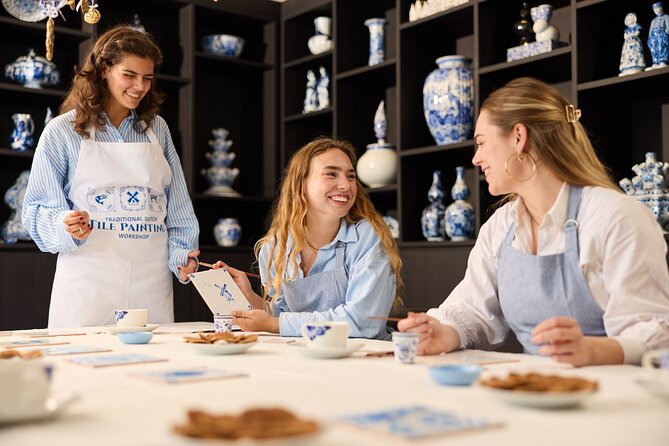
- Delft Blue practice without art pressure: You’re guided step-by-step, and stencils help you get a clean look.
- Delftware story included: You’ll learn why blue-and-white patterns became such an iconic Dutch style.
- Small group energy: The class can feel personal, and sometimes it’s almost like a mini private session.
- Tea and stroopwafels are part of the moment: It’s not just paint; it’s a proper pause in your day.
- You take your tile home: It’s a keepsake you made with your own hands, not a mass souvenir.
Why paint a Delft Blue tile in Amsterdam?
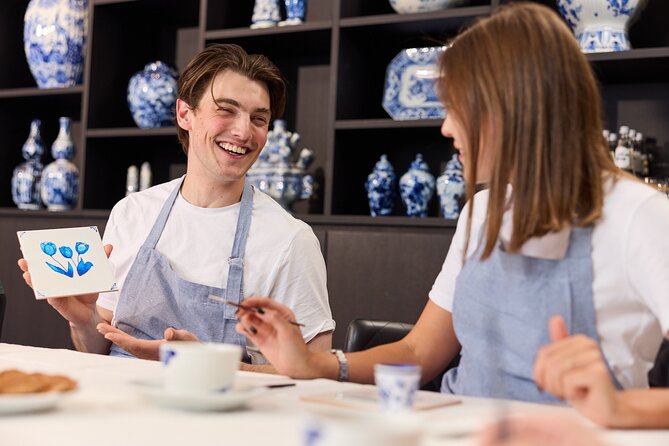
If you’ve got a day where museums feel like too much, this kind of workshop is a great pivot. Amsterdam can move fast—canals, crowds, quick photo stops—and then suddenly you’re sitting down with paint, breathing, and making something tangible. In a short 75 minutes, you go from blank ceramic to a finished tile you can keep.
This isn’t about being artistic. It’s about learning a famous Dutch visual language and turning it into your own small piece of Amsterdam. The workshop also covers the context behind Delftware, so you’re not painting blue swirls with zero meaning. You’ll leave knowing what you did and why it matters in Dutch craft tradition.
And the value is real. For $25, you get more than a guided activity: you get all materials (tile, paint, brushes, apron), plus refreshments. That matters, because a lot of souvenir shopping is expensive for what it is. A handmade tile costs less than many “pretty to look at” purchases—and it’s personal.
A few more Amsterdam tours and experiences worth a look


The 75-minute flow: from the front door to a finished tile
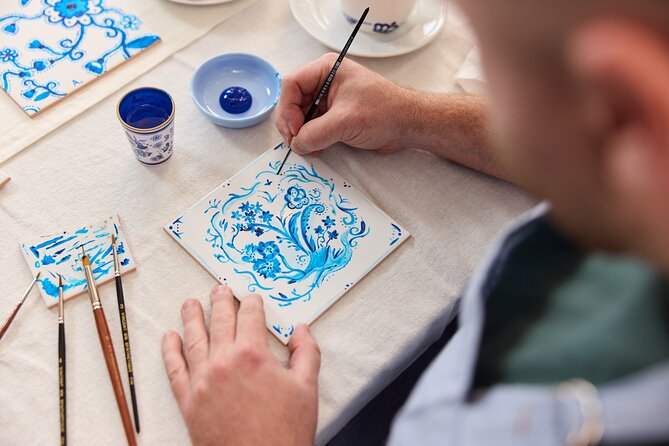
Meet is simple. Your instructor meets you at the front door, and the session moves at a steady, friendly pace. You’ll sit down with a ceramic tile, brushes, and the paints for Delft Blue-style designs.
Most of the class centers on three phases:
First comes the setup and the “how-to.” Your instructor explains the process and the look you’re aiming for—especially the classic blue-and-white effect and the clean, decorative patterns people associate with Delftware. This is where you get the confidence to start, even if you think you can’t draw.
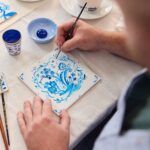
Then you paint. You’ll choose from multiple design options and often use stencils so you can focus on brush control rather than sketching from scratch. The instructor shows you easy techniques for laying down lines and filling shapes without overthinking.
Finally, you wrap up with the finished tile. Since you’re creating something that you’ll keep, the session isn’t rushed in a frantic way. Still, it moves to a finish, so you should plan to stay present for the full 75 minutes.
A nice touch: the workshop includes coffee, tea, and stroopwafels. That turns the end of the session into more of a break than a checkout line.
Delftware storytelling that stays practical (not lecture-y)
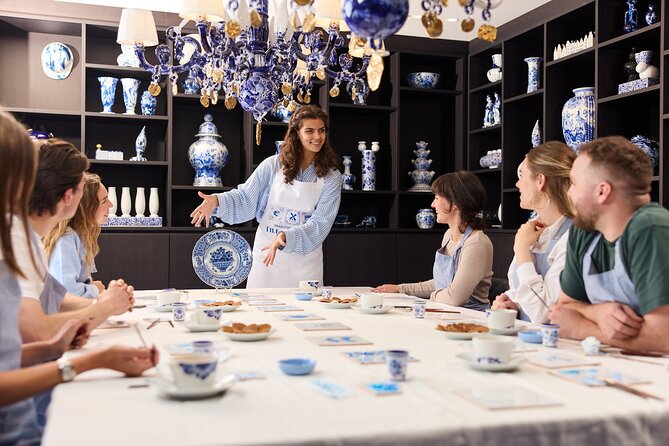
The best workshops teach you a craft and also teach you how to look at the result. Here, the Delft Blue story isn’t dumped as a textbook. Instead, it’s framed around the patterns and why Dutch artisans became known for blue-and-white ceramics.
You learn how Delftware became an iconic style and how those familiar motifs—like tulips and windmill-inspired designs—fit into the Dutch visual tradition. It helps you paint with purpose. You’re not just copying a template; you’re recreating something with a recognizable cultural “grammar.”
This is also where the instructor names and guidance matter. Different hosts—like Martina, Erna, and Peyaswani—bring their own pacing and style, but the common thread is explanation that connects directly to what’s happening on your tile. That connection is what makes the workshop feel like more than craft time.
Stencils, brush technique, and how you get crisp results
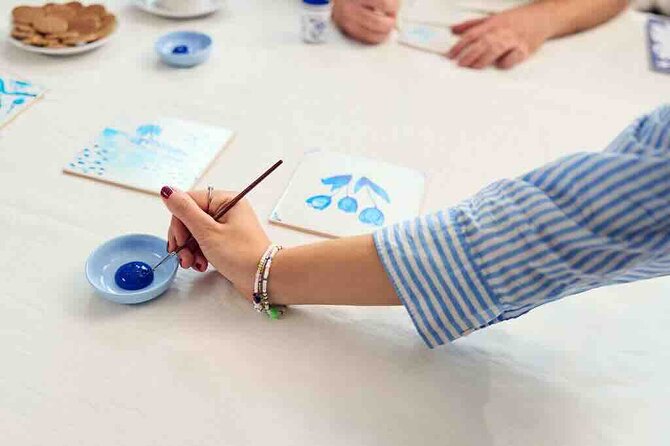
If you’ve ever feared that you’ll ruin a craft by holding the brush wrong, you’ll probably relax here. Stencils play a big role. Instead of starting from blank paper, you get design choices and a framework that keeps lines tidy and shapes readable.
That’s why the experience works for all skill levels. Beginners can follow along and still end with a tile that looks intentional. More confident artists can still make it their own—choosing motifs, adjusting details, and painting in a way that feels like their style.
Here’s what typically matters most in a Delft-style tile painting session:
- Line control: Your instructor shows you how to guide your brush for steadier strokes.
- Simple filling: You’ll learn quick ways to color in shapes without making a muddy mess.
- Pattern balance: Even with stencils, you’ll still make choices about spacing and finishing touches.
One small consideration: because the class is timed, you might not get infinite time to perfect tiny details. A thoughtful pacing note showed up in one suggestion—if you’re the kind of person who hates finishing too early, you may feel the ending arrive sooner than you’d like. Still, the guidance is structured so you finish with a complete, displayable tile.
The workshop vibe: small groups, patient hosts, real guidance
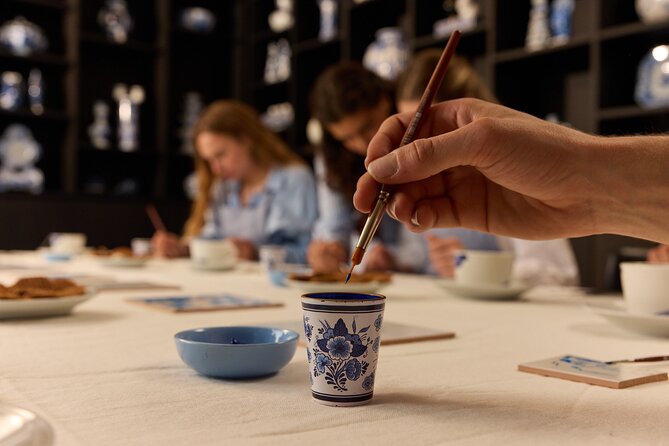
This class is designed for a personal feel. You sit with other participants, but it doesn’t feel like a crowded factory session. That “small group” setup helps the instructor give you attention and adjust their coaching as you go.
You’ll often hear that hosts are patient and encouraging. Names that come up in the experience include Martina, Erna, Peyaswani, and Belinda. The point isn’t celebrity-level storytelling—it’s that you’re in a room where questions are welcome and technique gets explained clearly.
English instruction is also a plus. You won’t get stuck translating craft instructions. You can focus on painting.
And if you want a quieter, more intimate vibe for couples, friends, or solo travelers, this workshop format can deliver. Some schedules can be very small, and that makes it feel almost private. Even in a fuller group, the teaching stays hands-on, not distant.






What you take home: your tile, plus little extras
Your finished hand-painted tile is yours to keep. That’s the key difference between a class and a typical Amsterdam stop: you’re leaving with something physical, made during the trip.
In addition, some sessions include small extras that turn the tile into a keepsake beyond the object itself. People mention receiving a certificate and getting the tile presented in a box, which is handy for transport and gift-giving. Even if those extras vary a bit by session, the core takeaway doesn’t: you’ll leave with your own Delft Blue tile souvenir.
For practical purposes, that box matters. A ceramic tile can be fragile, and having it protected makes it easier to bring home without last-minute packing anxiety.
If you like souvenirs you can actually use—like something that becomes wall art, a desk decoration, or a gift with a real story—this is a strong option. Buying Delft Blue decor is fun, but it’s not as memorable as making your own version while learning the background.
Price and value: is $25 worth it?
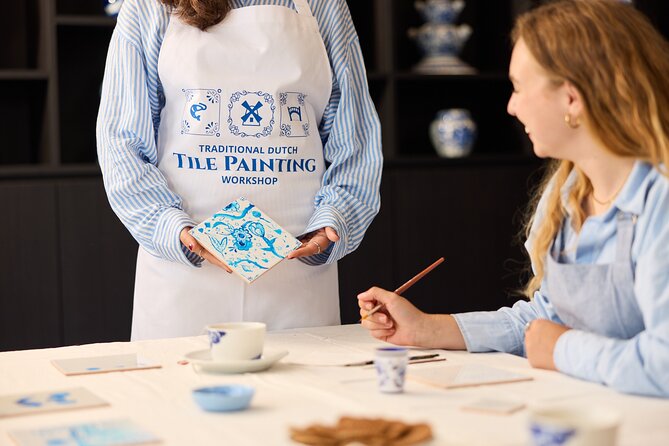
At $25 per person, this workshop feels like good value because it bundles three things most craft experiences separate:
- Instruction and guidance
- Materials (tile, paints, brushes, apron)
- Refreshments (coffee, tea, and stroopwafels)
A lot of Amsterdam activities charge you for the “experience” but don’t handle the supplies. Here, you’re set up to succeed from the start. That reduces the risk of paying money and then feeling like you’re stuck with only half the tools you need.
You’re also getting a short time commitment. 75 minutes is long enough to learn and finish, short enough to fit into a busy itinerary without turning your day into a schedule puzzle.
So the value question comes down to your style of travel. If you love hands-on moments and want a souvenir that isn’t just another shop bag, this is a fair price. If you only want to look at art from a distance, you might find a museum more aligned with your mood.
Who should book this tile workshop, and who might not?
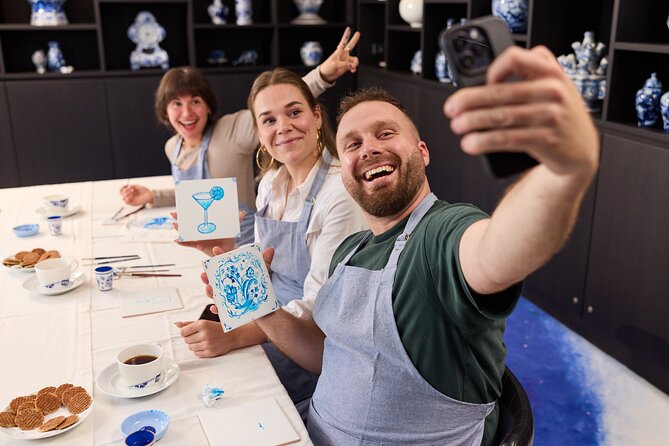
Book it if you want a creative break in the middle of Amsterdam and you like the idea of learning a traditional craft in a low-pressure way. It’s great for:
- Couples looking for a calmer, shared activity
- Families (with the note that it’s not suitable for children under 4)
- Solo travelers who want something social but not overwhelming
- Friends who enjoy making things together
You’ll also like it if you’re the kind of person who enjoys “small wins.” You won’t just watch an art process—you’ll produce a finished tile you can take home. The stencils and step-by-step help make it likely you’ll end satisfied, even if your drawing skills are unproven.
Consider skipping if you’re short on time and only want sightseeing blocks, not hands-on time. Also consider if you’re extremely detail-obsessed and want hours of slow painting; 75 minutes is designed for completion, not total perfection.
As for timing and confidence: you can typically plan with flexibility because the workshop offers free cancellation up to 24 hours in advance and a reserve-now, pay-later option.
Should you book it? My decision guide
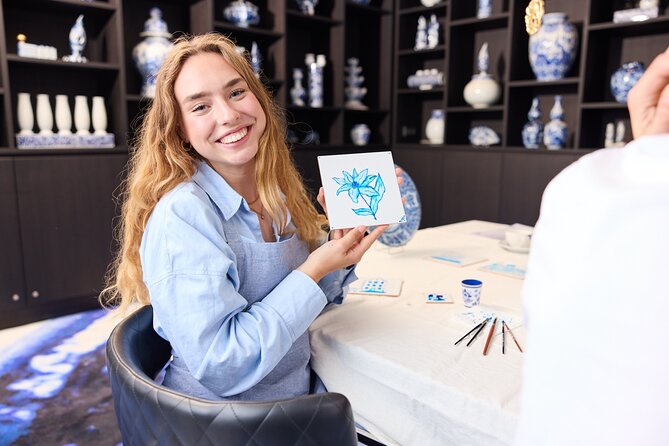
If you’re planning Amsterdam around photos, walking routes, and landmarks, this gives you a different kind of memory. It’s a small, focused activity that teaches you a Dutch art form and hands you a tangible souvenir at the end. For $25, with materials included and refreshments waiting, it’s an easy “yes” for most travelers who want something memorable without the stress.
If your top priority is quiet, creativity, and a craft you can carry home, book it. If you’re looking for a long lecture or museum-level depth, you might still enjoy the history portion, but the main product here is the hands-on tile painting.
FAQ
How long is the Delft Blue tile painting workshop?
The workshop lasts 75 minutes.
What will I paint, and can I take it home?
You’ll paint your own decorative Delft Blue-style ceramic tile, and you can take the finished tile home.
Do I need any prior art experience?
No. The workshop is designed for all ages and skill levels, and stencils are part of the approach to make painting easier.
What’s included in the price?
The price includes guidance from a local English-speaking instructor, all materials (tile, paint, brushes, apron), and coffee, tea, and stroopwafels.
Where do I meet the instructor?
The instructor meets you at the front door.
Is the workshop taught in English, and is there an age limit?
Yes, the workshop is taught in English, and it is not suitable for children under 4 years old.