REVIEW · AMSTERDAM
Amsterdam: Tulip Fields Day Tour with Lunch & Windmill
Book on GetYourGuide →Operated by Tulip Tours Holland · Bookable on GetYourGuide
Tulips without the big-garden crush. This Amsterdam-area day tour trades long lines for 3 tulip fields in North Holland, then adds a working windmill from 1633 and a relaxed lunch in Onderdijk. What seals it is the guide team—often people like Roel or Mike—who explain how tulip farming actually works, not just how pretty the flowers are. One thing to plan for: tulip colors depend on the season, so if you’re touring late, you’ll still get plenty of blooms, but not the same peak carpet of color every year.
I like that the tour keeps the group moving without feeling rushed: a modern bus (max 30 people) and multiple photo stops so you can actually look, not just snap and sprint. If you’re staying central, the meeting point is also simple—Market 27 at Metro station Noord, just a short hop from Amsterdam Central.
Then there’s lunch in Onderdijk. You get a proper Dutch buffet break (including mustard soup) plus juice and water, and you even pause with views around the historic Geradus Majella church. If you’re the type who wants flowers plus food plus windmill history, this is a solid 6-hour package.
In This Review
- Key moments you’ll remember
- Why North Holland tulip farms feel better than the famous garden route
- Getting to the tour from Amsterdam: Market 27 and the Noord metro hop
- Middenbeemster stops and tulip photo viewpoints that actually give you time
- Onderdijk lunch: Dutch village time with Geradus Majella church views
- A 1633 windmill stop with real inside access and miller interaction
- The guides, group size, and pacing: why the 6 hours don’t feel chaotic
- Price and value: what $143 buys you (and what to watch)
- Who should book this tour, and who should skip it
- Should you book the Amsterdam Tulip Fields Day Tour with Lunch & Windmill?
- FAQ
- How long is the Amsterdam tulip fields day tour?
- Do you visit multiple tulip fields?
- Where is the meeting point in Amsterdam?
- Is lunch included, and what does it include?
- What windmill experience is included?
- How big is the group, and what transport is used?
- Is the tour wheelchair accessible?
Key moments you’ll remember
- Tulip industry guides (often Roel or Mike) who connect the flower season to real farm work
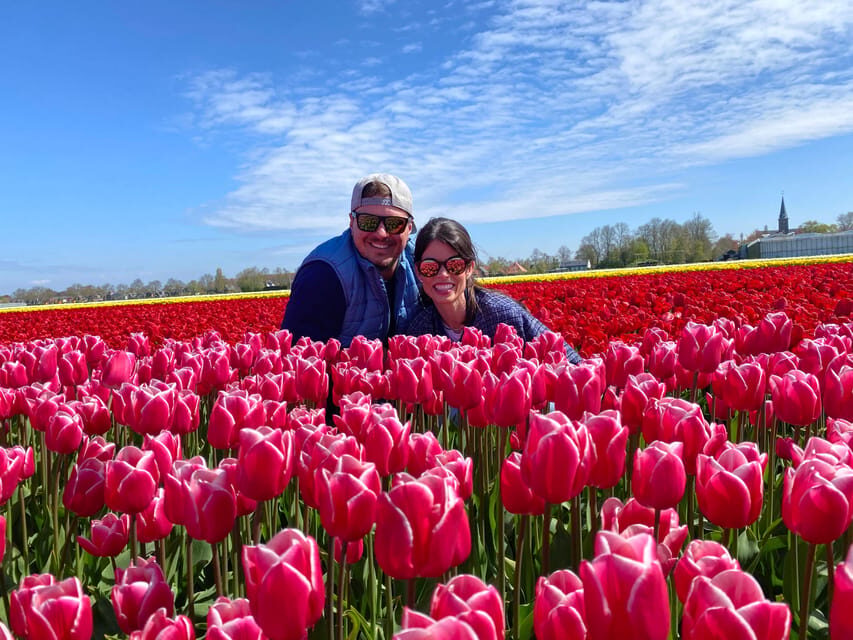
- Walk-through access to at least 3 tulip fields with intentional photo stops
- Lunch in Onderdijk with juice, water, and standout soup options like mustard soup
- A 1633 windmill visit plus meeting the miller, with time to tour the inside
- Small-group comfort on a modern coach (max 30), which helps the day feel calmer than mass buses
Why North Holland tulip farms feel better than the famous garden route
If you’ve been eyeing Amsterdam tulips, you’ve probably noticed two very different experiences. One is the famous, ticketed garden style—great, but crowded and very timed. The other is what Dutch tulip growers do when they want people to see the fields without turning it into an all-day traffic jam.
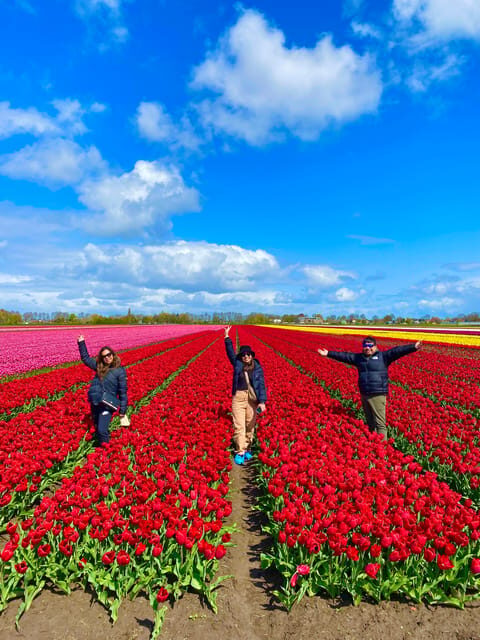
This tour lives in that second lane. You’ll visit multiple areas north of Amsterdam and walk through at least three tulip fields, with guided context from people connected to the tulip industry. That matters because you’re not just looking at colors. You’re learning what you’re seeing: how varieties develop across the season, how fields are managed, and why timing is everything.
A big plus is that the itinerary builds in photo stops and short guided segments rather than one giant “field stop” where everyone mills around waiting for the bus to move. In practice, that means you get more moments where you can actually stand in a field and take photos without feeling like you’re in a queue.
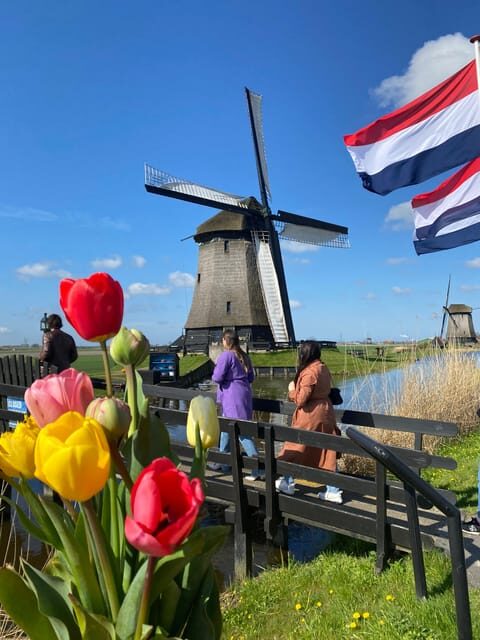
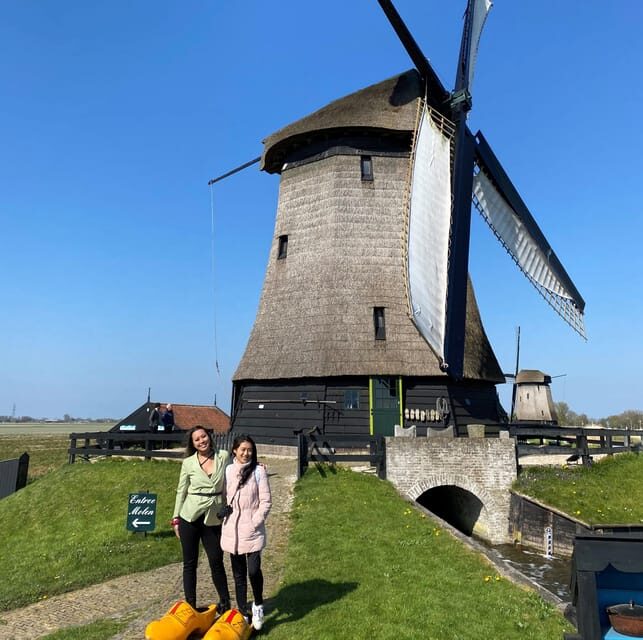
And yes, the windmill adds a nice change of pace. A 17th-century windmill isn’t just decorative here; it’s described as a traditional Dutch mill from 1633, and the visit includes entry. You also get the chance to meet the miller, so the windmill isn’t just a backdrop—it’s a people-and-purpose stop.
Possible drawback: the tour is 6 hours and bloom timing varies. If you’re traveling at the tail end of the season, you can still expect tulips and great photos, but you may not get the absolute peak blanket of flowers you see in early-season marketing.
A few more Amsterdam tours and experiences worth a look


Getting to the tour from Amsterdam: Market 27 and the Noord metro hop

Logistics can make or break a day trip. The nice part here is that your meeting point is straightforward.
You depart from Market 27 at Metro station Noord. It’s designed to be easy if you’re coming from Amsterdam Central: you take the North-South metro line (M52) in the direction of Noord. The ride is short—about a 4-minute metro connection from Amsterdam Central Station to Noord—then you’re at the restaurant-area meeting point.
That simplicity pays off because you lose less time to transit confusion and more time outdoors. You’re also not dealing with a complicated pick-up web across the city. One clean meeting point is a gift when you’re packing a tight schedule around tulip season.
Inside the day, transportation is handled by a modern coach with comfort in mind. The tour is capped at 30 people, so you’re not crammed into the kind of cattle-car style group that can make field stops feel stressful. Several experiences mention a smaller effective group size as well, which usually means better flow when guides are explaining, pointing out farming details, or helping with photo timing.
One more practical note: the route and stop times can shift due to seasonal conditions and traffic. That’s normal for North Holland day trips, and it’s why you’ll want to arrive with a calm mindset. The day is designed to flex while still hitting the key components: tulip fields, Onderdijk lunch, and the windmill.
Middenbeemster stops and tulip photo viewpoints that actually give you time
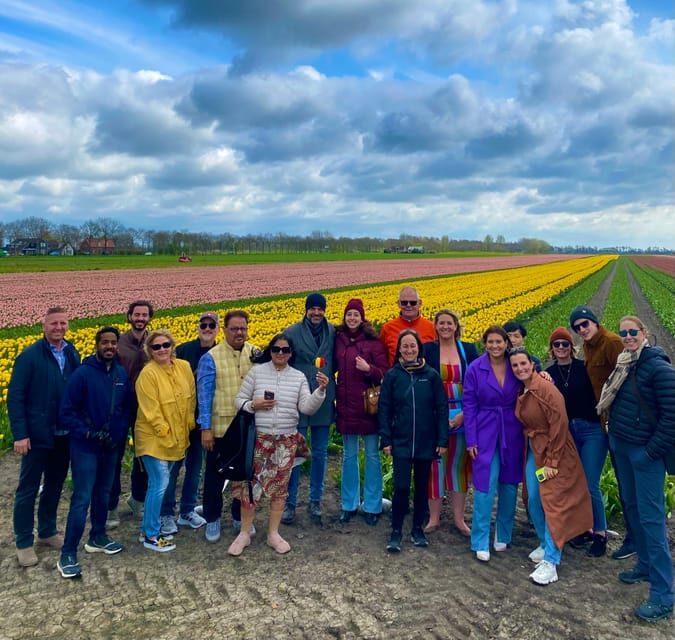
The itinerary is built around a rhythm: drive, guided orientation, then a photo-and-walk stop. That rhythm is exactly what you want when the goal is tulip fields, not just quick sightseeing.
A highlight area is Middenbeemster, where you get a guided tour and sightseeing time. The schedule includes a longer stretch early on (about 45 minutes), plus another Middenbeemster moment later (about 30 minutes) that includes photo time, guided tour elements, and free time. In plain terms: you get more than one chance to see how the countryside looks as the morning light changes.
There’s also a dedicated viewpoint stop with time to visit, take photos, and enjoy a bit of breathing room. The tour builds these shorter pauses so you can:
- step away from the main group when you want a quieter shot
- catch the best angles without feeling like you’re interrupting the bus plan
- ask questions while the guide is still fresh and nearby
You’ll also be walking through tulip fields, not just standing at a fence line. The tour describes walk-through access to three tulip fields, which is the difference between “I saw flowers” and “I got the photos I came for.” It’s also why this tour can feel more personal than the typical big-bus garden day.
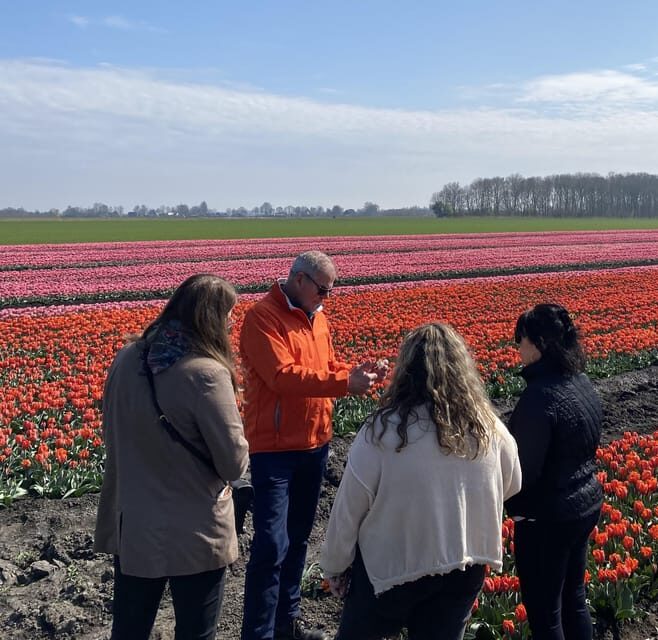
One detail that comes up in the guide approach: tulip farming is an industry with real experimentation and planning. You may see plots and hear explanations tied to how farmers work on new hybrid varieties and how cultivation happens behind the scenes. Even if you’re not a horticulture nerd, you’ll likely come away with a better sense of why some fields look different from others—even on the same day.
Possible drawback: because the tour is built around field viewing, you’ll want appropriate shoes. If you’re sensitive to walking on uneven ground, wear something sturdy. And if it’s windy (it can be), you’ll want a light layer for comfort during viewpoint stops.
Onderdijk lunch: Dutch village time with Geradus Majella church views

Lunch is the anchor point of this tour, and it’s placed in Onderdijk, an old Dutch village setting that makes the break feel like part of the experience rather than a random stop.
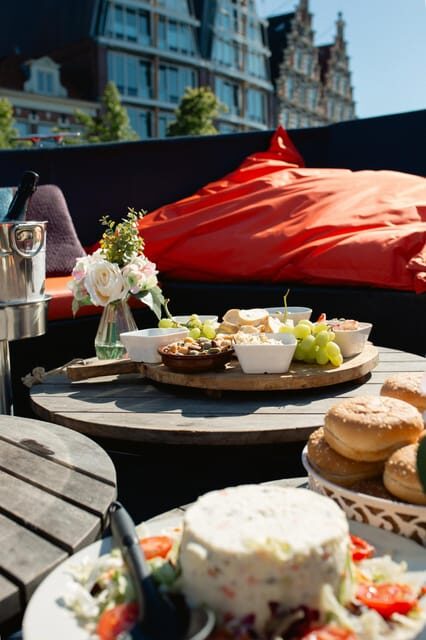
The schedule includes a one-hour lunch break with regional food. Lunch includes juice and water, and it’s set up as a buffet-style spread. Based on the tour details and the food described, expect Dutch favorites like cold cuts and cheese, plus pastries and soup.
The standout is mustard soup. More than one guide-style detail points to it as a “try it” item, and it shows up as a memorable element of the meal. There are also mentions of a dutch breakfast-style option (toast with butter and chocolate sprinkles), along with the range of items typical of a Dutch lunch buffet.
Why this matters: when you’re out in tulip season weather, you burn time and energy standing in fields and walking between viewpoints. This lunch isn’t an afterthought. It’s built to keep you fueled for the afternoon windmill portion.
There’s also a cultural sightseeing element tied to the area around the historic Geradus Majella church. Even if you don’t know the architecture terms, a quick visual stop helps break up the day and makes Onderdijk feel like more than just a restaurant stop. You’ll get the sense you’re in a real village with history, not just a curated pit stop.
Possible drawback: alcoholic drinks and sodas aren’t included with lunch. So if you like a beer with your meal, budget for it separately.
A 1633 windmill stop with real inside access and miller interaction
The windmill is the tour’s “big finish” vibe. Instead of just seeing a structure, you get the full entry experience.
The windmill described is a traditional Dutch mill from 1633. You’ll get time for a visit and guided tour, plus free time to explore and take photos. Importantly, the tour includes entry to the windmill and includes the chance to meet the miller.
That’s a meaningful difference. Windmills can be either staged or functional. Here, the emphasis is on a working experience, including the chance to look inside. One of the best ways to understand Dutch history is to connect the machine to the daily needs that made it valuable—water control, milling, and local work. Meeting the miller gives that context a human voice.
The day also builds in time for photo moments around the windmill area. If you’re planning your shots, this is often where you’ll capture “Dutch countryside” frames that look like postcards but still feel grounded in real place.
Possible drawback: the windmill is a structure, so if you’re mobility-limited, you’ll want to consider your comfort with uneven floors and interior movement. The tour is marked as wheelchair accessible, but the details of inside access can vary. If this matters for you, ask how the visit portion works for wheelchairs.


The guides, group size, and pacing: why the 6 hours don’t feel chaotic
This kind of tour lives or dies on the guide. You want someone who can explain what you’re seeing, keep timing reasonable, and still make the day feel friendly.
On this tour, the guide concept is consistent: you’re hosted by professionals from the tulip industry. Names that show up in the guide team include Roel and Mike, and some days also pair guides with a driver team that keeps things smooth (names like Renee or Ellen appear in the tour experience details).
What I like about that setup is that it changes how you view the countryside. You’re not just walking through pretty fields. You’re hearing practical context: why certain plots look a certain way, what farmers focus on during the season, and how tulip growing fits into the wider Dutch landscape and land management.
Pacing is also thoughtful. You’re not stuck in one location too long, and you’re not rushed through each stop like a checklist. The itinerary includes multiple photo stops with short windows of free time. That’s the sweet spot for most people:
- enough time to take photos without fighting for position
- enough time for questions without feeling like the guide has to repeat everything
- enough time for rest between field walks and the windmill
Group size matters here too. The tour caps at 30 people, but the day can feel even calmer because you’re not a giant crowd. A smaller feel helps if you’re traveling solo, want help with framing photos, or just don’t want to shout over bus noise.
Timing-wise, the tour runs about 6 hours (with the day often finishing around the mid-afternoon range). With tulip season and weather involved, I’d still plan to take the day as a full focus day, not something to squeeze into with other plans immediately after.
Price and value: what $143 buys you (and what to watch)
At $143 per person, this tour isn’t the cheapest tulip option. But it also isn’t a bare-bones ride to a single garden.
Here’s the value math that matters:
- You’re getting transportation in a modern coach
- you’re visiting multiple tulip fields with walk-through time (not just fence viewing)
- you get an expert guide from the tulip industry for the day
- lunch is included, with juice and water
- windmill entry is included
That’s a lot bundled into 6 hours. And because lunch and windmill entry are included, you don’t spend your day hunting for add-ons.
The biggest “watch this” is what’s not included: alcoholic beverages and sodas with lunch are not included. If you like to treat lunch as a full sit-down meal with drinks, plan for extra spending.
Also, remember that the tour depends on the season. If you travel during a peak bloom window, you’ll likely feel like you hit the lottery visually. If you’re at the tail end, the experience is still valuable because you’re learning about farming and seeing fields in different stages, but the color intensity may be less “perfect carpet” and more “real seasonal transition.”
Who should book this tour, and who should skip it
This tour fits best if you want:
- tulip fields without the big garden-style crowd energy
- guided explanation from people tied to tulip farming
- a real break in Onderdijk with Dutch lunch food (including mustard soup)
- a windmill visit that includes entry and the miller interaction
It may be less ideal if you’re hoping for:
- a long, slow Keukenhof-style garden stroll (this is a fields-and-windmill day)
- a flexible schedule day where you can customize timing beyond the set stops
- a day that’s mostly “Amsterdam city sightseeing” (this is North Holland focused)
Also, if you’re a person who gets impatient when weather changes plans, keep in mind the route and times can vary with seasonal conditions and traffic. That’s part of why guided timing is useful.
Should you book the Amsterdam Tulip Fields Day Tour with Lunch & Windmill?

If your goal is an Amsterdam tulip day trip that feels local, guided by tulip-industry insiders, and not dominated by crowds, I think this is an excellent match. The best reasons to book are the combination of three tulip field walk-throughs, a lunch in Onderdijk with real food like mustard soup, and a windmill visit to a traditional 1633 working mill with the miller.
If you’re traveling late in the season, don’t panic. You can still have a memorable day because the tour isn’t only about peak color—it’s about understanding the growing cycle and seeing multiple fields in different stages.
Go for it if you want value you can feel in the day: transport, guided access, lunch, and windmill entry all handled for one price.
FAQ
How long is the Amsterdam tulip fields day tour?
The tour lasts about 6 hours.
Do you visit multiple tulip fields?
Yes. You will always visit at least 3 tulip fields, and the tour includes walking through three tulip fields.
Where is the meeting point in Amsterdam?
Meet at Market 27 at Metro station Noord. It’s the departure point for this tour.
Is lunch included, and what does it include?
Lunch is included and includes juice and water. Alcoholic beverages and sodas are not included with lunch.
What windmill experience is included?
The tour includes entry to a traditional Dutch windmill from 1633, plus time to visit. Meeting the miller is included.
How big is the group, and what transport is used?
You travel in a modern bus. The group is capped at a maximum of 30 people.
Is the tour wheelchair accessible?
Yes, the tour is listed as wheelchair accessible.