REVIEW · THE HAGUE
Private Walking Tour of Delft: Dive into the Dutch Golden Age
Book on Viator →Operated by Discover Delft · Bookable on Viator
Delft tells stories in stone and brick. This private walk strings together the city’s big Dutch Golden Age landmarks with an easy, central route and a guide who makes the names and buildings click. You start at the Hugo Grotius statue near Markt and finish back at the same meeting point, so you spend your time looking up, not searching streets.
I especially love how the stops connect power, faith, and art in a tight loop. You’ll see the New Church and the famous leaning tower of the Old Church, then keep going to sites tied to William of Orange and the Dutch East India Company. Second, I like that it’s truly private, with a small-group feel that makes it easier to ask questions and adjust pace if your group includes kids or someone who moves more slowly.
One possible drawback: it’s a walking tour that’s most rewarding if you enjoy history talk while you walk. If you’re in Delft mainly for photos and minimal explanations, you may want a shorter self-guided plan instead.
In This Review
- Key takeaways
- Starting at Hugo Grotius: how this 2-hour walk really works
- New Church on the Markt: royal burials and a tower you can’t miss
- Stadhuis Delft and the Old Church’s leaning tower: governance meets art
- Prinsenhof: William of Orange’s assassination and why Delft became central
- Gemeenlandshuis van Delfland: the water board story you’ll remember
- Armamentarium and the Dutch East India Company: Delft’s money, ships, and power
- Synagogue memory and the Beestenmarkt finish: everyday Delft after the big stories
- Guide impact in plain terms: Robin and Matyas-style hosting
- Price and value for a private group up to 15
- Who this Delft Golden Age walk is best for
- Should you book this Delft Golden Age walking tour?
- FAQ
- Where does the private walking tour meet?
- How long is the tour?
- Is this tour private or shared with strangers?
- What language is the tour guide?
- Is pickup available?
- Is there an admission fee at the stops?
- What do I need to have for entry or check-in?
- Can I cancel and get a full refund?
Key takeaways
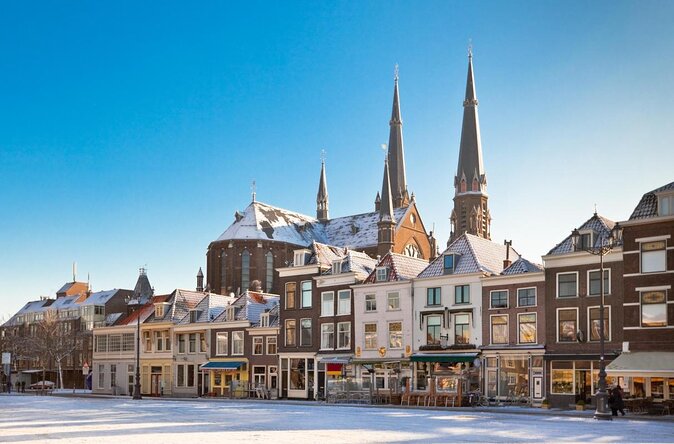
- A tight 2-hour Golden Age walk: key sites clustered around Market Square, Old Delft canal, and the Beestenmarkt area.
- Vermeer connections at multiple stops: you get a clear sense of where art fits into Delft’s city life.
- Power + governance on the same route: churches, town hall, Orange’s household, and commercial/military buildings.
- Water management explained without jargon: the water board story makes Delft’s survival feel real.
- Private guide with room for your pace: flexible enough for mixed ages.
- Stop-by-stop entry is listed as free: the itinerary calls out free admission for each highlighted stop.
Starting at Hugo Grotius: how this 2-hour walk really works
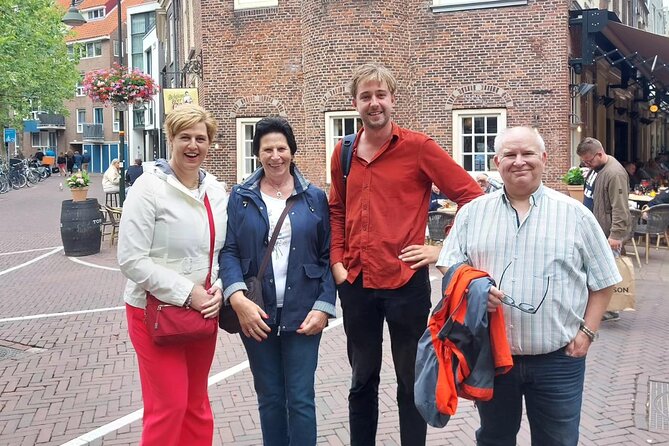
Your tour begins at the Hugo Grotius statue on the Markt in Delft, and you end right back at that same spot. That matters more than you’d think. Delft’s center is compact, but it’s also easy to waste time crossing the same streets twice when you’re trying to fit a day together.
The format is simple: you walk between major landmarks, and your guide fills in the why behind what you’re seeing. The total time is about two hours, which is long enough to get meaning out of the buildings without turning into a full-day commitment.
This is offered in English, and you’ll receive a mobile ticket. If you want to reduce friction at the start, optional pickup from any place in the city centre is available—handy if you arrive by tram, train, or on foot from a hotel a bit off-center.
You can also read our reviews of more tours and experiences in The Hague.



New Church on the Markt: royal burials and a tower you can’t miss
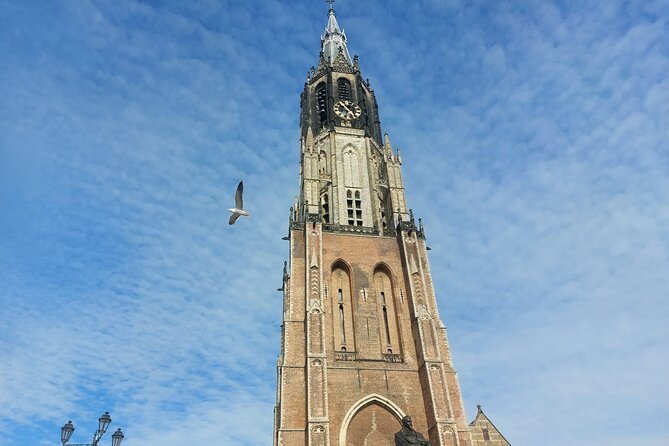
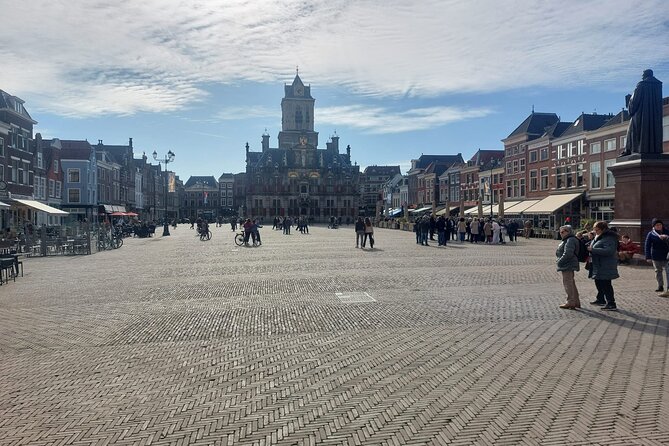
Your first major anchor is the New Church, right beside Delft’s historic Market Square and the Hugo Grotius statue. It’s a striking “start here” spot because you’re already in one of the oldest market squares in the Netherlands, where civic life and storytelling have long overlapped.
This church matters for two reasons. First, it’s the burial place of the Dutch royal family, which gives the building real political weight. Second, it’s also the final resting place of Hugo Grotius himself, so you’re literally starting the walk with a person who helped shape Dutch intellectual life.
And then there’s the tower. The New Church tower is described as the second tallest church tower in the country, which makes it an easy skyline landmark while you’re oriented in the center. Even if you don’t climb it, your guide can connect the height to Delft’s sense of status and ambition.
Practical note: the listed admission ticket for this stop is free, so you’re not spending your energy on extra lines or budget surprises.
Stadhuis Delft and the Old Church’s leaning tower: governance meets art
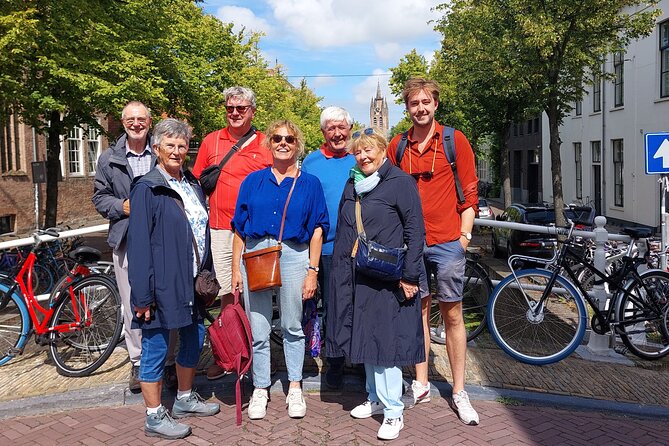
From the Markt, the route passes the Stadhuis Delft, Delft’s historic town hall. You’ll notice the elegant Renaissance façade, but the important part is what your guide explains behind it. This civic building carried a tough past: fires, justice, and city governance, including a role as a former prison.
That’s a big theme in Delft. You don’t just see monuments; you see institutions that had to function under pressure—sometimes with harsh consequences. When your guide connects that history to the town hall’s position in the city, the building becomes more than pretty architecture.
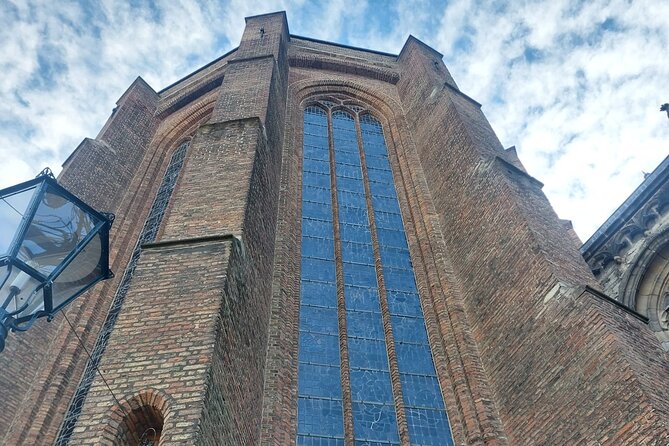
Next comes the Old Church, the stop with the most immediate visual hook: its tower leans. Inside, the Old Church is also tied to one of Delft’s best-known names—there’s a grave of Johannes Vermeer.
What makes this stop work on a walking tour is the explanation you get. Your guide walks you through why the tower began to lean soon after construction started, which turns a single curious detail into a story about building challenges and long-term consequences.
You’ll also pass reminders along the way, including a former Butter House, the old Weigh House, and the historic home of Antonie van Leeuwenhoek. Plus, you move through the area described as Delft’s former beer-brewing quarter, so the route quietly shows how industry and daily life sat near the religious and civic power.
The itinerary lists the admission ticket here as free, which keeps the pacing smooth.
Prinsenhof: William of Orange’s assassination and why Delft became central
Across from the Old Church, you reach the Museum Prinsenhof Delft, a former monastery that later became a residence for William of Orange, known as the Father of the Fatherland. This stop is less about one building’s look and more about a moment in history that changes the future.
The key event is the assassination of William of Orange in 1584, which your guide uses to explain how the incident helped shape what the Netherlands became afterward. Delft’s link to the House of Orange isn’t just a trivia fact; it’s a way to understand why the city carried political importance, not just artistic fame.
This is also where a private guide earns their keep. When the story is tied to what you can see—hallways, locations, the sense of place—the whole episode stops feeling like a line from a textbook. It becomes something you can picture while you’re standing there.
Admission is listed as free for this stop too, so you get history without paywall friction.
Gemeenlandshuis van Delfland: the water board story you’ll remember
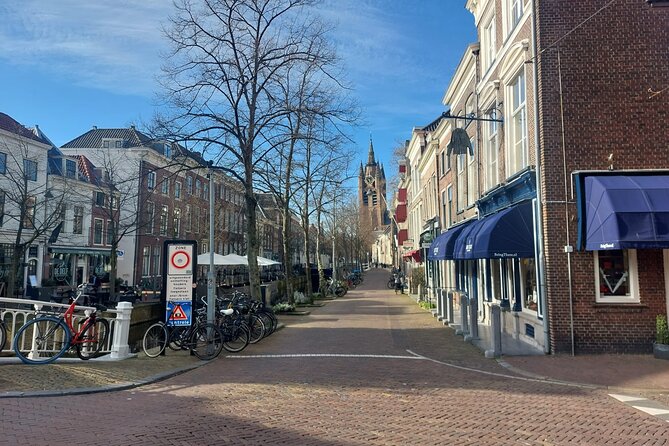
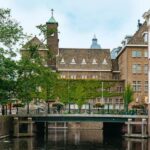
One of the cleverest parts of this route is the stop on the Oude Delft canal: the Gemeenlandshuis van Delfland. It’s described as the oldest surviving house in the city, decorated, and housing the local Water Board since 1645.
If you’ve ever wondered why the Netherlands treats water like a life-or-death job—this is your answer. Your guide will explain what a water board is and why it mattered so much for Delft’s survival and prosperity. In practical terms, it reframes the city from a postcard to a system that had to work every day.
This stop is also a reminder that the Dutch Golden Age wasn’t only about paintings and trade. It depended on organizing resources, managing risk, and keeping water under control—especially in a place where the landscape and the stakes are always close.
The listed admission ticket for this stop is free, and it’s an easy, smart shift from churches and politics to something more utilitarian that still feels deeply historical.





Armamentarium and the Dutch East India Company: Delft’s money, ships, and power
Continuing along the canal, you’ll reach the Armamentarium area, including a former state weapons armory and the main building of the Delft chamber of the Dutch East India Company. Even though you’re on foot, these are major clues about how Delft fit into the Dutch Republic’s expansion.
Your guide explains Delft’s role in military, maritime, and commercial growth. That’s the bridge between the “look” of Golden Age Delft and the engine behind it. This isn’t just about who built churches. It’s also about how the city helped build an economy—and how that economy supported power on land and at sea.
One detail I like here is the specific art connection: you’ll see the exact location where Johannes Vermeer stood when he painted View of Delft. It’s not just a museum association. It’s a spatial one. You’re standing near the viewpoint and hearing how the painting connects to the city’s layout and identity.
This stop is also listed with free admission in the itinerary, keeping the walking flow tight.
Synagogue memory and the Beestenmarkt finish: everyday Delft after the big stories
As you move north along Delft’s second-oldest canal—once the city’s grain market—you’ll pass Vrienden van de Synagoge Delft. This stop is focused on the former synagogue of Delft and reflects the long presence of a Jewish community in the city.
That matters because it adds texture to the Dutch Golden Age story. When you only think about princes, painters, and churches, it can feel like the city belonged to a narrow slice of people. This stop reminds you that real communities shaped Delft too, including minority communities with their own institutions and traditions.
The tour ends at the Beestenmarkt, just behind the Markt where you started. Historically, it was an animal market; today it’s a popular meeting square lined with cafés and restaurants. It’s a very practical ending point because you can go straight from history talk into a meal or a casual drink without needing transportation.
If you want local tips, your guide can share where to enjoy a good beer, casual snacks, or a relaxed dinner. I like this kind of finish because it turns the tour into a day plan, not a one-off experience.
Guide impact in plain terms: Robin and Matyas-style hosting
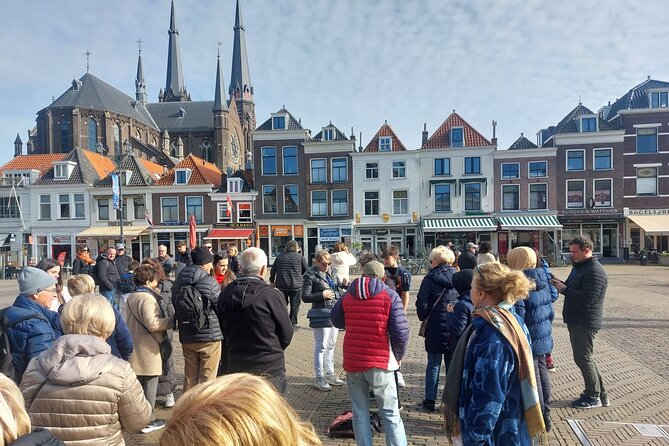
A good walking tour depends on the guide’s pacing and how they handle questions. The guides associated with this route tend to bring an easygoing tone, with real humor and lots of history detail delivered in a conversational way.
For example, Robin has been described as friendly, funny, and highly informative, with a talent for answering questions on the spot. There’s also a nice practical side—he’s offered advice that goes beyond landmarks, including pointers about grocery shopping and dining. That kind of help is surprisingly useful on a tight travel schedule.
Another guide, Matyas, has been praised for charm and a friendly demeanor, along with strong storytelling that helps first-time visitors make Delft feel memorable. And importantly, guides in this tour style seem comfortable adjusting the plan when the group includes different ages and needs—something that can make a standard “fixed route” tour feel much less stressful.
Bottom line: if you want more than a script, this format is built for conversation.
Price and value for a private group up to 15
The price is $203.22 per group for up to 15 people, and the tour lasts about 2 hours. On paper, it can look high if you’re thinking per person. But private tours don’t price like museum tickets; they price like guide time and planning.
Here’s the value logic that usually works: the fewer people you bring, the closer the cost feels to a one-person premium. The more people in your group, the more the price spreads out and becomes a good deal for a private experience.
Also, the stops listed in the itinerary have free admission tickets, so you’re not adding hidden costs at each building. And because the meeting point is central and the loop is efficient, you spend time on sights instead of commuting across town.
If you’re traveling as a family, a couple of friends, or a small group with different interests, the private setup is usually the deciding factor. You can ask follow-ups and keep the pace from turning into a sprint.
Who this Delft Golden Age walk is best for
This tour makes the most sense if you want a structured introduction to Delft’s Golden Age without turning it into a checklist you read on your phone.
It’s especially good for:
- First-time visitors who want the main story threads tied together: churches, governance, Orange, trade, and art.
- People who enjoy learning while walking, since the narration is woven into each stop.
- Small groups that benefit from flexibility. The tour has been described as adaptable when a group included a senior citizen and a small child.
If you want total freedom to wander at your own pace with zero guide talk, you might find it a bit structured. But if you want to understand what you’re looking at, you’ll likely feel the payoff.
Should you book this Delft Golden Age walking tour?
Book it if you want meaningful context in a short, efficient route. Delft can be gorgeous, but it’s also easy to skim past key landmarks without realizing what they represented. This walk gives you the why behind the tower lean, the Orange link, the water board importance, and the trade-and-military infrastructure tied to Delft’s power.
I’d skip or reconsider if you prefer independent travel where you don’t want explanations along the way, or if your group wants a long gallery-style day rather than a tight city walk.
If you’re trying to plan a first Delft day, this is a strong anchor. Start at the Markt, get your bearings fast, and end at Beestenmarkt with an easy path to food.
FAQ
Where does the private walking tour meet?
It meets at the Hugo Grotius Statue, GW, Markt, 2611 GW Delft, Netherlands.
How long is the tour?
The tour lasts about 2 hours.
Is this tour private or shared with strangers?
It’s private. Only your group participates.
What language is the tour guide?
The tour is offered in English.
Is pickup available?
Yes. If you want, you can be picked up from any place in the city centre. You just need to request it.
Is there an admission fee at the stops?
The itinerary lists admission tickets as free for the highlighted stops.
What do I need to have for entry or check-in?
You’ll receive a mobile ticket.
Can I cancel and get a full refund?
Yes. You can cancel up to 24 hours in advance for a full refund.