REVIEW · THE HAGUE
e-Scavenger hunt Delft: Explore the city at your own pace
Book on Viator →Operated by Qula · Bookable on Viator
Delft turns into a game map. This e-Scavenger hunt lets you explore at your own pace with phone prompts, riddles, and short assignments across some of the city’s best-known corners. I like that the trail is built for real-life wandering: you can start when you want, pause when you need a break, and keep going until the puzzles feel done.
Two more reasons it works: you get clear stop-by-stop checkpoints and you’re gently forced to look closely at the streets as you solve each task. One thing to consider is that if the session times out, you may have to start the trail over (even if you keep the same team name).
In This Review
- Why This Delft City Trail Works Better Than a Usual Walk
- Key Takeaways Before You Start
- The Real Price: $37.35 Per Group Can Be a Bargain
- Logistics That Matter: Phone, Data, and a Simple Start
- How Long Is 3 Hours If There’s No Time Limit?
- Stop-by-Stop: Delft Checkpoints and What Each One Gives You
- Stop 1: Beestenmarkt
- Stop 2: New Church
- Stop 3: Museum Prinsenhof Delft
- Stop 4: Stadhuis Delft (Delft Town Hall)
- Stop 5: Old Church
- Stop 6: Hugo de Groot Monument
- Stop 7: Bagijnhofpoort
- Stop 8: Vleeshal de Koornbeurs
- Stop 9: Gemeenlandshuis van Delfland
- Stop 10: Vermeer Centrum Delft
- Stop 11: Hot Spot Doelenplein Delft
- Stop 12: Markt
- The Experience Style: Team Play, Photo Breaks, and Low Stress
- Who Should Book This Delft Scavenger Hunt?
- Quick Advice to Make It Smoother
- Should You Book e-Scavenger hunt Delft?
- FAQ
- What is the price and group size?
- How long does the e-Scavenger hunt take?
- Do I need to start at a specific time?
- How do I play the trail?
- Do I need my own smartphone and data?
- Where does the experience start and end?
- What is the cancellation policy?
Why This Delft City Trail Works Better Than a Usual Walk
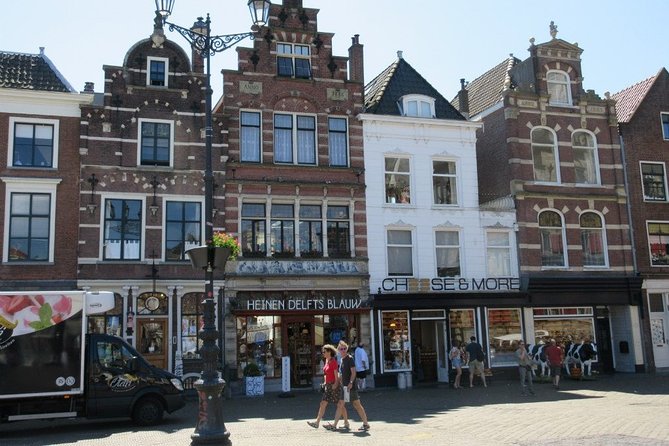
This is not a guided tour where you march to someone else’s schedule. Instead, you get a self-guided game experience that still keeps you moving through Delft in a sensible order. The “3 hours (approx.)” estimate gives you a good target, but the important part is what’s missing: there’s no fixed start time and no hard end deadline.
The format also fits different travel styles. If you like planning, you can skim ahead and mentally group stops. If you like drifting, you can treat the trail as a nudge, not a leash. And because you’re using your phone, you can zoom in on the moment you’re in rather than replaying big-picture directions all day.
Key Takeaways Before You Start
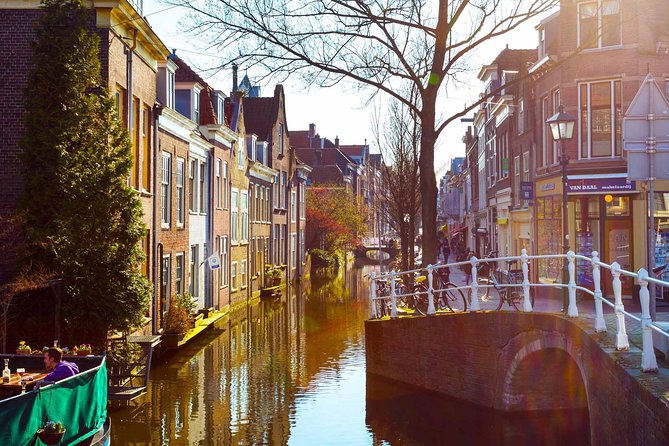
- Flexible timing: start anytime, pause or stop, and keep playing without a time limit.
- Group-friendly: one paid booking covers a team of up to 6 people.
- 12 city stops: checkpoints move you around Delft in a logical loop.
- Smartphone-based gameplay: your route and tasks live in the free app trail.
- Short competitive moments: some challenges can feel timed, even without overall time pressure.
- Watch for timeouts: if your session expires, you may need to restart the trail.
You can also read our reviews of more tours and experiences in The Hague.



The Real Price: $37.35 Per Group Can Be a Bargain
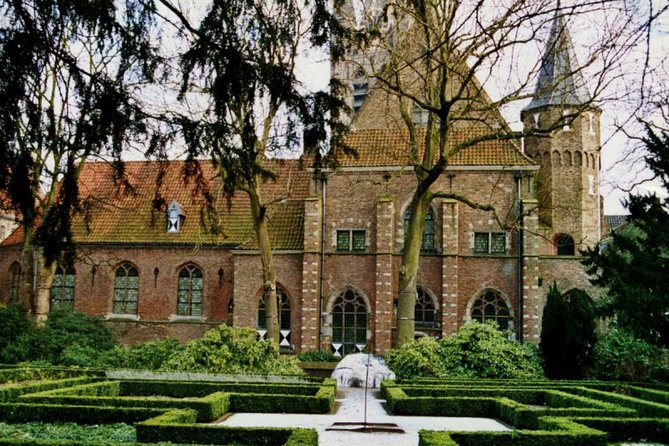
The cost is $37.35 per group for up to 6 people, playable in English (and available in multiple other languages too). Do the simple math and it can come out very reasonable per person—especially if you’re splitting among friends or a family with kids who actually want to participate.
What makes it good value is the way the price buys structure. You’re not just paying for a walking route; you’re paying for prompts that keep you engaged while you move. In a city like Delft, where it’s easy to wander aimlessly (especially if you’re eating your way through pastries), a trail like this helps you cover ground without forcing a rigid schedule.
Logistics That Matter: Phone, Data, and a Simple Start
To play, you’ll download the Delft City Trail through a free smartphone app, then follow the instructions you receive by email after booking. The activity runs 24/7, so you can fit it into a rainy afternoon or a calm evening stroll. There’s no need for a specific reservation time.
One practical catch: the experience does not include your smartphone or mobile data. If you’re planning to use mobile data only, make sure you have a signal. If you prefer offline mode, you’ll want to test whether the app works well without a connection before you head out.
Your start and end are both at:
Van Leeuwenhoeksingel 42A, 2611 AC Delft, Netherlands
How Long Is 3 Hours If There’s No Time Limit?

The experience is listed as about 3 hours (approx.), but the game itself has no time limit. That means the real duration depends on how you play:
- If you answer quickly and keep moving, you can finish in around the estimated time.
- If your group debates answers, stops for photos, or takes breaks between checkpoints, you’ll stretch it out.
This flexibility is a big deal for families and mixed-age groups. You can slow down near the more interesting buildings, then speed up when the next task is straightforward. And if someone needs a bathroom break, you can step away and come back without throwing off the whole plan.
Stop-by-Stop: Delft Checkpoints and What Each One Gives You
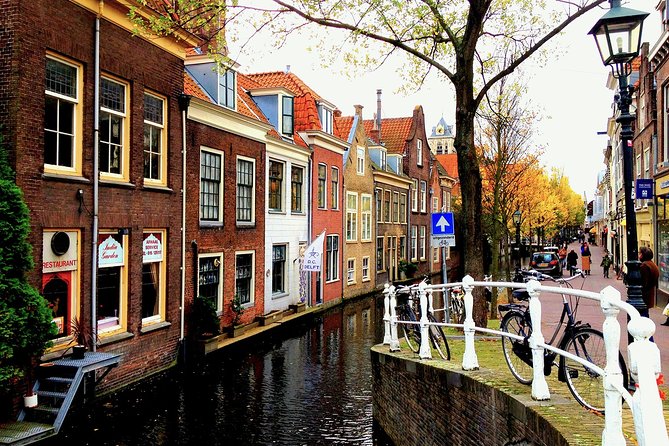
This trail is built around 12 named stops. Each one is a chance to switch from passive sightseeing to active noticing. You’re not just walking through Delft—you’re using the surrounding streets and buildings as clues, which is exactly why the route feels more satisfying than a random loop.
Below is a practical way to think about what you’ll do at each checkpoint, and what could feel easy or slightly tricky depending on your group.






Stop 1: Beestenmarkt
Beestenmarkt is your warm-up. Early stops are where the game format clicks—read the prompt, scan the area for the detail it wants, and move on. If your group is new to city trails, this is where you’ll figure out how fast you want to answer.
Potential drawback: if you start tired or underpowered on battery, you might take longer here just getting comfortable with the flow.
Stop 2: New Church
By the time you reach the New Church stop, you’ll likely feel the game “tighten.” Expect a task that pushes you to observe what you’re seeing rather than rely on broad memory. This is a good place for a slow look before you answer.
Tip: split duties—one person reads, one person looks, and one person double-checks the answer.
Stop 3: Museum Prinsenhof Delft
This checkpoint gives you a change of pace, because museum areas often invite quick curiosity stops. Use the trail prompts to focus your attention—otherwise, it’s easy to get stuck wandering the edges.
Practical note: if you decide to step inside a museum, keep in mind the game continues either way, so you may need to re-spot clues after a detour.
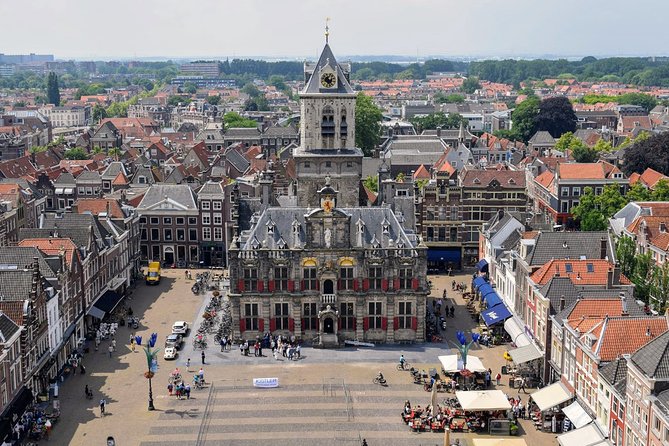
Stop 4: Stadhuis Delft (Delft Town Hall)
Town hall stops tend to work well for “look and read” style assignments. The area is a strong orientation point, so even if your group misses a clue, you’ll usually be able to recalibrate and try again without feeling lost.
Why it’s useful: it helps you anchor yourself in the city center as you move onward.
Stop 5: Old Church
By mid-trail, your group has momentum. The Old Church checkpoint is a natural moment to slow down, because churches often reward careful watching for small visual details (the kind a puzzle will likely reference).
Consideration: if your group prefers hands-on problem-solving, this is where you’ll enjoy the challenge most.
Stop 6: Hugo de Groot Monument
Monuments usually shift the trail from “street-level reading” to “spot the exact marker” thinking. If your group is competitive, this kind of checkpoint is where you may feel the push—answering quickly can matter during timed moments.
If you’re with kids: this is a good spot to let a younger person be the “finder.”
Stop 7: Bagijnhofpoort
Bagijnhofpoort is the kind of stop that can feel like stepping into a quieter pocket of Delft. Checkpoints like this help break the sightseeing rhythm so the day doesn’t feel like one long street.
Potential drawback: tight spaces can make it feel slower if everyone tries to crowd around the same clue at once.
Stop 8: Vleeshal de Koornbeurs
Indoor-market style names often bring more visual variety around the area. That’s helpful for puzzle hunting because you’re not relying on one flat view—you can circle, compare, and spot what the prompt is pointing at.
Tip: if you’re taking photos, do it after you solve, not before. It saves you from re-looking at the area later.
Stop 9: Gemeenlandshuis van Delfland
This checkpoint can work like a “focus” stop—your phone prompt pulls you into a specific question. When you’ve been walking for a while, tasks that narrow your attention can feel like a reset.
Why it matters: it keeps your group from drifting into vague sightseeing mode.
Stop 10: Vermeer Centrum Delft
A named cultural center like Vermeer Centrum Delft is a natural highlight zone in the route. Even if you don’t plan an extra museum visit, this stop adds thematic variety so the trail doesn’t feel repetitive.
Practical angle: expect your group to slow down here, because center stops tend to invite more looking and comparing.
Stop 11: Hot Spot Doelenplein Delft
The Doelenplein stop is a classic “energy checkpoint”—a place where you can see the wider street rhythm again. This is often where your group will want one last round of problem-solving before wrapping up.
Consideration: if you’re the type who likes to snack as you walk, this is the moment to plan a quick pause without losing your place.
Stop 12: Markt
The Markt stop finishes the loop in a satisfying way because open squares are easy to navigate. It’s where you can double-check final answers and keep the group moving toward the finish without extra confusion.
Why it works as an ending: you end where you can naturally regroup, chat about the puzzles, and decide whether you want to keep exploring on foot.
The Experience Style: Team Play, Photo Breaks, and Low Stress
This trail is private for your group, so you’re not sharing your path with random strangers trying to beat your speed. It’s also designed so you can play with a bit of friendly competition—your goal can be a top score, and the structure makes it feel like a day activity, not just walking.
One review-style theme that’s worth taking seriously: the game can feel exciting even without overall time pressure. Some challenges may use time limits inside the session, which is fun for groups that enjoy that little adrenaline hit. If your group hates timed moments, you’ll want to keep calm and treat any time pressure as a game mechanic, not a test.
Also, note the one wrinkle that can sour the mood: session timeouts. If your phone loses connection, battery drops, or the session expires, you might need to restart the trail. It’s not a reason not to do it, but it is a reason to keep an eye on battery and signal.
Who Should Book This Delft Scavenger Hunt?

This works best if your group wants active sightseeing. I’d recommend it for:
- Families who want kids engaged without long lectures
- Friend groups that like game rules and team challenges
- People who don’t want to commit to a fixed tour time
- Visitors who like structure but still want freedom
If you want a traditional, face-to-face guide telling you exact historical stories, this won’t replace that. The fun here is the puzzle-driven walk—using the city streets as your classroom.
Quick Advice to Make It Smoother

- Bring a fully charged phone and, ideally, a power bank.
- Assign roles in your team: reader, finder, and checker.
- Keep moving between stops. If you get stuck, step back and look around rather than staring at one spot.
- Plan your snack or coffee break at a natural square stop so you don’t lose the group rhythm.
Should You Book e-Scavenger hunt Delft?
I think this is a smart pick if you’re balancing sightseeing with something playful. The big win is the combination of flexible timing and a structured loop through Delft’s key central areas, priced reasonably for groups up to 6. You get a full afternoon option without the stress of catching a guide at a specific time.
Skip it only if your group strongly dislikes phone-based activities, or if everyone in your party wants the same pace and would be frustrated by puzzle challenges. Otherwise, this is a cost-effective way to see Delft in a way that feels like a shared activity, not a checklist.
FAQ
What is the price and group size?
It costs $37.35 per group for up to 6 people.
How long does the e-Scavenger hunt take?
It’s listed at about 3 hours (approx.), though there’s no time limit for the game itself.
Do I need to start at a specific time?
No. There are no fixed starting times, and the trail is available 24/7.
How do I play the trail?
After booking, you receive an email with instructions to play the trail on your smartphone using the app. You then start at the meeting point and follow the prompts.
Do I need my own smartphone and data?
Yes. A smartphone and data are not included.
Where does the experience start and end?
It starts and ends back at the meeting point: Van Leeuwenhoeksingel 42A, 2611 AC Delft.
What is the cancellation policy?
You can cancel for a full refund up to 24 hours in advance of the experience start time. If you cancel within 24 hours, the amount paid is not refunded.