REVIEW · THE HAGUE
Hague: The Heart of Old Town Exploration Game and Tour
Book on Viator →Operated by Questo · Bookable on Viator
A city game sounds gimmicky. This one works because it’s paced, self-guided, and built around looking closely at real places. I like the story-and-clue format that keeps you moving without feeling like a lecture, and I like that it’s designed for a tight walk through the central old-town area in about 1 hour. One drawback to weigh: you’re relying on the app and checkpoints, and a few people found navigation and reading on-screen tricky in bright sun or when locations were hard to access.
What makes it especially practical is the low-friction setup and the way it avoids crowds. You book it, then play when you want, and you don’t need internet while you’re walking. My caution? If you hate apps in general or want a classic guided tour feel, this may feel like extra steps compared with a normal audio or human-guided walk.
In This Review
- Key things to know before you play
- Price and time: good value for a one-hour story hunt
- How the Questo walking game actually works
- Start at Lange Voorhout 74, end at Spui 175
- Escher in Het Paleis: turning the palace museum into a clue stop
- Abbey Church in Loosduinen: oldest-building energy, no lecture required
- Noordeinde Palace: royal workplace outside the museum box
- Great or St. James’ Church: weddings, baptisms, and the high tower
- Old City Hall on Groenmarkt: Renaissance civic life
- Gevangenpoort and the Prince William V Gallery area: a former gate turned prison feel
- The Hague history museum stop: short pauses, citywide context
- Mauritshuis: 17th-century home turned museum landmark
- Binnenhof: where the States General meets
- The Nieuwe Kerk end-game: Protestant architecture finish line
- Where this game shines, based on real reactions
- Price and logistics: the parts that can make or break it
- Who should book this self-guided Hague game
- Should you book this Hague game?
- FAQ
- How long is the Hague exploration game?
- How much does it cost?
- Do I need internet to play?
- What language is it offered in?
- Is this a guided tour with a person?
- Where does it start and where does it end?
- Can I play it at any time after booking?
- What if my group is more than 15 people?
- Is there a service animal policy?
- If plans change, can I cancel and get a refund?
- Is the experience available all day?
Key things to know before you play

- Offline by design: you don’t need internet to run the game once you’re set.
- Private and no human contact: it’s just your group, with no guide walking alongside you.
- Clue checks at major landmarks: you pause at each stop and answer to move forward.
- Fast old-town loop: it’s paced for roughly 1 hour 5 minutes of walking.
- Central Hague focus: you hit the core sights rather than the whole city.
- App matters: if the map view or checkpoint access glitches, your progress can stop.
Price and time: good value for a one-hour story hunt
At $7.20 per person for about 1 hour 5 minutes, this is priced like a budget activity, not a big-ticket tour. You’re paying for the structure: a guided-feeling route, short tasks, and a story thread that connects landmark stops. If you like walking at your own speed, it can be a cost-effective way to see more than the usual postcard viewpoints.
Time also matters in The Hague. Many highlights cluster in the center, and this game keeps you from wandering too far in the wrong direction. You get a clear start and finish, plus step-by-step guidance that funnels you to the Nieuwe Kerk area at the end.
You can also read our reviews of more tours and experiences in The Hague.



How the Questo walking game actually works
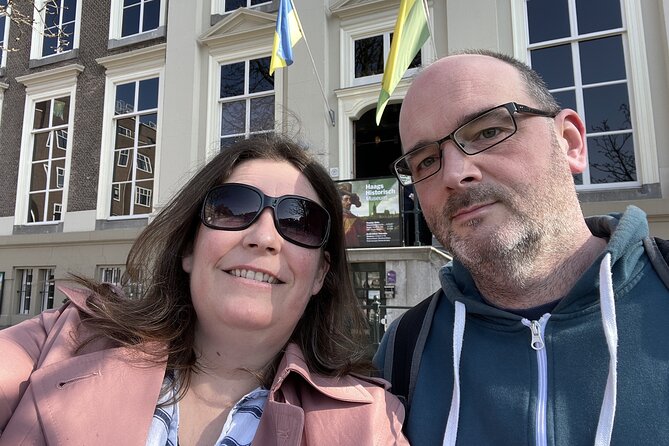
This is a self-guided walking experience delivered through the Questo app. After booking, you can play without rescheduling, and you can play offline, meaning you’re not stuck hunting for data coverage while you’re outside.
The flow is simple: you start at the first landmark, then follow the prompts to the next spot. At each stop, you look around for a detail and answer the challenge to unlock the next location. That last part is key: it’s not just sightseeing. You have to engage with the surroundings to keep the route moving.
Because it’s private, there’s no group pacing, no waiting for a guide, and no crowd shuffling. That’s a real win if you prefer quiet sightseeing, or if you’re visiting when the city is busy.
Start at Lange Voorhout 74, end at Spui 175
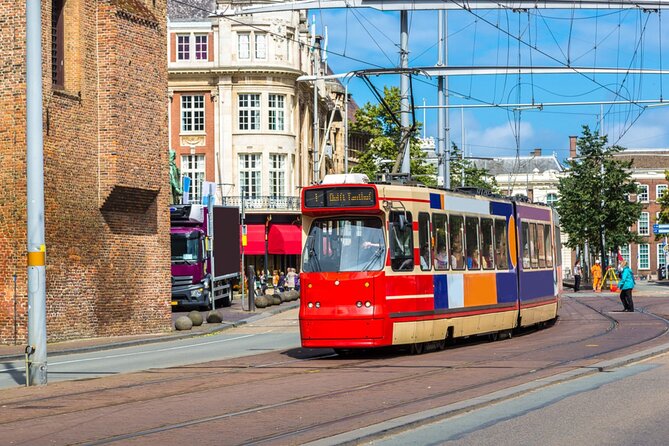
Your official start is Lange Voorhout 74, 2514 EH Den Haag. The finish is Spui 175, 2511 BM Den Haag. The app is set up to guide you step by step to the Nieuwe Kerk, so you’re not left guessing which streets to take.
For practical planning, it helps to arrive with a little buffer. This style of activity eats time if you’re still fighting with your phone or searching for the right screen. On the upside, since there’s no live guide to coordinate with, you’re free to pause for photos, a snack, or a breather whenever you want.
Escher in Het Paleis: turning the palace museum into a clue stop
One of the first stops is Escher in Het Paleis, housed in the Lange Voorhout Palace. Even if you don’t go inside, this is a strong start point because the building sits in a classic palace setting and the art-world reputation does the heavy lifting for you.
In the game, you’re asked to look around and find the answer to advance. That means your visit becomes less about reading general museum facts and more about noticing what’s in front of you. If you enjoy small observational puzzles—signs, text, architectural details—this kind of start can feel surprisingly fun.
A small consideration: museum buildings can have areas that feel less “street accessible,” depending on how the site is configured at the moment. Since the game requires you to physically reach each checkpoint area, keep an eye out for any barriers near the palace or surrounding entrances.
Abbey Church in Loosduinen: oldest-building energy, no lecture required
Next comes the Abbey Church in Loosduinen in The Hague, described as the oldest building in The Hague—older than the nearby Knights’ Hall, both built in a similar style. The church dates to 1238 to 1250, built in a transitional Roman-to-Gothic style by the wife of Dutch Count Floris IV.
What I like about this stop in a game format is the contrast. You get the serious dating and architectural vibe, but you don’t have to sit through a long explanation. You just look for the clue tied to the story and move on.
The practical tip here is to slow down for a moment. With a church that old, you can miss key details if you rush. Even a quick two-minute read of your screen plus a scan of the stonework and surrounding features can make the whole stop smoother.






Noordeinde Palace: royal workplace outside the museum box
The game then heads to Noordeinde Palace, one of the three official palaces of the Dutch royal family. It’s been the official workplace of King Willem-Alexander since 2013.
This stop can be a bit tense in a good way, because palaces feel different from churches and city buildings. You’re in the world of power and protocol, and the game pushes you to engage visually rather than just take a photo.
One caution based on how these checkpoints work: palaces and security areas sometimes have fencing or access limits. If a checkpoint lands in a hard-to-reach area, you may end up looping or waiting. If you’re the kind of traveler who gets stressed when things are slightly blocked off, this is the moment to keep calm and be flexible.
Great or St. James’ Church: weddings, baptisms, and the high tower
A major Protestant landmark follows: the Great or St. James’ Church on Torenstraat, named for its high tower. It’s described as one of the oldest buildings in The Hague, and it has hosted baptisms and marriages for the House of Orange-Nassau. The most recent events noted are for Willem-Alexander and his daughter Catharina-Amalia, Princess of Orange.
In a guided walk, this might come with a heavy dose of genealogy. Here, the approach is lighter: you’re there to find the answer to the challenge that unlocks the next stage. It’s a clever way to make the church’s importance stick, because you’re tied to a specific detail instead of collecting random facts.
If you’re visiting during busy times, church areas may have foot traffic. Since this is private, you can keep your pace and pause without needing to stay in lockstep with strangers.
Old City Hall on Groenmarkt: Renaissance civic life
The route includes the Old City Hall on Groenmarkt, near the Grote Kerk. It’s a Renaissance-style building and was the former seat of the city’s government. It’s still used for civic wedding ceremonies, and the royal family registers family births there.
This is where the game feels most useful for first-timers. City halls usually blur together on a walking trip, but this one is still active for modern life. The story angle helps you see it as a living civic space, not just a pretty facade.
For your own experience: when a building serves real ceremonies, the surroundings can look different on different days. You may notice flags, security attention, or event-related activity. Don’t assume it will look static.
Gevangenpoort and the Prince William V Gallery area: a former gate turned prison feel
Then you reach the Gevangenpoort, described as a former gate and medieval prison on the Buitenhof, next to the 18th-century art gallery founded by William V, Prince of Orange, known as the Prince William V Gallery.
Even without going deep into prison history, this is a powerful stop because it’s specific. A gate-turned-prison location has built-in drama, and the game makes you anchor that drama to a clue tied to the place.
Checkpoint practicality matters here too. Gate and prison areas can involve walls, gates, and nearby restrictions. If you can’t stand exactly where you need to stand for the app to recognize your location, your progress can slow.
The Hague history museum stop: short pauses, citywide context
You’ll also make a stop at a museum dedicated to The Hague’s history, with artifacts, portraits, cityscapes, and temporary exhibitions. The game again uses this stop as a clue checkpoint, pushing you to look for an answer and then move on.
I like this kind of “museum without the commitment” approach on a tight schedule. You get context for the city’s development without needing to carve out extra time for full interior exploration. For many travelers, that’s a smart use of an hour.
If you’re hoping for guaranteed museum entry, you should treat this as a guided exterior pause plus clue-based interaction. The data you’re working with doesn’t promise admission time.
Mauritshuis: 17th-century home turned museum landmark
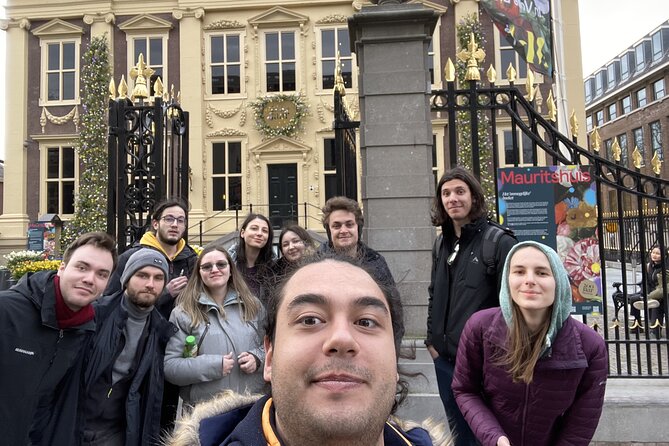
The route then takes you to the Mauritshuis, a 17th-century building originally the private residence of Count Johan Maurits of Nassau-Siegen, known as Maurits’s house. Since 1822, it has functioned as a museum.
Mauritshuis is one of those Hague anchors. In a game format, you don’t just admire the building—you’re nudged to use the phone as your guide and your quizbook at the same time.
This is also a great “reset” point in the middle of the walk. By then you’ve been moving through church and civic spaces. Switching to a museum landmark lets you change your brain from dates and functions to art and collecting.
Binnenhof: where the States General meets
The Binnenhof complex sits in central The Hague next to the Hofvijver. It houses the meeting place of both houses of the States General of the Netherlands, plus the Ministry of General Affairs and the office of the Prime Minister.
This part of the route can be surprisingly moving, even if you’re not a politics nerd. Standing near a place that’s been institutional for centuries gives weight to the rest of the walk. The app’s clue framework keeps it from becoming a dry architectural stop.
If you want to understand how The Hague works as a city, this is one of your best bets. You get royal buildings, religious buildings, and civic buildings—then the Binnenhof ties it all into governance and national decision-making.
The Nieuwe Kerk end-game: Protestant architecture finish line
The final major stop is the Nieuwe Kerk (New Church), built in 1656. It’s described as one of the oldest monuments in the city center of The Hague and representing the pinnacle of Protestant religious architecture in Holland. The New Church was once on an island, until surrounding canals were filled in around 1900.
The app guides you step by step here, and the game concept of looking around for the correct answer brings your attention to the building details that match the story thread. Since the route ends here, it’s a natural place to take your last photos and confirm you actually finished the whole sequence.
If you have to ration your time, I’d still prioritize the last stretch. The ending stop is the moment the whole route “clicks” into a coherent walk through church, civic space, and governance.
Where this game shines, based on real reactions
The strongest praise points cluster around a few things:
- It’s fun without being stuffy. The story-based approach makes history feel like a puzzle, not a lecture.
- It hits main highlights efficiently. The route covers central sights, which fits neatly into a short day.
- The challenge range feels variable. Some tasks are easier, some are harder, which can keep momentum.
- The background story can add texture. One notable mention is a story thread tied to DeWitt, which adds human stakes to the buildings.
And for negatives, I’d take these seriously because they’re practical, not nitpicky:
- App friction slows things down. People called out extra steps like having to download the app and the lack of a better map experience.
- Reading in bright sunlight can be tough. If your plan is to wander on a sunny day, consider how visible your screen will be.
- Blocked checkpoints can end your tour early. If a location is inside a restricted building or behind barriers, the game may not advance as expected.
- Puzzles can feel too simple or overly text-based. Some found the tasks a bit basic, like extracting words from facades.
Price and logistics: the parts that can make or break it
If you want the value version of this experience, do this:
- Bring a fully charged phone.
- Expect short pauses at each stop.
- Walk with patience in case a checkpoint is awkward to reach.
If you want the value version, this also has a big advantage: it’s private and no human contact. That means no waiting, no catching up, and no group tension. For a lot of people, that alone makes the low price feel fair.
But you should also acknowledge the cost in time and attention. You’re paying to play a game. If you end up spending extra time fighting the app, the value drops fast.
For reference, the experience is bookable in English and is offered with a mobile ticket. It also allows service animals, and it’s near public transportation.
Who should book this self-guided Hague game
This fits best if you:
- like walking at your own pace,
- enjoy clue hunts and short challenges,
- want to see a compact set of central landmarks fast,
- prefer not to deal with tour crowds or coordination.
It may not be ideal if you:
- hate app-based navigation or prefer a human guide,
- get frustrated when a checkpoint is blocked,
- expect an audio-first experience. (Some people specifically said an audio format would help.)
If your group is larger than 15 people, the data says you should book multiple times. Since this is private, that’s important to plan so you don’t end up with groups stuck together in a way the game isn’t designed for.
Should you book this Hague game?
Yes—if you’re the kind of traveler who enjoys turning landmarks into mini missions. For a $7.20 activity and an about 1-hour walk through core old-town sights, it’s an efficient way to get your bearings and learn what matters without sitting through a long talk.
Hold off or at least go in with eyes open if you dislike app setup or if you’re worried about accessibility to specific areas. This experience depends on you being able to reach each checkpoint and answer each challenge to unlock the next stop.
If you want a quick, low-crowd, story-driven route that ends at the Nieuwe Kerk, this is a strong match. If you want a classic guided tour with flexibility from a live human, you’ll likely feel the limits of a game.
FAQ
How long is the Hague exploration game?
It’s listed at about 1 hour 5 minutes.
How much does it cost?
The price is $7.20 per person.
Do I need internet to play?
No. It’s designed to be played offline, and you don’t need an internet connection to play.
What language is it offered in?
The experience is offered in English.
Is this a guided tour with a person?
No. It’s described as private with no human contact, so you won’t have a physical tour guide.
Where does it start and where does it end?
It starts at Lange Voorhout 74, 2514 EH Den Haag and ends at Spui 175, 2511 BM Den Haag. The app guides you step by step to The New Church (Nieuwe Kerk).
Can I play it at any time after booking?
Yes. You can play it anytime after booking without rescheduling.
What if my group is more than 15 people?
The experience notes that if your group is larger than 15, you can book multiple times.
Is there a service animal policy?
Yes. Service animals are allowed.
If plans change, can I cancel and get a refund?
Yes. Cancellation is free, and you can cancel up to 24 hours in advance for a full refund.
Is the experience available all day?
The provided opening hours show 12:00 AM to 11:30 PM.