REVIEW · ROTTERDAM
Rotterdam Architecture: Centre and South Bank with watertaxi
Book on GetYourGuide →Operated by Walk Rotterdam · Bookable on GetYourGuide
Rotterdam can feel like a city under construction, so this architect-led day makes perfect sense. You’ll follow a smart, photo-friendly route from newly-built Central Station through key modern Rotterdam landmarks, and then you’ll cap it with a fast watertaxi ride for big skyline views. I especially like how the guide (think Tania) explains what you’re seeing in plain language, and how she connects buildings to what Rotterdam is planning next. One consideration: it’s a 4-kilometer walk, and the tour is not ideal for people who need step-by-step mobility support.
The mix of walking and speedboat is the real value. You get a compact city overview without guessing where to look for the best architecture shots, and you’ll also see the city from the water—right under the Erasmus Bridge. The main drawback is simple: there’s no time sink for detours, and luggage or large bags aren’t allowed, so pack light and wear shoes you trust.
In This Review
- Key things I’d plan around
- Central Station: start under the clock and think like an architect
- Lijnbaan and Timmerhuis: post-war shopping meets OMA-level ambition
- St. Laurens Church and Markthal: the city’s daily-life architecture
- Cube Houses: when Rotterdam turns geometry into a landmark
- The riverside switch: speedboat watertaxi under the Erasmus Bridge
- South Bank: from former harbor area to a restaurant-and-architecture zone
- What the 3 hours really feels like (and what to wear)
- Price and value: why $82 feels fair for this mix
- Who should book this Rotterdam architecture with watertaxi
- Should you book this tour?
- FAQ
- Where is the meeting point for the tour?
- How long is the Rotterdam architecture tour with watertaxi?
- What does the price include?
- What is not included in the tour price?
- Is the tour suitable for children?
- How much walking is involved?
- Is it only available in English?
- Is luggage allowed?
Key things I’d plan around
- Architect guide perspective: You’ll learn the “why,” not just the “what,” with an English guide like Tania who shares future development context.
- Central Station starting point: Meet under the station clock next to the main entrance on the outside, then move quickly into the city core.
- Iconic skyline views from the water: A speedboat watertaxi ride gives you fresh angles on Rotterdam’s harbor-side growth.
- Design-heavy stops you can remember: Lijnbaan, Timmerhuis (OMA), St. Laurens Church, Markthal, and Cube Houses on the walking side.
- South Bank focus for food and architecture: You’ll pass landmarks like Hotel New York, Fenixloods, and Fenix Food Factory.
- Light and fast format: 3 hours, about 4 kilometers of walking, with most of the excitement concentrated into the river crossing.
Central Station: start under the clock and think like an architect
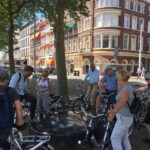
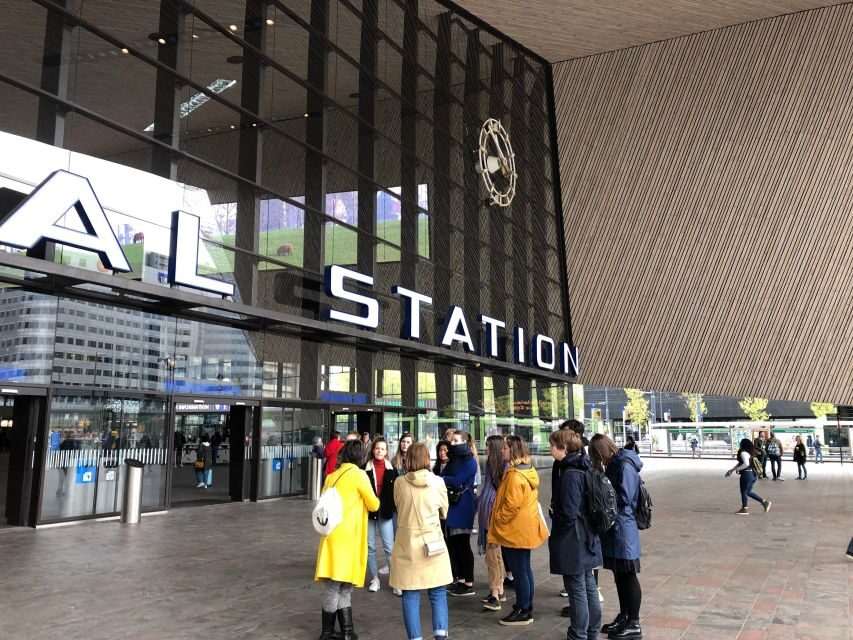
The tour kicks off at Rotterdam Central Station, at the outside meeting point under the station clock near the main entrance. That matters because you’re not wandering trying to find the group; you’re launched right into the route the guide wants you to see.
From there, the day follows an architecturally iconic path through Rotterdam’s core. I like this structure because it prevents the usual “I saw a nice church, then I got lost” problem. An architect guide also changes your focus fast. Instead of treating buildings like scenery, you start noticing geometry, materials, public space, and how the city uses scale—big structures for big ideas.
If your guide is Tania (as in the past), you’ll likely get clear explanations and practical sightseeing tips for after the tour. That’s one of the most praised parts of this experience: the way the guide links what’s around you with what’s next, so the city feels less random once you’re on your own.
You can also read our reviews of more tours and experiences in Rotterdam.

Lijnbaan and Timmerhuis: post-war shopping meets OMA-level ambition
Your walking route begins with the Lijnbaan—a post-war modernist shopping area. Even if you’re not an architecture nerd, this stop works because it shows Rotterdam’s reputation for planning and rebuilding. The buildings here are designed for movement and trade: shops, long lines of sight, and streets that feel like they were meant to function, not just look pretty.
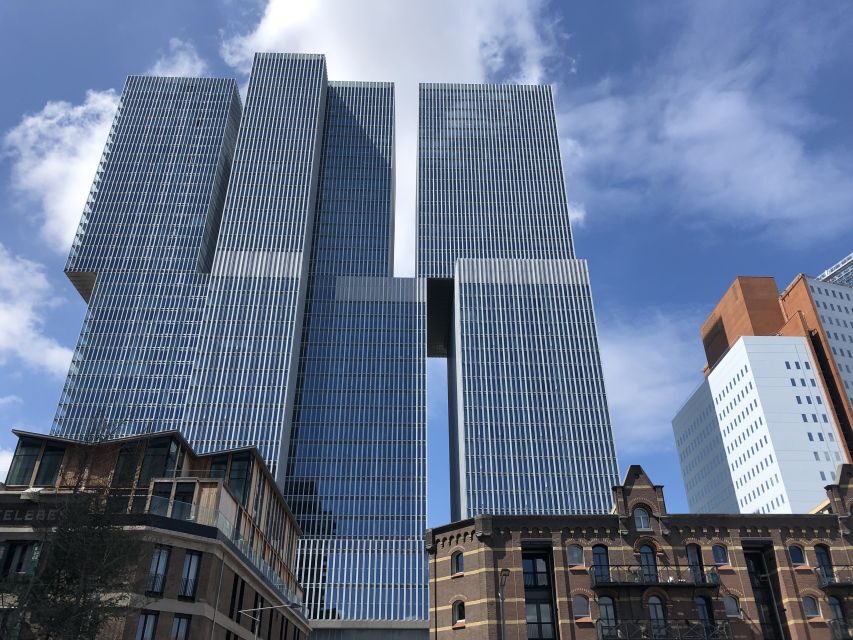
Next comes Timmerhuis, designed by OMA. This is where the tour’s focus on design starts to feel personal. You’re not just seeing a famous firm attached to a building; you’re learning why this kind of architecture fits Rotterdam’s identity—bold, experimental, and built for a city that has repeatedly reinvented itself.
A potential drawback here is timing. The route is structured, so if you want to linger for photos or read every detail at eye level, you’ll need to do quick shots and trust the guide to move you along. Think of it as an efficient architecture walkthrough with moments for pictures rather than a slow museum visit.
St. Laurens Church and Markthal: the city’s daily-life architecture
Rotterdam’s design stories aren’t all concrete and angles. St. Laurens Church adds a different tone, so the day doesn’t feel like it’s stuck in one style or era. It’s a useful contrast stop: after modernist blocks and office-scale statements, a church lets you notice how Rotterdam also supports long-standing cultural anchors.
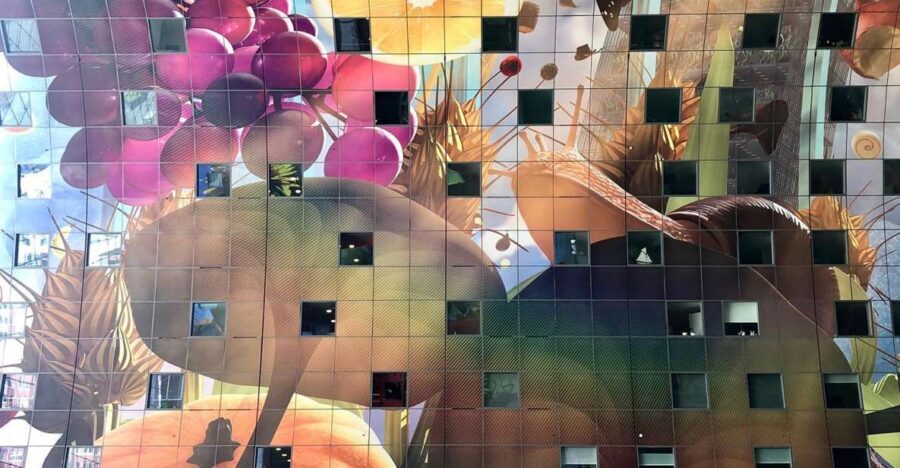
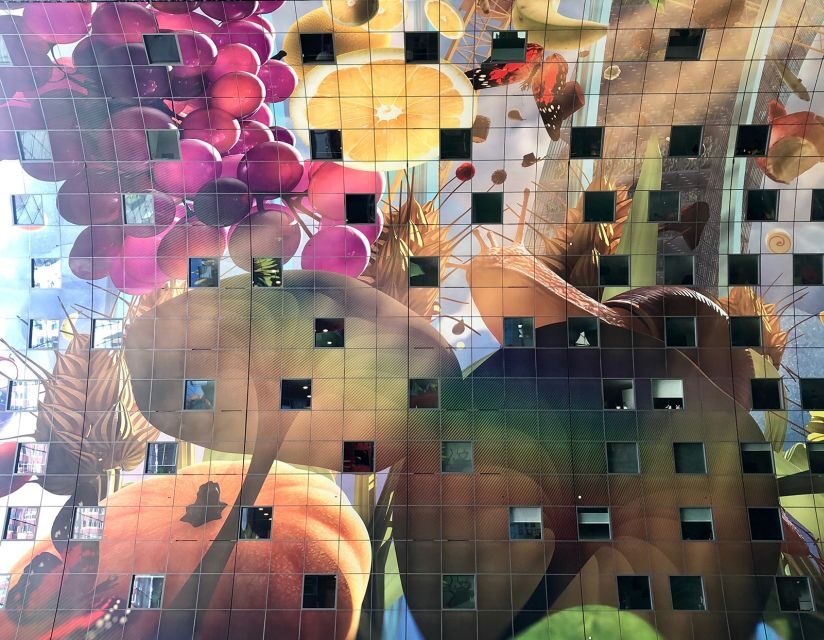
Then you reach the Markthal, described as the most unique indoor market in Europe. That’s exactly the kind of place that benefits from a guide. An indoor market is visually exciting, but it can also be chaotic if you don’t know what to look for. With an architect perspective, you’re more likely to notice how the space is shaped for crowds and vendors—what feels functional, what feels designed for atmosphere, and how the market fits into the surrounding urban fabric.
If you want a quick “future of the city” takeaway, this is a good place for it. Markets aren’t just about food. They show what the city prioritizes at street level: gathering, daily routine, and public space.
Cube Houses: when Rotterdam turns geometry into a landmark
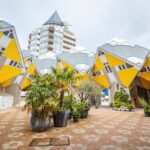
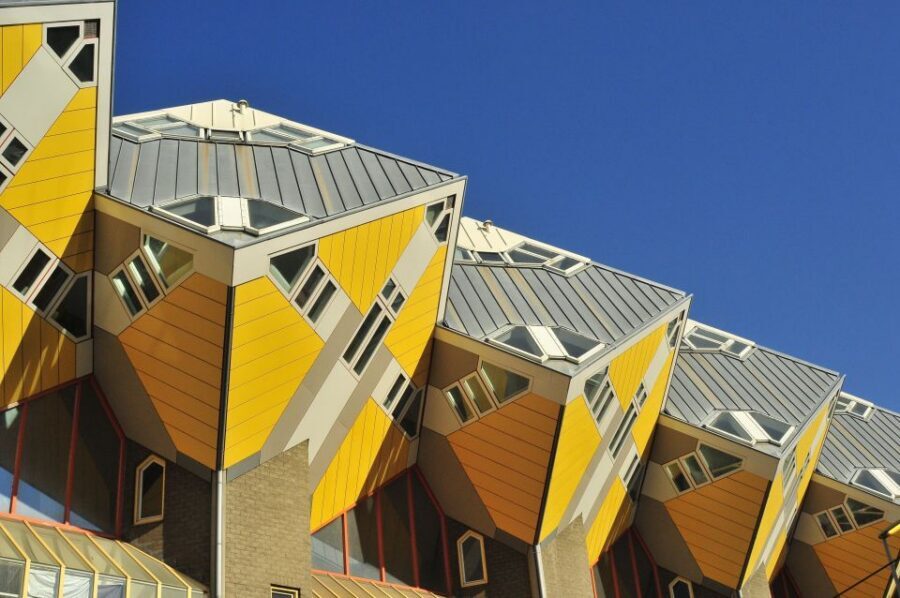
The tour’s most iconic photo stop on foot is the Cube Houses. These aren’t just odd-looking buildings; they’re a lesson in how design can be a form of identity. Once you see them, your brain locks onto the idea that Rotterdam isn’t afraid to be unusual—sometimes to solve problems, sometimes simply because creativity is part of the city’s rebuilding mindset.
Here’s how I’d use this stop: spend a little time looking at how the cubes relate to the ground plane and street views. The interesting part isn’t only the cubes themselves—it’s how the city uses them as a visual interruption. In a city full of straight lines and clean layouts, this kind of form makes everything around it feel more intentional.
One thing to plan for: the tour is moving. If you want longer time with photos, come prepared to do it quickly. The good news is that Cube Houses are easy to photograph from multiple angles without needing a long detour.
The riverside switch: speedboat watertaxi under the Erasmus Bridge
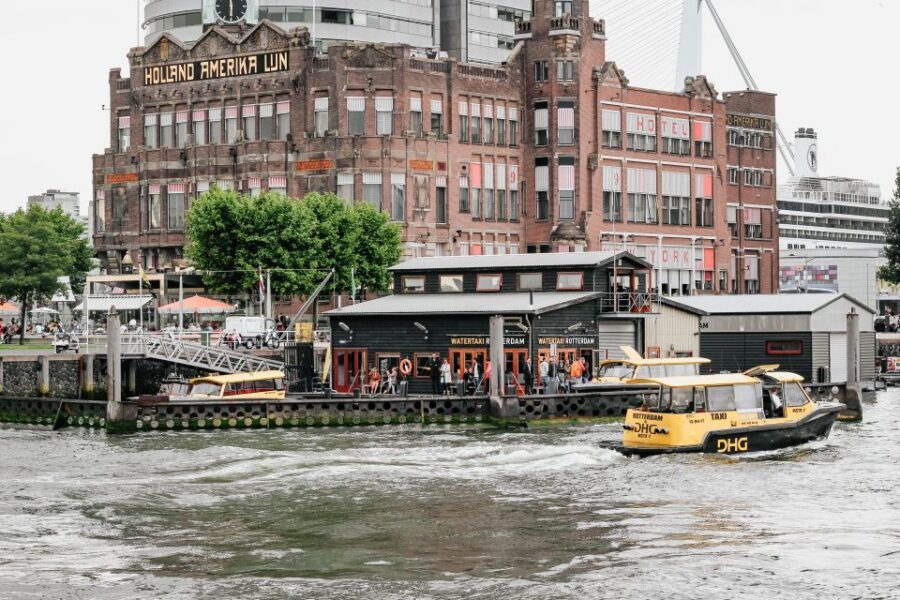
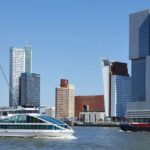
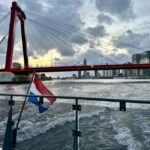
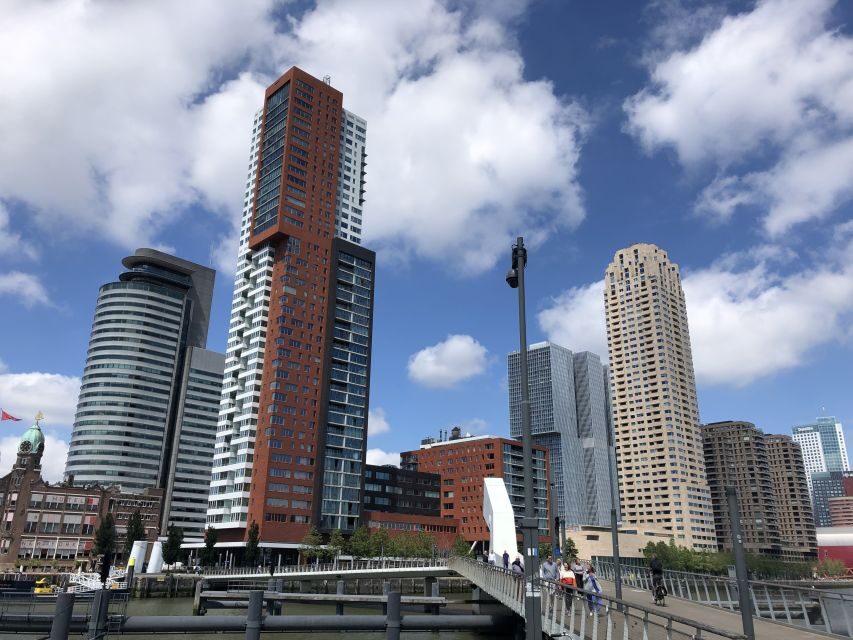
After the walking portion, you board the watertaxi speedboat at the riverside. This is where the tour earns its keep. Rotterdam from the ground is impressive, but from the water the city’s planning decisions become obvious: the waterfront’s role, how buildings relate to the harbor, and how major landmarks align in the skyline.
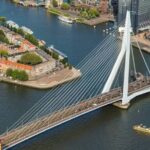
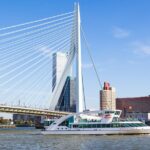
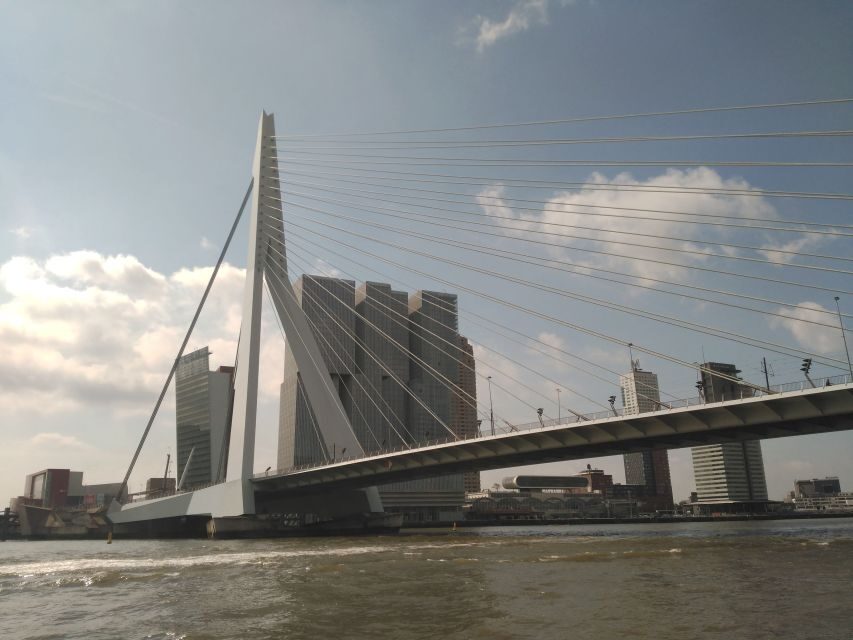
You’ll pass under the Erasmus Bridge, and that’s the kind of moment that feels like an instant upgrade. A walking tour can show you famous structures; a boat ride shows you how the city is stitched together. You’re getting a moving viewpoint, which means different heights and angles without extra time.
Expect a bit of thrill from the ride. If you’re prone to motion discomfort, sit where you feel most comfortable and keep your focus on the horizon as you move.



South Bank: from former harbor area to a restaurant-and-architecture zone
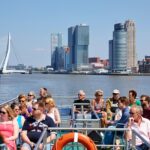
On the South Bank, the tour shifts from “look at buildings” to “understand the city’s change.” You’ll hear about the history and the future plans for the former harbor area, which is now described as a flourishing semi-island with high-end architecture and some of the best cafes and restaurants in the city.
That description matters because it explains what you’re seeing: this area isn’t just pretty. It’s a city project with momentum—space being repurposed and refined for modern life. When you connect that to the architecture you’ve already walked through, Rotterdam starts to feel like one long conversation: rebuild, experiment, adjust, repeat.
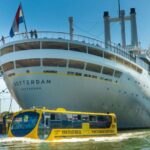
You’ll also see several landmark spots from the water, including:
- Rotterdam OMA building
- Hotel New York
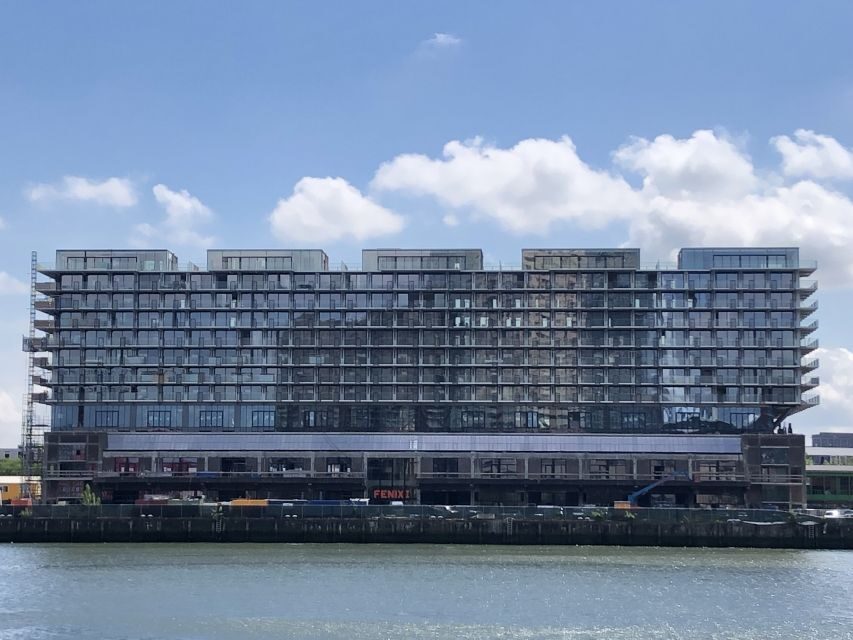
- Fenixloods
- Fenix Food Factory
I like how these names help you remember what you saw. After the tour, you can point at an area on a map and say: that’s the zone we crossed, those are the buildings we passed, and this is why they fit into the city’s story.
What the 3 hours really feels like (and what to wear)
This tour runs about 3 hours. It’s a 4-kilometer walk, plus time for boarding and the watertaxi ride. That combination makes it a good choice for a day when you want a full overview without spending your whole vacation trapped in a timetable.
What to bring is simple: comfortable shoes. You’ll also want to keep your hands free for photos. The tour notes specify that luggage or large bags aren’t allowed, so plan to travel like a light packer. If you’re coming from another activity, it’s worth taking a moment to stash anything bulky before you arrive.
Drinks aren’t included, so if you think you’ll want water or a quick rest, plan to grab it after the tour—especially since this is designed as a concentrated highlight run.
Price and value: why $82 feels fair for this mix
At $82 per person, the pricing is easiest to understand when you look at what’s included: the tour guide and the water taxi fee. In practice, those two items are doing most of the heavy lifting for value.
A walking-only architecture tour might cost less, but it wouldn’t give you the water angle or the Erasmus Bridge moment. A private boat option would usually be far more expensive, and you’d still need guidance to tie what you see to the city’s design logic. This one tries to balance both sides in a short, well-structured window.
So the value question isn’t only cost. It’s time and guidance. If you want to see Rotterdam’s major architecture signals—Markthal, Cube Houses, Timmerhuis—and also get the city view from the river, this format is efficient. If you hate boats or can’t manage walking a 4-kilometer route, then the value drops fast.
Who should book this Rotterdam architecture with watertaxi
This tour is a great match if you:
- Want an architecture-focused Rotterdam highlights day without building a route yourself
- Like explanations that connect buildings to culture and future plans
- Enjoy a mix of walking and a fast river ride for skyline views
- Appreciate a guide with real communication skills, like the architect-led style associated with Tania
It may not be the best fit if you:
- Need a very slow pace or frequent stops (the route is built to cover key sights)
- Have strong visual or mobility needs. The details list the tour as not suitable for people who are visually impaired, and it also notes it’s wheelchair accessible while separately stating it’s not suitable for people with mobility impairments. If you’re in that gray area, contact the operator before booking and ask what the route and boarding steps involve.
Should you book this tour?
Book it if you want a high-impact Rotterdam day: architect-led walking plus a watertaxi speedboat for views under the Erasmus Bridge. The biggest reason to choose it is the guide’s approach—clear architectural explanations and practical sightseeing tips, with future development context that makes the city feel more readable.
Skip it if you can’t handle 4 kilometers of walking or you strongly prefer to move at your own slow rhythm. In that case, a self-guided architecture route might feel less rushed.
FAQ
Where is the meeting point for the tour?
Meet your guide under the station clock at Rotterdam Central Station. It’s located next to the main entrance on the outside.
How long is the Rotterdam architecture tour with watertaxi?
The tour lasts about 3 hours.
What does the price include?
The price includes the tour guide and the water taxi fee.
What is not included in the tour price?
Drinks are not included, and there is no hotel pickup or drop-off.
Is the tour suitable for children?
Children under 12 can participate for free. The listed price covers only the speedboat fee.
How much walking is involved?
The tour includes a 4-kilometer walk.
Is it only available in English?
Yes, the live tour guide is English.
Is luggage allowed?
No. Luggage or large bags are not allowed.