REVIEW · ROTTERDAM
Rotterdam: WWII Walking Tour
Book on GetYourGuide →Operated by De Rotterdam Tours · Bookable on GetYourGuide
Rotterdam’s scars teach faster than textbooks. This WWII walking tour strings together the destruction of Rotterdam, the occupation and liberation, and the city’s rebuilding effort after the May 14, 1940 bombing, with big payoff in the views from Het Witte Huis.
I especially love the way you follow the city’s wartime footprint on foot, and the tour’s clear focus on how the reconstruction shows up in everyday monuments. It’s history you can see, then look up at.
One possible drawback: the balance and depth can shift by guide. If you’re hunting for very granular WWII detail, be ready for a tour that also spends time on Rotterdam’s architecture and the city you see now.
In This Review
- Key Points You Should Know Before You Go
- What This Rotterdam WWII Walk Is Really About
- May 14, 1940: Following the Fire-Zone Footprint on Foot
- Occupation and Liberation: How the City Lived Through It
- Reconstruction You Can Actually Point To: Monuments Since the Ashes
- Rooftop Payoff at Het Witte Huis: 360° Views That Make Sense
- Markthal Snack Stop: Modern Rotterdam Between Chapters
- Price and Value: $494 per Group Up to 4 (What That Means)
- Timing, Pace, and Meeting Point: Small Details That Prevent Stress
- Who Should Book This Tour (and Who Might Skip It)
- Quick Practical Tips Before You Go
- Should You Book the Rotterdam WWII Walking Tour?
- FAQ
- How long is the Rotterdam WWII Walking Tour?
- How much does it cost?
- What’s included in the price?
- Where does the tour meet?
- What languages are offered?
- Is the tour wheelchair accessible?
Key Points You Should Know Before You Go
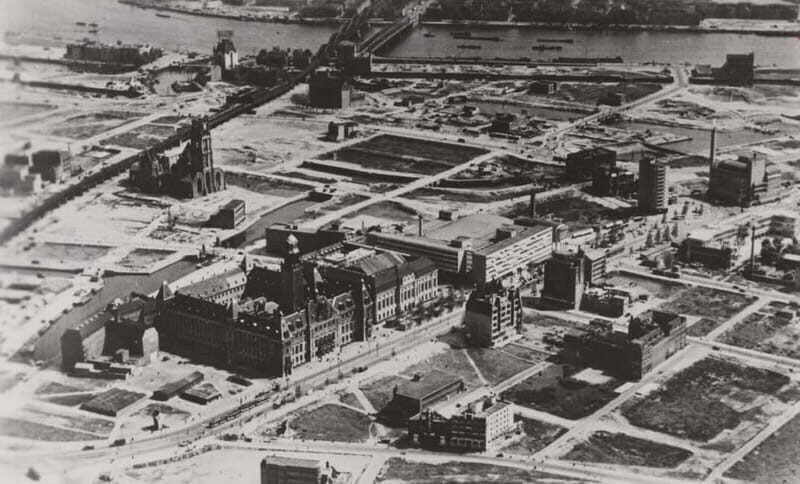
- May 14, 1940 bombing story tied to real spots you walk past, including the fire-zone borders
- Het Witte Huis rooftop with an impressive 360° panorama over Rotterdam
- Markthal snack stop inside a modern architectural icon, with discounts around the hall
- Private-group feel (up to 4 in a group) with guides speaking Dutch, English, and German
- Wartime to reconstruction comparison: scars, monuments, and the “can do” attitude you still notice today
What This Rotterdam WWII Walk Is Really About
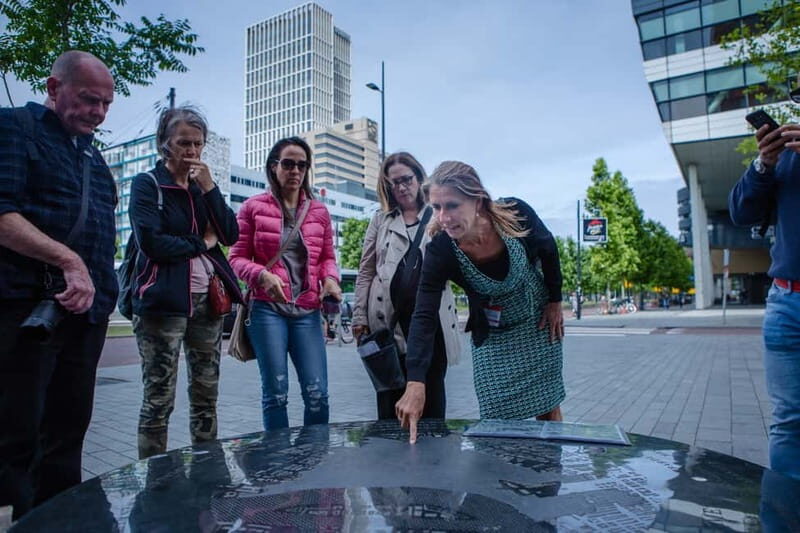
This is not a “sit and watch a documentary” kind of history tour. You get Rotterdam as a living map: first the devastation, then the occupation and liberation, and finally the reconstruction that turned a ruined port city into a place that kept building.
What I like is the structure. The tour moves from the human impact of the bombing toward what physically replaced it. That matters because Rotterdam didn’t just survive; it reshaped itself—streets, buildings, and public symbols included. You end with a rooftop view, which is a smart way to connect scale: the war was awful at ground level, but the city’s comeback also reads best from above.
There’s also a practical side. You’re not only walking; you’re walking with context. Your guide helps you interpret what you’re seeing, instead of leaving you to wonder why certain monuments exist or why the city looks the way it does.
You can also read our reviews of more walking tours in Rotterdam

May 14, 1940: Following the Fire-Zone Footprint on Foot
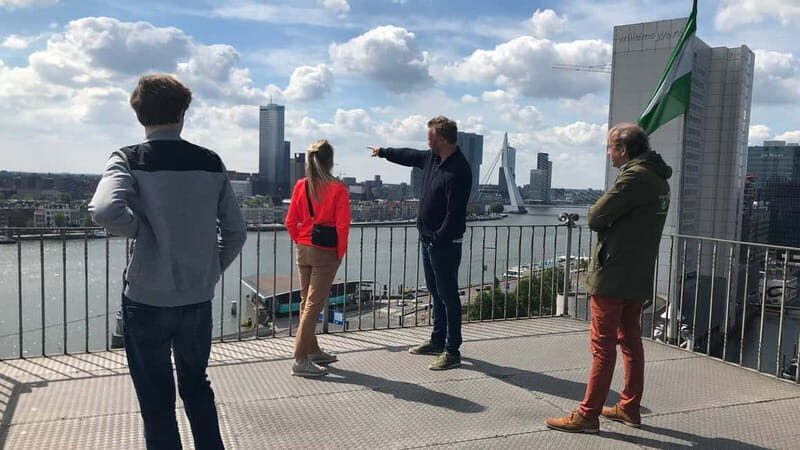
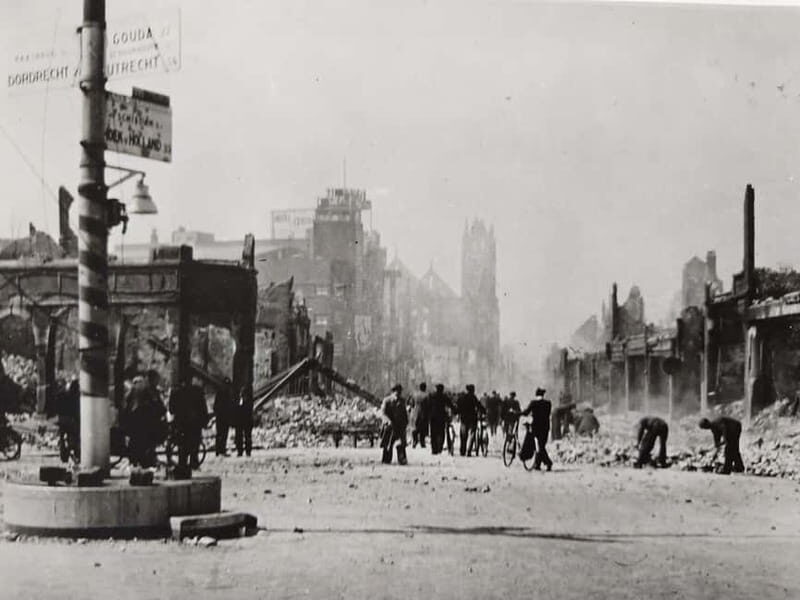
The heart of the walk centers on Rotterdam’s destruction during WWII, including the bombing on May 14, 1940, and the capitulation that followed. The tour encourages you to move through town while your guide tracks the timeline and the consequences.
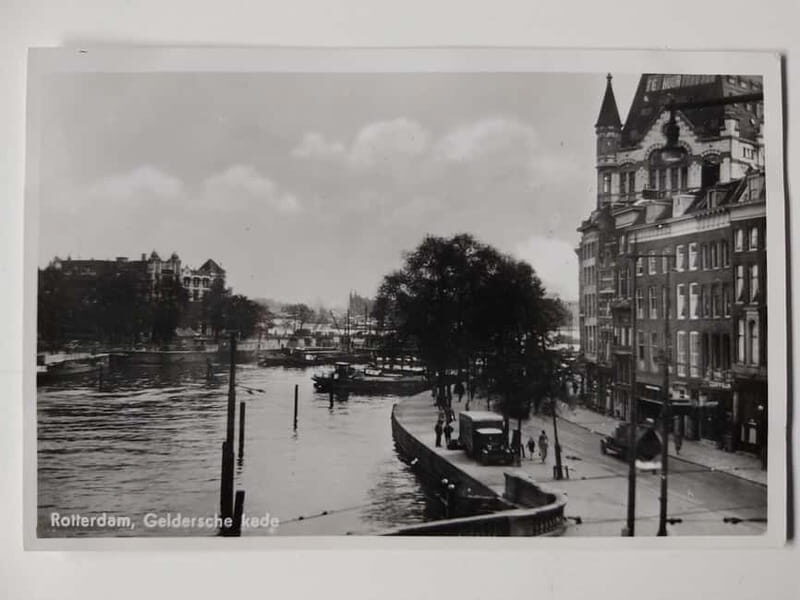
You’ll follow the borders of the fire zone, which is one of those details that makes history feel real. Without that kind of framing, a city can look like it’s just been “old and new mixed together.” With the fire-zone explanation, you start to see the unevenness: where damage was concentrated, where rebuilding choices had to happen, and why certain areas may feel different from others.
You’ll also look for remaining scars—places where the war’s imprint didn’t vanish. The tour’s tone here is important. It’s not only about tragedy. It’s about how disruption forces decisions. And Rotterdam’s decisions show up in the next chapters of the city’s story.
Practical tip: this portion is made for walking, not for long stops. Wear comfortable shoes and plan for a steady pace.
Occupation and Liberation: How the City Lived Through It
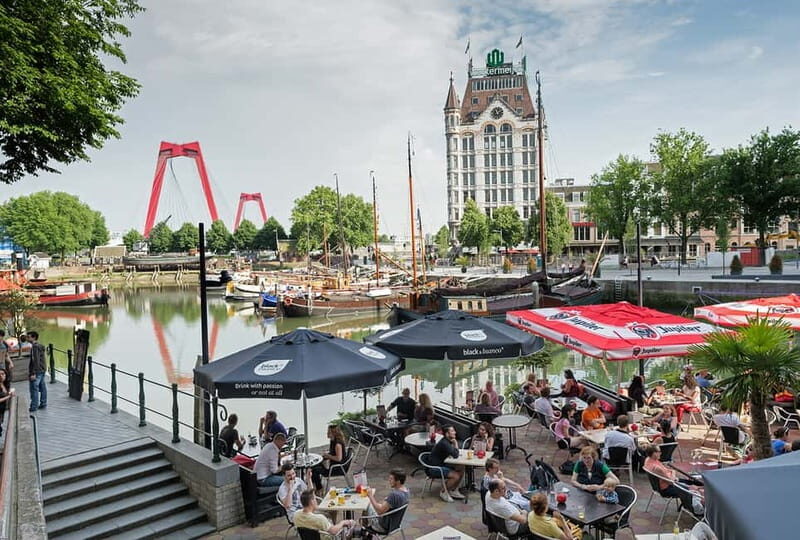
After the bombing, the tour shifts into the occupation and liberation period—again, with your guide helping you connect events to the streets and monuments around you.
This is where you’ll learn why Rotterdam’s WWII experience is more than one day in 1940. The occupation era affected everyday life, and the liberation changed the city’s direction. Your guide ties that to what you see around you now, so the story doesn’t feel frozen in the past.
One thing to watch: depending on the guide, the emphasis can tilt. Some guides give more time to the wartime events themselves; others also spend extra time on the city’s architecture and what replaced what. If you’re the type who wants maximum WWII detail, you’ll still get the big beats—just be aware the tour also aims to show the results of reconstruction.
If you care about this part especially, use the rooftop as your anchor. The view gives you the “why” behind the rebuild, and then you’ll better understand how liberation and rebuilding fed into what came next.
Reconstruction You Can Actually Point To: Monuments Since the Ashes
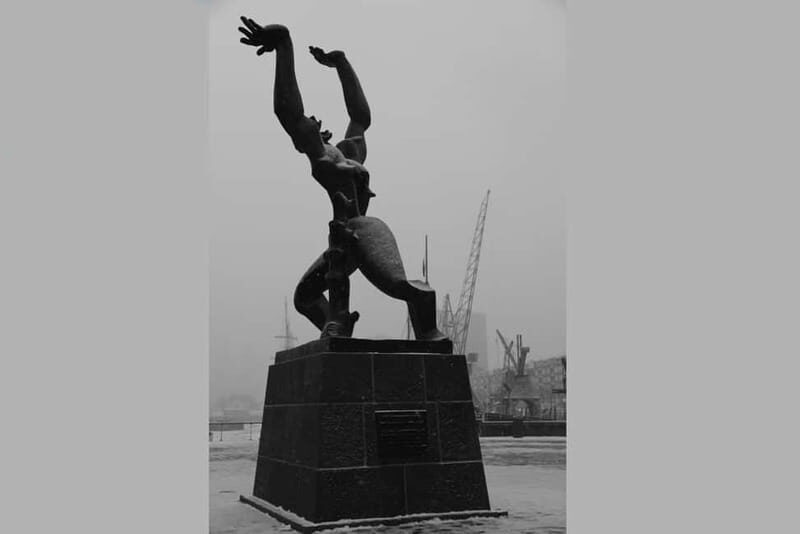
The reconstruction section is one of the biggest reasons this tour works. Rotterdam didn’t rebuild in a vague, abstract way. It rebuilt with choices, and those choices show up in monuments and landmarks you can find during your walk.
You’ll “discover the beauty of the Reconstruction period” in a very literal sense: you stop, look, and connect the story of the city’s response to physical symbols built after the war. That makes the experience feel less like memorizing and more like learning how a place remembers itself.
This part is also a good mental shift. WWII can feel impossibly heavy when it’s only described. By the time you’re walking through the reconstruction sites, the story becomes about resilience: what people built, what they prioritized, and how they wanted the future to look.
It’s worth calling out a subtle balance: the tour often compares wartime harm to postwar design. That’s a strong approach for most people, because it keeps your brain engaged. But if you’re looking for only military or political specifics, expect the tour to widen slightly into city-shaping decisions.
Rooftop Payoff at Het Witte Huis: 360° Views That Make Sense
The tour’s topper is the roof of Het Witte Huis. This is where the walking history clicks into scale.
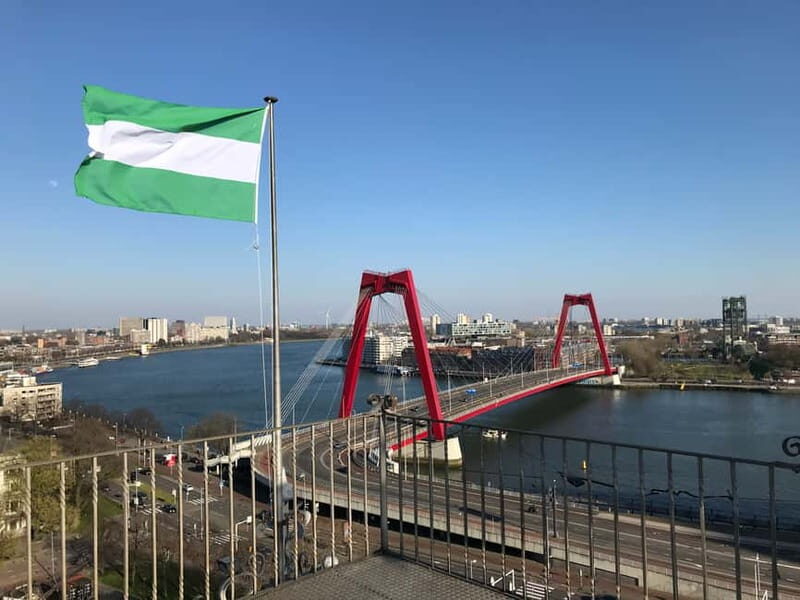
From up there, you get that 360° city view, and your guide can point out how Rotterdam’s layout and rebuilding choices affect what you see. It’s also an easy way to understand distance in a city with a waterfront mindset and a lot of deliberate planning.
The rooftop stop is especially valuable because it gives you a visual summary after the narrative. You spend time learning about destruction and rebuilding at street level, and then you look over the city as a whole. It’s the difference between knowing dates and really understanding the place.
Also, this is where you’ll appreciate why the tour is timed as it is. You’re not rushing to the rooftop; you’re building context first. Then the view feels earned.
Quick comfort note: rooftop time can mean wind and sudden temperature changes, so consider layers, even in milder weather.



Markthal Snack Stop: Modern Rotterdam Between Chapters
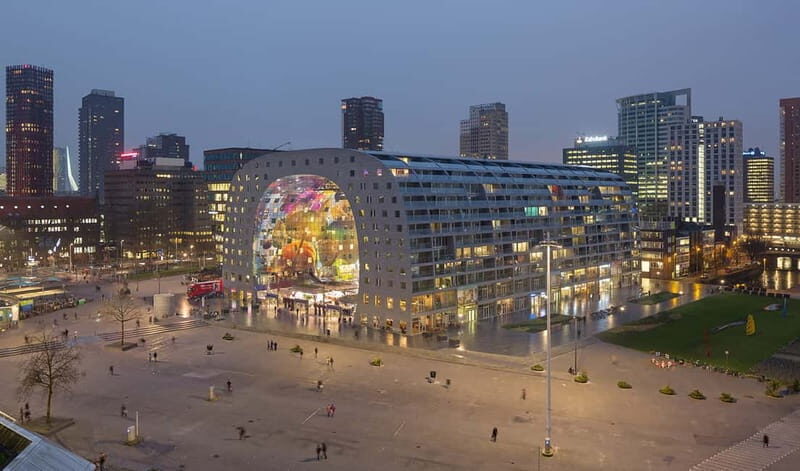
After the rooftop, the tour includes a tasty bite in the Markthal, Rotterdam’s modern architectural icon. This stop is more than a break. It’s the city’s present placed right after its hardest chapters.
The Markthal area is designed around movement and stalls, so you can pick up something quick without turning the tour into a long restaurant meal. You’ll also have discounts available at stalls in the market, which is a nice bonus if you want to snack a little more than the included bite.
If you like architecture as much as history, this is a helpful reset. WWII explains why Rotterdam has certain rebuilding scars and monuments; Markthal shows how the city now builds around community space, design, and everyday life.
One more small perk: you also receive a postcard by Rotterdam architectural photographer Ossip van Duivenbode. It’s a fun souvenir type—more likely to match the way you experienced the city here, through buildings and viewpoints.
Price and Value: $494 per Group Up to 4 (What That Means)
The price is $494 per group, sized up to 4 people. That private-group structure is the key part of the value equation.
If you fill all four spots, you’re effectively spreading the cost across people, and the rooftop entry, snack, and guide time become easier to swallow. If you travel as a couple or solo, the per-person cost goes up—so you’ll want to be honest about what you want from the tour:
- You’re paying for a guided story that connects wartime Rotterdam to today’s built environment.
- You’re also paying for the rooftop access and included Markthal snack, not just for walking with a person.
The included add-ons help the math. You get:
- Entrance to the Het Witte Huis rooftop
- A snack in the Markthal
- The postcard by Ossip van Duivenbode
- 50% discount entrance to the Cube Houses
- Discounts at stalls in the Markthal
That Cube Houses discount matters if you planned to visit afterward anyway. It’s not “free,” but it can turn a separate attraction from an optional splurge into a better deal.
Bottom line: this tour feels like strong value if you want a guided narrative with rooftop payoff, and if you can keep your group size near the maximum. If you’re booking solo and you only want a basic WWII overview, you might consider other options—but for most people who want both story and view, this format is the right fit.
Timing, Pace, and Meeting Point: Small Details That Prevent Stress
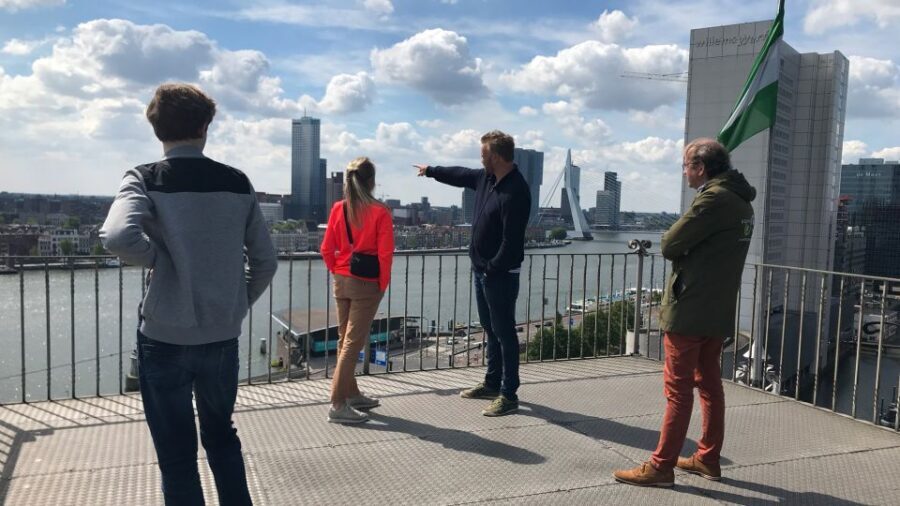
This tour runs about 2.5 hours and is designed as a walk through key WWII and reconstruction themes, with the rooftop and Markthal integrated so you’re not doing the hard parts back-to-back with no payoff.
You meet outside the front entrance of Wijnhaven 3, and you should arrive 10 minutes early. The tour leaves promptly, so don’t plan to stroll up right at the start time.
In terms of walking, it’s not described as a tiny stroll. One review clocked the route around 6.8 km, so plan for real walking time, not just a couple of city blocks. Comfortable shoes are non-negotiable.
Language is also practical here. Guides can speak Dutch, English, and German, and that can matter a lot for how much you absorb. If WWII context is your priority, choose the language that lets you ask and understand easily.
Who Should Book This Tour (and Who Might Skip It)
I think this tour is a great match if you:
- Want Rotterdam’s WWII story without the “museum-only” feel
- Like city views that connect directly to what you learned on the ground
- Appreciate architecture and public monuments, not just battles and dates
- Prefer a private-group experience rather than a large crowd format
You might want to reconsider if you:
- Need a wheelchair-friendly route (it’s not suitable for wheelchair users)
- Want only very deep, highly detailed WWII discussion with no attention to the present-day city
- Are especially sensitive to language clarity, since guide quality and English ability can vary
Quick Practical Tips Before You Go
A few small things make a big difference:
- Bring a face mask or protective covering.
- Wear comfortable clothes for walking and consider layers for rooftop wind.
- If you’re prone to stress with timing, get to Wijnhaven 3 early. The tour departs on schedule.
- Bring curiosity. Ask questions about what you see—street-level interpretation is where this tour earns its keep.
Also, it’s a good idea to plan a bit of buffer time afterward. The tour gives you discounts for the Cube Houses, so you may naturally want to continue exploring nearby.
Should You Book the Rotterdam WWII Walking Tour?
Book it if you want a Rotterdam experience that connects trauma to rebuilding, and you’d like the payoff of a 360° rooftop view plus a Markthal snack in one smooth package. The price makes sense most when you share it within a group of up to four, because you’re getting guide time, rooftop access, and value-added extras like the Cube Houses discount.
Skip—or choose carefully—if your main goal is ultra-specific WWII detail and you don’t want any architecture-and-today elements. In that case, this tour’s mix may feel too broad. But for most people who want history you can walk and see, this is a strong, practical choice.
FAQ
How long is the Rotterdam WWII Walking Tour?
The tour lasts about 2.5 hours.
How much does it cost?
It costs $494 per group, for groups of up to 4 people.
What’s included in the price?
Included are an expert guided experience, entrance to the Het Witte Huis rooftop, a snack in the Markthal, a postcard by Ossip van Duivenbode, a 50% discount entrance to the Cube Houses, and a discount at stalls in the Markthal.
Where does the tour meet?
The guide meets you outside the front entrance of Wijnhaven 3.
What languages are offered?
Guides are available in Dutch, English, and German.
Is the tour wheelchair accessible?
No, the tour is not suitable for wheelchair users.