REVIEW · THE HAGUE
Scheveningen: Guided Walking Tour
Book on GetYourGuide →Operated by alysia tourguide · Bookable on GetYourGuide
Scheveningen isn’t just a beach—it’s survival turned into sightseeing. On this guided walking tour of the resort, you connect the long sandy shore, esplanade, pier, and lighthouse with the story of how a small spa (from 1818) became a modern seaside destination.
I especially like the way the guide ties what you can see today to what used to be here—spa culture, fishing life, and the shift from boats pulled up on sand to a real harbor. You’ll also get practical context for enjoying the seaside itself, including local fishing history and water-sports flavor along the route.
One big consideration: the tour experience depends on the guide showing up on time. A few past bookings reported meeting-point confusion and even missed tours due to no-shows, so I’d take the meeting instructions seriously and plan a calm, early arrival.
In This Review
- Key Highlights at a Glance
- Getting Oriented: Where You Meet and How the 1-Hour Walk Feels
- From Spa Town to Modern Resort: The Story Behind Scheveningen’s Sea View
- Beach, Esplanade, Pier, Lighthouse: What Each Spot Contributes
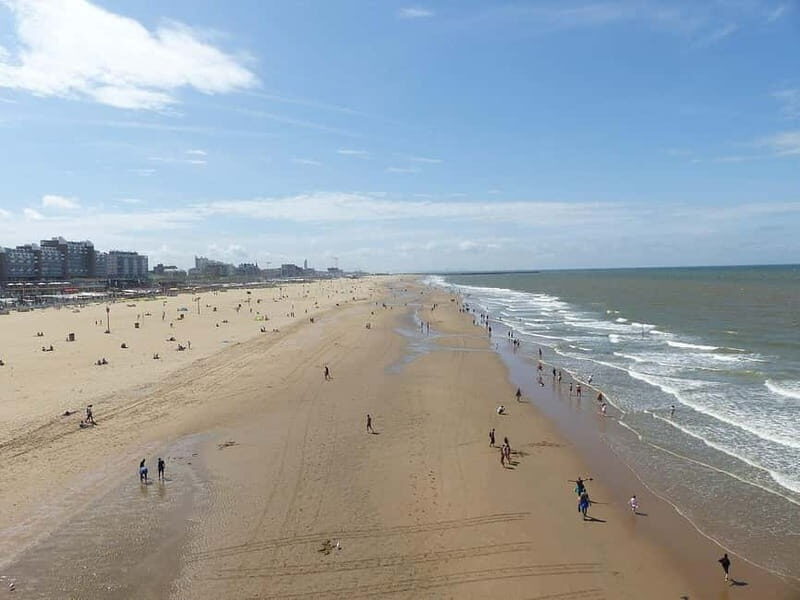
- The long sandy beach
- The esplanade
- The pier
- The lighthouse
- Fishing Village Life and the Inns Along the Water
- Storms That Kept Coming: How Nature Forced Big Changes
- Bomschuiten to a Harbor Built in 1904
- Group Size, Timing, and the Weather Reality at the Coast
- Price and Value: Is $29 Worth a 1-Hour Walk?
- How to Prepare So You Don’t Lose the Tour
- Who Should Book This Scheveningen Walking Tour (and Who Should Skip It)
- Should You Book It?
- FAQ
- How long is the Scheveningen guided walking tour?
- How much does the tour cost?
- Where do I meet for the tour?
- What will I see during the tour?
- What languages is the guide available in?
- Is this tour a large group?
- Are meals included?
- Is smoking allowed during the tour?
- What should I bring?
Key Highlights at a Glance
- 1818 spa to resort growth: You get the timeline behind Scheveningen’s rise, not just a postcard tour.
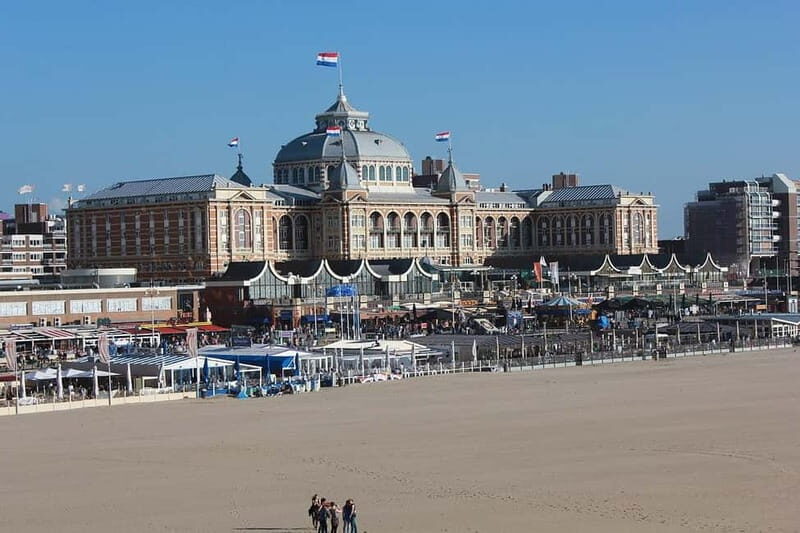
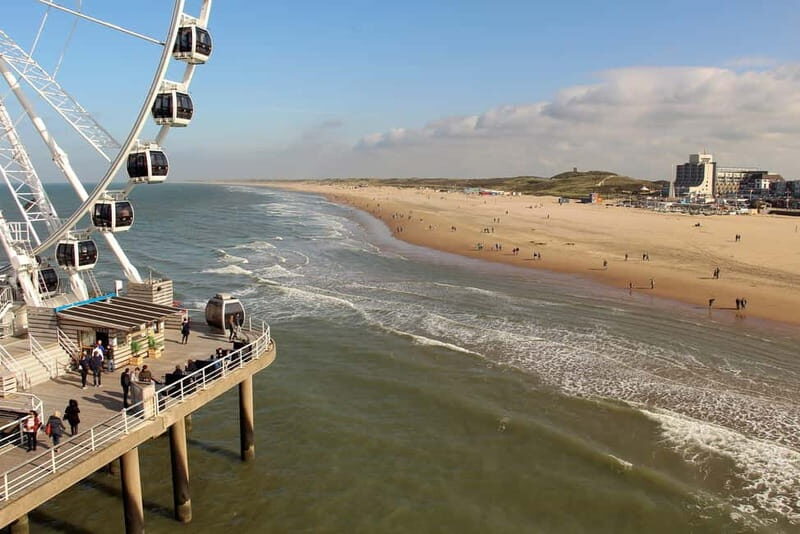
- Beach-to-pier viewpoints: You’ll see the long sandy beach, esplanade, pier, and lighthouse on foot.
- Fishing village details: The area’s old inn culture and seafaring routines come into focus as you walk.
- Storm years that changed everything: From the 1470 disaster onward, you learn how repeated storms shaped decisions.
- Bomschuiten to harbor (1904): You’ll hear how flat-bottom fishing boats worked until the harbor made things shift.
- Small group feel (max 5): Easier Q&A, especially for English-speaking visitors who want story context.
Getting Oriented: Where You Meet and How the 1-Hour Walk Feels
You’ll meet in front of the Kurhaus hotel. That matters more than it sounds. This tour is only 1 hour, so you do not want to waste time hunting around the seafront.
The best approach is simple: arrive early, be visible, and look for the group. If you can’t find the Kurhaus entrance area or you’re worried you’re at the wrong spot, use the contact method provided by the operator and call right away. One of the most frustrating failure points in short tours is the mismatch between where someone thinks the group meets and where it actually meets.
Once you’re moving, the pace is easy-walking rather than a long hike. You’re covering major seafront sights by foot, so the “tour” part is the commentary and connections, not exhausting distance.
You can also read our reviews of more walking tours in The Hague

From Spa Town to Modern Resort: The Story Behind Scheveningen’s Sea View
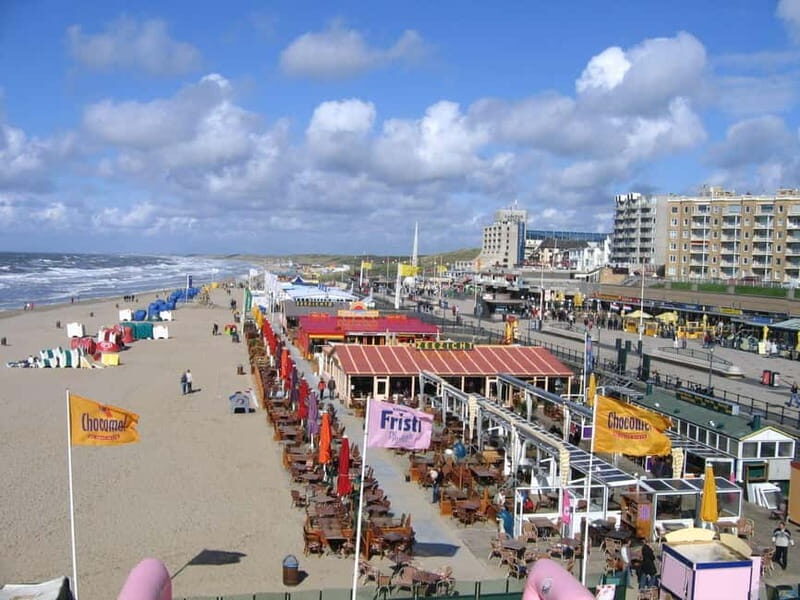
Scheveningen’s transformation is a great example of how the Netherlands builds with the sea, even when the sea does not cooperate.
The tour’s core timeline starts in 1818, when Scheveningen developed from a small spa. The big idea: what began as a health-and-relaxation stop grew slowly into a destination people chose for the coast. Over time, it became increasingly important as a resort area, and later the coastline saw big hotel development.
Here’s what you’ll likely appreciate when the guide explains this: seaside resorts didn’t just appear because people wanted sun. They emerged because transportation, leisure habits, and local industries (like fishing) evolved together. When you’re standing on the beach or the esplanade, the story gives the buildings and streets meaning, even if you’re not looking at old monuments.
You’ll also hear about the large hotels rising in the late 20th century along the coast line. That contrast—old seaside routines versus newer resort infrastructure—is part of what makes this walk satisfying. You’re not only seeing views; you’re seeing how the area changed its priorities.
Beach, Esplanade, Pier, Lighthouse: What Each Spot Contributes
This tour is built around four seafront scenes, and each one supports a different part of Scheveningen’s story.
The long sandy beach
The beach is your baseline. It’s where the maritime reality connects to leisure. You’ll walk where people come to relax today, but the guide can frame it as the same kind of shore that once shaped fishing routines—especially before harbor infrastructure improved.
If you enjoy photography, this is the part where the light and horizon help. Come prepared for wind. Even on mild days, the sea can make it feel colder than the city inland.
The esplanade
The esplanade is the “human scale” part of Scheveningen. It’s where resort life and promenade culture show up. When a guide talks about resort growth, this stretch is the perfect place to understand how people experience the coast as a designed public space rather than just open shoreline.
You can also read our reviews of more guided tours in The Hague
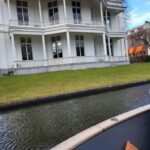
The pier
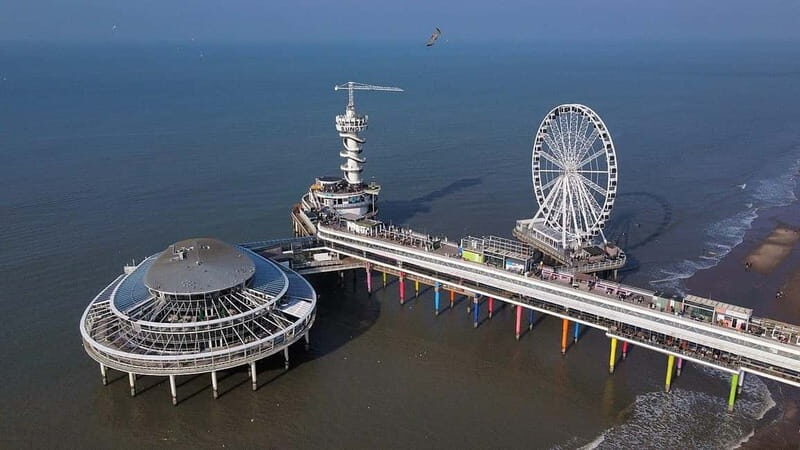
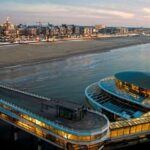
The pier helps you see the “edge” between land and working water. It’s a classic viewpoint for orientation, and it’s also a natural spot for the guide to connect history to practical geography: where boats needed access, where storms mattered, and where later choices like harbor construction paid off.
The lighthouse
The lighthouse is more than a scenic stop. It’s a symbol of navigation and risk—exactly the themes Scheveningen’s history emphasizes. When you hear about repeated storms and how communities responded, the lighthouse makes that risk feel real rather than abstract.
Fishing Village Life and the Inns Along the Water
Scheveningen was not only a spa and resort. It also had deep fishing roots—so deep that centuries included plenty of places to eat, drink, and share news.
The tour highlights that the fishing village counted many inns through the centuries. That detail matters because it tells you what kind of community you’re walking through. This isn’t a place made solely for visitors arriving fresh from elsewhere; it’s a working coastal town where people gathered to recover from fishing days, talk weather, and deal with whatever the sea threw at them.
If you’re a food-minded traveler, you’ll appreciate the way the guide brings the fishing angle into the seaside experience. One positive mention in the available feedback points to Scheveningen fish being part of the vibe during a tour—just note that meals aren’t listed as included in the tour basics. So think of any tasting as a possible bonus, not a guarantee.
Storms That Kept Coming: How Nature Forced Big Changes
This is the section that makes the walk feel like more than a promenade. Scheveningen history includes a string of storms that reshaped buildings and survival strategies.
You’ll learn that in 1470 a heavy storm destroyed the church and about half the houses. Then the pattern repeats with storms in 1570, 1775, 1825, 1860, 1881, and 1894.
Even without dramatic visuals, the guide’s explanation makes the logic clear: repeated damage isn’t just bad luck. It drives decisions. The story reaches a key turning point after the 1894 storm, when villagers decided to build a harbor.
And this is where the tour earns its keep: it shows you cause and effect. The guide uses visible seafront space as a classroom, so you can understand why a harbor would matter and what changes it would bring to fishing life and boat handling.
Bomschuiten to a Harbor Built in 1904
Before the harbor, fishing boats had to deal with the beach directly. That’s where the bomschuiten come in.
The tour explains that until the harbor was built, fishing boats had flat bottoms (bomschuiten) and were pulled up the beach. Over time, that system scaled up: by around 1870, more than 150 of these boats were in use.
Once the harbor was constructed in 1904, the story shifts again. More modern ships replaced the bomschuiten. Translation for you: the coastline didn’t just become prettier. It became more functional—and that functional change helped shape the area’s longer-term development as both a fishing center and a resort.
Standing on the pier or near lighthouse viewpoints, this history helps you see the coast as an engineering problem as much as a holiday setting. It’s also a reminder that the Netherlands often plans around water first, then builds for everyday life second.
Group Size, Timing, and the Weather Reality at the Coast
This tour runs for 1 hour and is limited to 5 participants. That small group size is a real advantage for questions and for getting the guide’s attention when you want extra context—especially if you’re comparing what you see with what you’ve already read.
The tour is offered in Dutch and English, so you should be able to follow the story without guessing.
What you should not underestimate is weather. The tour includes beach and outdoor promenading, meaning wind can be a factor. Pack water and dress for a breezy shoreline. If you forget comfortable shoes, you’ll feel it fast, because you’ll be walking the core seafront sights rather than sitting through long indoor segments.
Also, smoking is not allowed, so plan to follow local expectations if you’re used to taking quick breaks outside.
Price and Value: Is $29 Worth a 1-Hour Walk?
At $29 per person for a 1-hour guided walk, the value isn’t in ticketed attractions or museum time. It’s in the story-to-place connection.
You’re paying for:
- A guided narrative that explains the resort’s evolution from 1818 onward
- Seafront orientation through the beach, esplanade, pier, and lighthouse
- Context about fishing life, inns, repeated storms, and the switch to harbor-based shipping after 1904
So the question becomes: will you enjoy walking and listening rather than checking boxes? If yes, $29 can make sense because the guide’s explanations are the “product.”
But there’s a risk you should factor in from the information you’ve received: some prior bookings complained about guides not showing up and about meeting-point confusion. That doesn’t mean every departure will fail, but it does mean you should go in with eyes open. If the guide is late or absent, a short 1-hour tour can feel like a total loss.
How to Prepare So You Don’t Lose the Tour
Here are practical moves that protect your time.
- Arrive early at the Kurhaus hotel front area.
- Take a quick look for signage or staff/participants, so you can identify the group.
- Bring comfortable walking shoes, since you’ll be on foot through key seafront zones.
- Wear weather-appropriate clothing and have a plan for wind.
- Bring your camera, because the lighthouse and pier views are made for quick shots.
- If you can’t find the meeting spot, call right away using the operator contact instructions you’re given.
This tour is also not suitable for people with mobility impairments or wheelchair users, so be honest about comfort and walking ability before booking.
Who Should Book This Scheveningen Walking Tour (and Who Should Skip It)
Book it if you want:
- A short, efficient coastal walk with clear historical context
- Stories that connect the seafront you’re seeing to real events like storms and harbor building
- A small group format that makes it easy to ask questions
Skip it if:
- You need guaranteed indoor time or lots of seating
- You’re relying on a precise meeting point and you’re the type to get delayed easily (the tour is short, so delays matter)
- Walking comfort is limited for you
This is best for first-time visitors who want to understand Scheveningen beyond the beach photo—and for repeat visitors who enjoy learning why the coastline looks the way it does.
Should You Book It?
If your main goal is to get a quick grasp of Scheveningen’s past—spa origins in 1818, fishing village culture and inns, storm impacts from 1470 through 1894, and the harbor shift culminating in 1904—this guided walk can be a good use of time.
I’d book it with one mindset: protect your logistics. Show up early at the Kurhaus hotel front meeting point, keep your phone ready, and be ready for a windy, outdoors-first hour. If the tour runs as planned, the payoff is the way the guide makes the seafront feel purposeful rather than random.
If you want, tell me your travel dates and whether you’ll be arriving by tram, bus, or walking from nearby. I can help you plan a simple buffer so you start the walk calm, not stressed.
FAQ
How long is the Scheveningen guided walking tour?
It lasts 1 hour.
How much does the tour cost?
The price is $29 per person.
Where do I meet for the tour?
You meet in front of the Kurhaus hotel. If you can’t find it, call using the contact instructions provided.
What will I see during the tour?
You’ll visit the beach, esplanade, pier, and lighthouse.
What languages is the guide available in?
The guide speaks Dutch and English.
Is this tour a large group?
No. It’s a small group limited to 5 participants.
Are meals included?
Meals and drinks are not included.
Is smoking allowed during the tour?
Smoking is not allowed.
What should I bring?
Bring comfortable walking shoes, a camera, weather-appropriate clothing, and water.