REVIEW · AMSTERDAM
Amsterdam Jewish Quarter walking tour
Book on GetYourGuide →Operated by Silver Tours · Bookable on GetYourGuide
Cobbles and canals tell big stories here. This Amsterdam Jewish Quarter walking tour uses the neighborhood’s streets and canals as a living backdrop for the past and present of Amsterdam’s Jewish community, with a key stop tied to Anne Frank. You’ll connect what you read in her diary to what you can still see in the city today.
I especially like two things. First, the focus on Westerkerk and the bells Anne Frank described makes history feel specific, not abstract. Second, the local guide’s storytelling style turns street corners into clear context, from community life in earlier years to what wartime changed.
One consideration: it’s only 2 hours, so if you want extra time at sites you could linger at (or want a lighter, less serious tone), this may feel a bit short. Also, it’s conducted in English only.
In This Review
- Key things to know before you go
- Why this walk works so well in Amsterdam’s Jewish Quarter
- Finding the meeting point at Amstel 51C (and starting on time)
- First stretch: getting your bearings in the neighborhood
- Westerkerk and Anne Frank’s bells: the stop that makes it concrete
- From Golden Age to wartime to revival: how your guide connects the timeline
- Historic monuments: seeing why Amsterdam keeps these markers
- Group size, pace, and what 2 hours really buys you
- Price and value: is $29 fair for a 2-hour guided walk?
- What the ratings suggest: good moments, one serious outlier
- Who should book this tour (and who might not)
- Should you book the Amsterdam Jewish Quarter walking tour?
- FAQ
- How long is the Amsterdam Jewish Quarter walking tour?
- How much does the tour cost?
- Where is the meeting point?
- Is there a live tour guide?
- What language is the tour offered in?
- What’s included in the price?
- Is free cancellation available?
- Is there an option to reserve now and pay later?
- Is this tour private, or is it a group tour?
- What are the main highlights?
Key things to know before you go
Westerkerk bells linked to Anne Frank
A guided walk through the Jewish Quarter’s past and present
Historic monuments explained in everyday language
A tight, 2-hour format that fits most sightseeing days
English live guide with real-world local perspective
Why this walk works so well in Amsterdam’s Jewish Quarter
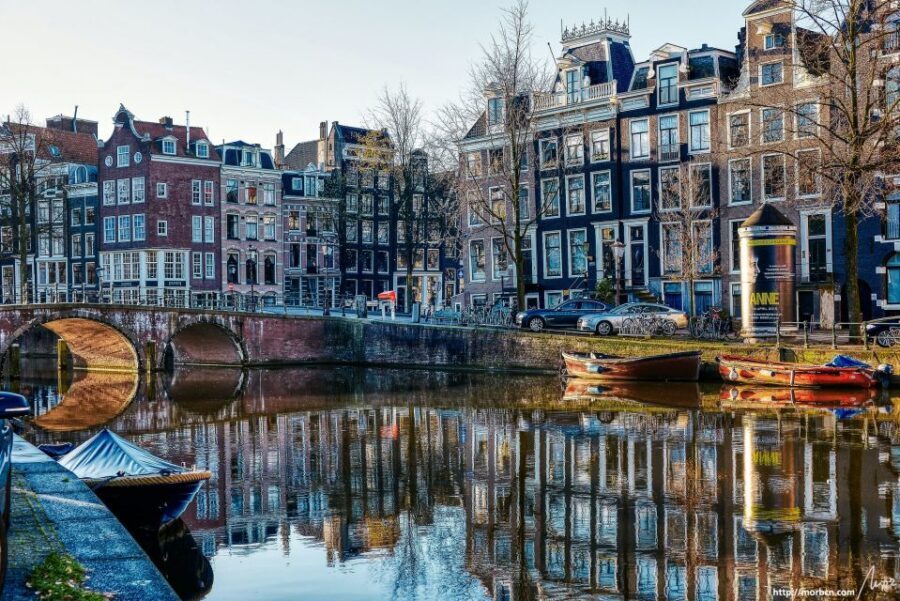
Amsterdam is best learned at walking pace. You feel it immediately in the cobbled lanes—the city doesn’t always reward speed. Instead, the streets nudge you to slow down, look sideways, and notice how canals and architecture shape daily life.
The Jewish Quarter is also one of those places where the story is layered. You can see how communities formed, flourished, and were disrupted. Then—without denying the hard parts—you can also see signs of continuity in how Amsterdam treats its history in public space.
This tour is built around that idea: you’re not just moving from point A to point B. You’re getting a guided thread that helps you understand why the landmarks matter and how the neighborhood became part of the city’s cultural memory.
You can also read our reviews of more walking tours in Amsterdam



Finding the meeting point at Amstel 51C (and starting on time)
You’ll meet at the boat platform in front of the entrance of the H’ART Museum, Amstel 51C, 1018 DR, Amsterdam. That location matters for a practical reason: it puts you close to the canal-side flow that defines this area, so the walk starts feeling like part of the city instead of a random transfer.
Plan to arrive a little early. It’s a walking tour, and the first minutes set the tone. If you show up flustered, you’ll miss the setup your guide provides right away.
First stretch: getting your bearings in the neighborhood

At the beginning, you’ll move through the Jewish Quarter’s streets and sights in a way that gives you context fast. Expect your guide to connect the area’s architecture and street layout to how Jewish life unfolded there over time, not just list dates.
This opening phase is important, especially if you’re new to Amsterdam. The Jewish Quarter can feel like a “zone” on a map, but on foot it starts to feel like a neighborhood with its own logic—where people lived, worked, prayed, and built a community identity.
You’ll also hear about the shift from earlier prosperity to wartime disruption. The tone is direct, but it’s framed to help you follow the timeline rather than leaving you with a pile of facts.
Westerkerk and Anne Frank’s bells: the stop that makes it concrete
The tour’s anchor moment is standing in front of Westerkerk, the church whose bells Anne Frank mentioned in her diary. This is the kind of detail that changes how you read the story, because you’re linking a line from the page to the physical world.
What I like about this stop is that it’s not only about Anne Frank as a name. Your guide explains why that sound and that place mattered—how a recognizable landmark turns into a sign of everyday life during extraordinary circumstances.
Even if you’ve been to Amsterdam before, this gives you a new way to look at the city. You stop thinking of the center as just pretty canals and start thinking of it as a place that carried real voices, routines, and fears.
From Golden Age to wartime to revival: how your guide connects the timeline
After the Westerkerk moment, the narrative widens. You’ll hear about Amsterdam’s Jewish community during its flourishing Golden Age, then the challenges of wartime, and finally the community’s later revival.
That arc is emotionally heavy, so the value here is how the guide structures it. You’re not dropped into tragedy with no explanation. Instead, you get the build-up—what life looked like, what changed, and what followed—so the story has shape.
This kind of guided storytelling is especially helpful on a short tour. It means you can walk away with a clearer understanding of cause and effect: prosperity didn’t happen by accident, and the rupture didn’t happen in isolation. Then recovery also required time, people, and persistence.






Historic monuments: seeing why Amsterdam keeps these markers
Throughout the walk, you’ll stop at historic monuments and learn their place in Amsterdam’s culture. The key is that you’re given context for what you’re seeing, not just told that something is old.
I find this approach makes street-level sightseeing smarter. A monument might look like “another building” unless someone explains how Amsterdam interprets it today—where it sits in public memory, how it relates to the city’s identity, and why locals can point to it so naturally.
Also, by staying on foot, you’ll notice how monuments connect with the surrounding streets. That matters because neighborhoods are not museums. They’re living spaces, and the past shows up in how the present is arranged.
Group size, pace, and what 2 hours really buys you
This tour is 2 hours, which is a plus in Amsterdam. It’s long enough for real context and multiple stops, but short enough to fit between canal cruises, museums, or day trips.
The walking pace is the practical advantage. You’re not trapped inside a bus waiting for everyone to return from photos. Instead, you keep moving and processing. That’s ideal if you like history but don’t want it to take over your whole day.
Still, be honest with yourself about your style. If you want time to linger at memorial spaces or read every sign without interruption, you might crave a longer format. In that case, consider pairing this walk with a separate visit where you can slow down.
Price and value: is $29 fair for a 2-hour guided walk?
At $29 per person for a guided walking tour lasting 2 hours, the price sits in a reasonable range for Amsterdam. What you’re paying for is not just motion—it’s interpretation.
You’re getting an English live guide, a structured route through the Jewish Quarter, and specifically framed stops like Westerkerk tied to Anne Frank. That combination is where the value usually is: guides help you connect the visible with the meaningful, so you don’t wander with only a vague sense of importance.
If you’re the type who likes to understand what you’re looking at (even briefly), this is a good deal. If you’d rather self-guide using a book or app, you may feel the cost is less justified, since the walk depends on narration.
What the ratings suggest: good moments, one serious outlier
The overall rating is 4.4, based on 4 reviews. The positive feedback highlights an engaging guide and strong preparedness—people described the guide as very interesting and very skilled. That lines up with why the tour concept works: you need a guide to stitch the neighborhood together into a clear story.
There is also one serious issue: one verified booking reported a guide no-show. That doesn’t mean it’s typical, but it does mean you should treat confirmation seriously.
If you want extra peace of mind, choose the free-cancellation window offered with this activity. Booking with flexibility is smart in a city where weather and schedules can change fast.
Who should book this tour (and who might not)
This is a great fit if you:
- want a guided introduction to the Jewish Quarter without committing to a full museum day
- care about Anne Frank’s context in the actual city setting
- like walking tours that teach meaning, not just directions
It may not be the best fit if you:
- need more time at fewer stops (you like deep reading on-site)
- prefer a lighter sightseeing vibe
- don’t do well with short tours that cover intense subject matter
Should you book the Amsterdam Jewish Quarter walking tour?
Yes, I’d book it if you want a focused, city-paced way to understand Amsterdam’s Jewish Quarter, anchored by Westerkerk and Anne Frank’s diary detail. The best part is the guided connection between physical landmarks and the story behind them—exactly what makes this neighborhood worth your time.
Just go in with the right expectations: it’s 2 hours, it’s conducted in English, and the topic is serious. If you’re flexible with your schedule and arrive ready to listen, this one is likely to feel like a meaningful use of an Amsterdam morning or afternoon.
FAQ
How long is the Amsterdam Jewish Quarter walking tour?
It lasts 2 hours.
How much does the tour cost?
The price is $29 per person.
Where is the meeting point?
You meet at the boat platform in front of the entrance of the H’ART Museum at Amstel 51C, 1018 DR, Amsterdam.
Is there a live tour guide?
Yes. The tour includes a local, live guide.
What language is the tour offered in?
The tour guide provides the tour in English.
What’s included in the price?
It includes a walking tour through Amsterdam’s Jewish Quarter and a local guide.
Is free cancellation available?
Yes. You can cancel up to 24 hours in advance for a full refund.
Is there an option to reserve now and pay later?
Yes. The tour offers reserve now & pay later.
Is this tour private, or is it a group tour?
Private group options are available.
What are the main highlights?
The tour focuses on Amsterdam’s Jewish Quarter, the story of Anne Frank, and historic monuments and their place in Amsterdam’s culture.