REVIEW · AMSTERDAM
Amsterdam Small-Group Walking Tour
Book on GetYourGuide →Operated by Guides and Tours · Bookable on GetYourGuide
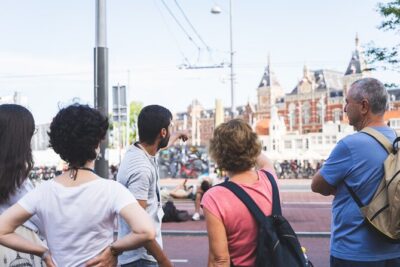
Amsterdam gets more interesting fast—once someone explains the rules. This 2.5-hour small-group walking tour is a practical introduction to the city’s best-known sights, plus the off-the-page stories that make the canals and alleyways feel personal. Guides like Rob, Laura, and Claire are often praised for making the info land without turning the walk into a lecture, and you’ll get built-in context for what you’re seeing.
I especially like the way this tour mixes big landmarks with human-scale details, so places like Dam Square and the Royal Palace aren’t just postcard backdrops. It’s also a 2.5-hour run with a limited group size (up to 10), which helps keep the pace comfortable and the Q&A actually useful. The main consideration: it involves some walking and it covers serious and sensitive topics (including the Nazi occupation and prostitution/red-light history), so pace yourself and be ready for heavy moments.
In This Review
- Key highlights to look for
- Where the walk starts: finding your blue umbrella in Beursplein 1
- Beursplein and Dam Square: the “how Amsterdam grew up” moment
- Nieuwe Kerk and the Royal Palace: quick photo stops with real context
- Zeedijk and Nieuwmarkt: street-level history you can feel
- Jewish Cultural District and the story thread toward Anne Frank
- Zuiderkerk and Begijnhof: from big stories to quiet streets
- Amsterdam Flower Market and Muntplein: fun, color, and simple photo wins
- The Red Light District and drug-policy stories: why Amsterdam handles contradictions
- How to use this tour to explore smarter afterward
- Price and value: why $20 can make sense
- Who should book this Amsterdam walking tour?
- Should you book it?
- FAQ
- How long is the Amsterdam Small-Group Walking Tour?
- Where does the tour meet?
- How much does it cost?
- What’s included in the price?
- What is not included?
- What languages are offered?
- Is the tour accessible for a wheelchair?
- What should I bring?
- What’s the group size?
- Can I cancel and get a full refund?
Key highlights to look for
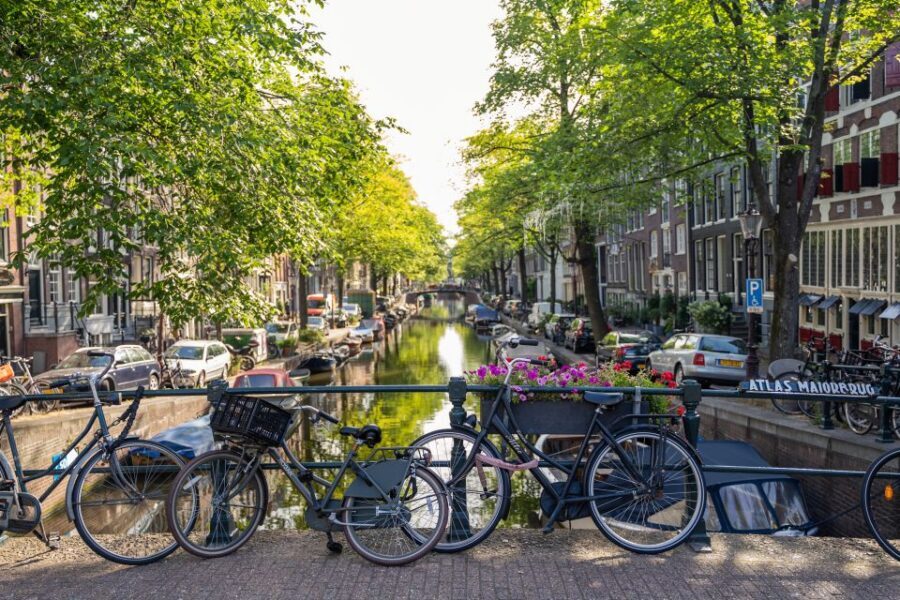
- A tight 2.5-hour route that hits major central sights plus nearby neighborhoods so you get your bearings quickly
- Storytelling that mixes humor and history, with guides known for dry, foreshadowing styles like Ilyan’s
- Red Light District and drug-policy context, explained as part of Amsterdam’s larger social history
- Jewish Cultural District stops and the Anne Frank-era thread, given in a respectful, guiding way
- Begijnhof and the calmer corners that balance the louder squares and busy streets
- Photo stops built into the walk, so you don’t have to hunt for the best angles
Where the walk starts: finding your blue umbrella in Beursplein 1
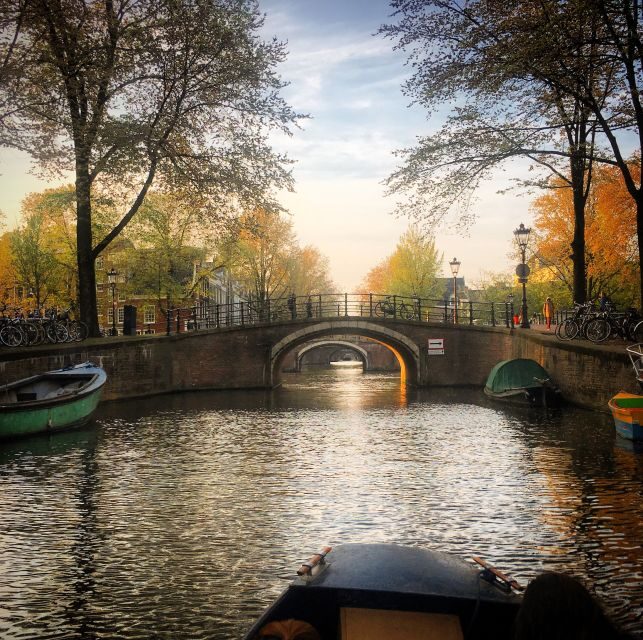
If Amsterdam is your first stop on the trip, I’d treat this tour like your quick “decoder ring.” It begins at Beursplein 1, right in the heart of central Amsterdam, which matters because you’ll spend less time crossing the city and more time understanding it.
The meeting spot is easy to navigate once you know what to look for: your guide stands in front of Cafe Bistro, beside the bull figure, holding either a blue umbrella or a sign/tag with the Amsterdam Guides & Tours logo. That little detail sounds minor, but it saves you from doing that frantic street-corner scanning with cold hands.
Also, you’ll have live guiding in English or Spanish, so you can pick the language that fits you best. And while the tour is listed as wheelchair accessible, it’s also labeled not suitable for people with mobility impairments—so if you’re dealing with limited mobility, don’t assume it’s a smooth fit. Ask directly before you book.
You can also read our reviews of more walking tours in Amsterdam



Beursplein and Dam Square: the “how Amsterdam grew up” moment
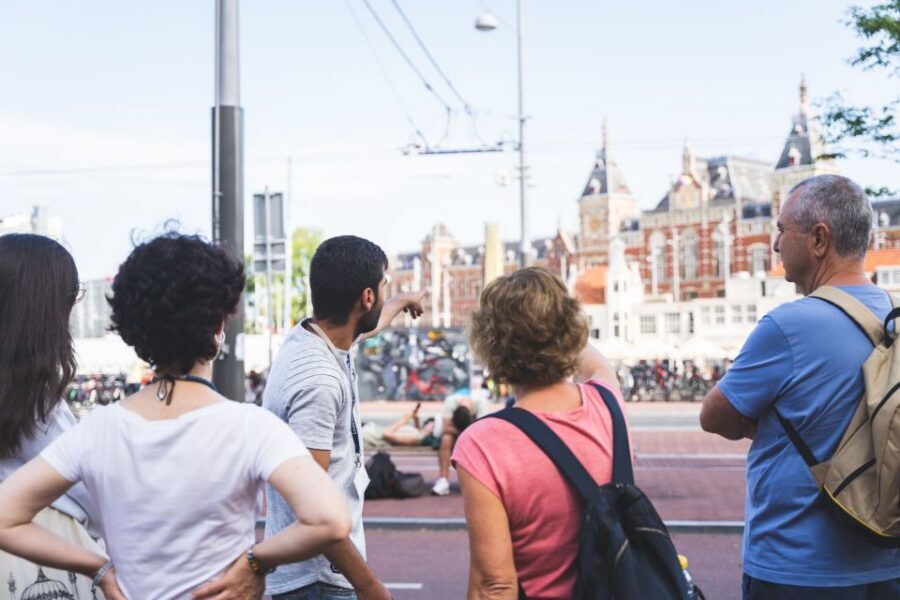
The first stretch sets the tone. You start with a guided intro at Beursplein, then move on to Dam Square. This is where you get the big-picture story: how a small settlement on the Amstel River turned into one of Europe’s most important trading centers during the Dutch Golden Age.
Why this matters: without context, Amsterdam’s landmarks can feel like a list. With context, they become clues. At Beursplein and Dam Square, the guide’s job is to explain what people built, what they traded, and why the city’s attitude toward commerce and culture shaped everything you’ll see later—canals, architecture, even the way neighborhoods evolved.
At Dam Square, you get a short, focused stop—enough time to take in the scale and snap photos, but not enough to slow the group down. This is smart for first-day energy. You’re not committing to a long museum-style stop; you’re building understanding while your feet stay moving.
Nieuwe Kerk and the Royal Palace: quick photo stops with real context
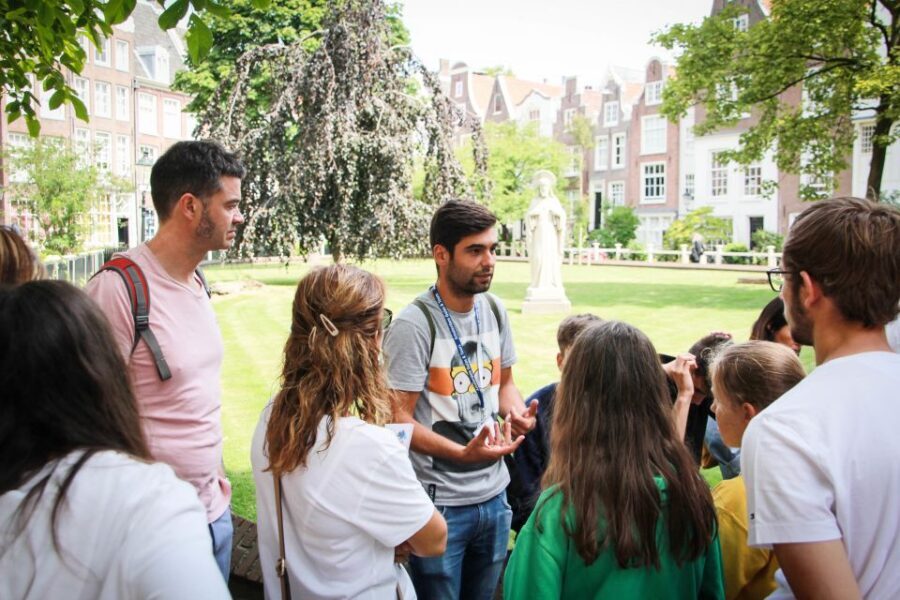
Next come two classic sights with short breaks: Nieuwe Kerk (photo stop) and the Royal Palace (another photo stop). These are the kind of places people point at, but the value here is that the guide ties them into the city’s larger story—power, wealth, and public life.
In practical terms, these photo stops are great if you’re traveling light and don’t want to waste time waiting for perfect light. In bad weather, they also work well because you’re not stuck outside for long. In fact, the tour’s ability to stay enjoyable even in cold or rain shows up in feedback, where guides kept the pace and the tone steady.
If you like a clean route with minimal wandering, these stops are a nice compromise: you get iconic backdrops without turning the tour into a “stand around and wait” experience.
Zeedijk and Nieuwmarkt: street-level history you can feel
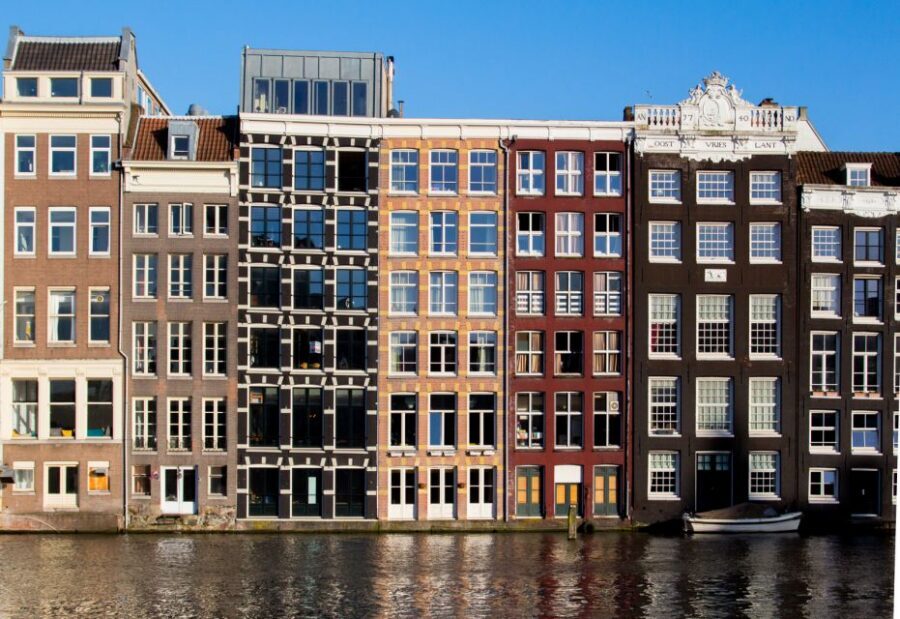
From the formal feel of the palace area, the tour shifts to Zeedijk Street and then Nieuwmarkt Square. This portion is where Amsterdam stops being abstract and becomes street-level.
You’ll get an explanation of the city’s liberal approach as it developed over time, including how Amsterdam handled controversial topics. The guide doesn’t treat these subjects like tabloid trivia. Instead, the story is framed as social policy and historical change—how the city’s attitudes formed, shifted, and left traces in the streets.
Nieuwmarkt is also a good place for the “oh, that’s why it looks like that” moment. The mix of old trade routes, religious and cultural neighborhoods, and changing populations is exactly what makes Amsterdam feel different from other European capitals. You’re not just seeing a neighborhood; you’re learning how it got layered.
The walking here is part of the point. You’ll see the city in motion, and the guide will help you connect what you notice—architecture, street names, the way squares open up—with what it meant historically.
Jewish Cultural District and the story thread toward Anne Frank
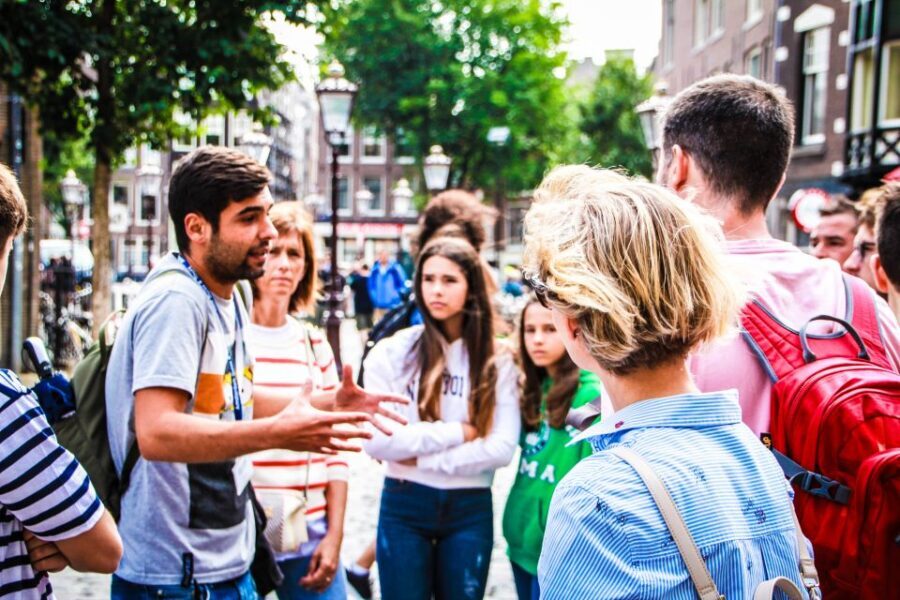
One of the most important parts of the walk is the stop in the Jewish Cultural District, with a guided segment that stays focused on historical context. This is where the tour touches the darker side of the 20th century, including the Nazi occupation and the moving story connected to Anne Frank.
This section is valuable even if you’ve read about Anne Frank before, because a guide can help you connect the story to the geography of Amsterdam. Seeing the places related to community life and historical disruption makes the past feel less like a book and more like a real city history.
A good guide will also manage the emotional weight without turning it into heavy-handed storytelling. The overall tone across guides is often described as engaging and respectful, and you’ll feel that balance when the walk moves from hard history back toward everyday Amsterdam.
If you prefer to emotionally process at your own pace, treat this part like a moment to slow down mentally. You don’t have to rush through it to keep up—good tours leave space for questions.



Zuiderkerk and Begijnhof: from big stories to quiet streets
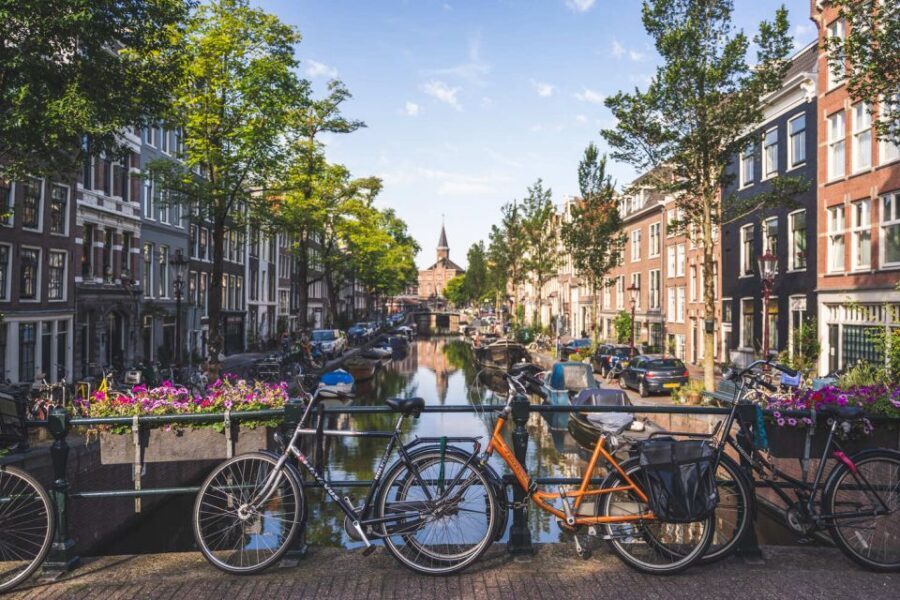
After the denser history, the tour brings you to Zuiderkerk for a photo stop, then continues to Begijnhof for a longer guided visit (about 20 minutes).
Zuiderkerk works as a visual palate cleanser: another landmark, another angle, but not an overwhelming time sink. It gives you a chance to reset your brain and take photos from a spot where the city’s geometry shows clearly.
Then comes Begijnhof, which is the kind of place you’ll remember after you’ve left Amsterdam. This is a quieter pocket tucked within the city’s busy fabric. The guide’s job here is to explain what the site meant and why it’s different from the surrounding streets. It’s not just a pretty courtyard stop; it’s a lesson in how Amsterdam found space for community life.
If you like places that feel lived-in rather than staged for tourists, Begijnhof is a highlight. It’s also a nice balance against the tour’s heavier themes. You finish this segment with a calmer lens on the city.
Amsterdam Flower Market and Muntplein: fun, color, and simple photo wins

The final third leans lighter. You’ll visit the Amsterdam Flower Market for about 20 minutes. Even if you don’t buy anything (and you might not want to with luggage), it’s a visual payoff after the history stops.
This is where you notice Amsterdam’s practical side: the city loves commerce, but it also loves beauty built into daily life. The market feels like Amsterdam’s “working culture” in real time.
Then you end with Muntplein for a photo stop, before heading back to Beursplein 1 to wrap up. These last moments help you connect the walk to your own day after the tour. You leave with images, yes—but more importantly, you leave with a sense of what you can explore next without getting lost.
The Red Light District and drug-policy stories: why Amsterdam handles contradictions
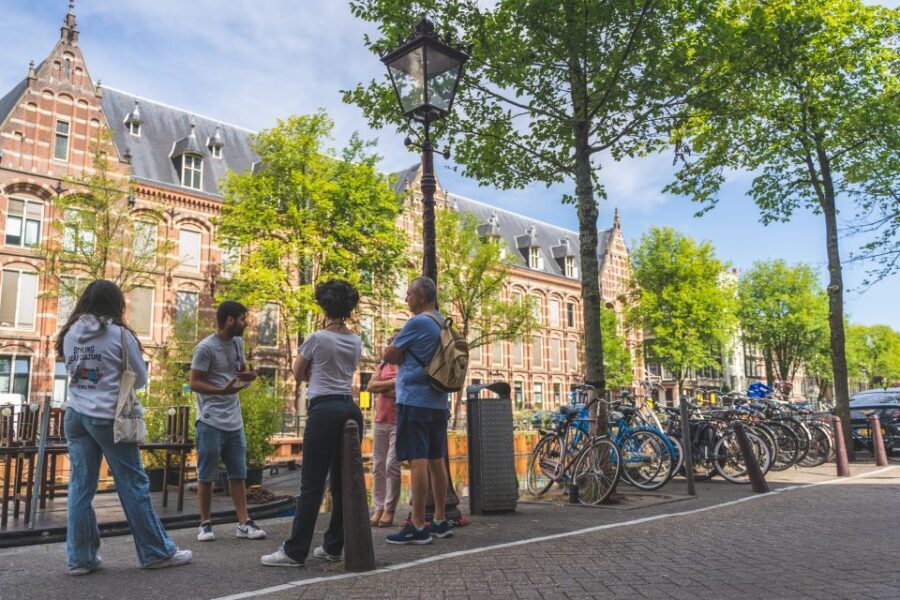
A big promise of this tour is that you won’t only get the glossy postcard Amsterdam. You’ll hear about the Red Light District and the city’s history around prostitution, plus the pioneering policies related to drug decriminalization—and you’ll hear it as part of the city’s evolution, not as shock-value sightseeing.
This matters because Amsterdam’s reputation is built on contradictions. If you only learn the Golden Age stories, you miss half the picture. If you only focus on modern nightlife, you also miss why the city developed the attitudes it did.
One more practical note: how your guide handles these topics can shape the entire experience. Many guides are praised for balancing humor with serious facts—some with a dry sense of humor and clever foreshadowing. That tone helps you stay engaged while you handle harder content.
How to use this tour to explore smarter afterward

What you’re really paying for isn’t just walking past buildings. It’s the mental map you build by hearing why things are where they are.
Here’s how to carry it forward on your own:
- If you feel turned around, start from what you learned near Dam Square and work outward. The central route gives you a reliable anchor.
- When you see canal houses and street patterns, look for the historical logic your guide explained. You’ll spot the “why” faster.
- For food and breaks, use your guide’s tips right away. Guides are often praised for making specific recommendations, including places to warm up and relax during cold weather.
Also, if you get lucky with timing and the group is small, the experience can feel more personal. Some people report tours running as a tight duo or very small group, with extra time for chat and photos.
Price and value: why $20 can make sense
At about $20 per person for roughly 2.5 hours, this is strong value for a few reasons:
- You’re getting a guided walk through the most central sights, with context you won’t get as efficiently on your own.
- The tour covers more than “what to see.” It connects the major themes of Amsterdam—trade and the Golden Age, social policy, and the heavy 20th-century chapters—so you’re not paying museum prices for meaning.
- It’s small-group by design (limited to 10), which makes the guide’s time more usable.
Compare that to doing a self-guided route: you might still see a lot, but you’d miss the connecting story that makes the streets feel coherent.
Who should book this Amsterdam walking tour?
Book it if you want:
- A first-day orientation that still feels entertaining
- Central Amsterdam highlights without long lines or ticket hassle
- Honest context, including the tough parts of history and social policy
Consider a different option if:
- You prefer only light, upbeat sightseeing and want to skip heavy topics
- You can’t handle some walking or long stretches outdoors
- You have mobility needs that might not work with the tour’s physical demands
Should you book it?
Yes, if you’re the type of traveler who likes cities with contradictions. This tour is built for you: you get iconic landmarks, plus the human stories that explain why Amsterdam feels like it does. With high guide ratings and a strong reputation for engaging humor and clear pacing, it’s a low-risk way to start your trip with confidence.
FAQ
How long is the Amsterdam Small-Group Walking Tour?
The tour runs for about 2.5 hours. The exact route and timing can vary depending on the guide and group needs.
Where does the tour meet?
The tour departs from Beursplein 1. Your guide is waiting in front of Cafe Bistro, next to the bull figure, with a blue umbrella or a logo tag.
How much does it cost?
It’s listed at $20 per person.
What’s included in the price?
The price includes a 2.5-hour walking tour with an expert local guide, walking through iconic sights in the historic city center, and tips to continue exploring like a local.
What is not included?
Entrance fees for museums or other attractions are not included. Food and drinks and transportation to and from the meeting point are also not included.
What languages are offered?
The live guide is available in Spanish and English.
Is the tour accessible for a wheelchair?
It is listed as wheelchair accessible, but it is also marked not suitable for people with mobility impairments, so it’s worth checking your specific needs before booking.
What should I bring?
Bring comfortable shoes and drinks.
What’s the group size?
The experience is a small group limited to 10 participants.
Can I cancel and get a full refund?
Yes. Free cancellation is offered up to 24 hours in advance for a full refund.