REVIEW · AMSTERDAM
Amsterdam: Food and Culture Walking Tour with Tastings
Book on GetYourGuide →Operated by Ollantay Food Tour · Bookable on GetYourGuide
Food first, history right behind. On this 3.5-hour Amsterdam walk, you sample Dutch classics and pass landmarks like Begijnhof and the Royal Palace. It starts at the Flower Market and keeps moving through real neighborhoods, so you get a city feel, not just photo stops.
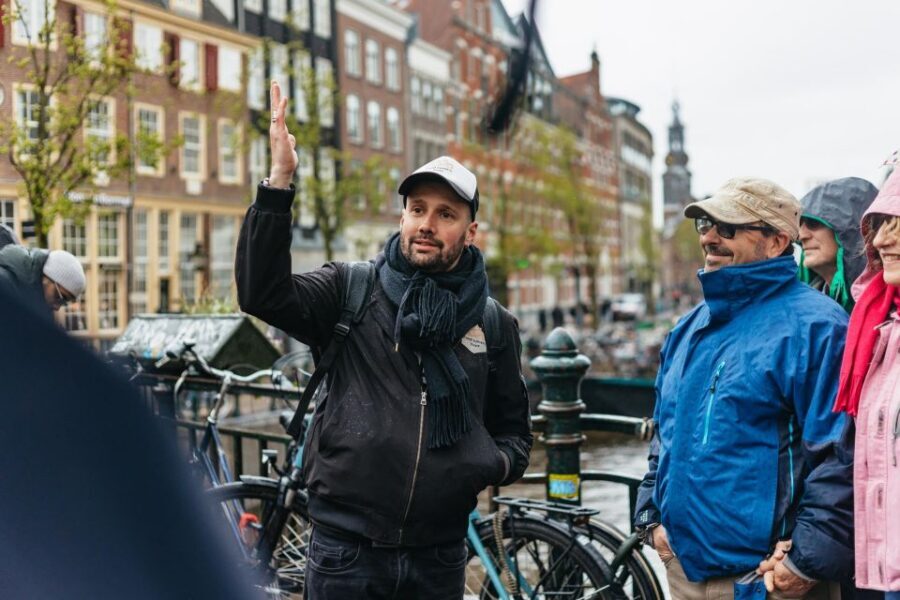
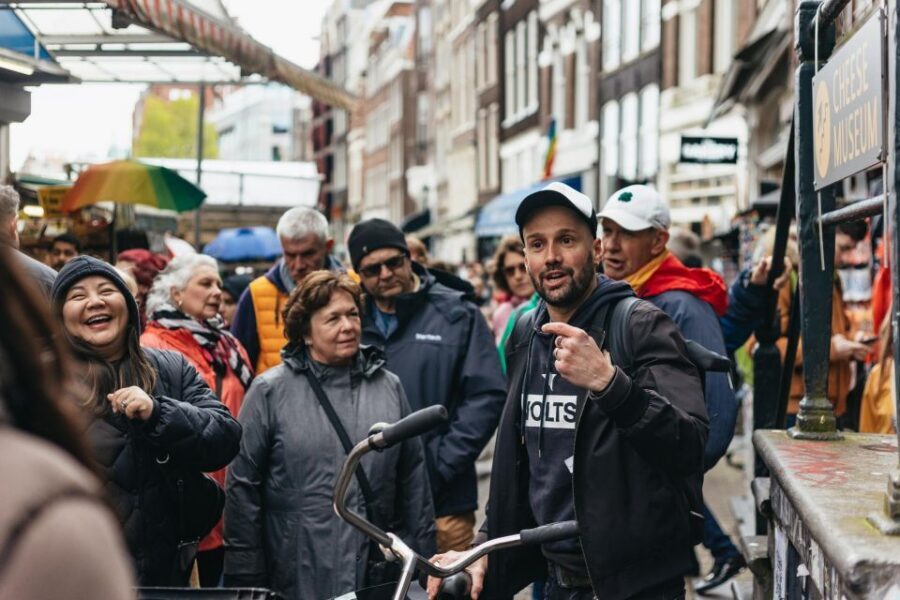
I especially like two things. First, the lineup is practical and specific: you taste kibbeling, herring, cheese, bitterballen, stroopwafels, Dutch fries, grilled cheese, and finish with apple tart. Second, Roman (your guide) brings the stories with energy, and he’s the kind of person who learns names and keeps the group moving without rushing.
One consideration: it’s a walking tour. If you need mobility support, note that it’s not suitable for people with mobility impairments, and luggage or large bags aren’t allowed. Bring comfortable shoes and come ready to stroll for about 3.5 hours.
In This Review
- Key highlights that make this tour worth your time
- Why this Amsterdam food walk works
- Finding your start point at Vijzelstraat and the Flower Market
- Begijnhof, the Royal Palace area, and Westerkerk by foot
- Anne Frank House area views without the full museum day
- Jordaan neighborhood walking: where the city feels human
- The tastings: what you’ll eat and how to enjoy it
- Local cheese
- Herring
- Kibbeling
- Stroopwafel
- Dutch fries
- Bitterballen
- Grilled cheese
- Apple tart sweet finish
- Pace, group size, and what to bring
- Price and value: what $93 buys you in Amsterdam
- Who this tour is best for
- Should you book this Amsterdam Food and Culture Walking Tour?
- FAQ
- How long is the Amsterdam food and culture walking tour?
- How much does the tour cost?
- What’s included in the tour price?
- Where do I meet the guide?
- What foods will I taste during the tour?
- What should I bring?
- Is hotel pickup and drop-off included?
- Is luggage allowed?
- What accessibility limits should I know about?
- What languages is the tour offered in?
- What’s the cancellation policy?
Key highlights that make this tour worth your time
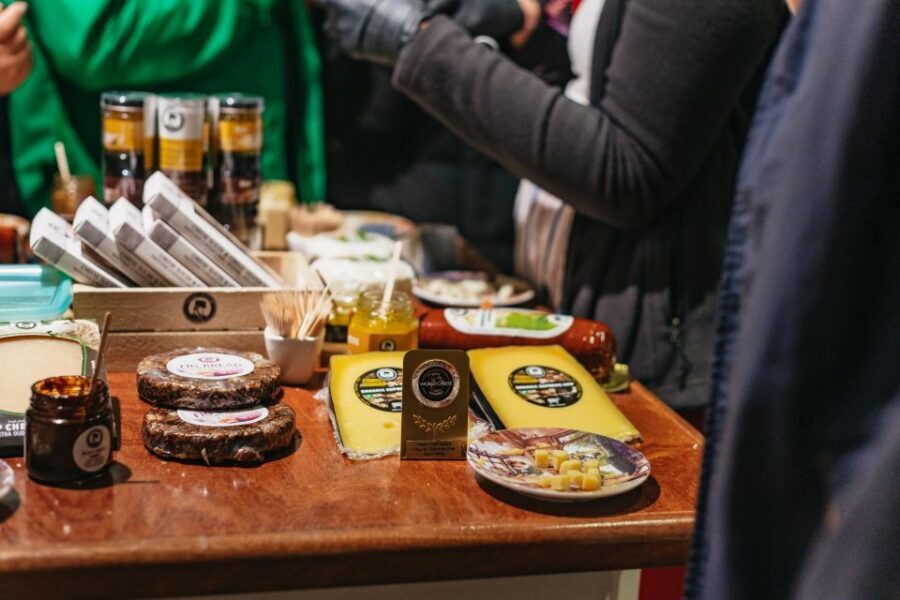
- A focused tastings plan: eight Dutch staples plus a sweet apple-tart finish
- Flower Market start: see the iconic stalls right where locals shop
- Major landmarks on foot: Begijnhof, Royal Palace area views, Anne Frank House area, and Westerkerk
- Jordaan neighborhood time: charming streets that feel more lived-in than tourist-only corners
- Roman’s people-first hosting: learning names, keeping the pace comfortable, and handling small practical needs (like umbrellas in rain)
- You leave with ordering confidence: you’ll know what to chase later in Amsterdam
Why this Amsterdam food walk works
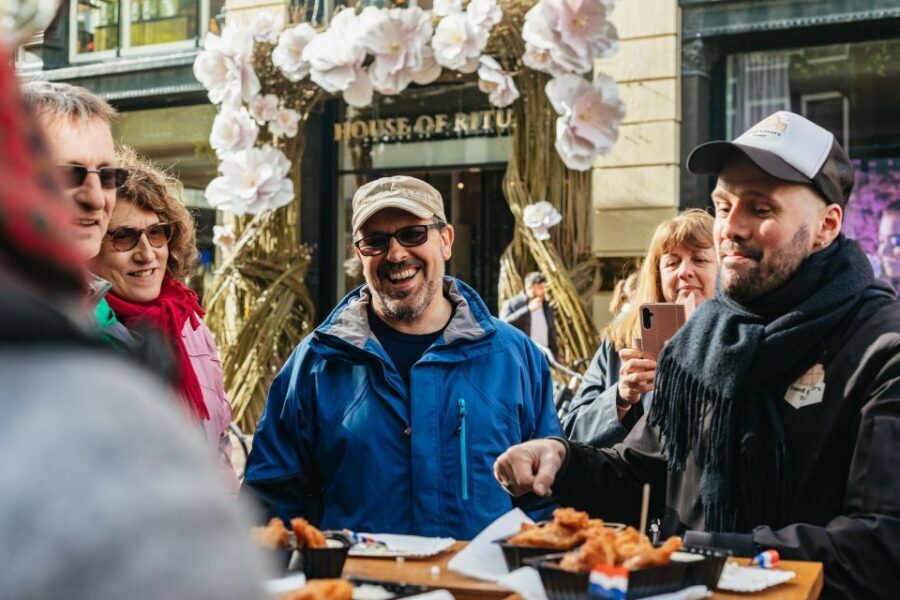
This tour hits a sweet spot for first-timers: you get food that makes sense in Amsterdam, and you also get the city’s layout and “why it looks like this” context. Amsterdam can feel like a blur of canals, bikes, and narrow streets. A guided walk turns that chaos into a map you can actually use later.
The best part for me is the food strategy. Instead of vague descriptions, you taste specific Dutch things like herring, kibbeling, bitterballen, and stroopwafels. You’ll quickly learn what you like and what you can skip without spending your whole trip gambling on menus.
The second big win is how Roman connects the dots. It’s not only facts. It’s food tied to place: market life, neighborhood history, and the way Amsterdam’s past still shows up in what people eat.
You can also read our reviews of more walking tours in Amsterdam



Finding your start point at Vijzelstraat and the Flower Market
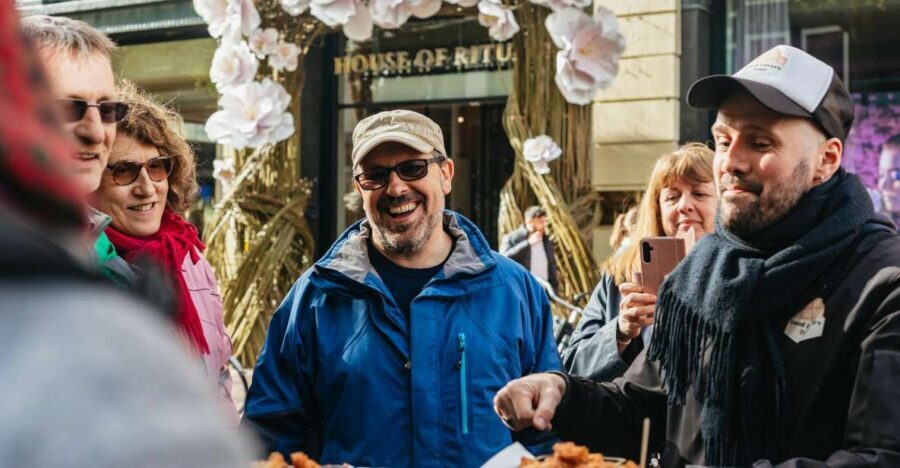
You meet just in front of Asian Kitchen at 5-A Vijzelstraat, in the center of Amsterdam, right by the Flower Market entrance. It’s an easy landmark to orient yourself to, and it sets the tone immediately.
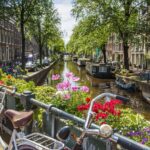
The Flower Market stop matters more than it sounds. This isn’t a distant viewpoint. You’re right inside the colorful world where flowers and bulbs are part of daily commerce. That means you’re seeing the market as a working place, not a staged set piece.
If you’re the type who hates standing around, you’ll still enjoy this segment. You’re moving, people are around you, and you’re learning the city through something locals actually use.
Practical tip: arrive with a little extra time to find the exact spot and get settled before you start walking.
Begijnhof, the Royal Palace area, and Westerkerk by foot
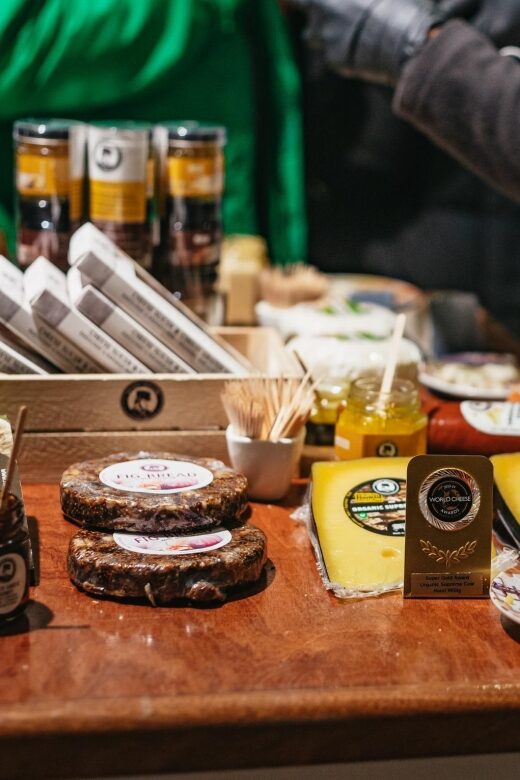
Amsterdam’s big sights can be overwhelming if you just show up and wander. On this tour, the key landmarks come with context as you walk between them.
Begijnhof is one of those “wait, this is in the middle of the city?” spots. It’s a historic courtyard tucked among surrounding streets, and it instantly gives you a feeling for how Amsterdam protected private community spaces while still living in dense urban quarters. When your guide explains what you’re looking at, it’s easier to see why this kind of design lasted.
You also get time around the Royal Palace area. Even if you’re not going inside, it helps to see the building presence in its setting. You start noticing the city’s style choices—how important structures fit into the flow of streets and canal-adjacent views.
Then there’s Westerkerk Church. Churches in Amsterdam can feel like landmarks in both senses: spiritually important and visually dominant. Seeing it during a walking tour gives you the advantage of context—approach, perspective, and how the neighborhood frames the monument.
Anne Frank House area views without the full museum day
You’ll also see the Anne Frank House area as part of the route. This is the kind of stop that can be emotionally heavy, so it’s good to have guidance and pacing. You’re not forced into a rushed checklist moment.
What you gain here is location awareness. When you’ve walked past the area with a guide, you’ll understand how the surrounding streets work and why the site sits where it does. That makes it easier if you later decide to visit the house formally.
Even if you never plan a ticketed visit, the tour still gives you a strong sense of what this part of Amsterdam feels like in real life.
Jordaan neighborhood walking: where the city feels human
One of the itinerary’s smartest choices is the inclusion of the Jordaan neighborhood. This area tends to feel more like Amsterdam lived-in rather than Amsterdam staged for postcards.
You’ll notice it in the street scale and the “day-to-day” vibe. Instead of only stopping at the most famous corners, the walking route pulls you toward the quieter textures that make Amsterdam feel livable: shopfronts, side streets, and the way people flow through the neighborhood.
This is also where the tour’s food storytelling clicks. When your guide explains connections between old city patterns and current food culture, Jordaan is the kind of backdrop that makes it stick.
If you want a travel souvenir beyond photos, this neighborhood segment does that. You’ll remember the feeling, not just the landmark.
You can also read our reviews of more food & drink experiences in Amsterdam






The tastings: what you’ll eat and how to enjoy it
The core of the experience is food. You’ll taste eight typical Dutch foods, including local cheese, herring, kibbeling, stroopwafels, Dutch fries, bitterballen, a grilled cheese, and you’ll end with apple tart.
Here’s how to think about each tasting so you get the most out of it.
Local cheese
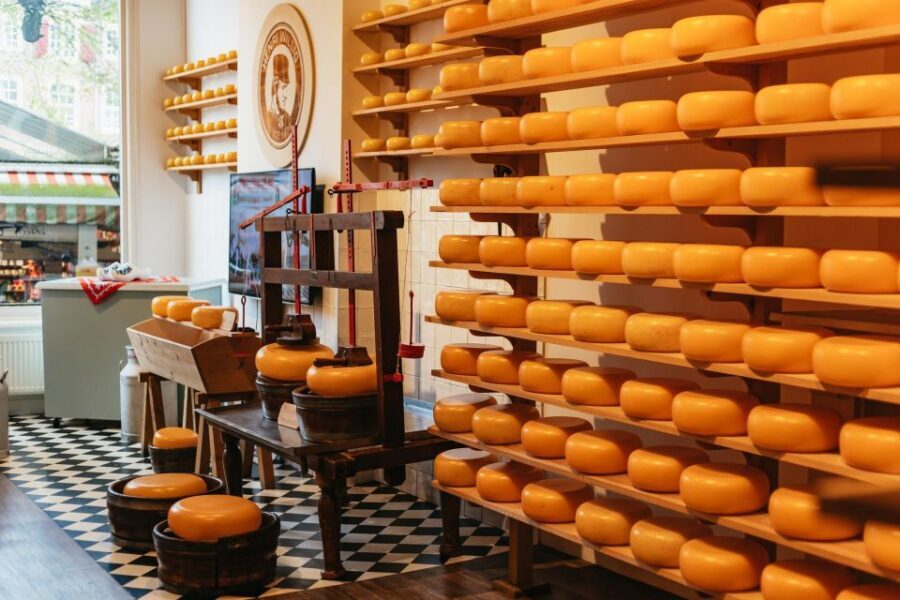
Dutch cheese is a bigger deal than most people realize before they arrive. On this tour, cheese isn’t a generic “try this dairy.” It’s a taste point tied to Dutch food culture—how cheese fits into everyday eating and market traditions.
If you like to remember flavors, take a second to note the texture and the difference between mild and stronger varieties. Later, when you see cheese shops around town, you’ll know what you’re actually looking at.
Herring
Herring is classic Amsterdam street food, but it’s also one of those foods people either love or bounce off. That’s exactly why I like trying it on a guided tour. You’ll taste it without needing to guess how to order or what version is best.
The big tip here is mindset: don’t treat it like a fish-and-chips substitute. Treat it like a Dutch specialty with its own logic.
Kibbeling
Kibbeling is battered and fried fish, usually served in bite-sized pieces. It’s comfort food with a crunch. If you want something salty and easy to keep eating while you walk, this is one of the smartest stops.
This is a good tasting to pace yourself. Eat it when you’re ready for something hot and fresh, not when you’re already stuffed.
Stroopwafel
Stroopwafels have that warm, caramel-syrup sweetness that feels made for cool Amsterdam weather. The tour’s setup also makes this practical: you’ll get it at the right moment instead of chasing the dessert on your own.
If you like sweet snacks but hate overly messy ones, take small bites first. Stroopwafel can be sticky, and you’ll enjoy it more if you don’t rush.
Dutch fries
Dutch fries are another “simple on paper, special in practice” food. This stop helps you understand Amsterdam’s street-food rhythm: fry stands, quick bites, and flavors that keep you moving.
If you’re comparing fries later, you’ll have a baseline from this tasting. That’s useful when you’re trying to decide where to return.
Bitterballen
Bitterballen are meat croquettes, usually served hot with a sauce on the side. This is one of those foods that tastes better the moment it’s served, so a scheduled stop matters.
They’re also a great “Amsterdam party snack.” You’ll taste the classic texture—crispy outside, dense inside—and you’ll immediately understand why these show up so often in Dutch social life.
Grilled cheese
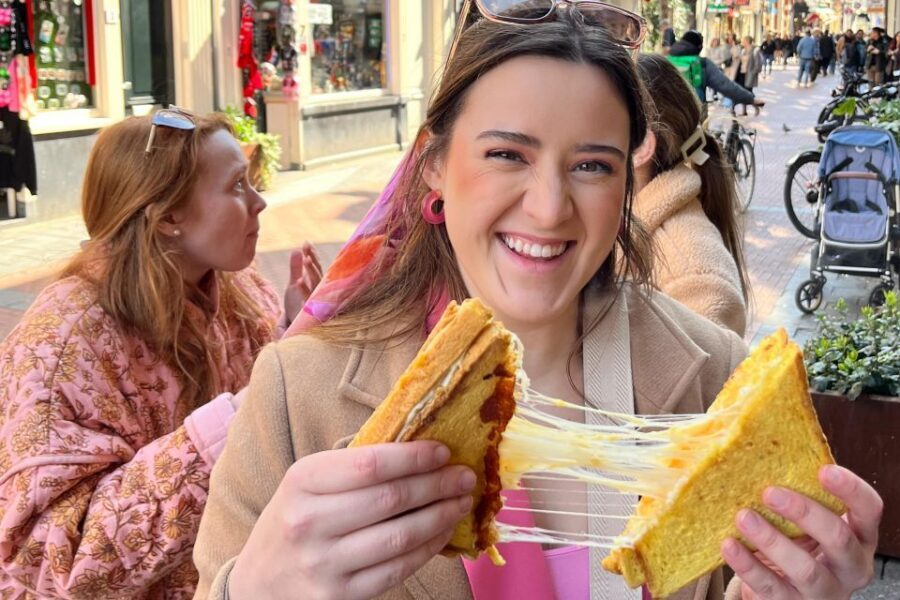
Yes, grilled cheese is part of the lineup. In Amsterdam, it’s not always the bland, school-cafeteria version you might expect. In this tour, it functions as a comforting, crowd-friendly flavor bridge between savory items.
If you’re traveling with someone who doesn’t want only fried or fishy choices, this stop helps balance the plate.
Apple tart sweet finish
Finishing with apple tart is a smart move. It cleans up the salty flavors and gives you a proper Dutch-style sweet note to end on.
When you’re done, you’ll have the feeling that you ate a real mini-course rather than random samples. That’s why people come back to these kinds of tours.
Pace, group size, and what to bring

This is a walking tour that lasts about 3.5 hours. It’s long enough to see real landmarks and neighborhoods, but it’s also short enough that you’re not stuck in “all day” mode.
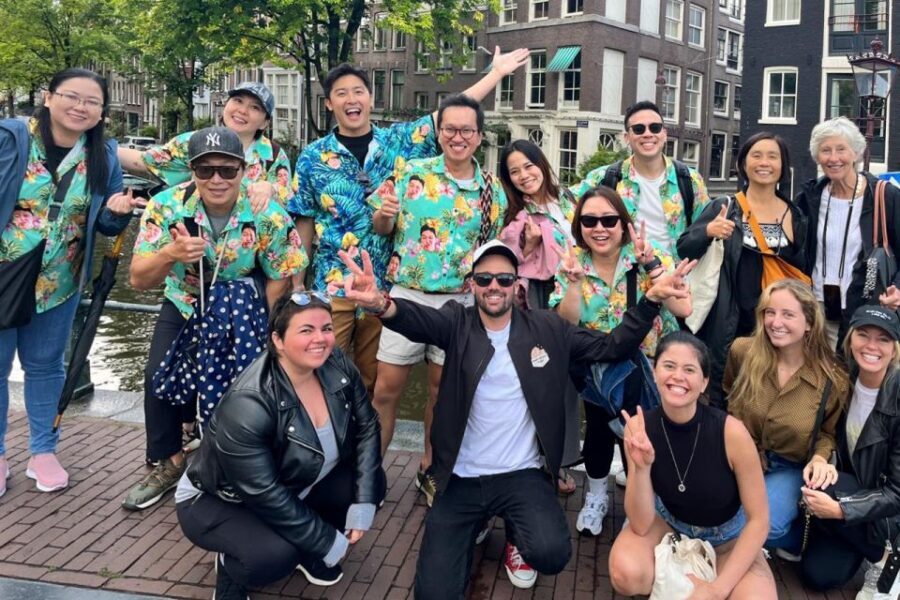
One review detail that’s consistent with what you want from a food walk: the group is kept small (around 15 people). A smaller group helps you hear the stories and keeps the flow smooth at each tasting place.
Your best prep is simple:
- Wear comfortable shoes
- Bring an appetite, since the tastings are spread out across multiple stops
- Plan your day so you’re not forced to rush a big meal right afterward
And if weather is an issue, Roman’s practical approach has included rain-friendly touches like umbrellas.
Price and value: what $93 buys you in Amsterdam
At $93 per person, this isn’t a bargain snack crawl. But it also isn’t just paying for food. You’re paying for a guided route that mixes:
- landmark sightseeing by foot
- neighborhood time in areas like Jordaan
- a set number of guided tastings
- a guide who ties food to context
If you break it down, the value comes from the combination. You’re not just eating eight Dutch staples plus a sweet. You’re also learning what those foods mean in Amsterdam and getting recommendations you can use later.
Think of it like this: you’re buying clarity. You’ll know what kibbeling actually tastes like in Amsterdam, what bitterballen feels like hot, and how stroopwafels deliver their sweetness. That saves money on trial-and-error later.
And since the tour includes a bottle of water, it helps you stay comfortable while walking.
Who this tour is best for
This tour fits best if you:
- want an easy way to orient yourself to central Amsterdam
- like food that has a clear local identity
- prefer guided explanations over wandering with no plan
- want a first-day activity that gives you direction for the rest of your trip
It may be less ideal if you:
- have mobility limitations (the tour isn’t suitable for mobility impairments)
- rely on carrying larger bags (luggage or large bags aren’t allowed)
- hate walking tours in general
If you’re unsure, pick your “walking tolerance” honestly. Comfort matters more than anything.
Should you book this Amsterdam Food and Culture Walking Tour?
Yes, if your goal is a strong first taste of Amsterdam that blends food and city context in about half a day. The highlights are specific and well-chosen: Flower Market energy, Begijnhof’s tucked-away atmosphere, Jordaan’s lived-in feel, and a tasting list that covers sweet, salty, and proper Dutch favorites.
If you want a simple checklist where you only eat and don’t care about seeing how Amsterdam is put together, you might not feel the full value. But if you want to leave with a better sense of the city—and a clearer idea of what to order—this is the kind of tour that pays off for the rest of your trip.
FAQ
How long is the Amsterdam food and culture walking tour?
It lasts 3.5 hours.
How much does the tour cost?
The price is $93 per person.
What’s included in the tour price?
You get the walking tour, a guide, food tastings, and a bottle of water.
Where do I meet the guide?
Meet just in front of Asian Kitchen at 5-A Vijzelstraat, in the center of Amsterdam, in front of the entrance of the Flower Market.
What foods will I taste during the tour?
You’ll taste eight typical Dutch foods, including local cheese, herring, kibbeling, stroopwafels, Dutch fries, bitterballen, a grilled cheese, and you’ll end with apple tart.
What should I bring?
Wear comfortable shoes.
Is hotel pickup and drop-off included?
No, hotel pickup and drop-off are not included.
Is luggage allowed?
No, luggage or large bags are not allowed.
What accessibility limits should I know about?
The tour is not suitable for people with mobility impairments.
What languages is the tour offered in?
The live tour guide is available in English and French.
What’s the cancellation policy?
You can cancel up to 24 hours in advance for a full refund.