REVIEW · AMSTERDAM
Amsterdam: Royal Palace Entry Ticket + Audio guide
Book on GetYourGuide →Operated by Royal Palace Amsterdam · Bookable on GetYourGuide
A royal building in the middle of everyday Amsterdam. The Royal Palace of Amsterdam is still used for official visits and ceremonies, so you’re not just looking at decoration—you’re touring a place with a job today. I especially love the self-guided audio that walks you room by room, and I love how the interiors mix Dutch Golden Age art with carefully preserved furnishings from the Louis Napoleon era.
One thing to factor in: the route relies on numbered stops, and it can be easy to miss the next one if the signage isn’t immediately clear to you.
In This Review
- Key things I’d plan around
- Royal Palace of Amsterdam 101: what you’re really stepping into
- Getting there by tram or metro: keep it simple
- Timing that works: how long to give yourself
- Priority lane, cloakroom, and your smartphone ticket
- How the audio guide route really feels inside
- Citizens’ Hall: where the scale hits you
- Dutch Golden Age art: what to look for beyond the frame
- Louis Napoleon interiors: furniture, clocks, and chandeliers
- State-visit atmosphere: why this place feels different
- Who this works best for
- Value check: is the $15 price fair?
- Should you book the Royal Palace entry with audio guide?
- FAQ
- How do I get to the Royal Palace of Amsterdam?
- What languages is the audio guide available in?
- Is there a children’s audio option?
- Do kids need tickets?
- What time is the last entry?
- What can’t I bring or do during the visit?
Key things I’d plan around
- A multilingual multimedia audio guide (Chinese, Dutch, English, German, French, Italian, Spanish, Russian) that lets you stop and start
- Citizens’ Hall scale shock, including the Atlas statue with the sky on his shoulders
- Golden Age art and sculpture highlights, including works by Ferdinand Bol and Govert Flinck
- Louis Napoleon–period details, like preserved furniture plus chandeliers and clocks from that time
- Priority lane with smartphone ticket, which helps you get inside faster
- Kids under 18 are free, with a counter ticket pick-up
Royal Palace of Amsterdam 101: what you’re really stepping into
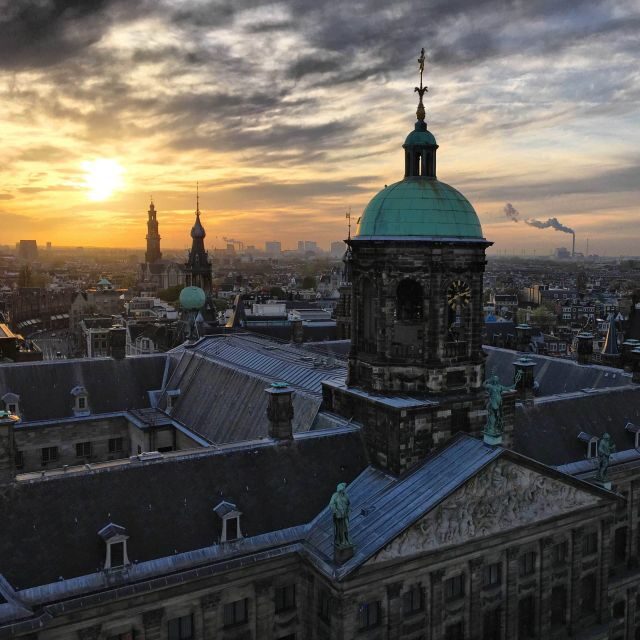
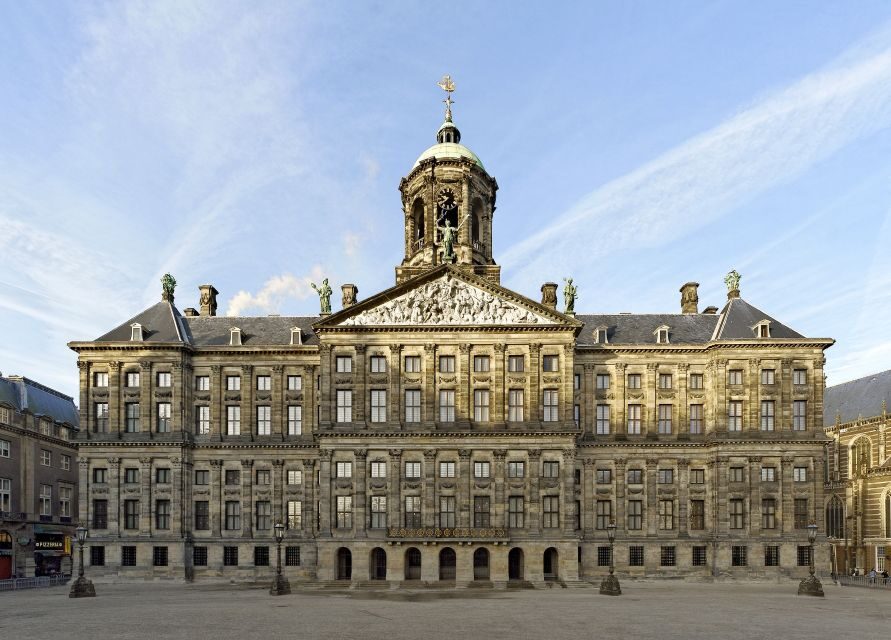
This isn’t a dead museum set behind velvet ropes. The Royal Palace of Amsterdam is a 17th-century landmark that’s still used for state visits, award ceremonies, and other royal receptions. That matters because the audio tour doesn’t just describe art and architecture—it ties the rooms to how they function.
Inside, you’ll see the official look: marble, formal chambers, and carefully kept interiors. But you’ll also see the human layer. The palace tour highlights sculptures and paintings from the Dutch Golden Age, plus “period living” details like furniture and decorative objects that were preserved from a later chapter of palace history.
I like the balance here. One room can feel grand and ceremonial. The next can feel intensely specific—down to the style of decoration and the kind of artists whose works were placed where.
A few more Amsterdam tours and experiences worth a look



Getting there by tram or metro: keep it simple
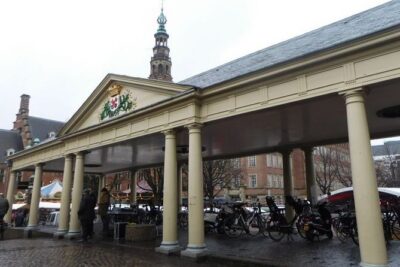
The palace is easy to reach because it sits right where Amsterdam’s public transit lines braid together.
For trams, aim for numbers 2, 4, 12, 13, 14, 17, and 24. If you’re using metro, take Metro 52 and exit at Rokin. The nearest GVB tram stop is Dam Square.
Practical tip: I’d plan to arrive a little early even if you have a timed plan in mind. The palace entry includes a scan desk and a cloakroom, and moving at a calm pace beats rushing.
Timing that works: how long to give yourself
The visit is structured around a self-guided audio route. You can move at your own pace, and the audio is designed in segments—so you don’t feel trapped in one long lecture.
A good rule: budget about 1 to 1.5 hours if you want to actually follow the audio all the way through. If you’re a slow-and-stare person with art and sculpture attention spans, plan closer to that upper end.
Also note the entry cutoff: the last entry is 45 minutes before closing time. That one detail can save you from last-minute disappointment.
Priority lane, cloakroom, and your smartphone ticket
You can enter using a priority lane. When you arrive, show your smartphone ticket at the scan desk. This is one of those “small” perks that keeps your day from turning into a waiting contest.
If you have a coat or bag you don’t want to carry through formal rooms, you can use the cloakroom. The good news: the palace makes it straightforward, so you’re not spending your visit playing luggage Tetris.
Travel sanity tip: go light. Even when the visit is self-guided, you’ll move through multiple rooms where holding things gets annoying fast.
How the audio guide route really feels inside
This is a multimedia audio tour with multiple language options, plus a special children’s version in Dutch and English. Once you’re inside, you follow the route and listen to the narration tied to the rooms.
I like that the audio guide is designed so you can stop and start. That means if you want to spend extra time on a painting, you’re not punished by a guide “moving you along.” You also get a clear sense of what you’re looking at—why these objects matter and how the palace changed over time.
One caution: the audio route depends on finding numbered sections. If the signage isn’t obvious where you’re standing, take a breath and re-check where the next numbered stop is before you wander too far. This tour is easy once you’re oriented, and frustrating if you lose the sequence.
You can also read our reviews of more guided tours in Amsterdam





Citizens’ Hall: where the scale hits you
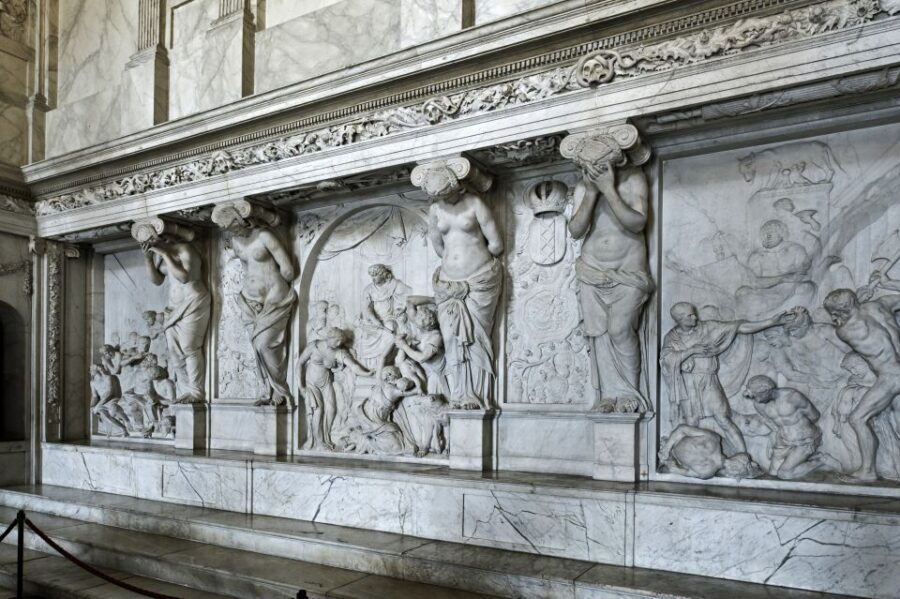
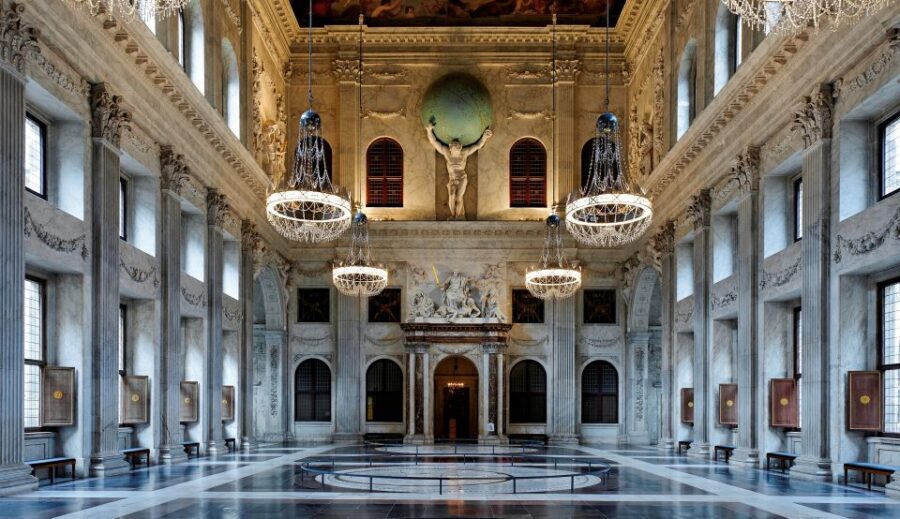
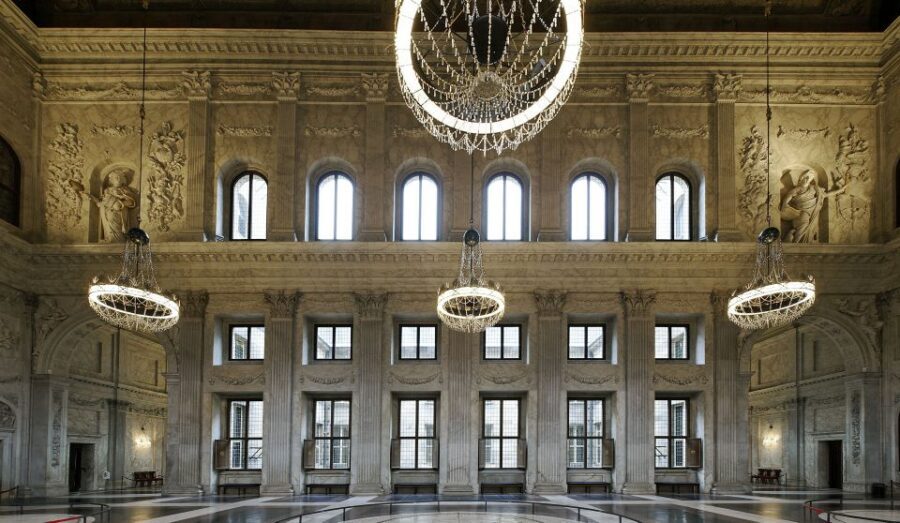
When you reach the Citizens’ Hall, expect your brain to recalibrate. It’s described as a vast marble chamber, and the size is part of the point. Even before you focus on details, you feel the grandeur of the space.
The standout feature here is the statue of Atlas with the sky on his shoulders. It’s the kind of image that turns a room into a story. The audio helps connect symbolism to the era and the palace’s intended messages of power and order.
If you want the best experience, don’t rush this hall. Look up first, then scan the room for how decoration and art are placed. You’ll get more from the time you spend here.
Dutch Golden Age art: what to look for beyond the frame
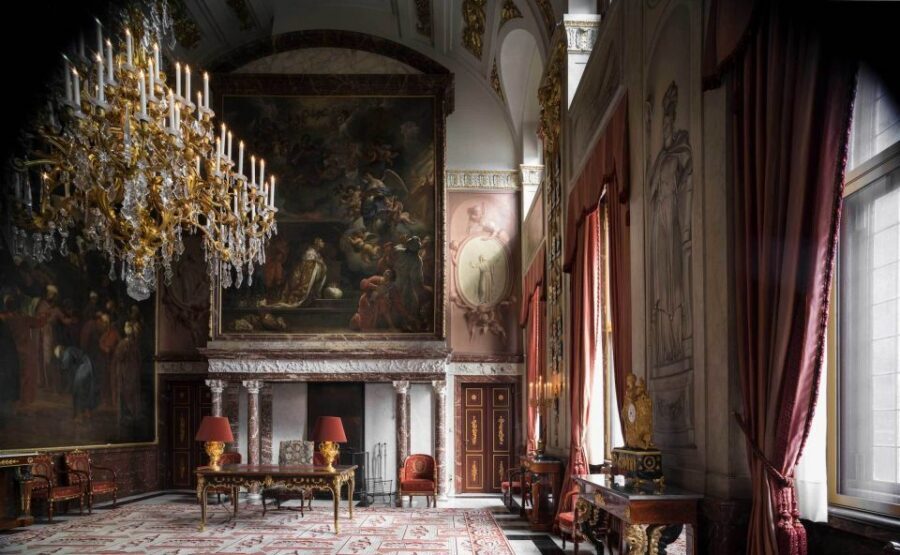
The audio guide points you to paintings and sculptures from the Dutch Golden Age—the period when Dutch art shaped European taste for generations. The palace doesn’t treat this as decoration. It presents it as status, patronage, and identity.
Specific artists mentioned in the tour include Ferdinand Bol and Govert Flinck. You’ll also see how sculpture and painting are used to “stage” the rooms. That means you’ll want to look for the relationship between artwork and setting, not just the artwork by itself.
A practical way to enjoy this: pick one or two pieces per room and get curious about what the audio says about them. If you try to see every detail in every room, you’ll end up speed-watching and missing the best moments.
Louis Napoleon interiors: furniture, clocks, and chandeliers
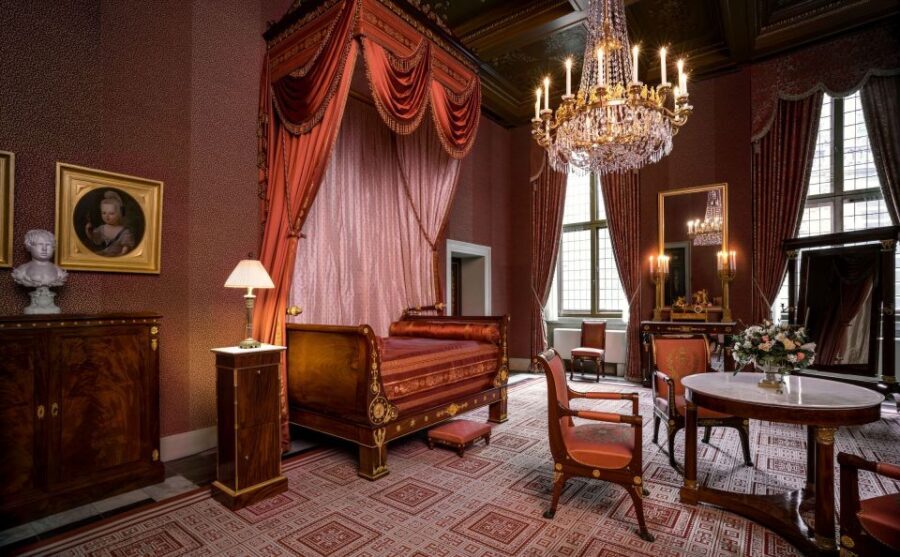
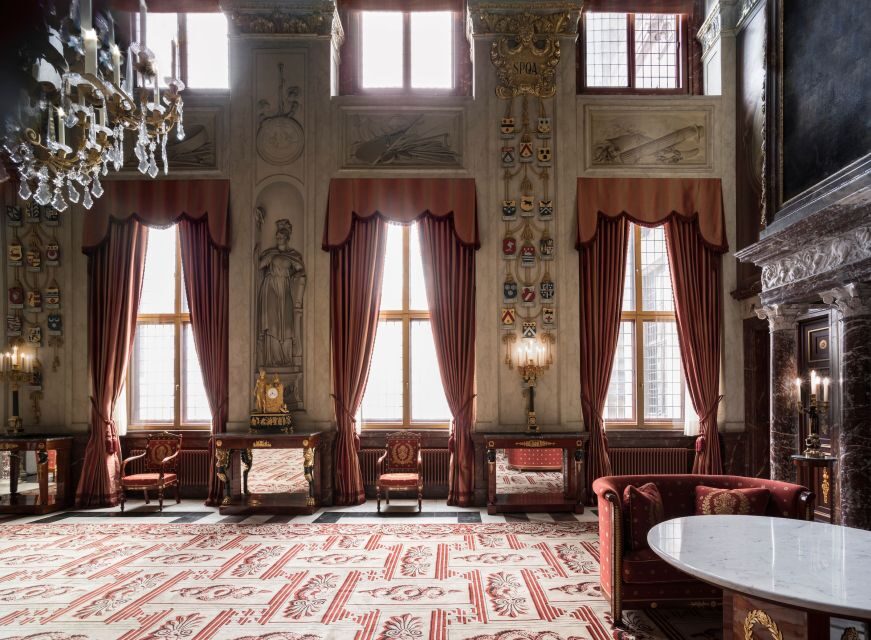
One of the most distinctive parts of this palace visit is the focus on preserved interiors from the time of Louis Napoleon. The highlight isn’t just the look—it’s the continuity. You’re seeing spaces furnished and decorated in a particular historical style that’s been carefully kept.
That means you can pay attention to the small-but-important stuff:
- Finely preserved furniture
- Chandeliers
- Clocks
These aren’t random pretty objects. They tell you what daily life in a high-status environment felt like—how people arranged space, what they valued, and how timekeeping and décor were part of ceremony.
If you love interior design history, you’ll likely linger longer here than you planned.
State-visit atmosphere: why this place feels different
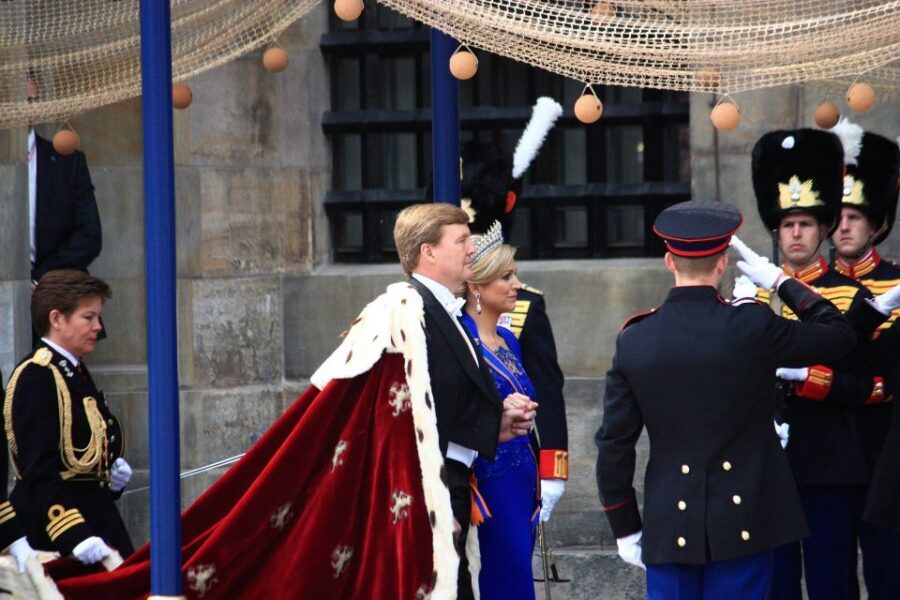
Most palaces tell you the story of power. This one adds a living layer. The palace is still used for state visits, award ceremonies, and royal receptions. Even if your visit doesn’t coincide with an event, the fact that it’s still functioning changes the vibe.
I find that knowing it’s still active makes the rooms feel less like staged scenery. It also makes the audio’s connections between past and present more convincing.
When you plan your timing, consider late afternoon if you want a calmer experience. The palace works well when you don’t feel squeezed by a crowd.
Who this works best for
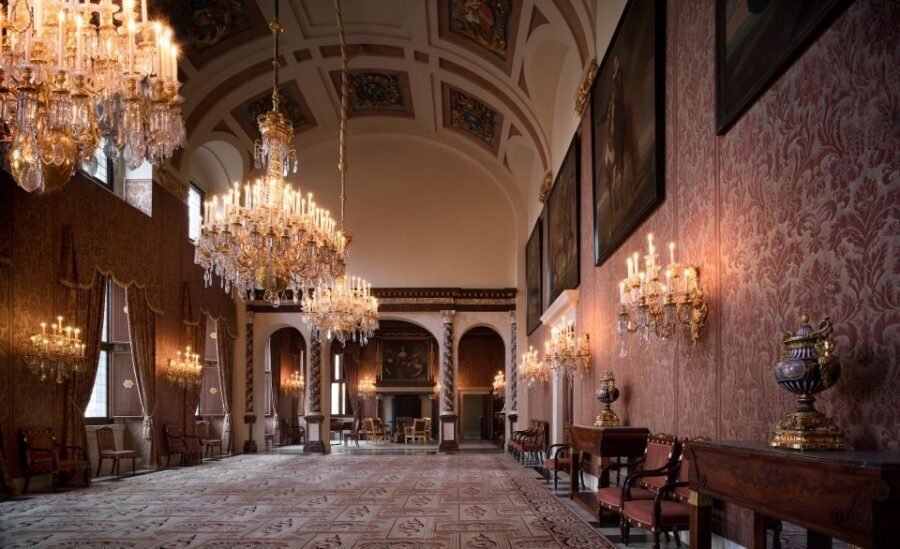
This Royal Palace audio tour fits best if you:
- Want a self-guided visit where you control your pace
- Care about art and interiors, especially Dutch Golden Age works
- Like learning through narration that ties objects to history and use
It can also be a good choice if you’re traveling solo or with someone who prefers not to wait for others. The audio format supports that.
Two practical considerations:
- The palace is busy, and seating/rest opportunities aren’t what you’d want if you need frequent breaks.
- If you have mobility limits, the building is wheelchair accessible and includes a lift, wheelchair accessible toilet, and wheelchairs for visitors.
Value check: is the $15 price fair?
At around $15 per person, this is strong value for what you get: palace entry plus a full audio experience in multiple languages, covering major art and interior periods, not just “look and move on.”
A lot of Amsterdam sights charge more for less. Here, you’re paying for access to a functioning royal interior and a guided narrative you can repeat at your pace. If you use the audio guide properly, you’ll likely feel like you got your money’s worth quickly.
Bonus value points:
- Children under 18 enter free with a ticket picked up at the counter
- The priority lane helps you save time when you want to get inside fast
- You can choose a longer or shorter way to listen, depending on your time
Should you book the Royal Palace entry with audio guide?
Book it if you want a memorable Amsterdam stop that mixes real palace atmosphere with clear self-guided storytelling. I’d especially recommend it if art, interiors, and the Dutch Golden Age are on your must-see list.
Skip it or adjust your expectations if you hate signage-based routes or you only want a quick photo-and-go visit. The experience is best when you’re willing to slow down, follow the audio segments, and actually look.
If you’re the type who appreciates order, rooms, and the way decorative details carry meaning, this is a very practical “yes.”
FAQ
How do I get to the Royal Palace of Amsterdam?
You can reach it by tram 2, 4, 12, 13, 14, 17, and 24. Metro 52 stops at Rokin. The nearest GVB tram station is Dam Square.
What languages is the audio guide available in?
The multimedia tour audio guide is available in Chinese, Dutch, English, French, German, Italian, Spanish, Russian.
Is there a children’s audio option?
Yes. There is a special multimedia tour for children available in Dutch and English.
Do kids need tickets?
Entrance is free for children under 18. A ticket can be picked up from the counter.
What time is the last entry?
The last entry is 45 minutes before closing time.
What can’t I bring or do during the visit?
You’re not allowed pets, smoking, or food and drinks. Also, avoid flash photography and video recording.