REVIEW · AMSTERDAM
Amsterdam: Guided Anne Frank Small-Group Walking Tour
Book on GetYourGuide →Operated by Empire Tours and Productions (Amsterdam) · Bookable on GetYourGuide
Anne Frank’s story starts before the house. This 2-hour small-group walk links Amsterdam’s Jewish quarter to memorials you can’t ignore, beginning at the Portuguese Synagogue area. I also love how the guide’s storytelling makes the heavy parts easier to follow without flattening the truth, and you’ll feel that expert historian touch in the way each stop connects to the next. One drawback to plan for: the tour does not include Anne Frank House entry, so you’ll need tickets separately.
I like that the route is short enough to do in a day already packed with canal walks and museum stops, yet it still covers major landmarks tied to the occupation and the Holocaust. You’ll be on your feet the whole time, and you should bring solid shoes, since Amsterdam can be slick when it’s rainy.
If you want a respectful, guided way to understand Anne Frank’s world in context, this is a strong pick, especially if you prefer walking through the city instead of watching it from a bus. It’s offered in English and Spanish, and the tour is wheelchair accessible.
In This Review
- Key moments that make this tour worth your time
- Meeting at Jonas Daniël Meijerplein: get your bearings fast
- Portuguese Synagogue from the outside: why this stop matters
- Libeskind’s Holocaust Memorial: architecture you can read with your feet
- Auschwitz Memorial in Wertheimpark: broken mirrors and the sky
- Rembrandt House Museum stop: art, place, and what gets preserved
- Zuiderkerk and the tower: Amsterdam’s faith and a practical view break
- Anne Frank Statue near the house: the emotional landing
- The guides: how the storytelling stays respectful and clear
- Price and value: what $30 buys you in Amsterdam time
- Practical tips so your day goes smoothly
- Who should book this Anne Frank walking tour?
- Should you book this Anne Frank walking tour?
- FAQ
- Where is the meeting point for the Anne Frank walking tour?
- Does this tour start at the Anne Frank House?
- What’s included in the price?
- What does the tour cover?
- Is Anne Frank House entry included?
- How long is the tour?
- What languages is the tour offered in?
- Is the tour wheelchair accessible?
- What should I bring?
- What’s the cancellation policy?
Key moments that make this tour worth your time
- Portuguese Synagogue exterior with clear explanations of what makes it historically significant
- Daniel Libeskind’s Holocaust Memorial and what its design communicates
- Wertheimpark’s Auschwitz Memorial and the broken-mirror symbolism
- Rembrandt House Museum area tied to daily life and artistic legacy
- Zuiderkerk for an architectural history stop and a view outlook
- Anne Frank Statue near the House that lands the story with meaning
Meeting at Jonas Daniël Meijerplein: get your bearings fast
You’ll meet at Jonas Daniël Meijerplein (address listed as Jonas Daniël Meijerplein 21, 1011 RG Amsterdam). Look for the large dockworker statue in the square right in front of the Portuguese Synagogue, Esnoga. Arrive a few minutes early; at least one guide’s meeting-point directions were noted as harder than they should be, so giving yourself time prevents stress.
This tour is designed for an easy rhythm: walk, stop, listen, move again. The total time is about 2 hours, but on smaller days the pace can mean you finish a bit quicker.
If the weather is bad, plan to stay flexible. Amsterdam rain happens, and you’ll spend enough time outdoors that being stuck without a jacket is a bad match for the subject matter.
You can also read our reviews of more walking tours in Amsterdam



Portuguese Synagogue from the outside: why this stop matters
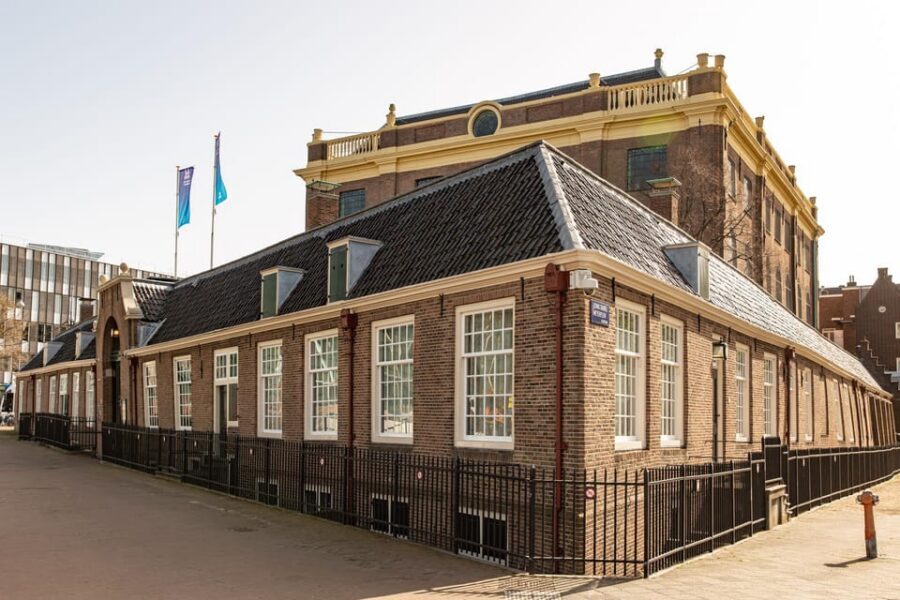
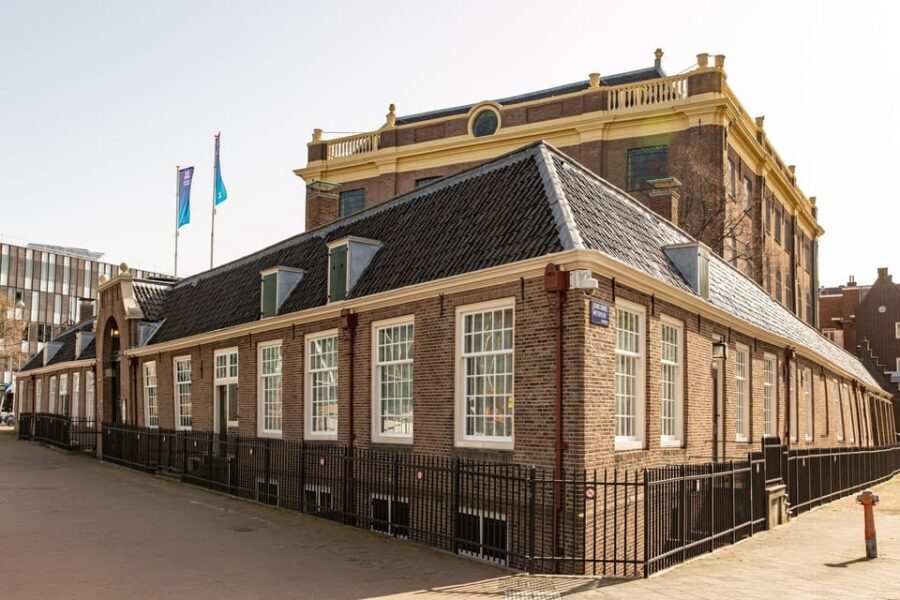
The tour starts where Amsterdam’s Jewish community story is physically anchored: the Portuguese Synagogue area. You won’t be inside on this tour, but your guide explains what makes the synagogue stand out—its 17th-century Sephardic roots, the scale, and the character of the interior (including details about how it was preserved without modern lights and heating). That kind of context helps you “see” the place even when you’re only looking at it from the street.
This opening matters because it sets a tone. Before the tour hits Holocaust memorials and occupation-era loss, you get the sense that Jewish life in Amsterdam wasn’t only tragedy. It was also culture, community, and long-established presence.
It’s also a smart way to start the day: the synagogue sits in an area that’s easy to orient to, and the photo opportunities outside are straightforward. No frantic navigation while your mind is already bracing for tough history.
Libeskind’s Holocaust Memorial: architecture you can read with your feet

Next comes the Holocaust Memorial designed by Daniel Libeskind. Even if you don’t know a thing about modern memorial design, you’ll likely find your guide’s explanation makes the space feel intentional rather than abstract.
Here’s what makes this stop valuable for you: memorials like this are built to shape how you stand, look, and think. A good guide will connect design choices to the human stories behind them—Dutch victims, loss, and remembrance—so you’re not just viewing a structure. You’re understanding why it was made.
Expect a reflective pause. This isn’t the kind of site where you rush, because the goal isn’t speed; it’s comprehension.
Auschwitz Memorial in Wertheimpark: broken mirrors and the sky
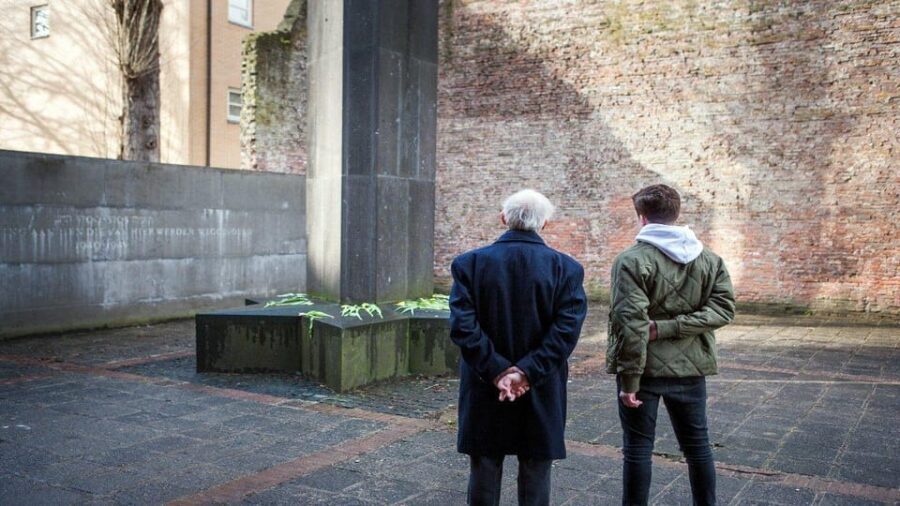
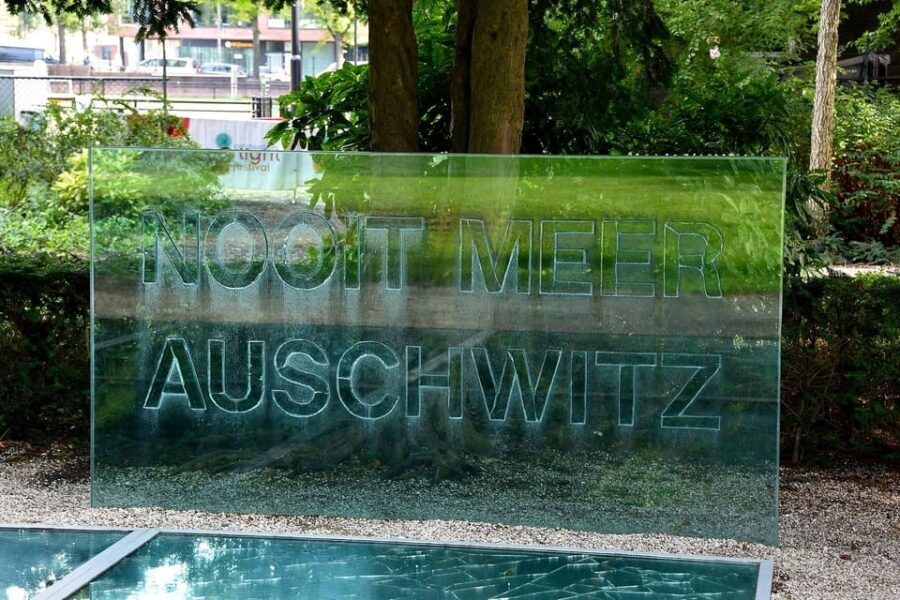
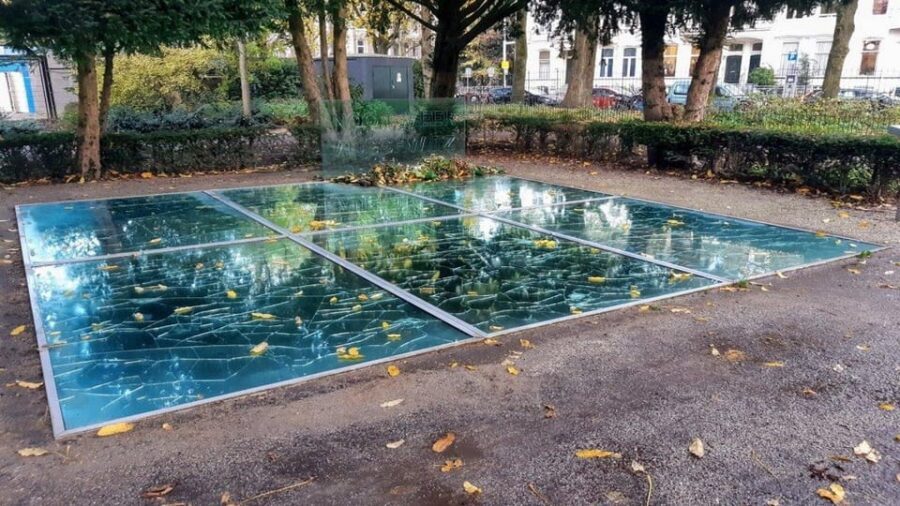
The route then heads to the Auschwitz Memorial in Wertheimpark, an installation by Jan Wolkers. This is one of the most visually memorable stops on the walk because of the symbolic broken mirrors. They fracture the sky into fragments—an image that hits harder when the day is gray, since clouds make the “reflection” feel more broken.
Why I think this stop works well on a walking tour: you experience it as part of a sequence, not as a standalone photo spot. After hearing about the Holocaust generally, you’re shown a specific kind of symbolism that forces you to slow down and interpret.
If you’re the type who needs time to process, you’ll appreciate the way the installation encourages it. It’s not a long stop, but it doesn’t feel like a checklist stop either.
Rembrandt House Museum stop: art, place, and what gets preserved
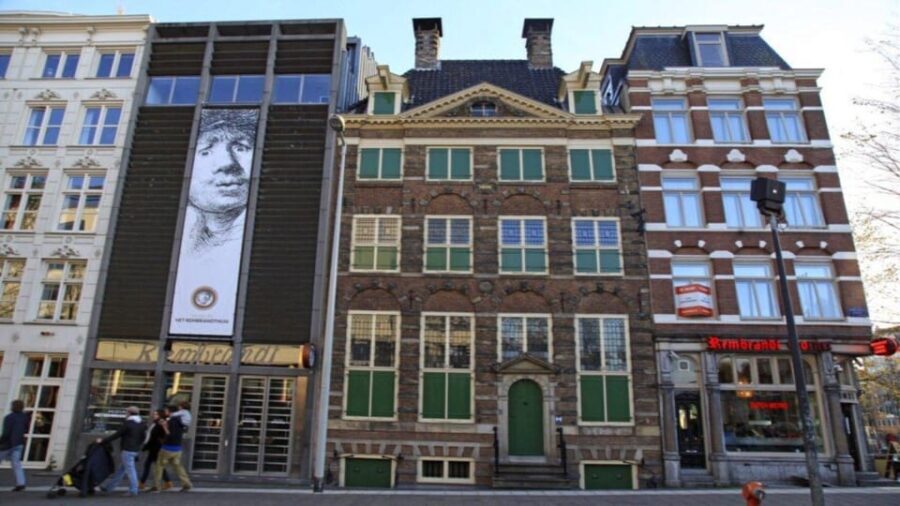
From memorials and commemoration, you move to a different kind of Amsterdam landmark: Rembrandt’s preserved home museum. The tour doesn’t position it as a distraction. Instead, it helps you see how preservation works in a city like Amsterdam—what the city chooses to keep, and why.
Your guide should connect Rembrandt’s life and work to the preserved setting, including mention of things like his etchings, personal items, and the way the museum showcases his process and techniques. Even if you’re not going inside for a formal ticketed visit, you’ll come away with a clearer sense of Rembrandt as a real person living in this place, not just a name on a classroom worksheet.
This stop can also lighten the mood in a careful way. A few guides (for example, Duncan and Sunil in different groups) are praised for mixing humor and humanity into their delivery, and that balancing act matters when the subject matter turns heavy.
You can also read our reviews of more guided tours in Amsterdam




Zuiderkerk and the tower: Amsterdam’s faith and a practical view break
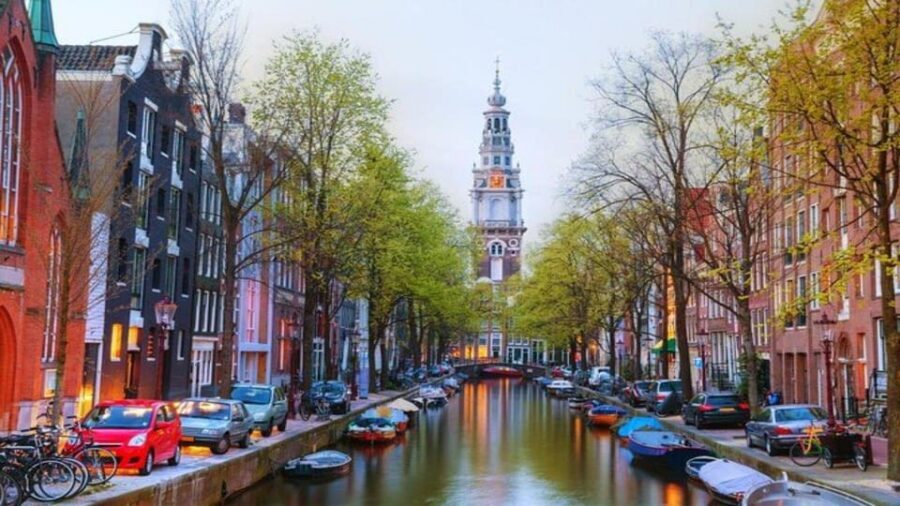
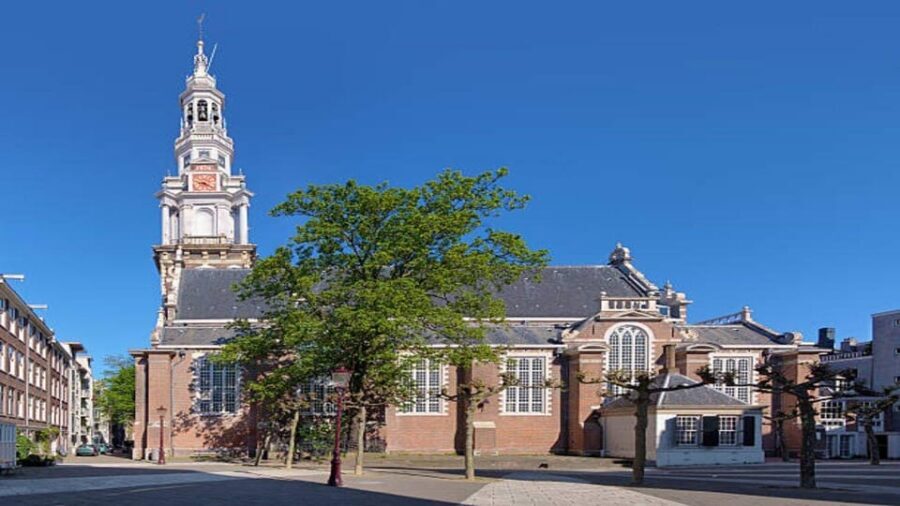
Next up is the Zuiderkerk, Amsterdam’s first Protestant church. Your guide explains its architectural evolution and why it matters historically, plus what you can tell just by looking at the building and its tower.
Today, the Zuiderkerk functions as a municipal information center, but it still serves as a meaningful historical marker. The tower and its surroundings give you a natural “reset moment”—a chance to look out and regain your bearings before returning to the storyline.
This is a good point in the tour to pay attention to how the neighborhood changes as you walk. The city’s layers—religion, architecture, and community—show up in real time at street level.
Anne Frank Statue near the house: the emotional landing
You’ll finish with the Anne Frank Statue near the Anne Frank House. This ending is intentional: it gives you a respectful tribute and a final reminder that intolerance has consequences that echo through generations.
Important detail: this tour does not start at the Anne Frank House, and it does not include the house entry. If you want to go inside the secret-rooms experience, you’ll need to buy tickets on the official website. That separation can be a plus, because the walking tour helps you understand what you’re seeing before you commit to the house visit.
If your schedule is tight, consider this: book the walking tour first, then decide when to do the house. You’ll likely get more out of the visit because you’ll understand how the surrounding landmarks connect to Anne’s Amsterdam.
The guides: how the storytelling stays respectful and clear
The biggest factor behind why this tour earns strong ratings is the guide style. Many groups get an engaging, warm host who can handle heartbreak without making it sensational. Names that show up in the guide lineup include Duncan, Ana Perez, Sunil, Julie, Martina, Lola Stamboulian, Stefan, and Joshua—different personalities, same mission: clarity, context, and sensitivity.
You’ll want to listen for two things as you walk:
- How each stop connects to the next (so you don’t feel lost in names and dates)
- How the guide keeps the tone appropriate when the topics turn very dark
One reason people seem to love the tour is that it’s not just a lecture. On some days, guides tailor the route to what the group wants to focus on, and a few even add extra context where questions come up. There are also mentions of gentle humor used to keep the pace human—like small “history stops” and, in one case, a snack break.
That’s useful for you because the subject matter is intense. Humor here isn’t the point; it’s the pressure valve that helps you keep listening.
Price and value: what $30 buys you in Amsterdam time
At about $30 per person for 2 hours, the value is best understood in terms of what’s included and what’s not.
Included:
- An expert historian tour guide
Not included:
- Food and drinks
- Anne Frank House entry tickets
So what are you really paying for? You’re paying for guided interpretation at multiple key sites in a tight walking loop. Without a guide, it’s easy to see memorials and historic buildings but miss why they matter. Here, you get the “read” of each landmark—how design, location, and context connect to the story.
This can be a particularly good deal compared to paying for separate museum visits you might not fully understand on your own. Plus, the tour is short enough to pair with other highlights in Amsterdam without taking over your whole day.
If Anne Frank House entry is your top priority, plan your budget for that ticket separately. If your priority is context and connection—Jewish Amsterdam, occupation-era landmarks, and the meaning embedded in memorials—this tour is a smart first step.
Practical tips so your day goes smoothly
Here’s how to set yourself up for an easy, respectful experience:
- Wear comfortable shoes. The route is built for walking, and you’ll be outside for significant stretches.
- Dress for weather. People report both rain and heat, so bring layers you can manage.
- Don’t arrive minutes before start time and then panic—give yourself a short buffer at Jonas Daniël Meijerplein and the dockworker statue.
- If you’re sensitive to heavy topics, pace yourself. This is a tour that includes Holocaust-related memorials and symbolism, so it’s okay to take a slow breath during stops.
If you’re traveling with family, this could work well for motivated teenagers and adults who can handle serious history thoughtfully. If you’re going with younger kids, you might want to consider whether they’ll be comfortable with memorials centered on genocide and loss.
Who should book this Anne Frank walking tour?
Book it if:
- You want a guided walking route through the Jewish quarter and major WWII-era sites
- You’d rather understand the context before visiting the Anne Frank House
- You like storytelling that connects architecture and memory to real people
You might want a different option if:
- You specifically want the Anne Frank House interior as part of the package price (this tour doesn’t include entry)
- You’re looking for a very light, casual sightseeing walk. The tone turns serious for memorial stops, and that’s the point.
Should you book this Anne Frank walking tour?
Yes, I’d book it if you want a well-paced 2-hour introduction that helps you read Amsterdam’s WWII landmarks with meaning. The price is reasonable for a guided historian-led walk that hits multiple high-impact sites—Portuguese Synagogue area, Holocaust Memorial, Auschwitz Memorial’s broken mirrors, the Rembrandt connection, Zuiderkerk, and the Anne Frank Statue.
If you’re already planning to visit the Anne Frank House, treat this tour like your “set up.” It gives you the context that makes the house visit hit harder in the right way. Just remember: you’ll need to handle house tickets separately, so plan that timing early.
FAQ
Where is the meeting point for the Anne Frank walking tour?
You meet in Jonas Daniël Meijerplein square at Jonas Daniël Meijerplein 21, 1011 RG Amsterdam. Look for the large dockworker statue right in front of the Portuguese Synagogue (Esnoga).
Does this tour start at the Anne Frank House?
No. The tour does not start at the Anne Frank House, and it also does not include Anne Frank House entry.
What’s included in the price?
The price includes an expert historian tour guide. Food and drinks are not included.
What does the tour cover?
You’ll see the Portuguese Synagogue area from the outside, the Daniel Libeskind Holocaust Memorial, the Auschwitz Memorial in Wertheimpark (broken mirrors), the Rembrandt House Museum area, the Zuiderkerk, and you’ll end at the Anne Frank Statue near the Anne Frank House.
Is Anne Frank House entry included?
No. Tickets for the Anne Frank House are not included, and you must purchase them on the official website.
How long is the tour?
The duration is 2 hours.
What languages is the tour offered in?
The tour is offered in English and Spanish.
Is the tour wheelchair accessible?
Yes, the tour is listed as wheelchair accessible.
What should I bring?
Bring comfortable shoes and weather-appropriate clothing since it’s a walking tour and you’ll spend time outdoors.
What’s the cancellation policy?
Free cancellation is available up to 24 hours in advance for a full refund. The activity also offers a reserve now & pay later option (book and pay nothing today).