REVIEW · AMSTERDAM
From Amsterdam: Countryside Bike Tour
Book on GetYourGuide →Operated by We Bike Amsterdam · Bookable on GetYourGuide
Two wheels beat the Amsterdam air fast. This North Holland ride mixes ferry-to-farm life with hands-on stories about Dutch water control, then ends with a photo stop at the last chalk windmill in Holland.
I love that the route takes you away from the city rhythm quickly. You pedal through old fishermen villages and farmland while your guide explains how the Netherlands stays dry—and why windmills mattered for centuries.
A great mid-tour break also helps. In tiny Holysloot, you stop at a small restaurant where you can order Dutch-style coffee and the world-famous homemade apple pie that people talk about again and again.
One consideration: this is easy riding, but it still adds up to about 18 miles (around 30 km) in roughly 4 hours. If you can’t comfortably ride for that length of time, skip it.
In This Review
- Key reasons this tour is so well liked
- Getting out of Amsterdam: ferry over the IJ-lake, then straight to the countryside
- The ride’s real subject: Dutch water management (dikes, embankments, and the windmill legacy)
- The halfway pause in Holysloot: where the pie fuels the rest of the ride
- Ransdorp and Waterland: the flat church tower moment and local history
- The last chalk windmill: why this stop hits harder than you expect
- Bikes, distance, and why 18 miles can feel easy (or not)
- Value math: why $47 feels fair for bike + guide + a countryside day
- Who should book this and who should skip it
- Should you book the Amsterdam countryside bike tour?
- FAQ
- FAQ
- How long is the Amsterdam countryside bike tour?
- What distance will I ride?
- Is the ride flat?
- Does the tour run in bad weather?
- What’s included in the price?
- Are food and drinks included?
- What size is the group?
- Is the guide English-speaking?
- Who is this tour not suitable for?
Key reasons this tour is so well liked
A ferry ride right out of Amsterdam: You cross the IJ-lake by ferry before you start pedaling, so the day feels like a real change of scenery.
Dutch water management is the theme: Dams, dikes, and embankments aren’t just scenery. They’re the story of how life works here.
Holysloot coffee stop is the morale boost: A calm village pause with a much-loved apple pie moment in the middle of the ride.
Ransdorp delivers Waterland character: You head to a former Waterland capital area known for its flat church tower and local history.
The chalk windmill stop is a classic photo: You get one more iconic stop before you roll back toward Amsterdam.
Small group, guided pacing: Groups are limited to 12, with regular regrouping and questions welcomed along the way.
Getting out of Amsterdam: ferry over the IJ-lake, then straight to the countryside
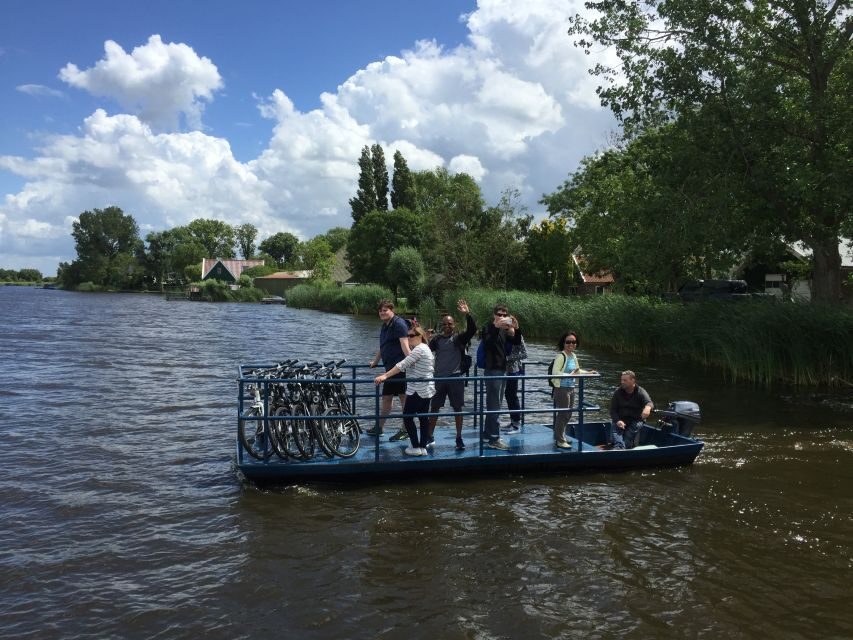
This is one of those tours where the payoff starts early. You begin in the Amsterdam city center and soon hop on a ferry over the IJ-lake. That short water crossing sets the mood: you’re moving from canals and bikes-for-everyone energy to flat rural paths.
Then the pedaling begins, and the route does a smart thing. It gets you onto dikes and embankments quickly, so you feel the “Dutch engineering” theme instead of only seeing it from a distance. You’ll pass fishing villages and farmer towns as you ease into the ride, not after a long stretch of boring flat roads.
Guides are a big part of why it works. In the feedback I saw, guides like William, Joris, Sen, Pierce, and Astrid are repeatedly praised for explaining what you’re seeing in plain language. The best guides also keep the group together, then pause for questions without turning the ride into a lecture.
If you’re coming from a hotel on the edge of town, plan simple transport to the start point. One reviewer specifically noted that parking near meeting spots can be limited for paid options, so using a taxi or rideshare can save hassle.
You can also read our reviews of more cycling tours in Amsterdam
The ride’s real subject: Dutch water management (dikes, embankments, and the windmill legacy)
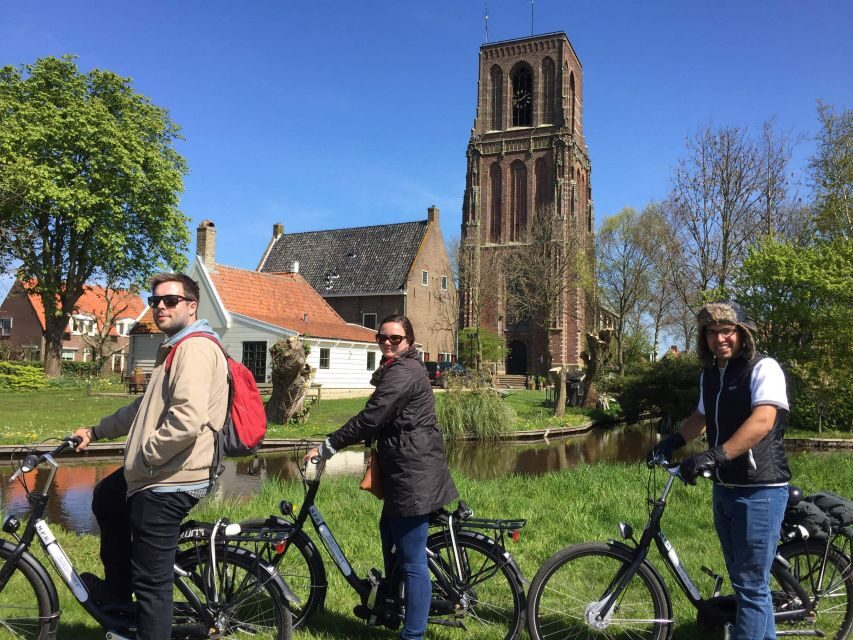
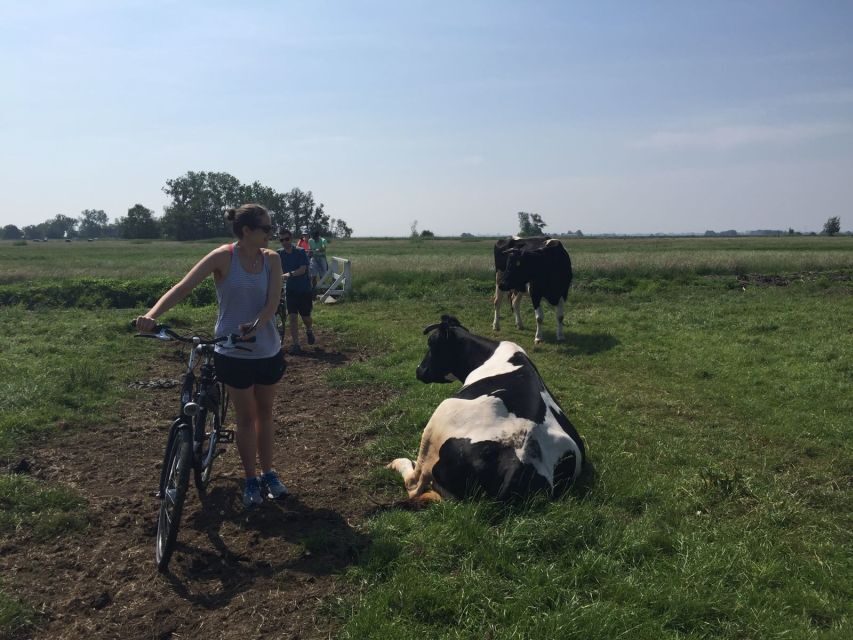
The biggest reason this bike tour stands out is its focus. Yes, you’ll see cows, sheep, horses, and classic North Holland farm scenery. But the point is understanding how water control shapes everything.
As you cycle over embankments and past dikes, your guide explains the system behind Dutch survival: land is shaped, protected, and managed because water is always part of the equation. This is not just history as trivia. It’s why villages are built where they are, why roads and paths follow certain lines, and why windmills became more than “old Dutch decoration.”
The windmill portion ties it together nicely. You learn about how windmills and the mill industry worked during the 17th and 18th centuries, when milling and water control were essential daily functions. Then you finish with a stop at Holland’s last chalk windmill, which makes the concept feel physical—something you can stand next to and photograph.
One thing I really like for first-time bike tour riders: the route is flat and leisurely. Reviews repeatedly mention that it doesn’t feel like a strenuous workout, and that the group gets built-in pacing through stops. Still, you should treat it as real riding time because the total distance is about 18 miles (around 30 km).
The halfway pause in Holysloot: where the pie fuels the rest of the ride
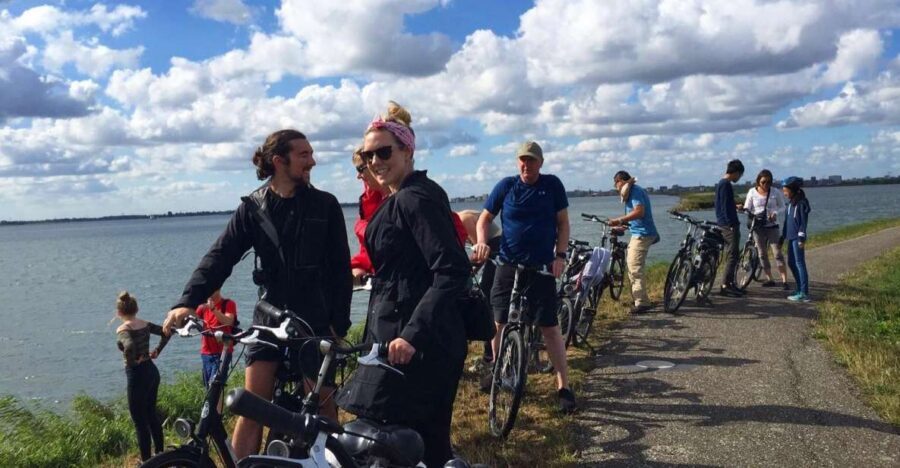
Halfway through, you stop for coffee at Holysloot, a tiny village deep in the farmlands north of Amsterdam. This isn’t an awkward “sit and wait” break. It’s the kind of stop that resets your body and also gives you time to ask questions you’ve been saving.
In the information you’re given ahead of time, food and drinks aren’t listed as included. So think of this as a café break where you can order what you want. That said, the homemade apple pie here is described as world-famous, and review after review points to it as a highlight—often alongside tea or coffee.
This pause also changes the vibe of the tour. After pedaling along dikes and through villages, you get a calmer moment in a rural setting. It’s a simple pleasure that works even if you’re traveling with kids or you’re not sure how you’ll handle a longer bike day.
Practical tip: dress for the weather. The tour runs rain or shine, so if skies look questionable, bring a light waterproof layer. One review notes they rode in rain and still felt like nothing important was missed, largely because the tour keeps moving at an easy, steady pace.
Ransdorp and Waterland: the flat church tower moment and local history
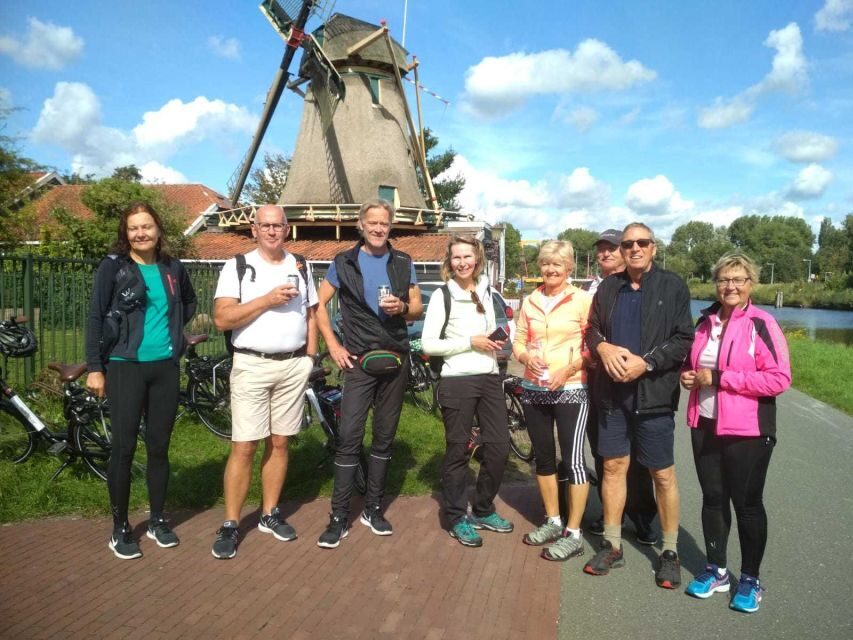
After Holysloot, you continue onward to Ransdorp. This part matters because it’s more than “another village.” Ransdorp is tied to the Waterland region and is described as a former capital area, which gives your guide’s explanations more weight.
One of the most iconic things you’ll notice is the church tower—flat, recognizable, and very specific to the area. It’s exactly the kind of landmark that helps you understand how these settlements organized themselves around community life and the water system they depended on.
This segment also tends to work well for photo lovers. You’re still on a bike route, so you get movement, not just one stop. And because the group is small, you usually have a better chance to hear what the guide is pointing out before you reach the next turn.
Is there any drawback here? The route keeps a comfortable rhythm, but if you’re the type who wants frequent long stops purely for photography, you might crave more time. One reviewer said they’d have liked extra photo breaks for animals along the path. So if that’s you, bring a bit of patience and grab photos during natural regrouping moments.
The last chalk windmill: why this stop hits harder than you expect
Near the end of the tour, you stop to see the last chalk windmill in Holland. This is the classic “only here, only now” moment, and it’s not random. Chalk windmills are tied to the visual identity of older Holland, and learning how windmills function makes you look at the structure differently when you arrive.
Your guide explains the functioning of windmills and the mill industry of Holland during the 17th and 18th centuries. That background gives you something to think about while you take photos: how wind became a tool, and how tools like this supported daily life in a country that had to manage water constantly.
In practical terms, this stop is also a nice pacing tool. After the Ransdorp section, you still get a final iconic point before you return. That makes the end of the ride feel planned rather than like a rushed pedal-back to Amsterdam.
If windmills are already on your “must see” list for the Netherlands, this stop is a strong reason to choose the countryside bike format. It’s not just visiting a structure. You’re seeing it as the endpoint of a full day spent learning why wind and water engineering belonged together.

Bikes, distance, and why 18 miles can feel easy (or not)
The tour is described as flat and leisurely, with about 18 miles (around 4 hours) of riding time. Reviews often mention that it feels manageable even though the distance is around 30 km, mainly because the pace stays relaxed and the guide builds in breaks.
Bikes and helmets are included, and a helmet is available if you request one. That part matters if you’re traveling in casual shoes and want at least the comfort baseline handled for you. Reviews also repeatedly praise the bikes as easy to ride and well maintained.
That said, “easy pace” doesn’t mean “no saddle time.” If you’re not a frequent cyclist, expect some next-day soreness. One reviewer even suggested taking Advil beforehand if you don’t ride often, which tells you what your body might consider normal here. Bring padded shorts if you have them, or at least plan to wear something comfortable for a multi-hour ride.
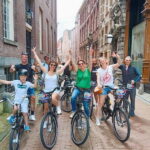
Another small logistical note: group size is limited to 12. That helps because faster riders don’t disappear ahead, and slower riders don’t get left behind. The guide’s job becomes keeping the group together while still moving.
Value math: why $47 feels fair for bike + guide + a countryside day
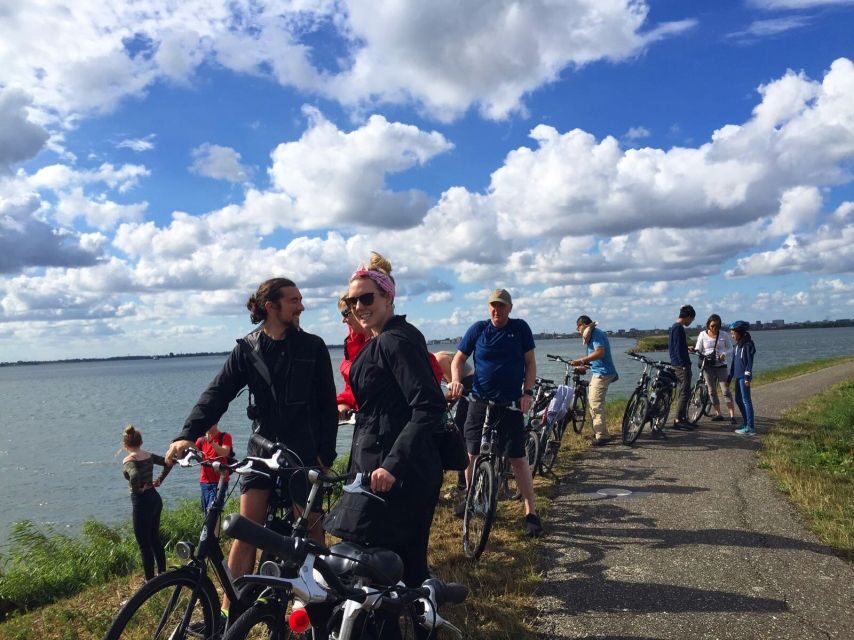
At $47 per person for a 4-hour small-group tour, the value is strongest when you look at what’s included and what you get for your time.
You get:
- A bike for the full ride
- A tour guide (English)
- A route that includes major countryside moments: ferry crossing, dike cycling, village stops, Ransdorp, and the chalk windmill photo stop
Food and drinks are not included. So you’ll likely spend extra at the café in Holysloot if you order apple pie and drinks (which is exactly what most people do). But that’s also part of the authenticity: you’re paying for a local-style break in a small village, not an overpriced sit-down meal designed for tourists.
The small group size is another value lever. When you’re capped at 12, your guide can actually keep track of everyone, answer questions, and adjust pace. That’s harder to do in a big group.
For someone who wants a real slice of Dutch life without committing to a full day, this price makes sense. It’s long enough to change how you see the country, but short enough that you’re still fresh for Amsterdam dinner afterward.
Who should book this and who should skip it
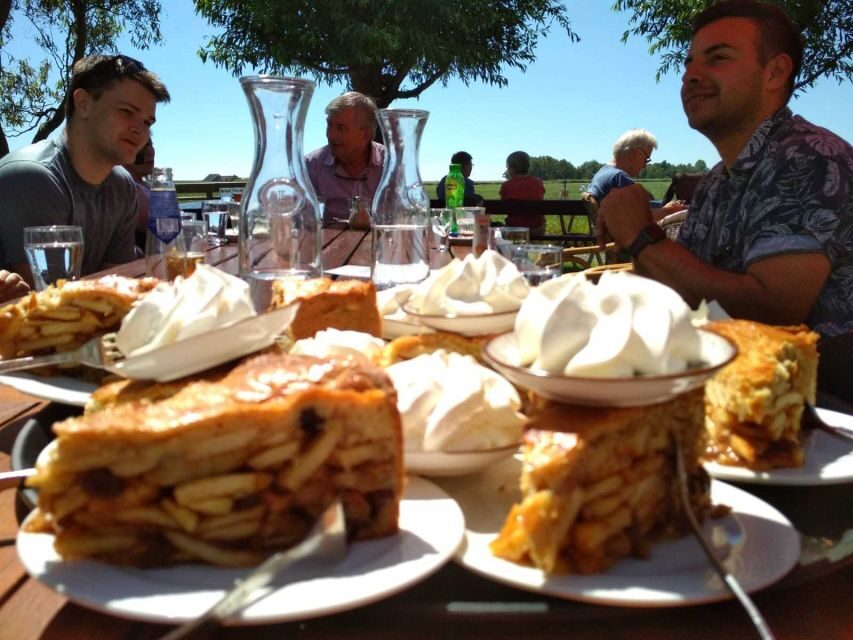
This tour is a great match if you want to see more than canals and museums. If you’re curious about Dutch water management, you’ll find the dikes and embankments more interesting than they would be on a typical sightseeing day. And if you love practical local flavors, Holysloot’s apple pie stop is a strong motivator.
It also fits families and mixed groups fairly well because:
- The ride is flat and leisurely
- Stops break the day into smaller chunks
- Guides are active in keeping everyone comfortable and together
Who should skip it? The tour isn’t suitable for people who can’t ride a bike. Also, if you’re expecting a very short stroll—this isn’t that. It’s about covering distance, even if the terrain is kind.
Finally, check your weather gear. The tour runs rain or shine, and while rain won’t end the day, it will affect comfort. A lightweight waterproof layer makes a big difference.
Should you book the Amsterdam countryside bike tour?
If you want a bike-based way to understand North Holland, I’d book this. It’s one of the best formats for first-timers because it combines movement, local village atmosphere, and an explanation of the systems that make this region work.
Choose it especially if you care about:
- learning why dikes and windmills matter
- riding through villages like a resident, not walking them like a museum
- getting the famous Holysloot apple pie break in the middle of your ride
If you’re ultra-sensitive to saddle time or you’re not confident on a bike, consider a gentler alternative. But if you can ride comfortably, this $47, 4-hour small-group outing is one of the most practical ways to get a real countryside day without losing your whole day to transport.
FAQ
FAQ
How long is the Amsterdam countryside bike tour?
The tour lasts about 4 hours.
What distance will I ride?
You’ll cover approximately 18 miles (about 30 km) in around 4 hours.
Is the ride flat?
Yes. It’s described as flat and leisurely.
Does the tour run in bad weather?
It takes place rain or shine.
What’s included in the price?
The tour includes a bike, a tour guide, and a helmet if requested.
Are food and drinks included?
No. Foods and drinks are not included, though you’ll have a café stop partway through the tour.
What size is the group?
It’s a small group limited to 12 participants.
Is the guide English-speaking?
Yes, the live tour guide speaks English.
Who is this tour not suitable for?
It’s not suitable for people who can’t ride a bike.