REVIEW · AMSTERDAM
Amsterdam: Off the Beaten Path Bike Tour in French
Book on GetYourGuide →Operated by Samy's Bike tours · Bookable on GetYourGuide
That first bike roll through Amsterdam feels like cheating. You cut through the city on a real local route with a French-speaking guide. You’ll start in the Jordaan, then pedal into parts of Amsterdam most people skip, with thoughtful stops connected to the Jewish Quarter and Anne Frank.
Two things I especially like: you get quality bikes included for many rider sizes, and Samy brings the city to life with clear commentary and lots of on-the-spot answers. It’s also one of those tours that gives you practical direction—where to eat, what to notice, and how to avoid the obvious tourist traps.
One consideration: this tour is in French, so if your French is weak you may still catch plenty, but you’ll want to be comfortable with listening. It can also move at a steady city pace for 2.5 hours, so dress for wind and grab comfortable cycling shoes.
In This Review
- Key highlights worth your attention
- A French off-the-beaten-path Amsterdam ride that actually changes your perspective
- Jordaan start: the Amsterdam you’ll want to return to on your own
- From Amsterdam-Centrum to Prins Hendrikkade: small streets, big character
- Entrepotdok and Plantage: warehouses, canals, and a calmer pace
- National Holocaust Names Monument and Anne Frank context: memory in motion
- Samy’s guiding style: history with questions, not just facts
- Bikes, comfort, and small details that make a big difference
- How the route matches the real Amsterdam experience
- Price and value: why $43 feels reasonable here
- Should you book the French Off-the-Beaten-Path Bike Tour in Amsterdam?
- FAQ
- What language is the tour guide?
- How long is the Amsterdam bike tour?
- Where does the tour start?
- What time departures are available?
- Are bikes included in the price?
- What major stops will I see during the ride?
- Is there a map and restaurant recommendations included?
- Can I leave my suitcases with the tour?
- Is food included for children?
- What about cancellations and paying later?
Key highlights worth your attention
- Jordaan first, with narrow lanes, bridges, and canal-side atmosphere
- Off-the-beaten-track focus, aimed at neighborhoods away from the busiest routes
- World War II context, including the National Holocaust Names Monument and Anne Frank-area storytelling
- Bikes for many sizes included in the price, plus support for special needs (like kids under 1m50)
- Built-in local tips, including restaurant recommendations for Dutch, Indonesian, Surinamese food, and brown cafés
- Samy’s guiding style, friendly, humorous, and history-with-real-life context
A French off-the-beaten-path Amsterdam ride that actually changes your perspective
Amsterdam by bike is the obvious answer—until you realize “obvious” usually means “crowded.” This tour aims for the quieter Amsterdam: the side streets, the bridge moments, and the neighborhoods you won’t stumble into without a plan.
You ride for 2.5 hours with a live guide speaking French. The pace is active but not frantic. The point isn’t to sprint through postcard stops—it’s to build a working map in your head so the rest of your trip makes sense. And since the route is designed to connect different eras of the city, you’ll feel the shift from older neighborhood life to the heavy World War II story without it turning into a lecture-only experience.
At $43 per person, this is priced like a smart “first Amsterdam” activity: bikes and guided commentary are included, plus you leave with a map and a list of restaurant ideas. In other words, you’re not paying just to see canals—you’re paying to understand them.
You can also read our reviews of more cycling tours in Amsterdam
Jordaan start: the Amsterdam you’ll want to return to on your own
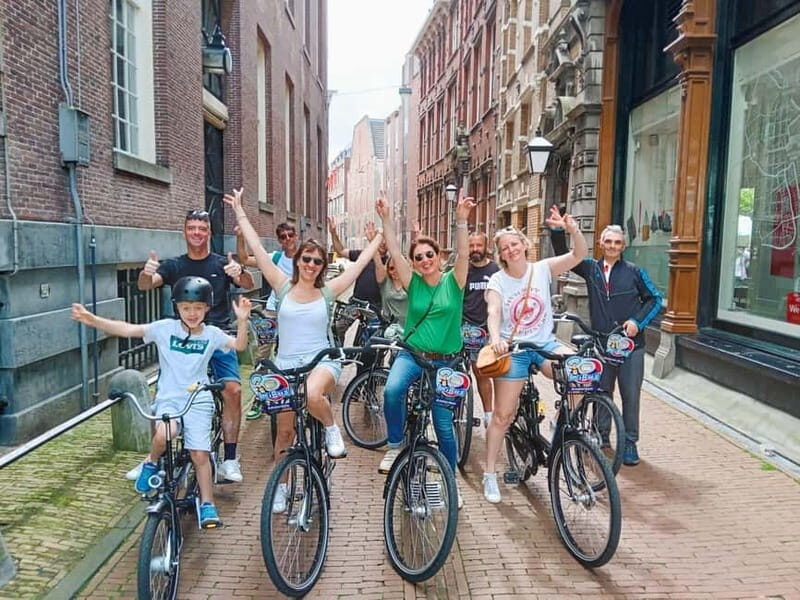
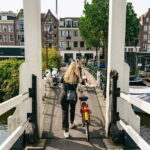
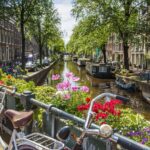
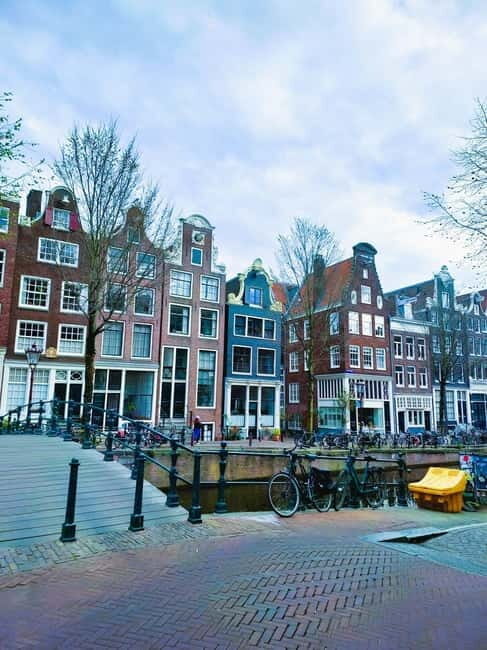
The tour begins at Binnen Wieringerstraat 3 and eases you in with the Jordaan. This is the area with a village feel inside a big city: narrow streets, lots of bridges, canal corners, and small-house architecture that makes you slow down naturally.
You’ll spend about 20 minutes in the Jordaan with a mix of guided biking and a photo stop. What you’re really doing here is learning how Amsterdam “reads” visually. Bridges aren’t just crossings—they’re natural viewpoints. Brown café windows aren’t decoration—they’re part of how locals socialize. Even the rhythm of the streets teaches you where to look next as you ride.
What I like about starting here: the Jordaan gives you an emotional baseline. It’s warm, close-up, and human-sized. When the route later moves into the Anne Frank and Jewish Quarter story, it lands with more weight because you already understand what this city feels like day-to-day.
From Amsterdam-Centrum to Prins Hendrikkade: small streets, big character
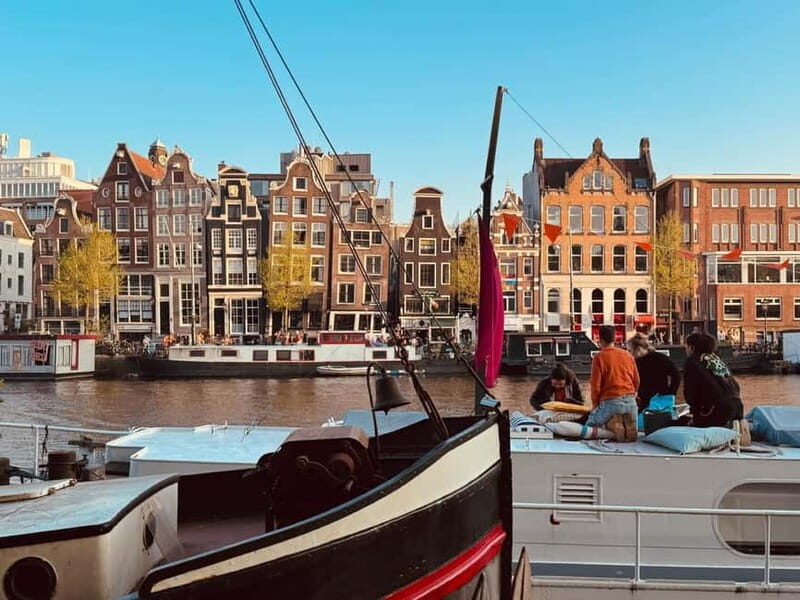
After the Jordaan, you move into Amsterdam-Centrum for around 15 minutes of guided riding and explanation. This part matters because it helps you connect the “touristy center” to the neighborhoods that orbit it. You’re not just passing through—you’re learning what each stretch is and why it matters in the city’s layout.
Then you head to Prins Hendrikkade for about 10 minutes. This is the kind of stop that’s easy to overlook when you walk fast. By bike, you notice the edges: the canal-side textures, the building lines, the way the city channels movement. It’s less about one famous monument and more about building a feel for how Amsterdam works.
A good tour for your first day is one that gives you “navigation instincts.” This sequence does that. After a couple of these turns and canal approaches, you start predicting what’s coming next. That’s when Amsterdam stops being overwhelming and starts being yours.
Entrepotdok and Plantage: warehouses, canals, and a calmer pace
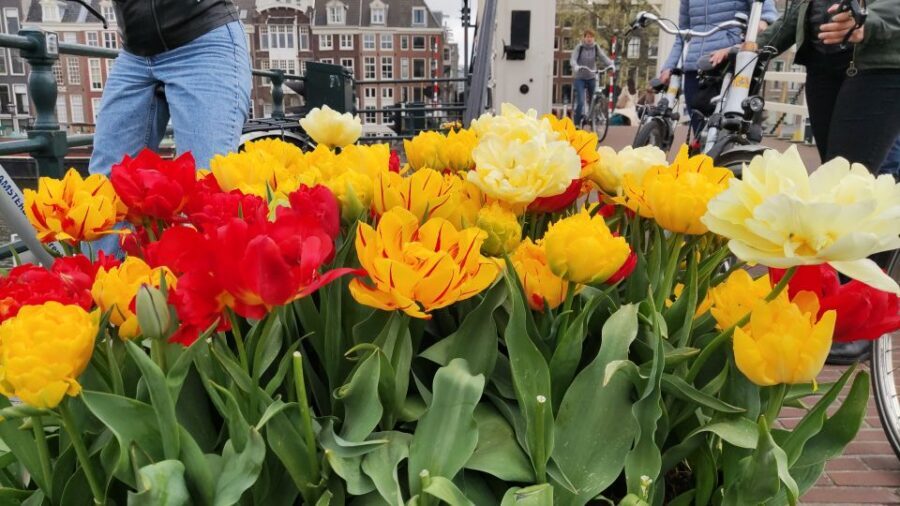
Next comes Entrepotdok for about 15 minutes. The name might not ring a bell, but the feel often does: canal-adjacent infrastructure, older urban bones, and that “this city used to do work here” vibe. Bikes are perfect for this. You see transitions faster than on foot, but you’re not so far away that everything feels generic.
Then you spend roughly 20 minutes in Plantage, Amsterdam. Plantage is a shift in character. It tends to feel more local and less showy than the postcard lanes—exactly the mood you want for an off-the-beaten-path tour. The guide’s commentary helps you link the architectural cues to real-life Amsterdam: schooling, daily routines, and how the city’s geography shaped community life.
This middle section is also where the tour’s “value beyond sightseeing” shows up. You’re not just collecting views. You’re learning how Amsterdam residents think about place—what they do, where they gather, and why certain areas have a different vibe than others.
National Holocaust Names Monument and Anne Frank context: memory in motion
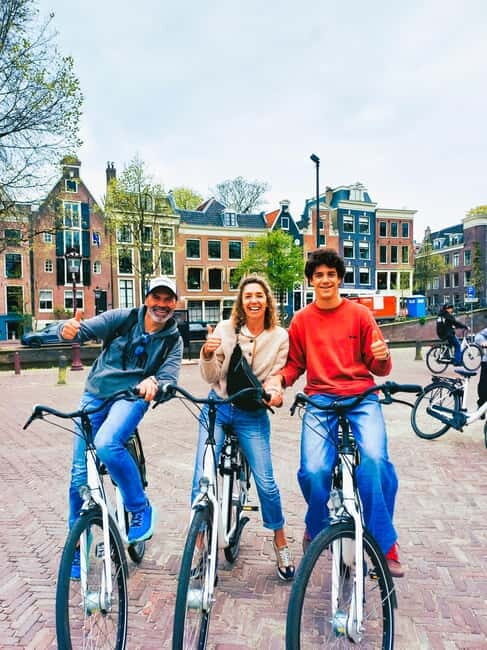
The tour’s emotional heart comes later, and it’s handled with the seriousness it deserves. You’ll make a photo stop and guided time at the National Holocaust Names Monument for about 25 minutes. This isn’t just a stop on a checklist. The whole point is remembrance—grounded in specific names connected to the Holocaust and the legacy of Anne Frank.
What I appreciate here is the travel approach: you’re moving through space as you learn. You don’t sit in one place for the whole story. You feel the neighborhood around you while the guide sets context, which helps the information stay real instead of abstract.
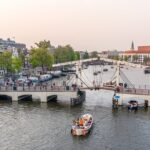
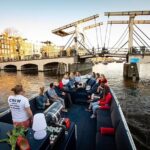
From there, you ride toward Magere Brug (about 10 minutes)—a classic canal bridge moment. It’s short, but it’s useful. When you reach a known landmark after a heavy stop, you’re able to reframe it. The city isn’t frozen in time. Life continued. People moved. Cities hold layers.
Then you pause at Amstelveld for around 10 minutes and later stop by Reguliersgracht, Amsterdam for about 10 minutes for photos and riding. These are the kinds of places where you can step back and just absorb. The guide’s storytelling ties it together so the “beautiful city” doesn’t erase the human history.
Samy’s guiding style: history with questions, not just facts
The biggest recurring theme in the tour experience is the guide. Samy has a reputation for being the kind of host who treats the tour like a conversation. You get answers as you go, plus plenty of anecdotes that connect big events to everyday city life.
In the comments people highlight how the tour feels like a history class while you bike—but not a dry one. There’s humor. There’s pace. And importantly, there’s guidance that helps you feel safe navigating Amsterdam streets during a busy day.
Language is also part of the equation. The tour is in French, and Samy’s French is presented as strong. Some riders also note he makes an effort to communicate beyond French when needed. If you only know basic phrases, you’ll still benefit from the structure and context, but I’d go in with realistic expectations: this is a French-led experience.
Practical tip: if you have questions, ask them early. This tour is built for Q&A across topics like education, work, health, sports, gastronomy, culture, and ecology. That’s not filler. It’s how you learn what living here feels like, not just what happened here.
Bikes, comfort, and small details that make a big difference
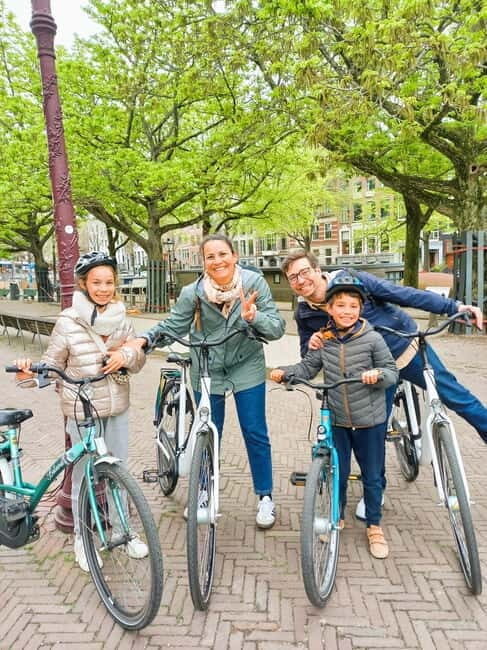
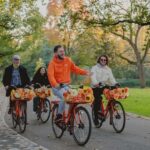
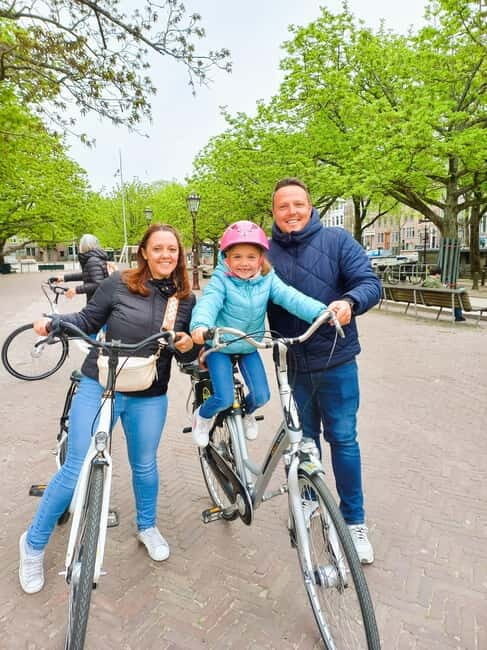
This is one of the few Amsterdam bike tours that clearly states quality bikes are included for all sizes. That matters because bike comfort determines how much attention you can give to the sights. If you’re hunched, it’s hard to enjoy canals, bridges, and the turning rhythm of the city.
The tour also spells out support for families and smaller riders: you can request bikes for children and support for people measuring less than 1m50, including options like a baby seat. If you’re traveling with a kid, planning ahead with those details will save you stress later.
A couple more practical perks:
- You get a map of Amsterdam.
- You can leave suitcases with the group on arrival or departure if you tell them in advance.
- There’s a snack for children included.
One note on bike types: electric bikes and cargo bikes are at your expense. So if you’re imagining an e-bike version, expect it to cost extra rather than being included.
And yes, you’ll want to dress for Amsterdam weather swings. Wind off the canals is real. Layers beat one big jacket.
How the route matches the real Amsterdam experience
I like how this tour is designed in two emotional halves.
First half: Jordaan and then the North-side movement through Centrum, Prins Hendrikkade, Entrepotdok, and Plantage. This section builds your sense of “where you are” in Amsterdam and gives you neighborhoods to revisit when you’re off your bike.
Second half: the World War II story. The transition from daily life context into remembrance stops is what makes it more than a sightseeing loop. The stops around Anne Frank-area themes and the National Holocaust Names Monument bring gravity, then the bridge-and-canal moments let you return to the city with a clearer mind.
That structure is a big part of why the ride works. You’re not just seeing sights. You’re learning how to hold multiple sides of Amsterdam in one day.
Price and value: why $43 feels reasonable here
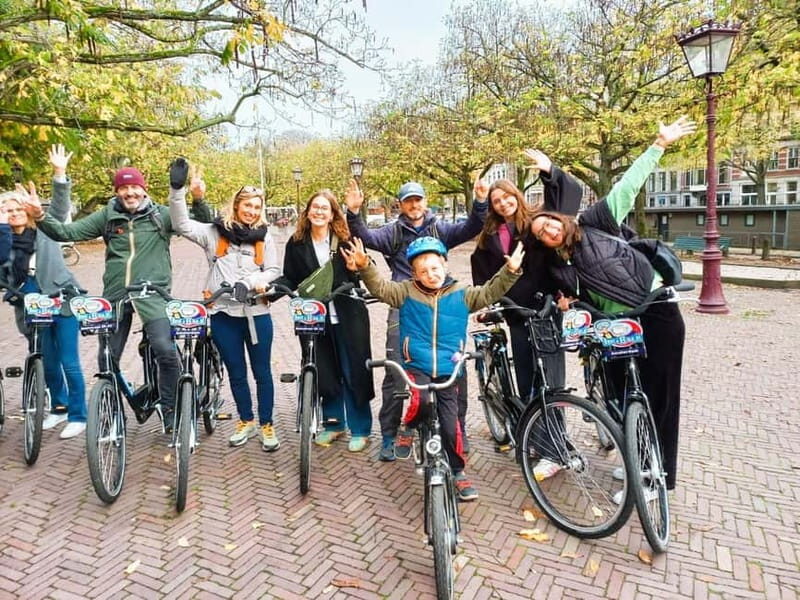
$43 isn’t cheap, but for Amsterdam it can be fair—if what you get is actually useful.
Here’s what you’re paying for:
- A guided 2.5-hour tour in French
- Bikes included in the price (for all sizes)
- A map
- A local recommendations list for Dutch, Indonesian, Surinamese restaurants, plus brown cafés
- A 10% discount on bike rental after the tour
- Optional help with storing suitcases
That restaurant and brown café list is the kind of extra that changes your trip. It saves you time hunting for places that are genuinely local. If you end up renting bikes later, the rental discount helps too.
In plain terms: this tour can earn its cost back in day one because it steers you toward where to eat and what parts of the city to explore next—on your own.
Should you book the French Off-the-Beaten-Path Bike Tour in Amsterdam?
Book it if you want a practical first Amsterdam experience: get your bearings fast, ride neighborhoods that feel less grind-your-teeth touristy, and get thoughtful context around Anne Frank and the Holocaust-related sites.
I’d skip it (or be cautious) if you need an English-only tour or you’re expecting a relaxed, slow “look at buildings” stroll. This is a bike tour with real city movement, and it’s guided in French.
If you’re flexible and enjoy asking questions, this is exactly the kind of outing that leaves you with a map in your pocket and a map in your head.
FAQ
What language is the tour guide?
The tour is guided in French.
How long is the Amsterdam bike tour?
It lasts about 2.5 hours.
Where does the tour start?
The meeting point is at Binnen Wieringerstraat 3.
What time departures are available?
The tour can depart at 10:30 a.m. or 1:30 p.m., and a 4:15 p.m. departure is also possible.
Are bikes included in the price?
Yes. Quality bikes are included, and the tour offers bikes for all sizes.
What major stops will I see during the ride?
You’ll pass through the Jordaan, Amsterdam-Centrum, Prins Hendrikkade, Entrepotdok, Plantage, and you’ll include a photo stop at the National Holocaust Names Monument, plus stops around Magere Brug, Amstelveld, and Reguliersgracht.
Is there a map and restaurant recommendations included?
Yes. You’ll receive a map of Amsterdam and a list of restaurant recommendations, including Dutch, Indonesian, and Surinamese options, plus brown cafés.
Can I leave my suitcases with the tour?
You can leave suitcases on arrival or departure if you let them know in advance.
Is food included for children?
A snack for children is included.
What about cancellations and paying later?
Free cancellation is available up to 24 hours in advance for a full refund, and you can reserve and pay later.