REVIEW · AMSTERDAM
Amsterdam: Coffee Shops Walking Tour
Book on GetYourGuide →Operated by Trigger Tours · Bookable on GetYourGuide
Amsterdam hits you with surprises. This 2-hour coffee shops walking tour links cannabis culture and the Red Light District to the streets you’ll actually walk. I love that it’s not just theory: you’ll visit a famous coffee shop and hear the story behind Amsterdam’s famously liberal approach to sex and soft drugs.
Two things I especially like are the chance to see the world’s biggest coffee shop at Prix d’Ami and to spot the city’s smallest alleyway while a local explains why these places matter. A possible drawback: because the tour starts in the Red Light District, the atmosphere may feel uncomfortable if you’d rather avoid that part of town.
If you want a guided shortcut to understanding how Amsterdam thinks about legality, culture, and everyday life, this is a strong pick. It’s also a good way to see “Amsterdam in motion” on foot, rather than ticking off landmarks from a map.
In This Review
- Key things you’ll notice on this Amsterdam coffee shops tour
- Getting started at Barbizon Palace Hotel NH, then walking into it
- Red Light District context: sex work history and today’s challenges
- Coffee shop legends: seeing the biggest one at Prix d’Ami
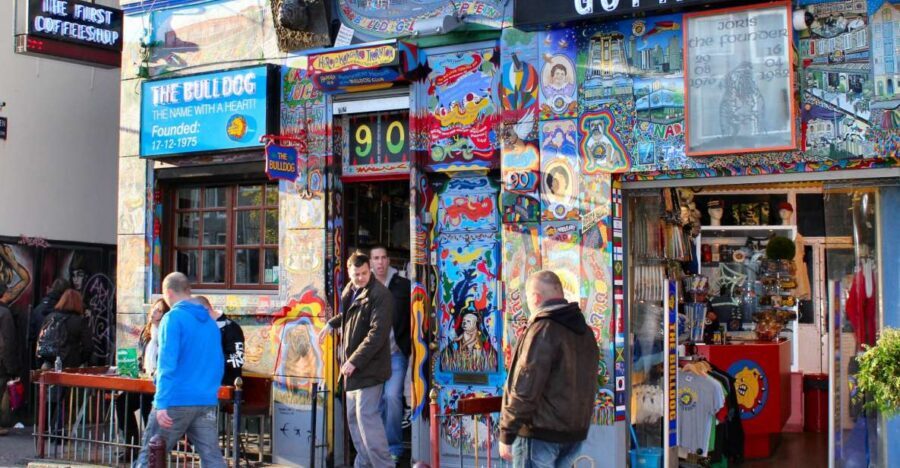
- The world’s first coffee shop stop, and why it changes your perspective
- Finding the smallest alley in Amsterdam on foot
- Dutch drug laws explained in plain street language
- Street art, canals, and local markets: what you’re actually seeing
- What you get for $106 in two hours (and when it’s worth it)
- Language options and small planning tips that matter
- Who this Amsterdam coffee shops tour is best for
- Should you book this Amsterdam coffee shops tour?
- FAQ
- Where is the meeting point for the Amsterdam coffee shops walking tour?
- How long is the tour?
- What’s included in the price?
- Are food and drinks included?
- What languages are available, and is German offered every day?
- Is the tour suitable for people with mobility impairments?
Key things you’ll notice on this Amsterdam coffee shops tour

- Prix d’Ami: you’ll get a focused stop at the biggest coffee shop in the world
- The Red Light District on a facts-first route: sex work and drug policy get context, not just shock
- The smallest alley in Amsterdam: a quick walk that makes the city feel real
- Street-level Amsterdam: you’ll pass historic sights, street art, and local markets
- Guides who handle questions: names like Maurice and Gavin come up for a reason
- Two hours, well paced: enough time to learn without feeling dragged around
Getting started at Barbizon Palace Hotel NH, then walking into it
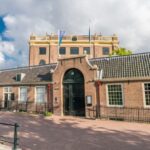
Your tour begins at the Barbizon Palace Hotel NH collection, right in front of the entrance. That’s a practical setup because you’re starting in the heart of the action, with the Red Light District close by. From minute one, you’re in a neighborhood where you’ll notice architecture, lighting, and street rhythm right away.
This is a walking tour, so plan on moving continuously for the full 2 hours. You’ll want comfy shoes, since Amsterdam’s charm is partly in its uneven street feel. And since food and drinks aren’t included, it helps to eat before you go or plan a post-tour stop.
You can also read our reviews of more walking tours in Amsterdam


Red Light District context: sex work history and today’s challenges
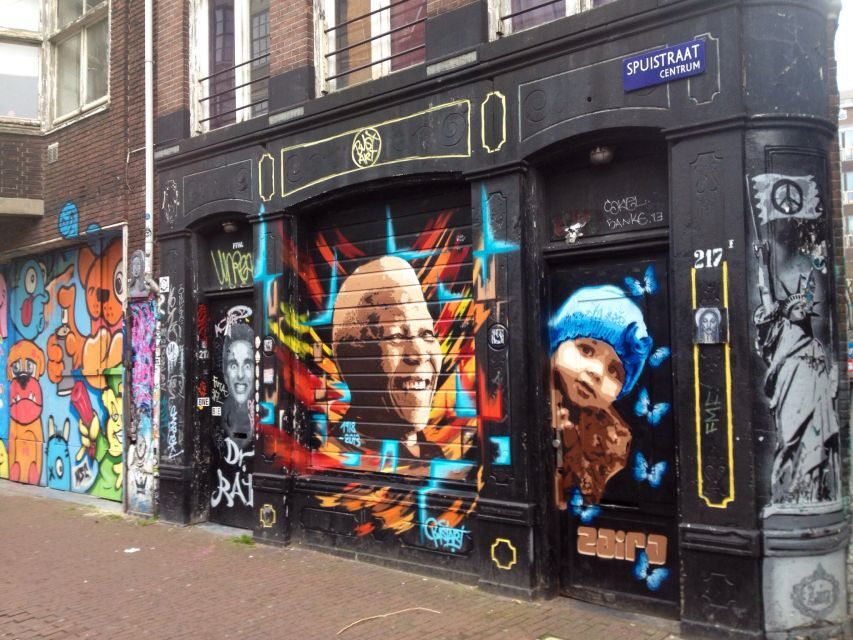
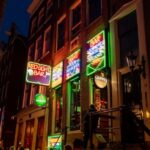
The tour starts in the heart of the Red Light District, where you’ll see the famous red-lit windows along the streets and canals nearby. The guide’s job is to keep it grounded in history and policy, including how prostitution was legalized in the Netherlands. You’ll also hear about the challenges sex workers face today, which changes the tone from “tourist spectacle” to “human reality.”
I like that this tour treats the area like a real place with real rules and real consequences. You’re not just looking at lights—you’re learning why the city built a system around legality and what that means for people on the ground.
If you’re the kind of visitor who prefers a smoother, quieter route, this is the one moment that might not click. But if you can handle the setting, the added context makes the experience much more worthwhile.
Coffee shop legends: seeing the biggest one at Prix d’Ami
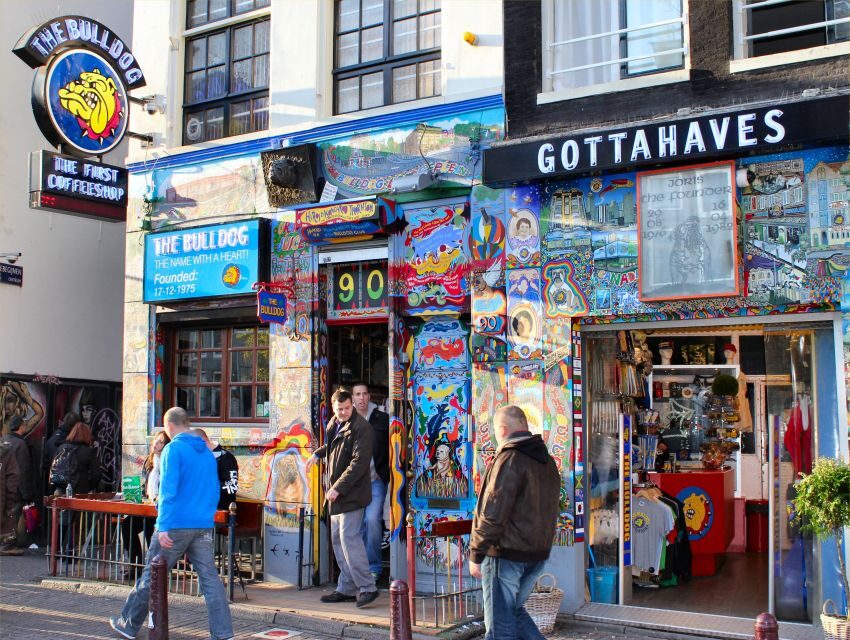
A major highlight is visiting one of Amsterdam’s legendary coffee shops, and the top-name stop is Prix d’Ami—described here as the world’s biggest coffee shop. This is the kind of place that’s easier to understand once you’re physically there, surrounded by the streets that gave birth to the modern coffeeshop scene.
What you’re getting isn’t just a photo opportunity. The guide explains how cannabis culture developed in Amsterdam and how legalization of soft drugs took shape in the Netherlands. You’ll learn the background that makes Amsterdam’s approach feel less random and more intentional.
Even if you’re not there for any product, you’ll still leave with a better sense of why coffeeshops became part of Amsterdam’s identity. And if you are curious about the whole system—history, politics, and how it works in practice—this is where the tour earns its keep.
The world’s first coffee shop stop, and why it changes your perspective
Another key stop is the world’s first coffee shop. The point here isn’t the bragging rights—it’s perspective. When you see the “origin” idea planted in a real neighborhood, it’s easier to understand how Amsterdam’s soft drug policy evolved rather than jumping straight to stereotypes.
I find that these origin-style stops help you connect dots. You start to see coffeeshops less like a quirky tourist thing and more like a long-running social compromise shaped by the city’s politics and culture.
The guide ties that historical thread back to what you’re seeing around you—streets, canals, and the daily life that continues in spite of the headlines. That’s the difference between a tour that only names places and one that explains them.
Finding the smallest alley in Amsterdam on foot
You’ll also walk down the smallest alley in Amsterdam. It’s a short moment, but it’s exactly the kind of detail that makes walking tours feel personal. You’re not just moving between big sights—you’re noticing how Amsterdam can get tiny in a way that still feels charming, even when it’s packed with history.
This is where the pace matters. The alley stop helps break up the larger story beats so the whole tour doesn’t feel like one long lecture. Instead, you get mini “reset points” where the guide’s talking matches what your eyes can instantly verify.
And yes, you’ll also be learning while you’re walking past historic landmarks, street art, and local markets. That mix keeps the tour from becoming purely political or purely visual.
You can also read our reviews of more shopping tours in Amsterdam

Dutch drug laws explained in plain street language
This tour is built around cannabis culture and the history of legalization of soft drugs in the Netherlands. You’ll hear about Amsterdam’s attitudes toward sex and drugs, plus what the guide calls the current strange Dutch laws on drugs.
The value here is tone. The guide frames the topic in a way that’s meant to clarify how Amsterdam thinks—not in a preachy way, and not as a checklist. You’ll get the kind of street-level context that helps you make sense of what you see, especially around coffeeshops and the Red Light District.
If you’ve ever felt like Amsterdam’s drug policy is discussed like a mystery or a meme, this tour is designed to replace the noise with a clearer picture. In short: you’ll come away understanding the why, not just the where.
Street art, canals, and local markets: what you’re actually seeing
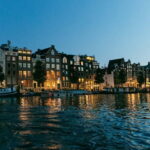
Between the bigger stops, you’ll pass hidden gems like street art and local markets. Those moments matter because they show you Amsterdam beyond its headline districts. You’re still in the same city, with the same policy history, but you’re seeing it through everyday scenes.
The guide also points out historic landmarks and adds commentary on Amsterdam’s unique culture and politics. Even if you’ve visited Amsterdam before, this angle—learning in motion—usually makes the city feel more legible.
And when the tour is rainy, it still works. One guide-led experience in bad weather stayed interesting and lively, which tells me this route is meant for real street conditions, not just sunny-day sightseeing.
What you get for $106 in two hours (and when it’s worth it)
At $106 per person for a 2-hour walking tour, the price isn’t “cheap,” but it also isn’t trying to be. You’re paying for a local guide who can connect the dots between the Red Light District, legalization history, and Amsterdam’s coffee shop culture—while walking you through the exact places where the story happened.
Here’s what makes it feel like value:
- You’re not just touring coffee shops; you’re learning the policy and cultural background behind them.
- You’re getting multiple high-interest highlights (biggest coffee shop, smallest alley, world’s first coffee shop) rather than one isolated stop.
- The guide’s Q&A style seems to be a strong point, with names like Maurice and Gavin associated with “no unanswered questions” energy.
When might it not be worth it? If you only want casual wandering with no interest in laws, history, or cultural context, you could feel it’s paying for education. But if you like explanations—especially about why Amsterdam handles things the way it does—this tour’s structure supports that.
Language options and small planning tips that matter
The tour runs with a live guide in Dutch, English, or German. One detail to plan around: on Mondays and Tuesdays, tours in German language are not available.
Also, this is a private group format. That matters because you can usually get more direct interaction than on a huge group bus tour. Still, it’s a walking tour, so it will be efficient rather than slow.
If you’re sensitive to the Red Light District atmosphere, consider that early. The meeting point is in that area’s orbit, and the tour purpose is directly tied to it. And if you have mobility impairments, it’s not suitable for you—so don’t count on being able to adapt the route.
Who this Amsterdam coffee shops tour is best for
This works well if you want a guided, city-specific explanation of Amsterdam’s cannabis culture and soft drug legalization history. It’s also great for people who like walking routes that pass multiple “types” of places—historic sights, street art, canals, and markets—rather than only one theme street.
It’s less ideal if you:
- Want only scenic photos and minimal talking
- Dislike the Red Light District setting
- Need accommodations for mobility impairments
If you’re traveling with someone who enjoys learning, this tour also gives you plenty to discuss afterward—especially around the idea that Dutch policy is built for regulation, not denial.
Should you book this Amsterdam coffee shops tour?
I’d book it if you’re the kind of traveler who gets more out of a place when someone explains the rules, history, and local logic behind it. The combination of the Red Light District context plus coffeeshop legends—Prix d’Ami, the smallest alley, and the world’s first coffee shop—gives you a tight route with real meaning, not random stops.
I’d think twice if you’re uneasy about the Red Light District atmosphere or if education-heavy tours feel like work. For the right mindset, though, this is an efficient way to understand how Amsterdam’s liberal attitudes show up in actual streets.
And if your plans are flexible, you can usually book with a reserve-now and pay-later approach, plus free cancellation up to 24 hours in advance, which helps when weather or timing changes.
FAQ
Where is the meeting point for the Amsterdam coffee shops walking tour?
Meet the guide in front of the Barbizon Palace Hotel NH collection entrance.
How long is the tour?
The tour lasts 2 hours.
What’s included in the price?
A local guide for a private or group walking tour is included.
Are food and drinks included?
No. Food and drinks are not included.
What languages are available, and is German offered every day?
The guide is available in Dutch, English, and German. On Mondays and Tuesdays, tours in German are not available.
Is the tour suitable for people with mobility impairments?
No, the tour is not suitable for people with mobility impairments.