REVIEW · AMSTERDAM
Amsterdam: Red Light District 1-hour Smartphone Audio Tour
Book on GetYourGuide →Operated by Clio Muse Tours · Bookable on GetYourGuide
Windows get the headlines; the streets tell the rest. This 1-hour smartphone audio tour keeps you moving through Amsterdam’s Red Light District while the story stays focused on people and places, not just shopfronts. I like that it’s built for real walking—use offline content with an interactive map so you can keep going even if cell service drops.
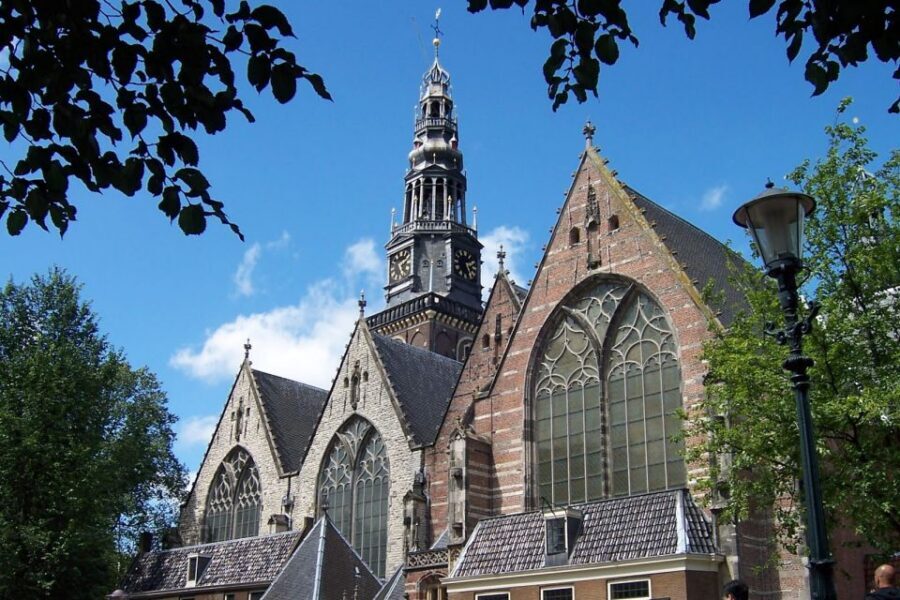
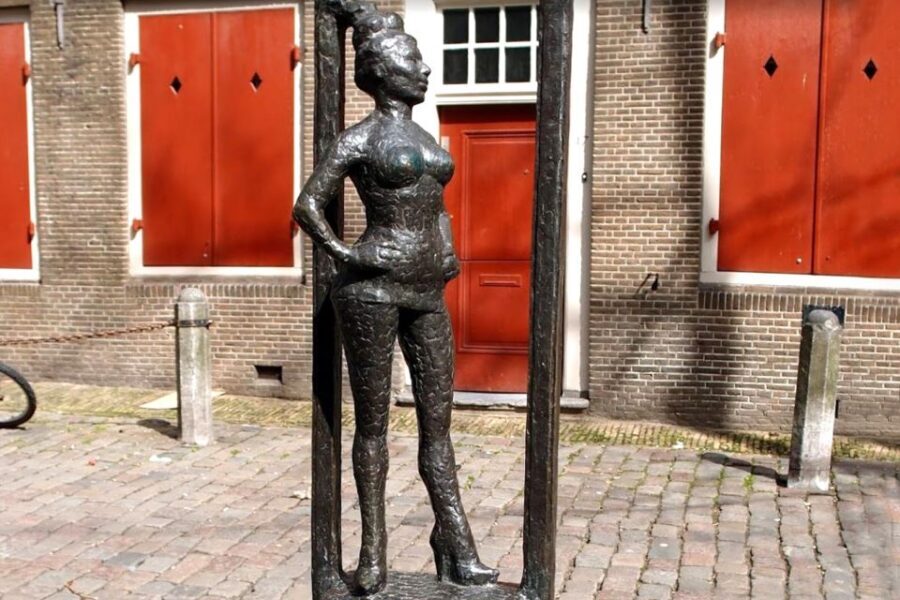
Two stops made the biggest impression on me: Oude Kerk, Amsterdam’s oldest building, and the small statue called Belle, honoring sex workers’ rights. The narration is also built around lived-in neighborhood details—sailors, merchants, residents, and travelers—so you’re not just memorizing facts; you’re getting a sense of how this area formed. The possible drawback: if you’re hoping for lots of practical, modern detail about prostitution and the district’s current street-level life, the audio leans more toward city history and churches than what you might be expecting.
Because there’s no live guide and no set meeting point, you control the pace from the start: Dam Square to the finish around Nieuwmarkt. You’ll want charged headphones and a phone with enough space, but once you’re set, it’s a straightforward, low-pressure way to understand what’s going on beyond the windows.
In This Review
- Key points before you go
- Dam Square start: no meeting point, just start walking
- Oude Kerk and Belle: hearing the neighborhood’s “why” without staring
- Ons’ Lieve Heer op Solder and Café In’t Aepjen: Amsterdam in the side streets
- Bloedstraat and the feeling of narrow-alley stories
- Nieuwmarkt and the Waag building: ending with Amsterdam’s changing identity
- Price and value: what $7 buys you (and what it doesn’t)
- Device and comfort tips: make the audio work smoothly
- Who should book this Red Light District audio walk?
- Should you book this Dam Square to Nieuwmarkt audio tour?
- FAQ
- Where does the audio tour start?
- Is there a live guide with the tour?
- What languages are available?
- Do I need headphones?
- Can I download it for offline use?
- Are museum or site entrance tickets included?
- What devices is it compatible with?
- Is it suitable for children?
Key points before you go
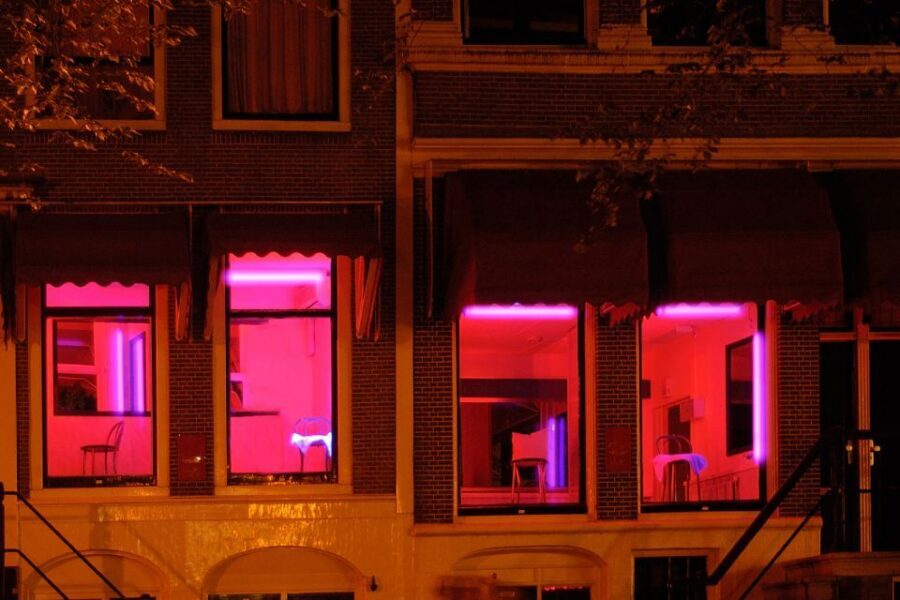
- Phone-first format: self-guided audio, no live guide, and you move at your own pace
- Offline interactive map: download first to avoid roaming headaches and weak signals outdoors
- Respectful, context-heavy storytelling: the focus is history and neighborhood layers, not a spectacle
- Landmarks with meaning: Oude Kerk, Belle statue, Café In’t Aepjen, and Ons’ Lieve Heer op Solder
- Smart end point: the walk concludes near Nieuwmarkt and the Waag building
Dam Square start: no meeting point, just start walking
The tour starts at Dam Square, with no meeting point and no guide waiting around. That’s great if you like to get moving fast, and it also makes the experience easier to fit into a normal day of wandering. If you’re coming from Centraal station, plan on a roughly 9-minute walk to the square, then take a moment to orient yourself before you press play.
Before you head out, you’ll want to do two practical things. First, bring headphones (the tour doesn’t provide them), and second, make sure your smartphone is charged. The tour is also meant to be downloaded ahead of time, since internet or mobile signal can be weak in public areas.
One detail I appreciate: the audio comes with offline support, including an offline interactive map. That means you’re not constantly hunting for service while you’re trying to follow the route, which is half the battle in any self-guided city walk. Also note that the tour is sold per device, not per person—so if you’re traveling with someone, each device needs its own booking.
A few more Amsterdam tours and experiences worth a look


Oude Kerk and Belle: hearing the neighborhood’s “why” without staring
Oude Kerk is where the tour really nails the idea of history you can hear while you walk. Amsterdam’s oldest building is a strong anchor, because it gives you a sense of how long this city has been shaping trade, people, and power. In the narration, you’re not just told that it’s old—you’re guided through how the neighborhood connected to the wider story of Amsterdam over time.
Then comes Belle, a small statue honoring sex workers’ rights. That stop matters because it reframes what many people think they know about the Red Light District. Instead of treating the area as only a photo spot, the audio points you toward the human rights angle and how sex work became part of the city’s ongoing debate and identity.
If you’re someone who wants to look at this district with more context than curiosity, this pair of stops works well. You get a reminder that the Red Light District didn’t appear out of nowhere—it formed alongside the city, with institutions, laws, and community realities changing over centuries. The flip side is timing: if you’re specifically chasing lots of current, street-level details, you may notice the audio spends more time on broader civic history and church sites than on the day-to-day window scene.
Ons’ Lieve Heer op Solder and Café In’t Aepjen: Amsterdam in the side streets
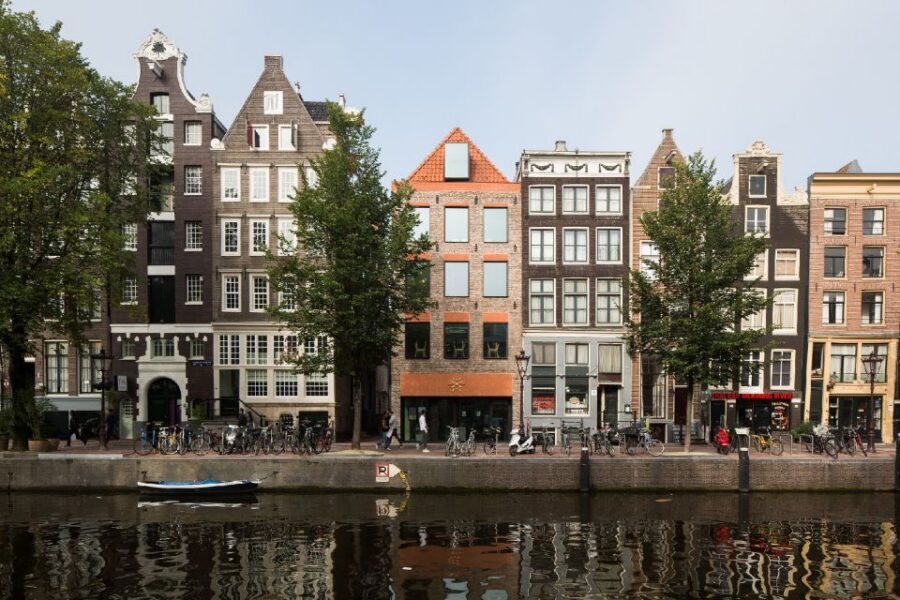
One of the best things about this tour is how it uses “in-between” spaces to tell bigger stories. You’ll be guided through narrow alleys and corners, following footsteps of sailors, merchants, residents, and travelers. That approach makes the Red Light District feel less like a single attraction and more like a working neighborhood that just happens to be famous worldwide.
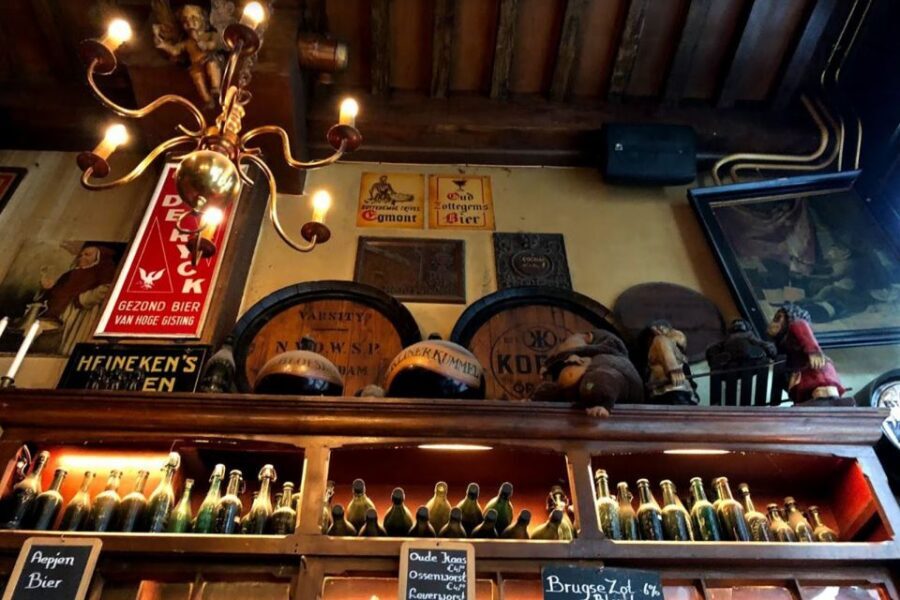
Two highlights stand out in a way that’s hard to get from a simple walk. Café In’t Aepjen is included as a historic stop, giving you a chance to connect the district to everyday city life rather than only monumental buildings. Even if you don’t go inside (entry is not included), the audio helps you notice why a place like this becomes part of local memory.
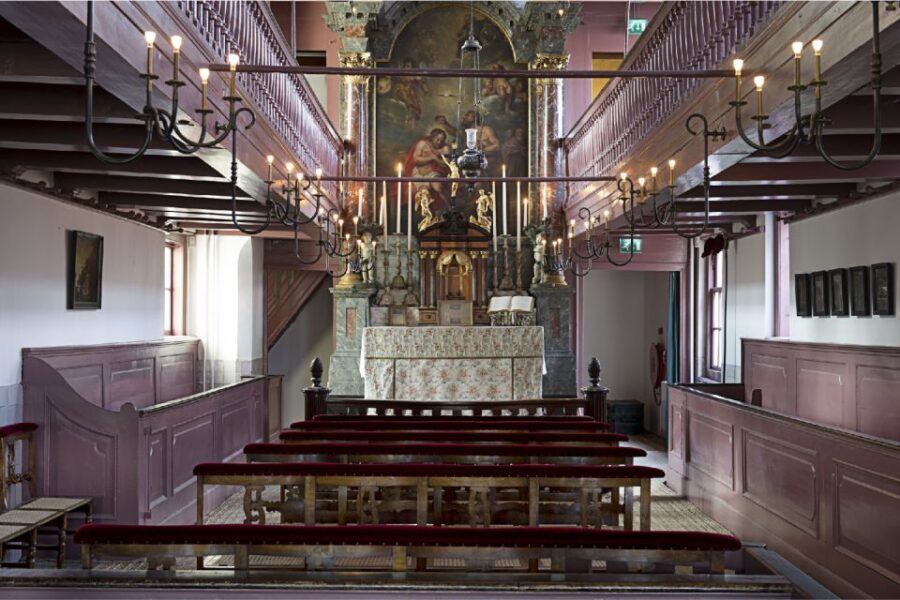
Then there’s Ons’ Lieve Heer op Solder, described as a clandestine chapel. That word is doing work: it nudges you to think about secrecy, constraints, and how people found ways to practice faith or community when they couldn’t do it openly. This is the kind of stop that changes how you read old Amsterdam—less postcard, more lived-in reality.
As you listen, try to keep your attention split between two things: the route in front of you and the idea behind it. The audio’s strongest moments come when you pause long enough to look at the surrounding building shapes and the alley narrowing that helps you feel how people moved through the area.
Bloedstraat and the feeling of narrow-alley stories
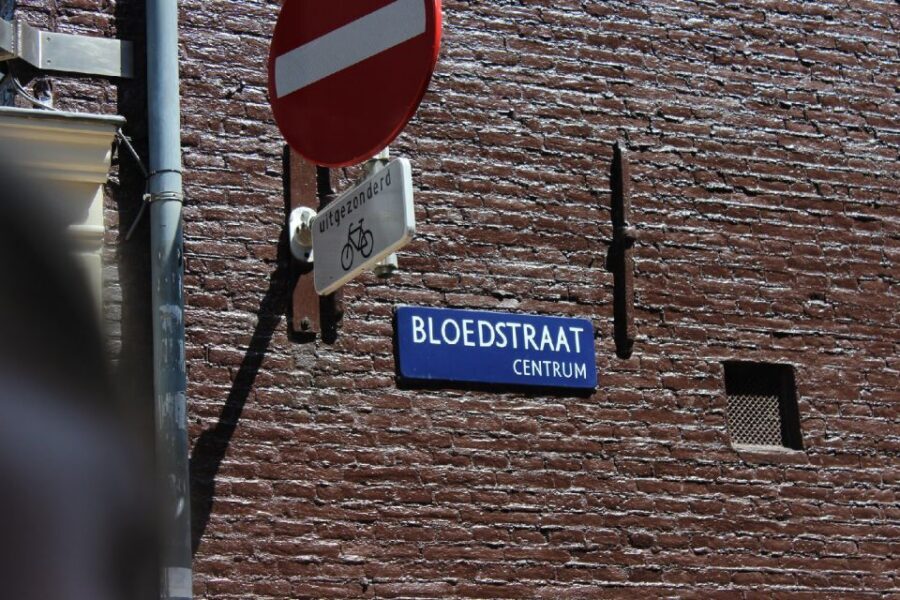
Not every highlight is a famous building. Bloedstraat is one of the stops called out by name, and it’s exactly the kind of place that sticks in your head because the name sounds dramatic before you even understand it. That’s useful on a walking tour: you get a hook, then the narration gives it context so it stops being just a strange word on a street sign.
The audio also emphasizes the people who would have passed through this area—sailors and merchants in particular—along with residents and travelers. This is where the Red Light District starts to feel like it belongs to Amsterdam as a whole, not as a self-contained world. If you’ve ever wondered why cities develop certain districts near canals, trade routes, and busy centers, this storytelling approach gives you clues without turning it into a lecture.
One practical note: since it’s self-guided, you can get through sections quickly if you’re rushing. I’d plan a slower rhythm here, because narrow alleys can blur together. When the story is about individual lives and movement, you’ll understand more if you take a couple of minutes to walk steadily instead of power-walking to the next landmark.
Nieuwmarkt and the Waag building: ending with Amsterdam’s changing identity
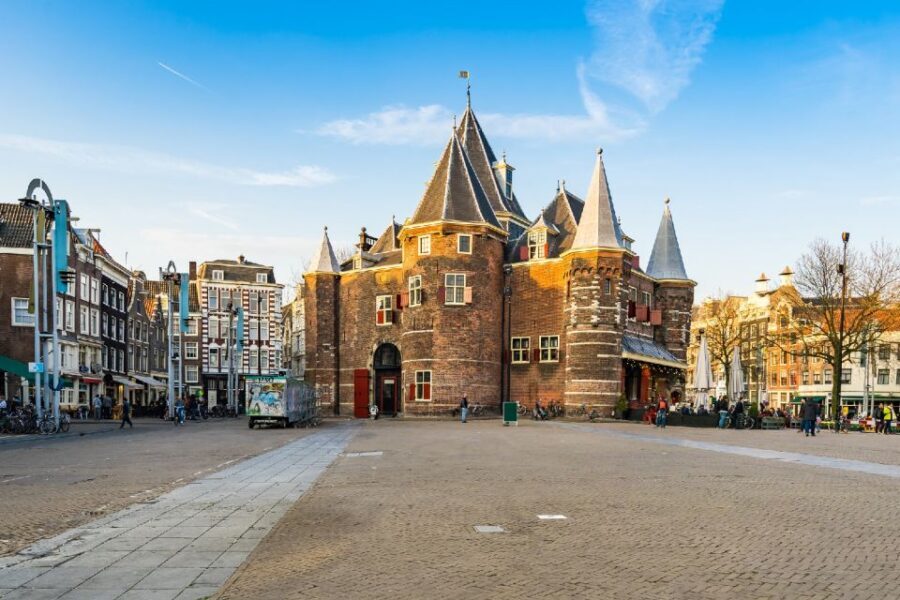
Your tour ends around Nieuwmarkt, where the Waag building anchors the final chapter. The narration connects Waag to multiple identities over time—once a city gate, later a guildhall, and now a symbol of Amsterdam’s evolving identity. That change over time is what makes this end point satisfying. You get a sense of how civic functions shift, while the city keeps using its space for new purposes.
Nieuwmarkt itself feels like a natural place to finish because it’s an area where you can easily break off into normal sightseeing after the audio ends. Since the tour is about history and context, finishing at a building tied to trade and civic organization helps the story land cleanly.
If you’re the type who likes to tie a walking route to one final “big picture” stop, Waag does that job well. You don’t end on a purely atmospheric note. You end on a structure that reflects how Amsterdam has rebranded and reused its own space across eras.
A few more Amsterdam tours and experiences worth a look

Price and value: what $7 buys you (and what it doesn’t)
At about $7 per person, this is a low-cost way to get structured context in a part of the city that can easily feel like a blur of signs, windows, and secondhand assumptions. The value isn’t just that it’s cheap—it’s that it’s cheap and it’s designed to work without you paying for guide time or transport time.
What you’re paying for:
- a self-guided smartphone audio tour
- an activation link
- offline content plus an offline interactive map
- English, German, and Italian audio options
What you’re not paying for:
- entrance fees or museum admission
- a live guide
- headphones or a smartphone
- food and drinks
- transportation, hotel pickup, or drop-off
That last point matters. If your plan includes entering museums or specific sites, you’ll still need separate tickets. The tour can still make those entrances more meaningful, but it won’t cover them.
Also, treat it like a 1-hour experience in terms of time. It’s short enough to fit into a busy schedule, which is a big part of its practicality. The small group limit to 10 participants is noted, but in practice this is still self-guided, so the real group experience is mostly about how the product is managed rather than how you physically walk together.
Device and comfort tips: make the audio work smoothly
This tour is phone-based, so your comfort depends on a few technical basics. The tour isn’t compatible with Windows phones, and it also won’t work on older iPhones and some older iPad models. You’ll need an Android or iOS smartphone, plus enough storage space—about 100–150 MB.
After booking, you get an email from the local partner with instructions to download and access the tour. Check your spam folder, because these emails sometimes end up there. And again: download on the spot before you walk in. Internet may be spotty, and the tour explicitly relies on offline content for a smooth experience.
You’ll also want to think about content style. This is labeled as not suitable for children under 18, and that’s worth respecting both for comfort and for appropriateness. If you’re bringing someone who’s sensitive to adult-topic storytelling, consider keeping the expectation aligned: the audio is respectful and history-focused, but it’s still about a neighborhood known worldwide for sex work.
Finally, headphones are on you. Bring wired or Bluetooth, but make sure you’re comfortable wearing them while walking through busy streets and crowds.
Who should book this Red Light District audio walk?
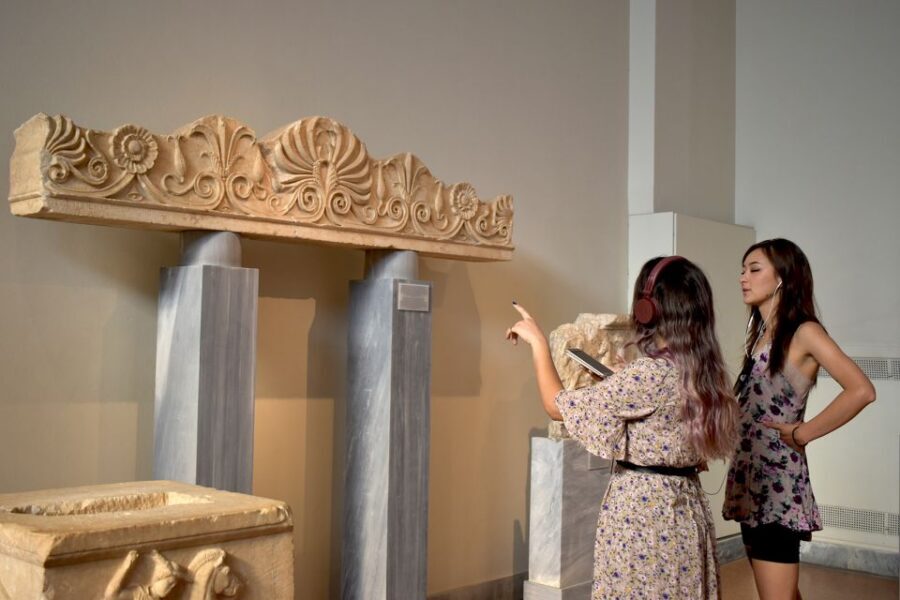
This is a good fit if you want to understand the Red Light District through context. You’ll likely enjoy the tour most if you’re the type who likes old buildings and city development stories—especially stops like Oude Kerk, a rights-focused point with Belle, and the chapel of Ons’ Lieve Heer op Solder.
It also works well if you dislike group logistics. There’s no live guide, no required pace, and no meeting point. You can pause, replay, and slow down when a street name like Bloedstraat catches your attention or when you want to connect what you’re hearing to what you’re seeing.
On the other hand, if your main goal is highly detailed information about prostitution as it exists today, this may not satisfy that expectation. The narration focuses strongly on city history and certain church landmarks, so treat it as a context walk rather than a street-report.
Should you book this Dam Square to Nieuwmarkt audio tour?
I’d book it if you want a structured, respectful walk through the Red Light District that helps you see beyond the windows. The offline audio + interactive map are genuinely practical, especially for a short, busy neighborhood visit where signal can be unreliable. And the included stops—Oude Kerk, Belle, Café In’t Aepjen, Ons’ Lieve Heer op Solder, and the Waag building—are the kind of anchors that make a self-guided route feel coherent.
I wouldn’t book it if you’re expecting a heavy focus on the modern street-level mechanics of prostitution or a long, window-by-window walk. If that’s what you want, you’ll probably feel like the history angle takes the steering wheel.
If you’re comfortable with a phone-based self-guided format and you want stories tied to real landmarks, this is good value at $7.
FAQ
Where does the audio tour start?
It starts at Dam Square, and there is no meeting point. Dam Square is about a nine-minute walk from Centraal station.
Is there a live guide with the tour?
No. This is a self-guided smartphone audio tour, with no live guide.
What languages are available?
The audio is available in English, German, and Italian.
Do I need headphones?
Yes. Headphones are not included, so you’ll need to bring your own.
Can I download it for offline use?
Yes. It includes offline content and an offline interactive map to help you avoid roaming charges.
Are museum or site entrance tickets included?
No. Tickets or entry to specific sites or museums are not included.
What devices is it compatible with?
You need an Android or iOS smartphone. It is not compatible with Windows phones, and it’s not compatible with iPhone 5/5C or older, iPod Touch 5th generation or older, iPad 4th generation or older, or iPad Mini 1st generation.
Is it suitable for children?
No. It’s not suitable for children under 18.