REVIEW · AMSTERDAM
Amsterdam: Self-Guided Food Tour in De Pijp Neighbourhood
Book on GetYourGuide →Operated by Who Is Amsterdam Tours · Bookable on GetYourGuide
Street food in Amsterdam can feel like a stampede. This one keeps it sane, with a self-guided route through De Pijp and tastings built around family-owned spots instead of counters on every corner. I like the range: Dutch classics (croquette, poffertjes, stroopwafel) plus Suriname, Israel, and even Osaka-style takoyaki. I also like that you’re pushed toward the real market buzz via Albert Cuyp Market. One catch: not every stop runs every day, so you can run into closures or a missed location if you’re off by a few hours.
If you want independence, this fits. You set your pace, follow a PDF with Google Map links, and work your way from savory to sweet to savory again, ending with hand-cut fries and a classic Patatje Oorlog-style sauce mix. Just keep your expectations realistic: some “tastings” are small samples, and you’ll likely be paying for food and drinks on-site.
In This Review
- Key takeaways before you go
- Why De Pijp is the right neighborhood for street food
- The route, from croquette crunch to Patatje Oorlog fries
- Stop-by-stop: what you’ll likely eat (and the smart ways to handle it)
- 1) FEBO start: croquette kickoff
- 2) Suriname stop: pom with chicken + pickles and hot sauce
- 3) Israeli stop: smoked brisket, roulade, and tangy sides
- 4) Fish stall: herring + kibbeling
- 5) Sweet break: poffertjes and that bubbling moment
- 6) Stroopwafel at a long-running Gouda-maker
- 7) Takoyaki: Osaka balls + Tokyo ramen influence
- 8) Ending at the fries: Patatje Oorlog sauce
- The Albert Cuyp Market angle: where the street-food energy really comes from
- Timing reality: why your plan can change even with the best PDF
- Value math: what you pay for, what it costs to eat
- Vegetarian options and dietary limits you should take seriously
- How to use the PDF guide so discounts don’t fall through
- Who this suits (and who should pick a different plan)
- Should you book this De Pijp street food tour?
- FAQ
- Where does the self-guided tour start?
- Is there a human tour guide?
- How long is the tour?
- Does the tour run in bad weather?
- Are vegetarian options available?
- Is it okay for gluten intolerance?
- What should I budget for food?
Key takeaways before you go
- De Pijp street-food mix: Dutch classics and international comfort food, all in one neighborhood route.
- Albert Cuyp Market included: you get the day-market atmosphere, not just a quick photo stop.
- Discounts + tastings at 7 of 8 stops: the ticket is mainly about smart access, not an all-you-can-eat deal.
- PDF navigation rules matter: you need the guide on your phone for discounts to kick in.
- Plan for closures: at least 6 stops are expected to be open, but your exact run can still shift day to day.
- Portion control tip: share items—many bites add up faster than you think.
Why De Pijp is the right neighborhood for street food
De Pijp is where locals go to snack without turning it into a performance. The streets feel like a working neighborhood—cafés nearby, markets around the corner, and plenty of casual places to stand, eat, and keep moving.
That matters because a self-guided food tour lives or dies by flow. You’re not stuck waiting for a group. You’re not negotiating language at every step. You’re just hopping from one specialty shop to the next, mostly on foot, with the next stop mapped out for you.
The tour’s big win is that it’s built around the kinds of businesses locals actually return to: family-owned food shops and stalls, not generic “tourist tasting” counters. You also get short stories about local food heroes, which adds context to what you’re eating instead of making it feel like a checklist.
You can also read our reviews of more food & drink experiences in Amsterdam

The route, from croquette crunch to Patatje Oorlog fries
This is a self-guided crawl built for taste over theory. You’ll start at FEBO on Ferdinand Bolstraat, then follow a sequence that intentionally swings from snacky savory to iconic sweets and back again.
Here’s the arc you should expect:
- Traditional Dutch croquette to open: a classic, crispy starter that gets you grounded in Dutch street food right away.
- Suriname specialties next: you’ll hit flavors that Amsterdam does well—spices, sauces, and big comfort-food energy.
- Israeli street food: smoked meats and bread alongside pickles and olives.
- Fish stall stop: fresh Dutch herring plus kibbeling (fried cod) for that briny, crunchy hit.
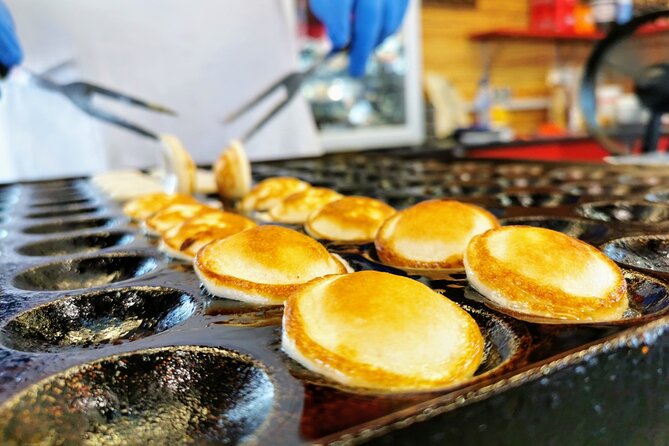
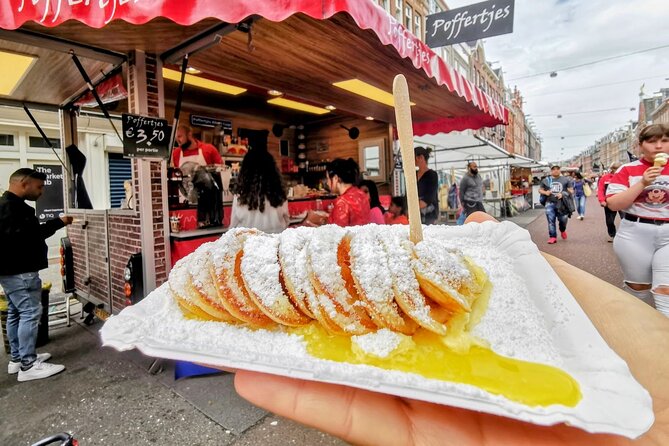
- Poffertjes for sweet-and-hot: tiny pancakes cooked until they bubble.
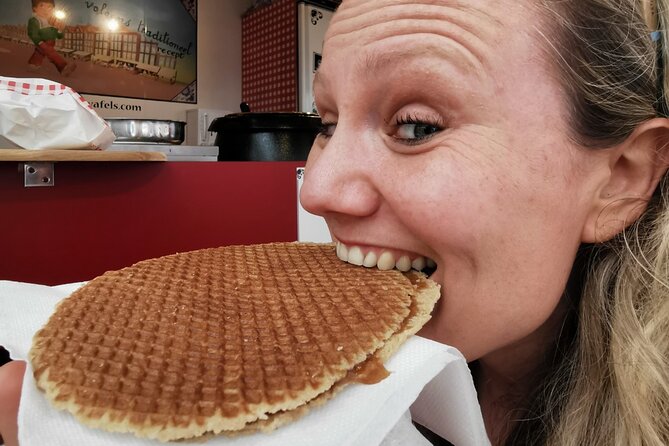
- Goudse stroopwafel: syrup waffles made the old-school way by a family with decades of production experience.
- Takoyaki with a Japanese twist: Osaka-style takoyaki teamed up with a Tokyo ramen specialist’s influence.
- Hand-cut fries to close: Patatje Oorlog-style sauce mix with peanut sauce, mayonnaise, and onions.
That last stop is a good closer because it’s hearty and unmistakably Dutch. By the time you reach it, you’ve probably earned fries.
Stop-by-stop: what you’ll likely eat (and the smart ways to handle it)
Below is how the menu reads, based on what the route is designed to serve. Real life can vary because some places don’t open daily, but the sequence is the point—and it’s a strong one.
1) FEBO start: croquette kickoff
You begin right where the locals grab Dutch fast bites. The croquette is the classic move: a breaded, crispy exterior with a creamy filling inside. It’s a great warm-up because it’s familiar but still very “Amsterdam snack” in the way you eat it—quick, standing, no fuss.
2) Suriname stop: pom with chicken + pickles and hot sauce
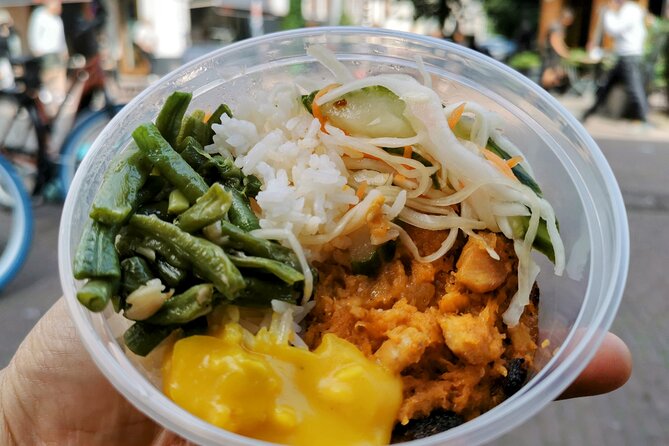
Next comes Suriname food, anchored by pom—an oven-baked root plant served with chicken. You’ll also get the supporting cast: long beans, rice, homemade pickles, and hot sauce.
This is one of those stops where your meal feels like more than a bite. It’s also a good example of how Amsterdam street food isn’t locked into Dutch only. If you like food that’s flavorful, not just salty, this stop should land well.
A few more Amsterdam tours and experiences worth a look
3) Israeli stop: smoked brisket, roulade, and tangy sides
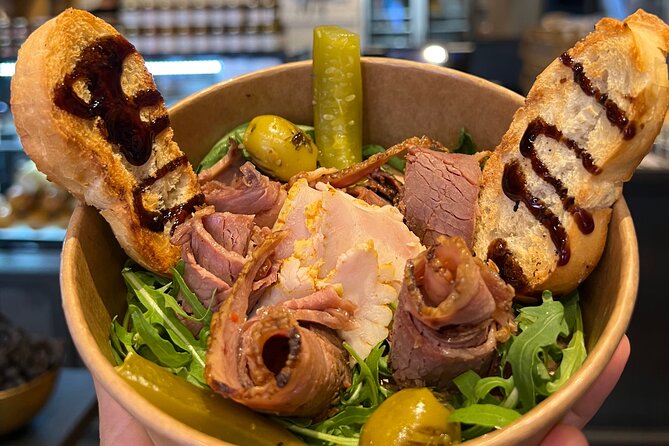
Then you move into Israeli flavors: smoked beef brisket and chicken roulade, served with Israeli pickle, olives, and bread plus balsamic vinaigrette.
What I like about this pairing is texture balance. You’re getting smoked richness plus bright, tangy elements from the pickles and vinaigrette.
4) Fish stall: herring + kibbeling
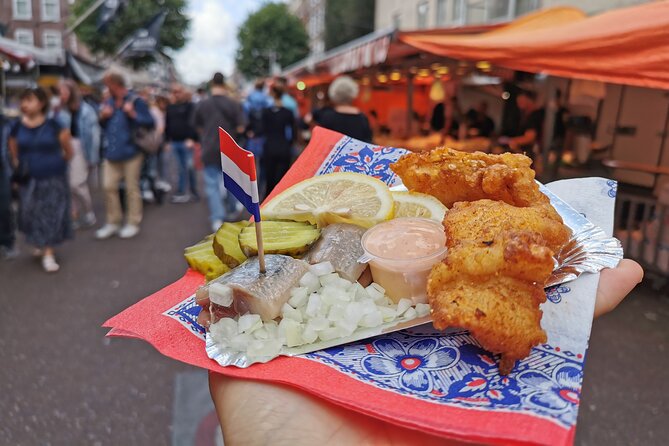
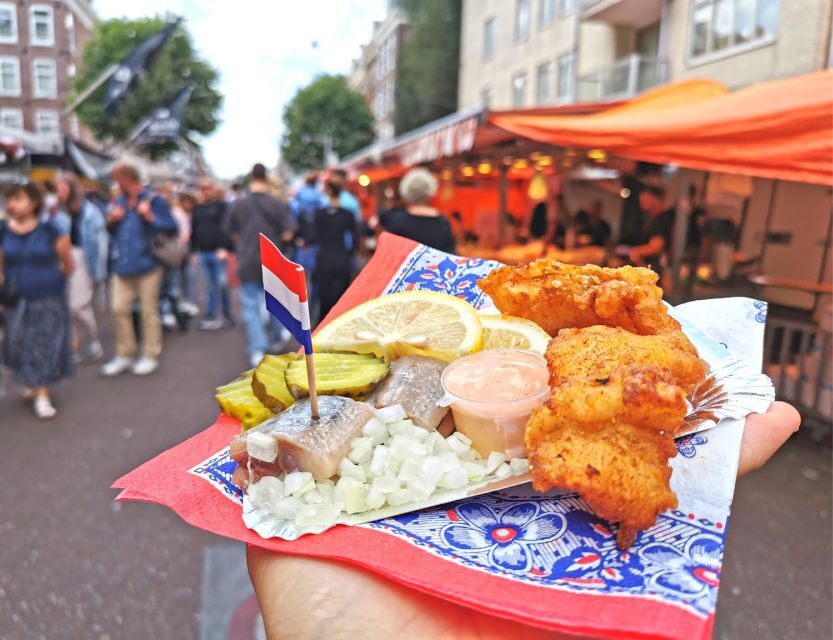
After that, it’s fresh Dutch herring and kibbeling—fried cod. This stop gives you the salty, crunchy side of Dutch street food. If you’re hesitant about fish, go anyway; the fried kibbeling helps, and the herring keeps it authentic.
5) Sweet break: poffertjes and that bubbling moment
Now you slow down. You’ll eat poffertjes, those tiny pancakes that puff and bubble while they cook. It’s the kind of food you can watch—like a mini show—while you wait for the next instruction from your own feet and the PDF.
6) Stroopwafel at a long-running Gouda-maker
Then you get Goudse stroopwafels, the syrup waffle people talk about for a reason. The tour highlights a family that’s been making them for more than 45 years.
This stop is a good reality check: stroopwafel isn’t just sweet pastry. It’s a Dutch ritual snack, usually served warm, and the syrup does most of the work.
7) Takoyaki: Osaka balls + Tokyo ramen influence
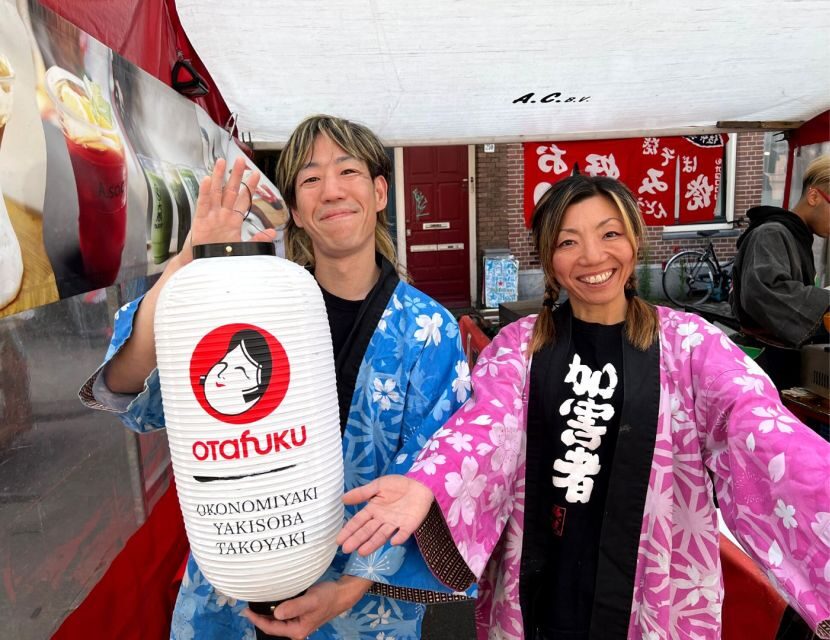
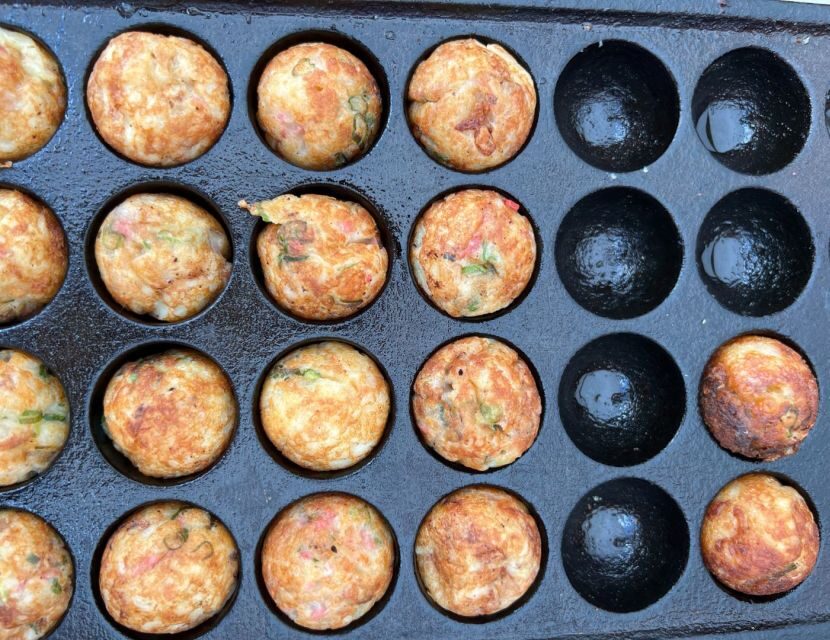
Next up: takoyaki balls made by a takoyaki chef from Osaka, with a connection to a ramen specialist from Tokyo. Expect that classic takoyaki vibe—small bites with a savory center.
This is a fun pivot point after Dutch sweets. It breaks up “one cuisine after another” fatigue.
8) Ending at the fries: Patatje Oorlog sauce
You finish with award-winning hand-cut fries and a Dutch sauce combo often called Patatje Oorlog: peanut sauce, mayonnaise, and onions.
It’s salty, creamy, and weirdly satisfying. If you only remember one Dutch thing about this tour, make it fries with that sauce.
The Albert Cuyp Market angle: where the street-food energy really comes from
A headline here is Europe’s biggest outdoor day market, Albert Cuyp Market. In practice, what this gives you is atmosphere and choice. Even if the tasting portion is only part of your day, being near that market helps you feel what the neighborhood is like when locals do the shopping and snacking.
My advice: don’t treat it like a quick stop you can “fit in anytime.” Market energy and vendor hours can swing. If you want a smoother day, start earlier in the day and move on schedule even if you’re tempted to linger at one stall.
Timing reality: why your plan can change even with the best PDF
This tour runs rain or shine, and that’s nice—Amsterdam doesn’t always care about your schedule. But the bigger timing issue is openings.
You should expect that not every stop is open every day, even though at least 6 are expected to be open. That’s also consistent with what can go wrong in a self-guided setup: if one place is closed, you may lose more time than you think.
In the feedback I’m basing this on, there were a few pattern complaints:
- One route had long waits at a stop.
- Another time, a stop simply wasn’t there, and the tour ended early.
- On another day, after the first three items, many remaining places closed, making the overall value feel weak.
So here’s the practical fix: build in flexibility. Don’t schedule a big museum reservation right after. Aim to finish your route before late afternoon when smaller shops start shutting down. And if you notice the day running late, don’t keep chasing every last stop. Pick the ones you care about most—croquette, fish, stroopwafel, and fries are strong anchors.
Value math: what you pay for, what it costs to eat
The ticket price is $15 per group up to 1. That price is not for a free feast. It’s mainly for:
- the self-guided experience and directions,
- exclusive discounts and tastings at 7 of 8 stops,
- and extras like a free 3-day Amsterdam itinerary plus restaurant recommendations.
Then you budget for food. The tour sets expectations that total food cost is around €20 per person. That helps you plan without surprises, and it also tells you why sharing makes sense.
In fact, one of the best pieces of advice for this tour is simple: share items. With a route designed for many bites, you can fill up fast. If you’re with someone, split. If you’re solo, consider ordering smaller portions when the option exists, or swap bites mid-route.
Vegetarian options and dietary limits you should take seriously
Good news first: vegetarian options are available at 7 stops. That means you’re not trapped with only one safe choice.
Now the hard lines: this tour is not suitable for vegans, and it’s also not suitable for people with gluten intolerance. If that affects you, don’t gamble. Stroopwafel, kibbeling, and typical breaded items are exactly the kind of cross-contact and ingredient issues that can make gluten intolerance dangerous.
How to use the PDF guide so discounts don’t fall through
This is a self-guided tour, so your success depends on how well you follow the tech basics.
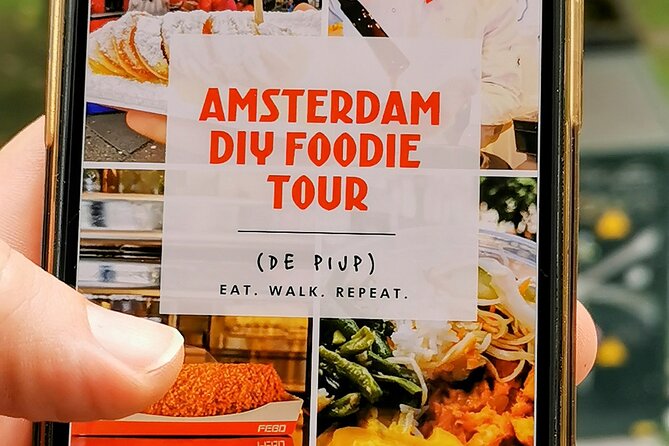
You’ll get a PDF guide with directions to each stop. It includes Google Map links, which is exactly what you want in a city where De Pijp streets can feel like a maze when you’re hungry.
Two key rules to know:
- Each person needs their own copy of the PDF on their phone to be eligible for discounts and special tastings.
- Bring a charged smartphone with internet access, plus cash and/or a credit card.
If you forget the PDF on your phone, you might still be able to eat, but you could miss the main value of the tour.
Also, remember: it runs rain or shine. A waterproof layer for your phone helps. Nothing kills a food day like your screen dying mid-route.
Who this suits (and who should pick a different plan)
This is a great choice if:
- you like going at your own pace,
- you want street food across multiple cuisines without booking a formal guided group,
- and you enjoy hopping neighborhoods on foot with a clear plan.
It’s also a smart pick for budget-minded travelers because the ticket buys you access to discounts and tasting opportunities while you control how much you actually spend on food.
You might skip it if:
- you need strict dietary compliance (especially vegan or gluten intolerance),
- you’re visiting only on a day when you expect shops to have shorter hours,
- or you’re the type who gets stressed by a “maybe some stops are closed” scenario.
Should you book this De Pijp street food tour?
If you like street food and want structure without a human guide hovering over you, I think this is worth booking—especially if you’re comfortable eating at small places and moving on when something is closed.
Choose it with clear expectations:
- You’re paying for smart access (discounts, tastings at most stops, directions, and a free itinerary), not for unlimited food.
- You’ll likely spend about €20 on food per person, depending on what you order.
- Start earlier, keep your phone ready, and plan to share bites if portion sizes feel heavy.
If you’re chasing a guaranteed schedule where every stop is open, look for a different type of guided tour. But if you want a practical, neighborhood-based food crawl that covers Dutch classics and surprising international flavors, this is a solid way to eat your way through De Pijp.
FAQ
Where does the self-guided tour start?
It starts at FEBO on Ferdinand Bolstraat.
Is there a human tour guide?
No. This is a self-guided food tour, so you navigate using the PDF guide and the directions provided.
How long is the tour?
The booking is marked as valid for 7 days (you can check starting availability). The route itself includes 6 to 8 food stops, depending on what’s open that day.
Does the tour run in bad weather?
Yes. It runs rain or shine.
Are vegetarian options available?
Yes. Vegetarian options are available at 7 stops. However, the tour is not suitable for vegans.
Is it okay for gluten intolerance?
No. It’s listed as not suitable for people with gluten intolerance.
What should I budget for food?
The tour notes that the total cost of food is around €20 per person. The tour ticket itself includes discounts and tastings at select stops, but food tastings and drinks are not listed as included.