Follow the water, and Amsterdam makes sense. This interactive eco-walking tour threads 750 years of Amsterdam through water engineering, the Golden Age, WWII, and today’s sustainability mindset, using street-level tools like chalk drawings and iPad overlays. I especially liked the hands-on way the guide makes history visible where you stand, and the small-group size that keeps the pace human; the main trade-off is 2 hours on cobblestones in quick-changing Dutch weather.
You start at De Zilveren Spiegel (Kattengat 4), and you end with a handwritten postcard from A’DAM plus a short list of social-impact places to visit afterward. Guides on this walk—often Antonis (spelled Adonis in some confirmations)—bring the kind of energy that turns dates and facts into street-level stories. Just know: video recording isn’t allowed, so you’ll want your camera ready and your eyes open.
In This Review
- Key Things That Make This Tour Worth Your 2 Hours
- Turning Amsterdam’s Past Into Something You Can See
- Meeting Point at De Zilveren Spiegel: How to Start Without Stress
- The Foundation: Water & Wind (Where Amsterdam’s Story Really Starts)
- Windows to the Past: Golden Age Through iPad Overlays
- The Eco Mindset: Education, Politics, and What You Notice on the Walk
- Quiet Routes and Courtyards: Seeing Amsterdam Without Getting Crushed
- What the Guide Style Feels Like (and Why It Changes Everything)
- Price and Value: Is $29 Fair for What You Get?
- What to Bring (So You Don’t Feel Rushed)
- The Handwritten A’DAM Postcard and the End of Tour “Next Steps”
- Who This Tour Fits Best
- Quick Booking Checklist (So You Get the Best Session)
- Should You Book This Amsterdam Eco-Walking Tour?
- FAQ
- How long is the Amsterdam History, Water & Eco walking tour?
- What is the maximum group size?
- Where do I meet the guide?
- What languages are offered for the live guide?
- What should I bring?
- Are food and drinks included?
- Is video recording allowed during the tour?
- Do I get anything included besides the tour itself?
- What is the cancellation policy?
Key Things That Make This Tour Worth Your 2 Hours
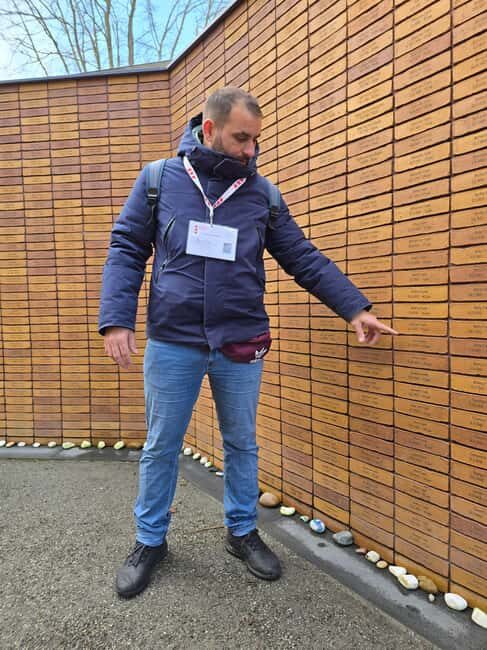
- Water & wind, made visual with chalk drawings and historical maps right on the streets
- iPad overlays that line up old paintings with the modern city view
- A tight group (max 8) so you can ask questions without yelling over the crowd
- Quiet streets on purpose, including courtyards and garden pockets away from the main flow
- Future-focused eco education, connecting Dutch schools, politics, and daily urban choices
- A handwritten A’DAM postcard plus social-impact café, shop, and brewery recommendations to carry forward
Turning Amsterdam’s Past Into Something You Can See
Amsterdam can feel like a postcard: canals, bikes, tidy facades. This tour pushes past the surface and makes the city’s big story feel logical, step by step. You’ll walk through centuries while the guide links why Amsterdam exists (below sea level) to how it thinks, how it fights, and how it reinvents itself.
The pacing is also a big part of the value. You’re not stuck in one spot listening to a lecture while everyone else scrolls on their phone. Instead, you get short storytelling beats, quick route changes to avoid crowds, and interactive moments that keep you awake without turning it into a gimmick.
If you like history, but you also want your feet to do some work, this hits a sweet spot. If you want a sit-down museum vibe only, you may find the walking and cobblestones a little much.
You can also read our reviews of more walking tours in Amsterdam


Meeting Point at De Zilveren Spiegel: How to Start Without Stress
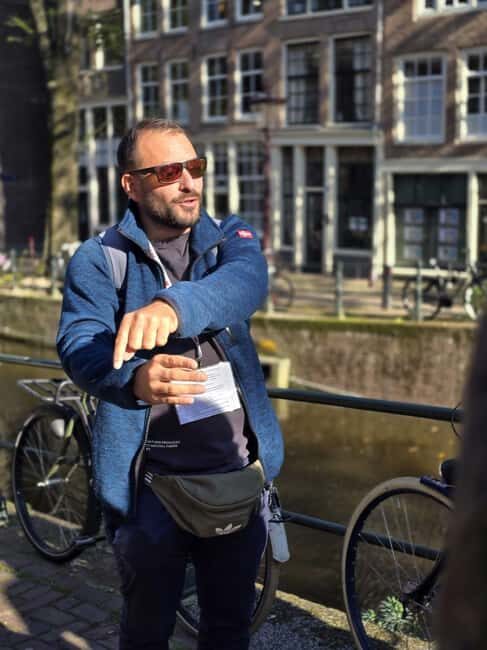
You meet the guide in front of De Zilveren Spiegel at Kattengat 4. Arrive about 10 minutes early so you can get oriented before the group moves out.
This start location matters because it sets a practical rhythm for the day: you’re not waiting around for everyone to catch up, and the tour’s “walk, look, then understand” format begins fast. Wear comfortable shoes—cobblestones are real here, and you’ll feel every uneven patch if you show up in soft sandals or thin soles.
The Foundation: Water & Wind (Where Amsterdam’s Story Really Starts)
The tour’s first theme is water and wind, and it’s a smart choice. Amsterdam isn’t just a pretty city that happened to grow near water; it’s a city that had to fight water to become a city at all.
You’ll follow the “how it works” thread using chalk drawings on the street and historical maps. The guide shows you the engineering logic behind the first dam and dikes—basically, the early structure that let people settle where they shouldn’t have. And because this is the Netherlands, the story isn’t only about water; it’s also about power. Windmills come up as the original green-energy tool, tied directly to how the Dutch managed water long before “sustainability” became a buzzword.
One angle I liked: the guide connects that survival engineering to society and governance. The point isn’t to turn everything into politics; it’s to show why people who live with constant water risk tend to value planning, coordination, and democratic problem-solving. That makes the later history feel less random and more connected.
Practical tip: bring your reusable bottle. You’ll get pointed to places to refill with fresh Dutch water for free during the walk, which is great because the tour does not include food or drinks.
Windows to the Past: Golden Age Through iPad Overlays
After the foundation, the tour shifts into “see it where it happened.” Using iPads, the guide overlays older paintings onto current streets. This is one of those tools that actually helps: it reduces the mental work of imagining the past, because the guide places it right in your line of sight.
This part covers the city’s Golden Age—including the role of wealthy merchants in the 17th century. You’re not just hearing about wealth; you’re learning how Amsterdam’s growth, architecture, and worldview changed as trade and prosperity expanded. Watching these time layers line up over the modern street makes the Golden Age feel like a living force rather than a chapter in a textbook.
Then the tour moves into the heavier turning points, including WWII and how the city showed resilience. And later, you connect it forward to the liberal culture period of the 1970s. The message is clear: Amsterdam’s modern attitude didn’t appear out of thin air. Social movements and protests helped shape what the city became, and those values still show up in daily street life.
If you’ve ever wondered why Amsterdam feels so openly argumentative—brilliantly so—you’ll get a history-based explanation here.
The Eco Mindset: Education, Politics, and What You Notice on the Walk
Here’s where the tour stops being only about the past and starts being useful for the present. The guide lays out why the Netherlands is known as a sustainability pioneer, not just for infrastructure, but for everyday habits and decision-making.
You’ll hear how the Dutch education system supports eco-friendly thinking from a young age. Whether or not you agree with every policy choice, it’s a big difference in approach: sustainability isn’t treated like a hobby for adults; it’s introduced as part of how people learn to live.
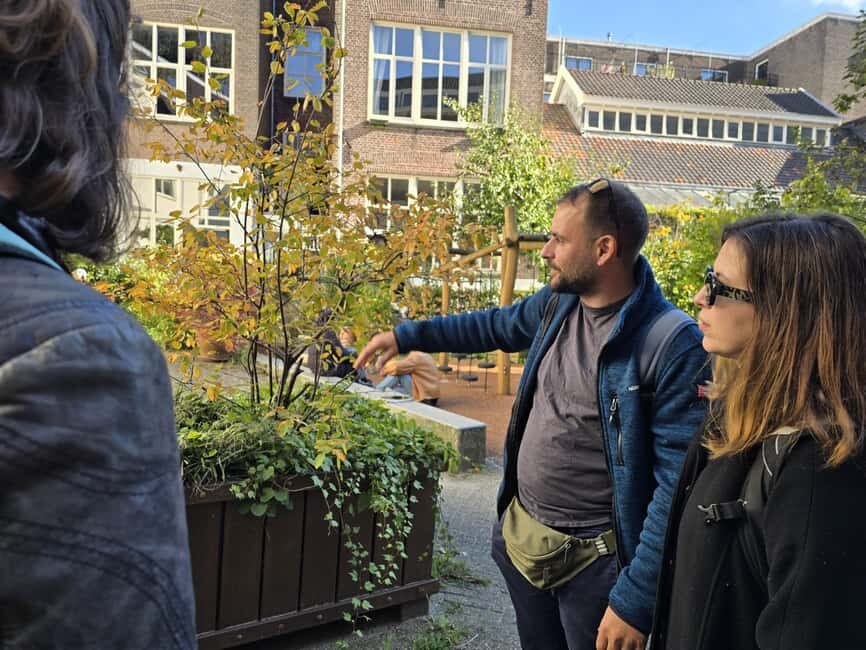
The tour also touches on green politics and how earlier choices still influence what’s happening now and what’s needed in the future. And this stays grounded by tying it back to what you can literally see. As you walk, the guide pauses for urban eco details—small changes that show how nature gets integrated into city life rather than pushed away.
I liked this section because it doesn’t force a lecture tone. It encourages you to pay attention. Afterward, you’ll start seeing eco choices in the city the way you notice street signs: automatically.
You can also read our reviews of more historical tours in Amsterdam





Quiet Routes and Courtyards: Seeing Amsterdam Without Getting Crushed
Amsterdam’s center can be crowded, especially if you’re following the same famous photo spots as everyone else. This tour’s design works against that problem.
You prioritize quieter local streets and often move through small courtyards or garden pockets. The guide does pass essential landmarks, but the plan is to avoid linger-heavy areas that drain your energy. When you do hit busier zones, the tour is quick, purposeful, and then you shift back toward calmer streets.
Another smart detail: if you hear street musicians or see artists along the route, the guide doesn’t treat them like an interruption. You pause to enjoy the moment and support local culture. That kind of flexibility keeps the walk from feeling like a rigid script.
It’s also why the small group format matters. With a max of 8 participants, you’re less likely to stretch across the sidewalk. The tour can move like it’s supposed to move.
What the Guide Style Feels Like (and Why It Changes Everything)
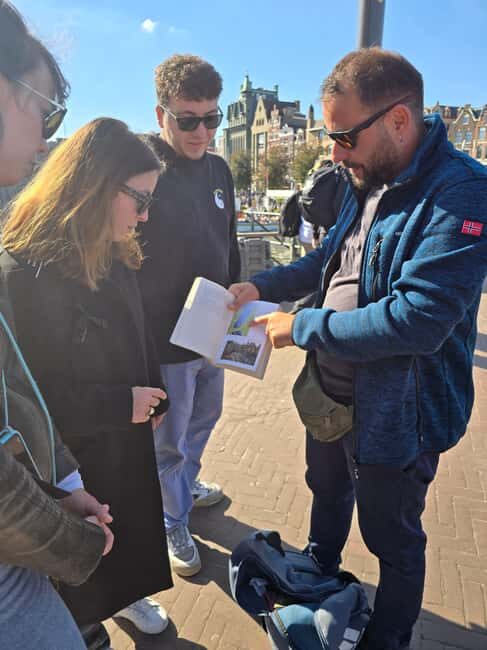
A lot of walking tours say they’re interactive. This one uses tools, but it also uses a guide who connects dots.
Antonis (and the occasional Adonis spelling you may see) comes across as the kind of person who knows the city’s heart and not just its facts. In a couple of cases, the guide has been known to extend the tour time when the group wants more city context—so you can get deeper context if you’re engaged.
The overall vibe is warm and enthusiastic, with a focus on storytelling plus practical city hints. You’ll also get recommendations at the end for places like social impact cafés, shops, and breweries—handy if you want your Amsterdam day to include more than just “see and leave.”
Price and Value: Is $29 Fair for What You Get?
$29 per person for a 2-hour, max-8, interactive history-and-eco walk is solid value in Amsterdam terms. You’re not just paying for someone to point at buildings. You’re paying for the combination of:
- interactive tech (iPads) and street-level chalk visuals
- a small group that supports questions
- a route that avoids heavy crowds
- and a guide who ties history to how the city works, then ties the present back to future choices
It also makes sense for travelers who don’t want to commit a whole day. Two hours is enough to get perspective and a handful of “wait, that’s why Amsterdam is like this” moments, without burning your entire morning or afternoon.
The only real “cost” is effort: you need comfortable shoes and you need to be ready for walking on cobblestones.
What to Bring (So You Don’t Feel Rushed)
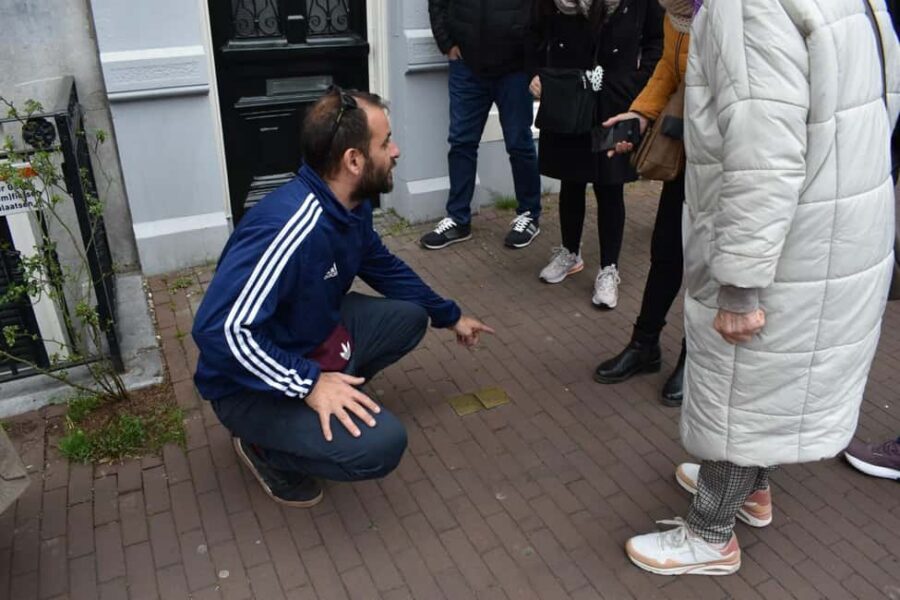
Since food and drinks are not included, plan your timing so you can eat after the tour. Pack light, but don’t show up empty-handed.
Bring:
- Comfortable shoes (cobblestones)
- Camera (video recording isn’t allowed)
- Reusable water bottle (you’ll refill with fresh Dutch water for free)
- Layers for quick weather changes
This is the Netherlands. You can get sun, wind, and mist in the same hour. Layers keep the mood right.
The Handwritten A’DAM Postcard and the End of Tour “Next Steps”
The tour closes with two helpful things.
First, you receive a handwritten postcard from historic A’DAM. It’s a small souvenir, but it’s also a nice “proof you did something specific” item, not just another generic paper bookmark.
Second, you get recommendations for social impact places—cafés, shops, and breweries—so your time in Amsterdam continues beyond the walk. Even if you only pick one or two stops, you’ll feel the difference because you’re choosing places connected to real community effort.
Who This Tour Fits Best
This is a great fit if you:
- want history that explains why the city is the way it is
- like interactive tools and street-level visuals more than classroom talking
- prefer smaller groups and calmer routes
- care about sustainability and want it tied to daily life, not just theory
It’s less ideal if you:
- hate walking on cobblestones
- want video recording during the experience
- only want mainstream landmark photos and nothing else
Quick Booking Checklist (So You Get the Best Session)
- Aim to arrive at the meeting point on time (10 minutes early is the sweet spot).
- Wear shoes that can handle uneven stone.
- Bring a reusable bottle so you can keep moving without buying drinks.
- Plan to bring a camera, not a recording setup—video recording isn’t allowed.
- If you want the tour in English, double-check the guide language for your start time since English and Greek are offered.
Should You Book This Amsterdam Eco-Walking Tour?
I’d book it if you want Amsterdam to make sense beyond the canals. This tour does a good job connecting water engineering, social change, and modern sustainability into one story you can literally point to as you walk. The max-8 size, chalk + iPad visuals, quiet route choices, and the ending with social impact recommendations make it feel like money well spent, not just a “tour for the sake of touring.”
Skip it if you’re only in town for a short taste and already know you want a purely landmark-focused day. Also, if you hate weather changes and cobblestones, you might feel underwhelmed because the experience depends on being outside, looking closely, and moving steadily for two hours.
If you can handle that, this is the kind of tour that gives you a new lens for the rest of your Amsterdam trip.
FAQ
How long is the Amsterdam History, Water & Eco walking tour?
The tour lasts 2 hours.
What is the maximum group size?
The group is limited to a maximum of 8 participants.
Where do I meet the guide?
Meet the guide in front of the restaurant De Zilveren Spiegel at Kattengat 4.
What languages are offered for the live guide?
The live guide offers English and Greek.
What should I bring?
Bring comfortable shoes, a camera, a water bottle, and weather-appropriate clothing (layers are recommended).
Are food and drinks included?
No, food and drinks are not included.
Is video recording allowed during the tour?
No, video recording is not allowed.
Do I get anything included besides the tour itself?
Yes. You receive a handwritten postcard from historic A’DAM, and you also get recommendations for social impact cafés, shops, and breweries.
What is the cancellation policy?
Free cancellation is available up to 24 hours in advance for a full refund.