REVIEW · AMSTERDAM
Amsterdam: Private Guided City Tour by Pedicab
Book on GetYourGuide →Operated by a Pedicab in Amsterdam · Bookable on GetYourGuide
Pedicabs make Amsterdam make sense fast. I love slipping down small streets and bridges cars and buses can’t reach, and I love the history + photo-stop rhythm led by guides like Alphonso and Guido, but the tour may not run well in bad weather.
This is a private ride for up to 2 people, timed for maximum sightseeing with minimum walking. You can also add optional hotel pickup within the city center limit (Nassaukade–Stadhouderskade area), and the live guide works in Italian, English, Spanish, and German.
In This Review
- Key highlights worth caring about
- Why a pedicab works so well for first-time Amsterdam orientation
- Price and value: what $118 per group buys you in 1–2 hours
- Damrak and Dam Square: the classic first stop without the crowd crush
- Munttoren and the Flower Market: shortcuts to charm (and better photo angles)
- Rembrandt Square and Rembrandt House: art-adjacent streets you can actually enjoy
- The Old Jewish Quarter and canal belt storylines: Herengracht, Keizergracht, Prinsengracht
- IJ Bay, Chinatown, and the Museum Quarter: seeing more than the postcard core
- Jordaan and Newmarket: where the city feels lived-in
- Comfort, safety, and practical limits you should plan around
- How to get the most out of the tour: questions to ask your guide
- Should you book this private Amsterdam pedicab tour?
- FAQ
- How long is the pedicab city tour?
- Is this a private tour?
- How many people is the tour priced for?
- What languages are available for the live guide?
- Is hotel pickup included, and where does it work?
- What areas of Amsterdam does the tour cover?
- Is the tour wheelchair accessible?
- Is there a weight limit?
- What if the weather is bad?
- Can I cancel for a refund?
- If I am hard of hearing, is there audio support?
Key highlights worth caring about

- Car-free shortcuts: you get routes through tight streets, not the usual big-road grid
- Stops built into the experience: you pause for explanations and pictures, not just pass-by views
- Friendly, flexible guidance: guides can adjust to what you want to see and where you want to end
- Canal-belt orientation: the Herengracht, Keizergracht, and Prinsengracht stretch is easier to “get” from a seat
- Comfort-first pacing: you’re carried through city highlights, which helps if you walk slowly
- Small-details storytelling: you may hear how the city’s name ties to a dam on the Amstel
Why a pedicab works so well for first-time Amsterdam orientation

Amsterdam can feel like a puzzle at first. Streets twist, bikes appear everywhere, and landmarks blend together unless someone helps you connect the dots. A pedicab tour is built for that “wait, I get it now” moment, because you move through the center with frequent context.
The biggest practical win is access. Instead of doing a long bus crawl or fighting the sidewalks, you slide through small streets and bridges that other vehicles can’t use. That means you’re not only seeing sights, you’re also seeing how the city physically fits together—canals, crossings, and neighborhood-to-neighborhood transitions.
The second win is pacing. I like tours where you stop long enough to actually absorb things. Here, the ride includes stops during the route so your guide can explain what you’re looking at and give you time for photos. You’ll often get a sense of Amsterdam’s layers, not just a list of buildings.
Guides matter a lot in a tour like this, and this operator’s guides have a pattern of being personable and animated. Alphonso and Guido show up repeatedly, and you can also hear guides like Bobby and Bram bringing stories and local color into the ride. If you want an Amsterdam tour that feels personal rather than mechanical, this format fits.
One more thing: pedicabs are a great choice when your body needs a break. Some people book because they can’t walk long distances, including visitors traveling with a foot cast or someone who’s older and slower on their feet. You still get fresh air and motion, without turning your day into a leg workout.
You can also read our reviews of more guided tours in Amsterdam


Price and value: what $118 per group buys you in 1–2 hours
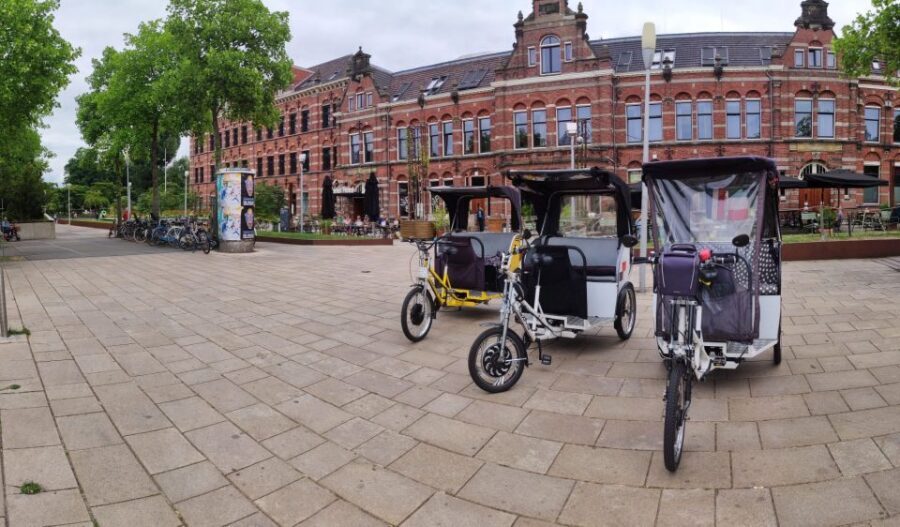
The price here is $118 per group, up to 2 people, and the tour runs 1–2 hours. That pricing structure is the first thing to understand: if you’re traveling as a couple (or a duo of friends), the cost per person can feel reasonable compared with larger group tours.
Value also comes from what’s included. You get a live guide, and the route covers multiple major districts in a short time window. That means you’re not spending your first hours in Amsterdam trying to plan on the fly or backtracking because you missed a canal turning or ended up far from your next stop.
Hotel pickup is optional, not automatic, and it’s only for hotels within the city center limit (Nassaukade–Stadhourderskade). If you’re staying inside that area, pickup can save you time and stress. If you’re outside it, you’ll want to confirm where to meet so you don’t lose your best part of the day—your sightseeing time.
Is it a “cheap” activity? Probably not. But for a private ride with a guide, a seat-focused pace, and access to tighter streets, I think it’s easier to justify. If your goal is a fast orientation and a relaxed intro to Amsterdam, this can be one of the most efficient ways to spend 1–2 hours.
One practical note: the timing may also affect your satisfaction. Late afternoon is a popular sweet spot because you get gentler light for photos. But if you come during rough weather, the tour may not be practicable, so keep an eye on forecast and have a backup plan.
Damrak and Dam Square: the classic first stop without the crowd crush

Most Amsterdam days start with Damrak. This tour typically rolls through Damrak and Dam Square as part of the central “start here” zone, which is exactly what you want on day one. From a seat, you can take in the big picture fast: what feels central, what feels busy, and where the city’s older civic heart sits.
Dam Square is one of those places where it’s easy to feel like you’re just snapping photos and moving on. Here, you’re more likely to understand why it matters. Guides often connect landmarks to Amsterdam’s story—how power, trade, and the city’s growth shaped what you see today.
As you head through the center, you’re also watching the city’s geography reveal itself. Pedicabs pass through street patterns that make it easier to see the connections between squares, canals, and neighborhoods. That matters because Amsterdam’s beauty isn’t only in the big monuments. It’s in the way everything is arranged.
You’ll likely also hear the kind of story that makes the city stick. One repeated theme is how the city’s name ties to a dam on the Amstel—simple, memorable, and exactly the kind of detail that helps you keep learning later while you wander on foot.
The main drawback of “classic center highlights” is that the center is always busy. The upside of this format is that you’re not trapped in long walking loops. You’re carried to the viewpoints and you pause where it counts.
Munttoren and the Flower Market: shortcuts to charm (and better photo angles)
After the center’s civic energy, the route often shifts toward scenes that feel more street-level and visual. Munttoren is one such stop—an iconic landmark that helps you orient to Amsterdam’s skyline and canal-side geography. It’s a good anchor point because it gives you a reference for what’s around you, even if you’re not sure which canal is which yet.
Then comes the Flower Market area. This is one of those places where timing helps. If you’re there in calmer moments, you can enjoy it more than if you’re trying to squeeze through with everyone else. From a pedicab, you’re not stuck on the curb trying to find a gap.
Why does a pedicab help here? Because the Flower Market isn’t just a single photo spot; it’s a whole zone of colors, storefronts, and small streets funneling into canals. A guided ride lets you position yourself, stop, and shoot without feeling like you’re constantly relocating.
Your guide’s job isn’t just to point. You’ll usually get quick context so the visuals feel meaningful. That’s important in a place like Amsterdam where pretty can turn into forgettable if you don’t get the “why” attached.
If you’re a person who likes to take photos, this part of the tour tends to be strong. Multiple guides are described as happy to stop and take pictures for you, and the tour structure supports those short pauses.
Rembrandt Square and Rembrandt House: art-adjacent streets you can actually enjoy
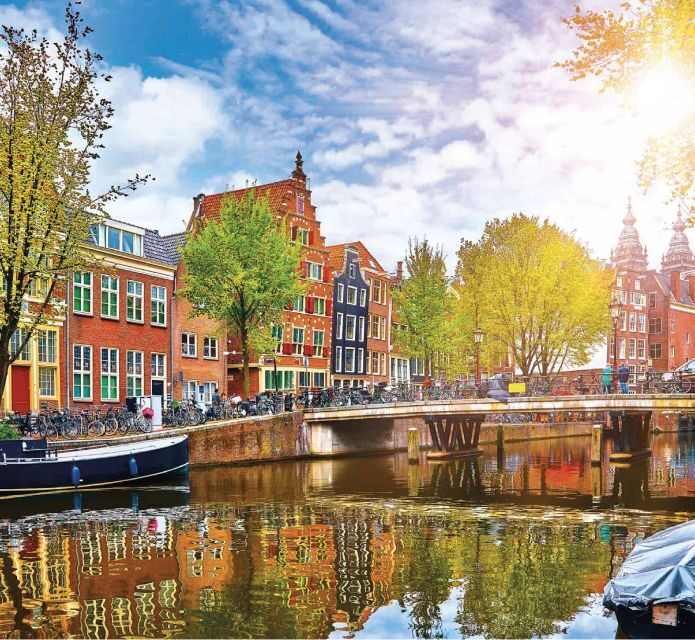
Next, the tour often reaches Rembrandt Square and the area around the Rembrandt House. I like this section because it feels like a shift from broad civic landmarks to a neighborhood scale. It’s still central, but it feels more human—more like you’re in the city rather than viewing it from a distance.
Rembrandt Square is a key stop for orientation, especially if you plan to spend your later days exploring independent museums and galleries. It gives you a landmark reference for where this whole art-and-history corridor sits relative to the canal belt.
Around the Rembrandt House area, the vibe changes again. It’s not only about the building itself; it’s about the surrounding streets and canal-side patterns that make the area feel preserved. From the pedicab, you can notice how narrow the routes are and how the canals shape the neighborhood. That’s one of the tour’s quiet superpowers: you learn without feeling like you’re on a lecture.
The photos here tend to come naturally because the streets and façades offer variety from one angle to the next. And because the tour includes built-in stops, you’re not forced into a rushed drive-by.
The potential downside is time. In a 1-hour version, you may have less freedom to linger at each point. If Rembrandt is your top priority, choose closer to the 2-hour end and mention what you want to focus on.
You can also read our reviews of more city tours in Amsterdam





The Old Jewish Quarter and canal belt storylines: Herengracht, Keizergracht, Prinsengracht
This is where the tour starts turning into something more than just sightseeing. The itinerary typically includes the Old Jewish quarter, then continues into the canal belt on Herengracht, Keizergracht, and Prinsengracht. If Amsterdam is hard to “map” in your head, this part helps.
Here’s why a guide is valuable: it’s easy to see canal houses and think they’re all the same. But when someone explains the canal belt’s significance and the neighborhood logic, the shapes start to make sense. From a seat, you also get a steadier view down the canal line, instead of having your sight interrupted by constant walking decisions.
The Old Jewish quarter stop is especially meaningful because it frames Amsterdam beyond the postcard scenes. It gives your tour emotional and historical context, so later, when you’re reading signs or watching people move through the neighborhood, you have something to connect it to.
Canals are also where the pedicab format shines again. The ride gives you a smooth glide along major canal stretches, while still allowing access through streets you wouldn’t reach on foot easily. It’s less effort, but still visual.
If you care about photo composition, this section is your friend. Canal reflections, angles through bridges, and long lines of façades are easier to capture when you’re stopped at the right moment rather than trying to juggle walking and framing.
One note for expectation-setting: you won’t get museum-level depth in this time window. But you will get enough context to make independent exploring later feel smarter.
IJ Bay, Chinatown, and the Museum Quarter: seeing more than the postcard core

Amsterdam isn’t only the center. This tour can reach outward to areas like the IJ bay zone and Chinatown, and it may also swing toward the Museum quarter. That variety matters because it helps you notice how different parts of the city feel.
The IJ bay area can shift the mood fast. Instead of tight canal streets, you start seeing more openness and a different sense of distance. It’s a helpful mental reset, especially if your day started with crowded squares.
Chinatown gives you a change of scene too. It’s one of those neighborhoods you might pass by later without fully understanding what you’re stepping into. Seeing it from a pedicab helps you grasp that Amsterdam’s identity isn’t one style; it’s multiple layers meeting.
The Museum quarter stop rounds out the big-picture view. Even if you don’t visit a museum that day, you’ll understand where that cluster sits and how it connects to the rest of the city. That makes planning your next day easier.
If you’re the kind of traveler who likes flexibility, this tour can be a good fit. Some guides are described as helpful and flexible, working with what you want to see and adjusting the ride to your pace. So if your top list includes one specific museum or neighborhood idea, it’s worth bringing it up during the tour.
Jordaan and Newmarket: where the city feels lived-in
Toward the end of the itinerary, the ride often reaches the Jordaan area and Newmarket. This is a strong pairing because both are known for feeling more local and street-focused than the major headline landmarks.
Jordaan can be hard to describe until you see it from street level. It has a neighborhood feel even when you’re in the middle of the city’s tourist orbit. A pedicab helps because you can sample the feel without walking between every turn. You can pause, look, and soak up the street rhythm.
Newmarket adds another texture. It’s the kind of area where you can feel Amsterdam’s daily energy—shopfronts, people moving, and the city doing its normal thing. It’s a nice contrast after the art-focused stops earlier.
This is also where the “photo-stop rhythm” can work well. If you want pictures that look like Amsterdam lived there, not just photographed, Jordaan and Newmarket can deliver.
If the tour is shortened to 1 hour, you’ll need to accept that some of these neighborhood moments become quick looks rather than lingering stops. If you’re trying to choose between time and variety, I lean toward the longer duration so you don’t feel like you swallowed the city whole and rushed the finish.
Comfort, safety, and practical limits you should plan around
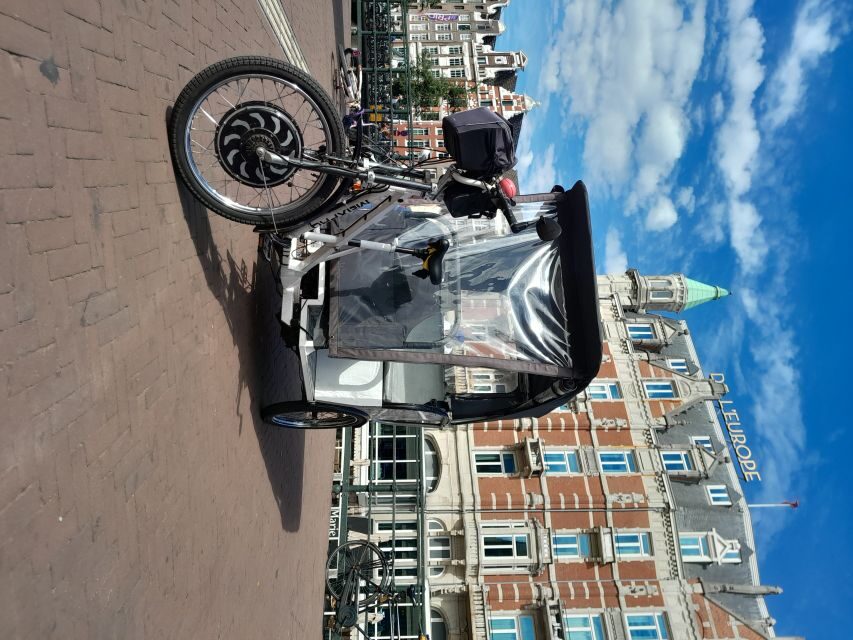
A pedicab is a bike-powered carriage with a seat, so your comfort depends on weather, your body needs, and how smooth the route is. Many guides are praised for driving carefully and for feeling safe and comfortable during the ride. It’s also why this tour often works for people who want a break from walking.
Still, there are limits. This activity is not suitable for wheelchair users, and there’s a maximum weight limit of 243 lbs / 110 kg. If either applies, you’ll want a different plan.
Weather is the other big consideration. The tour might not be practicable during bad weather conditions, so don’t build your Amsterdam day schedule around only this activity. I recommend picking a backup option (a museum, a canal cruise, or a café plan) so rain or wind doesn’t derail everything.
If you’re hard of hearing, plan smart. One piece of advice you should take seriously is to check with the tour company ahead of time about whether there’s a speaker or ear piece option. A tour that depends on spoken storytelling can still work for you, but you’ll want the right audio setup.
Also, don’t underestimate the value of a calm guide. Several guides are described as punctual, friendly, and entertaining, with good navigation through bike lanes and traffic. That matters because Amsterdam cycling culture is real; you want a driver who respects it and moves smoothly.
Finally, bring your priorities. If you care most about canals, say so. If you want more time for photos, ask for it. Guides are often willing to stop whenever you want pictures.
How to get the most out of the tour: questions to ask your guide
This tour is at its best when you treat it like a guided orientation, not a passive ride. Your guide’s job is to connect buildings to stories, and you can steer that connection toward what you care about.
A few good questions:
- What story explains why this area feels the way it does today
- Where should I walk next after this stop, if I only have half a day
- Can we spend extra time at the canal stretch or the neighborhood that matters most to me
Because this is a private group, you can ask for adjustments more easily than on a bus tour. Some guides are reported as helpful and flexible about seeing sites you want, and several guides are also described as ending the tour at a requested location or making pickup/drop-off arrangements within central Amsterdam. If you want that kind of control, mention it during reservation.
For the photo side of things, be direct. Ask your guide to stop for photos when a bridge view opens up or when a façade looks right. Many guides are also willing to take pictures for you against a canal or landmark background, which is a small thing that makes the whole trip feel easier.
Finally, time it with your energy. If it’s your arrival day, a late afternoon or early evening tour can give you orientation without tiring you out. If you plan to visit museums later, consider doing the pedicab first so you know where everything is before you start crossing the city on your own.
Should you book this private Amsterdam pedicab tour?
I’d book it if your priorities match the way this tour runs. Choose it if you want a high-sightings-per-hour intro, you’d rather sit than walk all day, and you like stories that help you understand what you’re looking at. It’s also a strong pick for mixed mobility groups—especially if someone in your party has trouble with long distances.
I’d hesitate if you’re counting on it as a weather-proof plan, because the tour may not be practicable in bad conditions. And I wouldn’t book it if you need wheelchair access, since it isn’t suitable for wheelchair users.
If you do book, make it work: pick the longer duration if Rembrandt, the canals, and neighborhood feel matter to you, ask about audio if you’re hard of hearing, and confirm your pickup details if you’re relying on hotel pickup within the Nassaukade–Stadhouderskade zone. With that in place, you’re set up for an efficient, personal Amsterdam day—one where the city clicks fast.
FAQ
How long is the pedicab city tour?
The tour duration is listed as 1 to 2 hours. You can check availability to see the starting times.
Is this a private tour?
Yes. It’s described as a private group.
How many people is the tour priced for?
The price is given as $118 per group up to 2 people.
What languages are available for the live guide?
The live tour guide is available in Italian, English, Spanish, and German.
Is hotel pickup included, and where does it work?
Hotel pickup is offered for hotels within the city center limit (Nassaukade–Stadhouderskade). Pickup is optional, and you may be asked to confirm your hotel location during reservation.
What areas of Amsterdam does the tour cover?
The itinerary includes the historical center, Newmarket, Chinatown, IJ bay, Damrak and Dam Square, Munttoren, Flower Market, Rembrandt Square, Rembrandt House, the Old Jewish quarter, Herengracht, Keizergracht, Prinsengracht, the Museum quarter, and Jordaan.
Is the tour wheelchair accessible?
No. It is not suitable for wheelchair users.
Is there a weight limit?
Yes. It is not suitable for people over 243 lbs (110 kg).
What if the weather is bad?
The tour might not be practicable during bad weather conditions.
Can I cancel for a refund?
Yes. Free cancellation is offered up to 24 hours in advance for a full refund.
If I am hard of hearing, is there audio support?
One practical suggestion is to check with the tour company before booking to see if a speaker or ear piece is available.