REVIEW · AMSTERDAM
Amsterdam: Anne Frank Walking Tour (French)
Book on GetYourGuide →Operated by Walking In Amsterdam · Bookable on GetYourGuide
Amsterdam’s story gets uncomfortably personal. This French walking tour turns the city into a timeline, walking you from central landmarks tied to the Nazi occupation to the end point at the Anne Frank House area. I love how it connects Jewish Amsterdam from the 16th century to the Frank family’s fate, and I also like the focus on hiding and Resistance rather than stopping at facts. One catch: the tour ends at the Anne Frank House Museum, but it does not include your entry ticket.
You get a guided route that makes you look at streets, squares, and canal-area neighborhoods with different eyes. The session is only two hours, so it moves at a steady pace without feeling like a history lecture that lasts all day.
The material is heavy. Before World War II, about 80,000 Jewish people lived in Amsterdam; after the war, only about 12,000 remained alive. The Netherlands also saw the highest percentage loss of Jewish lives among Western European countries, which is part of why this walk can feel emotionally intense.
In This Review
- Key takeaways before you go
- Finding the Guide at Rokin 17 (and avoiding the classic Amsterdam confusion)
- Dam Square: the heart of the city, and the shadow of occupation
- Royal Palace and Nieuwe Zijde: how power and public space tell a story
- A practical tip for this stretch
- Grachtengordel-West canals: Jewish life and community geography
- Homomonument pause: memory and resistance in one city
- Ending near the Anne Frank House: what you’ll learn, and what you won’t get
- Price and value: is $28 for two hours worth it?
- Who this tour suits best
- Should you book this Anne Frank walking tour?
- FAQ
- How long is the Anne Frank walking tour in French?
- Where do I meet the guide?
- Is entry to the Anne Frank House Museum included?
- What language is the guide?
- Is the tour wheelchair accessible?
- Is there free cancellation?
Key takeaways before you go
- Dam Square start: you get the big-picture setting early, before the stories turn personal.
- Nazi occupation focus: the guide frames how occupation changed daily life in Amsterdam.
- Frank family timeline: you hear how the story begins with their move to Amsterdam and follows through the tragedy.
- Hidden life + Resistance: the tour keeps returning to survival, secrecy, and how people helped.
- Ends at the Anne Frank House area: you finish right where your questions will be loudest.
Finding the Guide at Rokin 17 (and avoiding the classic Amsterdam confusion)
Meet your guide at Rokin 17, in front of the cookie shop Van Stapele. The guide waits next to the Manders Rokin Fountain Statue, holding a black umbrella with the Walking In Amsterdam logo. Arrive about 15 minutes early so you can get your bearings, especially if you’re juggling cold weather, camera gear, or just trying not to get swept into a tram crowd.
This meeting point is practical. You’ll be near major central streets, which means it’s easy to pair the tour with other sightseeing before or after. It’s also a good location to reset with a quick stop for water and the bathroom before you start—some of the route is outdoors and weather can shift fast.
If you’re going in winter, plan for cold. One of the best things about this tour format is that the experience is built around short stops and explanations, so you’re not stuck standing in one place for ages while waiting for the next story beat.
You can also read our reviews of more walking tours in Amsterdam



Dam Square: the heart of the city, and the shadow of occupation

The walk kicks off at Dam Square, with a guided start that sets context quickly. This is where you want to understand the stakes, because the rest of the tour depends on your sense of what changed when Nazi Germany occupied the Netherlands.
Dam Square also helps you orient to Amsterdam. You’ll see central architecture and the sense of scale that makes the city feel like a stage—then the guide ties that visible grandeur to the reality of control, fear, and persecution. The point isn’t to scare you for the sake of drama. It’s to show how occupation didn’t happen in some far-off corner—it touched the city’s core.
Expect your guide to connect that context to Amsterdam’s Jewish community history, including how that community formed and evolved over centuries. The guide’s focus is very much on consequences: what policies and actions did to real people, and how long survival required networks of ordinary citizens.
Royal Palace and Nieuwe Zijde: how power and public space tell a story
From Dam Square, you’ll move toward the Royal Palace area and then along Nieuwe Zijde. These stops matter because they’re public spaces—places where you can feel how governments, institutions, and visibility shape everyday life.
Your guide uses these landmarks to help you connect the Nazi occupation to what people experienced on the ground. Even if you’ve read about the Holocaust before, this kind of street-level framing often changes how you picture it. Instead of only thinking about camps and dates, you start thinking about days: who had access, who didn’t, and how quickly normal routes and routines could become dangerous.
Nieuwe Zijde, in particular, is useful because it’s part of a wider flow of streets in the center. You’re not just staring at one museum-like wall. You’re walking through the kind of urban fabric that made hiding both harder and more dependent on local help.
A practical tip for this stretch
Wear shoes you trust. This portion is still central Amsterdam, and you’ll want good traction on sidewalks that can be slick when it’s cold or damp.
Grachtengordel-West canals: Jewish life and community geography
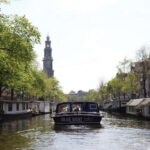
Next comes Grachtengordel-West, and this is where the tour’s “Amsterdam history” side really starts to click. The canal district setting helps you understand something that can be easy to forget: Amsterdam’s Jewish community wasn’t a single location. It was woven into neighborhoods, streets, and daily routines.
The guide’s storytelling connects the long arc—from the community’s arrival and presence in the city starting in the 16th century to the pressure that grew during the occupation. You’ll hear how the Frank family fits into that story, starting with their arrival and then moving into the grim years that followed.
This stop works well because canals slow you down visually. You can look at the layout and imagine how information moved, where neighbors lived close enough to notice changes, and why secrecy often depended on trust at street level. The tour doesn’t ask you to romanticize the past; it asks you to understand the social geography of survival.





Homomonument pause: memory and resistance in one city
You’ll also make a stop at the Homomonument. This point is a moment to slow, absorb, and reflect on how Amsterdam remembers human rights and persecution together.
The tour’s theme includes the Resistance of Amsterdam’s citizens, and this location gives your guide a place to widen the lens. You can expect the narrative to connect oppression to civic courage—how different communities and individuals faced danger, and how resistance took shape through help, solidarity, and refusal.
Even if your main reason for booking is Anne Frank, this stop adds perspective. It helps you see that survival in wartime wasn’t only about one family’s hiding story. It was about the broader reality of people being targeted and people choosing to act anyway.
Ending near the Anne Frank House: what you’ll learn, and what you won’t get
The walk ends at the Anne Frank House Museum area. The tour includes the guided portion at the key locations, but it explicitly does not provide entry into the house. That’s important for planning. If you want to go inside afterward, you’ll need to buy a ticket separately.
The guide keeps the emphasis on the hidden life of Jews during World War II and the Frank family’s sad fate. You’ll leave with a clearer sense of what hiding meant in practice: fear, isolation, the dependence on others, and the constant risk of being discovered.
You’ll also finish at Casa di Anna Frank. That final stretch gives you a transition from story to place, so you can stand in the final area and let the narrative “stick” before you move on to other plans.
If the museum’s interior is a must-do for you, I suggest scheduling it either immediately after the tour (if you can handle the emotional intensity back-to-back) or later the same day when you’ve had time for a short reset. Either way, don’t assume the tour ticket will cover entry.
Price and value: is $28 for two hours worth it?
At $28 per person for about two hours, the value comes from focus and pacing, not from trying to pack in too much. You’re paying for a guided story built around Nazi occupation and Jewish history, with a special emphasis on Anne Frank.
What makes the price feel reasonable is the structure: a walking tour that routes you from major central landmarks to the Anne Frank House area, with an organized narrative thread connecting centuries of Jewish presence in Amsterdam to the wartime period. If you’re the type of traveler who likes to understand what you’re seeing while you walk, this format fits well.
If you prefer to read at your own speed in a museum and aren’t interested in street-level context, you might find you get less value. But for most people, the payoff is in the way the guide turns the city itself into an explanation.
Who this tour suits best
This tour is a strong match if you want more than a quick stop at the Anne Frank House. You’ll get context about Jewish life in Amsterdam over time, plus the occupation-era pressure that led to hiding and the need for Resistance networks.
It also fits travelers who want clear structure in a limited time window. Two hours is enough to set the story in motion, especially if you’re planning to see other sites afterward. And because it’s wheelchair accessible, it’s designed to be workable for visitors who need that support.
If you’re traveling with teens or you’re returning to Anne Frank after years away from the topic, this kind of walking chronology can help. You can see how the story builds, and you finish near where the modern memorial and museum sit.
Should you book this Anne Frank walking tour?
Yes, if your goal is to understand Amsterdam as part of the Anne Frank story. Booking is especially smart when you want the guide to connect Nazi occupation, Jewish history in the city, and the Frank family timeline in one coherent route.
Skip it only if you’re mainly interested in the museum interior and you don’t want an outdoor walking component. Also, go in knowing you won’t get entry with the tour itself, so decide in advance whether you’ll add the house visit later.
If you like tours with a calm, well-organized narrative and you want the walk to feel respectful and story-driven, this one is a solid choice.
FAQ
How long is the Anne Frank walking tour in French?
The tour lasts 2 hours.
Where do I meet the guide?
Meet at Rokin 17, in front of the cookie shop Van Stapele, next to the Manders Rokin Fountain Statue. The guide will be holding a black umbrella with the company logo.
Is entry to the Anne Frank House Museum included?
No. The tour ends at the Anne Frank House Museum area, but it does not provide entry to the house.
What language is the guide?
The tour is guided in French.
Is the tour wheelchair accessible?
Yes, the tour is wheelchair accessible.
Is there free cancellation?
Yes. You can cancel up to 24 hours in advance for a full refund.