REVIEW · AMSTERDAM
Amsterdam: Small-group Guided Walking Tour (French/English)
Book on GetYourGuide →Operated by Voyage & Souvenir Amsterdam Tours · Bookable on GetYourGuide
Amsterdam has stories on every corner. On this small-group walking tour with guide Chris from Voyage & Souvenir, I love the tight, efficient route through Dam Square and the Jordaan, and I also love that you get lots of direct answers plus practical dining and sightseeing links. The only drawback to plan for: many stops are quick photo breaks, so if you want long museum time, book that separately.
You’ll choose a French or English guide and cover the city center at a relaxed pace in about 2–3 hours, starting near Amsterdam Centraal and ending in the areas that make Amsterdam feel like Amsterdam. Expect Golden Age canal context, Dutch daily-life stories, and moments tied to Anne Frank, all delivered in a way that helps you understand what you’re seeing instead of just collecting photos.
Bring comfy shoes and an umbrella. Amsterdam weather likes to change its mind mid-walk.
In This Review
- Key highlights I’d plan around
- Finding the tour start behind Amsterdam Centraal (and not getting lost)
- What 2–3 hours feels like on foot (and why small-group matters)
- Stop-by-stop: from the IJ to Amsterdam Centraal’s big-city energy
- Pancakes Amsterdam at the IJ (your starting anchor)
- Amsterdam Centraal Station (quick photo, big orientation)
- Dancing Houses (a modern curiosity with a story)
- Basilica of Saint Nicholas (classic architecture break)
- Zeedijk Street (a corridor into everyday Amsterdam)
- Major Alida Bosshardt Statue (a reminder that history isn’t only monuments)
- Ons’ Lieve Heer op Solder and Oude Kerk: seeing Amsterdam’s layers
- Our Lord in the Attic Museum (Ons’ Lieve Heer op Solder)
- Oude Kerk (the oldest vibe in the old center)
- Burgwallen Oude Zijde (side streets with main-character energy)
- Amsterdam Chinatown (change of scene, still central)
- Trade, power, and the UNESCO canal belt story you’ll actually remember
- De Waag Restaurant area (food and history meet at the street level)
- VOC / Dutch East India Company (why Amsterdam got wealthy)
- Narrowest House in Europe (a curiosity that sticks in your brain)
- Dam Square (the postcard heart, explained)
- Royal Palace (from square to power)
- Shopping streets and bridges: the walk’s middle section that keeps it fun
- Magna Plaza (modern shopping stop, used wisely)
- Torensluis Bridge (canals that make the city work)
- Grachtengordel (the UNESCO canal belt context)
- Anne Frank House and Westerkerk: history with street-level focus
- Anne Frank House (story context without the long detour)
- Westerkerk (a calm pause with big city meaning)
- Jordaan: where the city feels personal and you get your next-step ideas
- The Jordaan neighborhood (your finale zone)
- Dining, drinks, and shopping tips that go beyond generic recommendations
- What to bring (and how to stay comfortable in real Amsterdam weather)
- Price and value: why $33 can be a smart first move
- Should you book this Amsterdam walking tour?
- FAQ
- What languages is the tour offered in?
- How long is the walking tour?
- Where do I meet the guide?
- Is food or drinks included?
- Is the tour wheelchair accessible?
- What should I bring?
- Can my itinerary change?
Key highlights I’d plan around
- A small-group pace that keeps questions flowing (not a lecture hall).
- Dam Square + Royal Palace plus the UNESCO canal belt area, all in one walking loop.
- Jordaan neighborhood time so you see the Amsterdam beyond the obvious postcards.
- Anne Frank context on the street, not only as a ticketed museum stop.
- VOC and trading-hub stories that explain why Amsterdam’s buildings look the way they do.
- Personalized food and sightseeing recommendations you can use right after the tour.
Finding the tour start behind Amsterdam Centraal (and not getting lost)
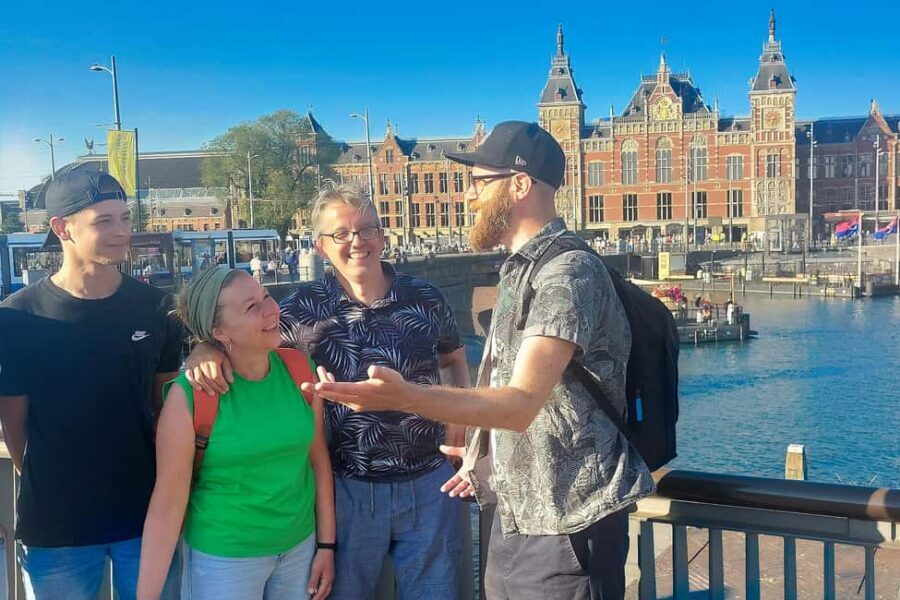
The meeting point is behind Central Station, where the white and blue ferries leave for Amsterdam North. Look for the spot next to Pancakes Amsterdam at the IJ, right by the water, near the large D ferry halte sign by the bike lane. The guide wears glasses, a beard, and a baseball hat, so you should be able to spot him quickly.
This is a smart start if you want orientation. You begin near the city’s main transport hub, then you work your way into the historical core on foot. That means you’re not guessing which direction matters first, and you’re not burning half a day just figuring out where everything is.
One practical tip: arrive a few minutes early. The area around the station has a lot going on, and you’ll want a calm minute to get your bearings and check the weather.
You can also read our reviews of more walking tours in Amsterdam


What 2–3 hours feels like on foot (and why small-group matters)
This is a walking tour through the Historical City Center—built for value of time, not for marathon-distance sightseeing. You’ll stop at a lot of key sights, with guided commentary plus short photo moments (often around five minutes per stop). That structure is great for first-timers, because you get meaning at each location without losing your whole afternoon.
Small-group (and private options) also changes the vibe. Instead of waiting in the back for your turn, you’re more likely to get your questions answered—especially around stories, Dutch daily life, and what to do next.
The main trade-off is length at each location. If you’re the type who wants to spend 45 minutes inside a building, this tour won’t replace that. Think of it as your city map with explanations.
Stop-by-stop: from the IJ to Amsterdam Centraal’s big-city energy
Pancakes Amsterdam at the IJ (your starting anchor)
The tour kicks off at Pancakes Amsterdam at the IJ, right by the water. Even if you don’t eat there, this spot makes sense: you’re starting where Amsterdam feels open and modern, before moving into the tight, historic center.
This is also where you’ll hear the baseline framing of the day—how the guide plans to connect today’s Amsterdam to its origins, from a small fishing village to a trading hub.
Amsterdam Centraal Station (quick photo, big orientation)
You’ll make a short stop at Amsterdam Centraal Station for a photo moment. The value here isn’t the photo itself; it’s the way it sets the layout. From Centraal, you can mentally place the canals and squares you’ll hit later.
If you’re arriving by train, this is the fastest way to turn station anxiety into confidence.
You can also read our reviews of more guided tours in Amsterdam




Dancing Houses (a modern curiosity with a story)
Next up are the Dancing Houses. These are a fun contrast: the city’s playful side right next to its historic core. The guide uses stops like this to remind you that Amsterdam isn’t frozen in the Golden Age—it keeps changing.
Basilica of Saint Nicholas (classic architecture break)
The Basilica of Saint Nicholas is another quick exterior pause. Stops like this help you notice architectural patterns: scale, brickwork feel, and how religious and civic buildings shape the streets around them.
You don’t need to be an architecture expert to benefit. You just need a guide who points out what you’d otherwise walk past.
Zeedijk Street (a corridor into everyday Amsterdam)
Then you’ll pass through Zeedijk Street. This is the kind of street stop that works well for a walking tour: narrow, lively, and a good place to absorb local street life while still staying on route.
Major Alida Bosshardt Statue (a reminder that history isn’t only monuments)
You’ll also stop at the Major Alida Bosshardt Statue. It’s short, but it matters because the tour doesn’t only focus on palaces and squares—it pulls in people and details that make Amsterdam feel lived-in.
Ons’ Lieve Heer op Solder and Oude Kerk: seeing Amsterdam’s layers
Our Lord in the Attic Museum (Ons’ Lieve Heer op Solder)
You’ll hit Ons’ Lieve Heer op Solder for a photo stop. The name alone hints at what makes this spot interesting: it’s an example of how Amsterdam’s past sometimes hides in places you wouldn’t expect.
This kind of stop works especially well on a walking tour because you’re learning the city’s “how did they do that?” moments without needing a separate timed entry ticket.
Oude Kerk (the oldest vibe in the old center)
Oude Kerk is next, another quick stop. Old churches like this help you understand why Amsterdam’s center is still structured around history. You’ll get context from the guide that connects what you’re seeing to how the city evolved.
Burgwallen Oude Zijde (side streets with main-character energy)
Burgwallen Oude Zijde is a photo stop in a corridor of older streets. You’ll start to notice how courtyards and quieter passages show up inside the city center. That fits with what the tour promises: hidden courtyards and secret-garden-type moments along the way.
Amsterdam Chinatown (change of scene, still central)
Then you’ll pass through Amsterdam Chinatown. This stop is useful even if you don’t plan to shop there that day. It shows Amsterdam’s multicultural vibe and how neighborhoods layer over time.
It’s also a reminder that the stories you hear aren’t only about centuries ago—they connect to everyday life now.
Trade, power, and the UNESCO canal belt story you’ll actually remember
De Waag Restaurant area (food and history meet at the street level)
You’ll stop at De Waag Restaurant. This is where the walking tour starts feeling practical: the guide ties landmarks to what they meant for the city and how you can keep exploring after.
VOC / Dutch East India Company (why Amsterdam got wealthy)
You’ll visit the VOC stop—VOC is the Dutch East India Company—and the guide uses it to tell stories about Amsterdam’s rise as a bustling European trading hub.
This part matters because it makes the canals and the Golden Age feel less like decoration and more like evidence. You’re not just seeing canal houses; you’re learning why the city could afford them.
Narrowest House in Europe (a curiosity that sticks in your brain)
The Narrowest House in Europe is a quick photo stop, but it’s exactly the kind of detail that turns a standard route into something you’ll remember later. These are the city’s little jokes and contradictions—small spaces in a city known for waterways and grandeur.
Dam Square (the postcard heart, explained)
Then: Dam Square. You’ll pause for a photo stop, and the guide frames what makes it central—politically, historically, and socially.
This is a good point to reset your mental map. If you were worried you’d miss context, Dam Square is where everything starts clicking.
Royal Palace (from square to power)
The Royal Palace stop follows. Even with a short pause, you’ll get the sense of how Amsterdam’s civic and royal identity fits into the square-and-street layout.
Shopping streets and bridges: the walk’s middle section that keeps it fun
Magna Plaza (modern shopping stop, used wisely)
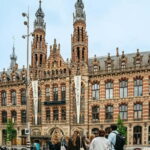
You’ll stop at Magna Plaza. This is one of those moments that keeps the tour balanced. It reminds you that you can switch gears from historic alleys to modern shopping without losing your orientation.
If you’re planning your shopping list after the tour, this stop helps you place what’s nearby.
Torensluis Bridge (canals that make the city work)
Next is Torensluis Bridge. Bridges are more than photos. They’re the city’s logic in a single glance: connections, viewpoints, and how the canal system shapes movement.
Grachtengordel (the UNESCO canal belt context)
You’ll reach the Grachtengordel area—Amsterdam’s 400-year-old canal belt, a UNESCO World Heritage site. The guide uses this to connect the Golden Age canal houses to the city’s evolution and trading wealth.
This is where your earlier “why” questions get answered. After this stop, you’ll look at the canals with meaning, not just beauty.
Anne Frank House and Westerkerk: history with street-level focus
Anne Frank House (story context without the long detour)
Anne Frank House is included as a photo stop. The tour also promises you’ll hear the story of Anne Frank as part of the walk, and the guide weaves it into the street-level context around the area.
Because this is a short stop, I suggest using it as a directional moment. If you want the full experience inside, that takes its own planning and time.
Westerkerk (a calm pause with big city meaning)
Then you’ll stop at Westerkerk. Even for a quick look, churches like this help you read the skyline and understand how Amsterdam’s historic center keeps presenting landmarks within walking distance.
Jordaan: where the city feels personal and you get your next-step ideas
The Jordaan neighborhood (your finale zone)
The tour ends at The Jordaan area (photo stop). This is often where Amsterdam feels most like a neighborhood, not a museum corridor. You’ll get time to absorb the street feel and see how the city’s character shifts from major squares to residential lanes.
It’s also an ideal ending because the guide can pivot from history to what you should do next: dining, shopping, and more sightseeing.
In practical terms, this tour sets you up to continue exploring with confidence. When someone can look at your day and suggest what fits, you don’t waste time guessing.
Dining, drinks, and shopping tips that go beyond generic recommendations
This tour includes recommendations for dining, shopping, food, drinks, boats, and sightseeing—and you also get helpful links to use after the walk.
One detail I really appreciate: Chris doesn’t just toss out names. He answers questions during the tour, and he’ll tailor suggestions based on where you’re heading and what you like. That shows up in the way people describe him as friendly, engaging, and willing to help. There’s also a clear sense of no pressure. You leave with ideas, not a sales pitch.
If you want a quick Dutch taste test, you’ll likely hear about bitterballen during the tour. It’s the kind of food recommendation that’s easy to act on immediately.
Also, the tour encourages you to think in sequences: what to do today after the walk, where to browse, and how to link sights so you don’t backtrack through the center.
What to bring (and how to stay comfortable in real Amsterdam weather)
You’ll be walking, so pack for feet and weather:
- Comfortable shoes (you’ll thank yourself later)
- An umbrella (Amsterdam can be unpredictable)
- Water
- Weather-appropriate clothing
Timing is flexible in the sense that the route can adjust for your interests or construction/workaround issues. That’s helpful because Amsterdam is always under some kind of change.
Price and value: why $33 can be a smart first move
At $33 per person for a 2–3 hour guided walk, you’re paying for three things that usually cost more time than money:
- Efficient orientation across the city center (you see major landmarks without getting stuck in indecision).
- Context you can carry (Golden Age canal houses, trading-hub stories, Dutch daily life, and the Anne Frank narrative stitched into locations).
- Actionable next steps through dining and sightseeing recommendations plus links.
Is it expensive? Not for what you cover. Is it cheap? It’s fair. The best part is that you’re not just “watching Amsterdam.” You’re learning how to read it as you walk.
If you plan to do a lot in a short stay, this kind of guide-led structure can actually save you hours later.
Should you book this Amsterdam walking tour?
Book it if:
- You want to see Dam Square, the UNESCO canal belt area, and the Jordaan without building a DIY route from scratch.
- You like your sightseeing with stories and clear Q&A, not long museum hours.
- You’d benefit from a guide like Chris who offers practical dining and sightseeing links right after.
Skip it (or add extra planning) if:
- You expect to go inside major sites for long periods. This tour is built around short photo stops.
- You already have a very firm Amsterdam plan and only need specific tickets. You might get more value spending that time on a focused museum visit or a canal cruise you choose.
My take: this is a strong first-day, first-weekend move. It gives you the city’s “why” fast, then helps you move through the rest of Amsterdam with better instincts.
FAQ
What languages is the tour offered in?
The guide speaks English or French, depending on the option you choose.
How long is the walking tour?
It lasts about 2–3 hours.
Where do I meet the guide?
Meet behind Amsterdam Centraal Station by the white and blue ferries leaving for Amsterdam North, next to Pancakes Amsterdam at the IJ near the water and a big D ferry halte sign by the bike lane.
Is food or drinks included?
No. Drinks and food are not included.
Is the tour wheelchair accessible?
Yes, it’s listed as wheelchair accessible.
What should I bring?
Wear comfortable shoes, bring an umbrella, pack water, and dress for the weather.
Can my itinerary change?
Yes. The route might be adjusted to accommodate your interests, construction work, or other unforeseen circumstances.