REVIEW · AMSTERDAM
Amsterdam: Queer City Walking Tour With Local Guide
Book on GetYourGuide →Operated by LGBTOUR_Amsterdam · Bookable on GetYourGuide
Amsterdam gets personal on this queer walk. You’ll spend 2 hours with Sanne learning LGBTQI+ Amsterdam stories that feel both historical and intimate, starting right at Dam Square.
I love how the tour connects big city moments to real human lives, with personal stories as the thread. I also like the way you get a rainbow perspective on famous landmarks, plus the chance to share your own experiences if you want.
One thing to consider: this walk takes you through areas that can feel controversial or adult-focused, and it runs rain or shine, so bring footwear that can handle wet streets.
In This Review
- Key highlights to know before you go
- A queer route from Dam Square to Café ’t Mandje
- Meeting Sanne at Nationaal Monument, Dam Square
- Homomonument: where visibility becomes a message
- Belle and the short guided stops that keep momentum
- Condomerie: AIDS-era necessity and the shape of solutions
- Amsterdam Red Light District: context instead of spectacle
- Eagle Amsterdam, Zeedijk Street, and the street-level queer vibe
- Kokopelli: another guided stop with a community feel
- Dancing Houses photo stop: playfulness as a closing note
- Café ’t Mandje: finishing where queer nightlife keeps breathing
- Price and value: why $59 makes sense for this route
- Who should book this queer city walking tour
- What to bring for comfort (so you can focus on the stories)
- Should you book this tour?
- FAQ
- How long is the Amsterdam Queer City Walking Tour?
- Where do I meet the guide?
- What languages are offered?
- Does the tour run in bad weather?
- Is the tour wheelchair accessible?
- What should I bring?
Key highlights to know before you go
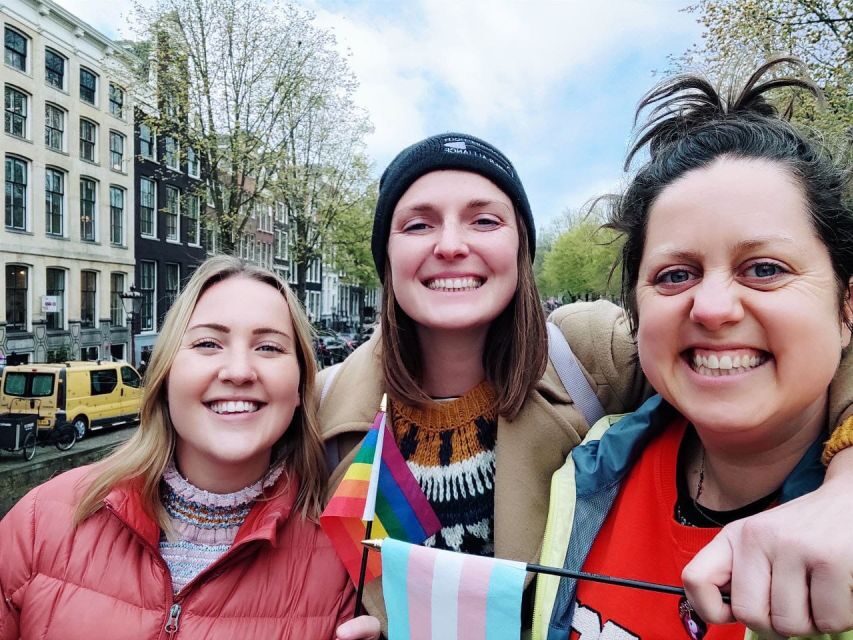
- Sanne’s story-led route: each stop ties to pride, protest, and everyday queer life
- A tight 2-hour format with multiple guided moments, not just passing-by photos
- Homomonument, Condomerie, and Café ’t Mandje: three stops with strong identity landmarks
- Pride and protest themes: you’ll see how public visibility and activism shaped Amsterdam
- Red Light District visit: you get context, not just sightseeing
- English and Dutch guide coverage, with a small-group feel
A queer route from Dam Square to Café ’t Mandje
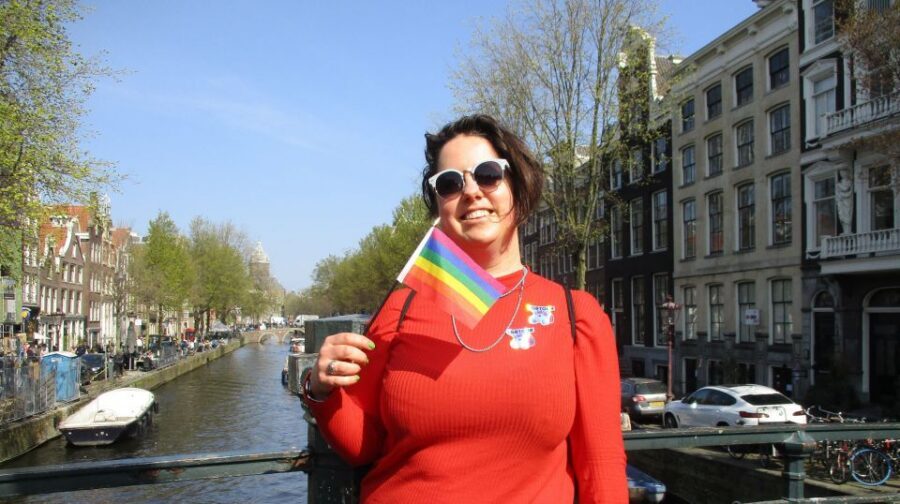
This is an Amsterdam tour built around stories, not checklists. You start where the city shows its official face—Dam Square—and then you walk into the older, more personal queer Amsterdam tucked into the streets nearby. Over about 2 hours, the guide connects places, events, and people in a way that makes you look twice at what you thought you already knew.
The biggest reason this works is the tone. It’s not only about famous dates or famous names. You’ll hear how queer life in Amsterdam was shaped by pressure, change, safety concerns, love, and community—sometimes all in the same breath. And because the guide includes personal reflections (from falling in love to being gay and single in Amsterdam), the history lands with weight.
For practical expectations: it’s a walking tour, so wear comfortable shoes. You’ll move at a steady pace, and several stops are guided with brief explanations rather than long museum-style periods. You also get a mix of guided segments and short walking transitions, so you’re never stuck in one spot too long.
You can also read our reviews of more walking tours in Amsterdam


Meeting Sanne at Nationaal Monument, Dam Square
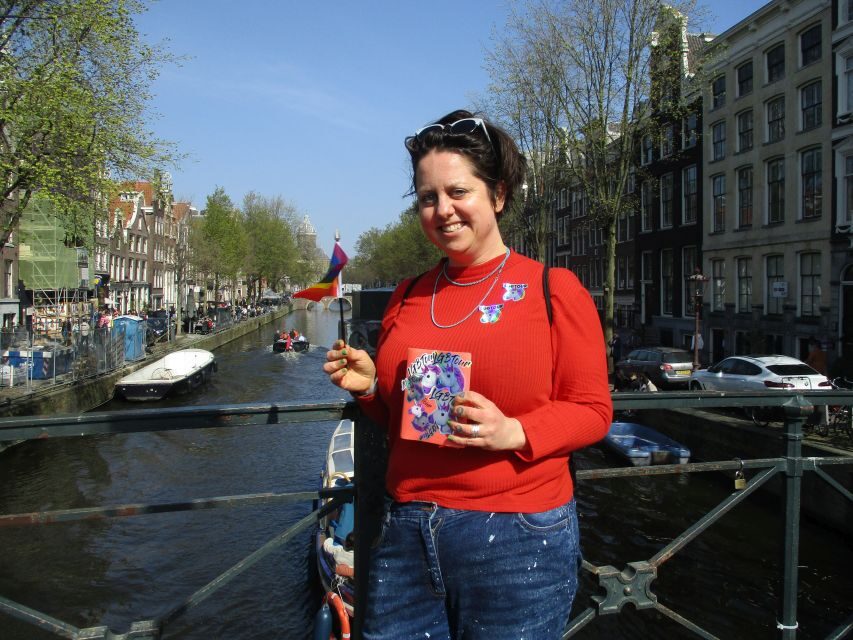
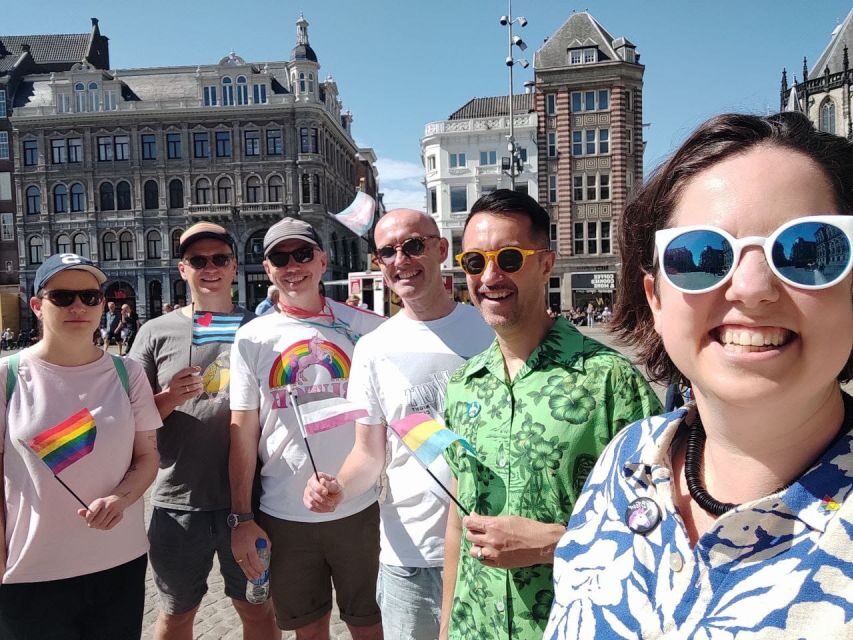
You’ll meet at the Nationaal Monument at Dam Square. The guide is easy to spot—she’ll be recognizable by a tiny rainbow flag. That matters more than you’d think on a busy square, because you can get oriented fast and start listening immediately.
This opening point is also a clue about the tour’s approach. The Nationaal Monument isn’t treated as a neutral backdrop. The guide promises controversial stories about how it came to be, which sets the stage for the theme running through the whole walk: public memory is political. What a city chooses to remember—and how—often reveals who had power and who didn’t.
If you’re the type who likes asking questions, this is a good start. The group format gives you room to react and reflect without pressure to be an expert.
Homomonument: where visibility becomes a message
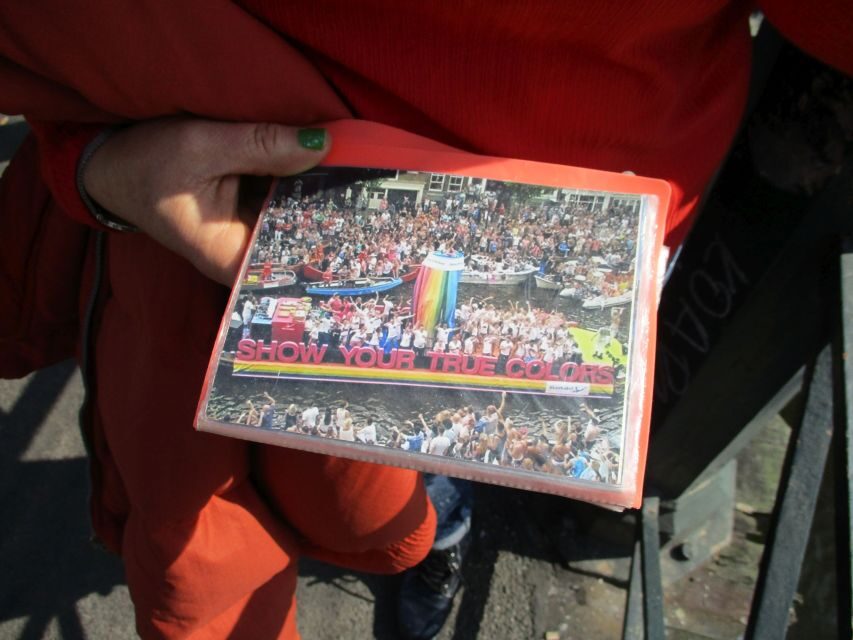
The first major guided stop is the Homomonument, with about 20 minutes here. This is where the tour’s emotional center starts forming. You’ll learn stories tied to LGBTQI+ life and how Amsterdam’s pride and protests grew into something seen in public space, not only in private.
You don’t just read a plaque and move on. You get context for why this kind of memorial matters—especially in a city that’s famous for being open today. The guide frames the Homomonument as a reminder: visibility didn’t happen automatically. It took conflict, organizing, and people insisting that they deserved recognition.
A nice practical detail: you’ll have a short guided moment before walking further into the dense queer area. That helps you anchor mentally, so the next streets feel connected rather than random.
Belle and the short guided stops that keep momentum
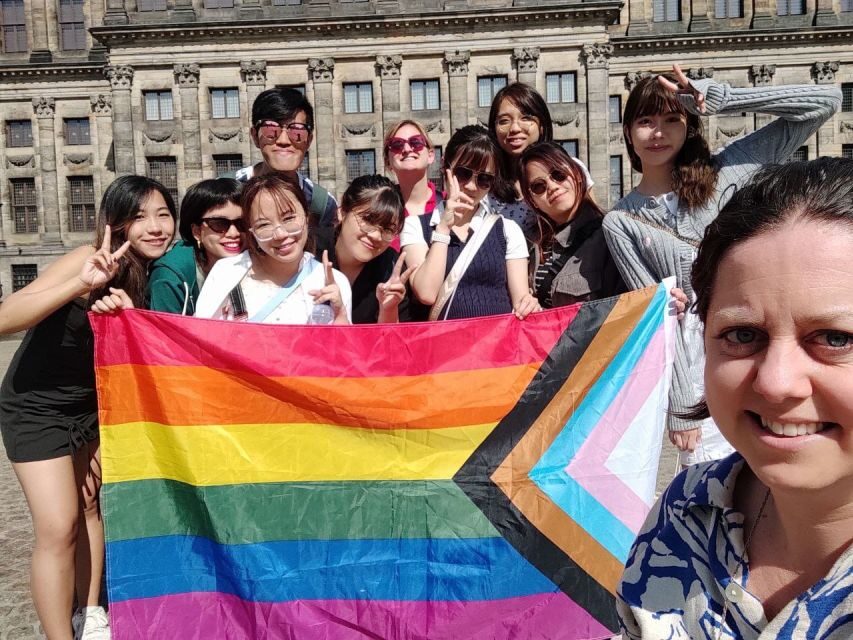
After Homomonument, you’ll make a shorter guided stop at Belle (about 10 minutes). The tour keeps each “in-between” landmark moving quickly, so you spend your time where the guide thinks attention will pay off.
Here’s what I’d watch for: how the guide ties each stop to “unexpected connections.” Belle isn’t presented as a standalone sightseeing object. Instead, it’s used to reinforce the idea that queer Amsterdam isn’t one straight line. It’s links—between people, places, and changing social rules.
If you’re worried about sitting through long speeches, don’t. These are compact, story-focused stops. You get enough time to understand why the place matters, then you’re back outside walking.
Condomerie: AIDS-era necessity and the shape of solutions
Next is the Condomerie (about 10 minutes). This stop is one of the most specifically explained moments on the itinerary. You’ll hear about the first condom shop in the world, and you’ll learn that it was born out of necessity during the AIDS crisis.
That’s a big deal because it reframes “queer history” in a practical way. It’s not only about celebrations. It’s also about survival, public health, and how commerce and activism can meet when people need help fast. When you hear the story here, it makes the later Pride and protest parts of the walk feel more grounded. Pride isn’t only a party; it’s also a response to fear, stigma, and urgent needs.
You’ll also get a strong sense of how Amsterdam’s queer spaces created real-world lifelines, not just symbolic statements. Even if you know Amsterdam is progressive, it’s still sobering to connect that progress to moments when community support had to move urgently.
You can also read our reviews of more guided tours in Amsterdam




Amsterdam Red Light District: context instead of spectacle
Then you visit the Amsterdam Red Light District for about 15 minutes. This is the part of the walk where the tour turns outward. The streets here are famous worldwide, and you might think you already know the story.
What this guide adds is framing. The stop is meant to show queer perspective in the oldest part of town and how complicated life could be—especially for people navigating sexuality, visibility, and autonomy in a city full of attention. You’re not just looking at the setting. You’re learning why this area sits inside the broader queer story.
Potential drawback: if you prefer your tours to stay purely in “museum quiet” mode, this section may feel less comfortable. That’s not the tour’s fault—it’s the area’s reality. For many people, the benefit is exactly that contrast: you see how queer life has existed in places that are openly charged.
Eagle Amsterdam, Zeedijk Street, and the street-level queer vibe
After the Red Light District visit, you’ll pass by Eagle Amsterdam (about 5 minutes) and walk along Zeedijk Street (about 15 minutes). You’ll also pass by Pride Clothing.
These aren’t long guided explanations, but they matter. They show you how queer culture in Amsterdam isn’t only housed in monuments. It lives at street level too—in shops, signage, and the everyday choreography of people moving through the neighborhood.
If you like photography, this is a good stretch. Keep your camera ready, but stay listening as you walk. The tour’s best trick is that it treats the neighborhood like a storybook you’re walking through. The guide helps you read what you see.
Kokopelli: another guided stop with a community feel
You’ll then get a guided stop at Kokopelli (about 10 minutes). While the tour keeps details focused and time-conscious, this segment contributes to the tour’s emotional balance. You’re not only learning activism and rights. You’re also learning about community spaces and how people found each other.
In a city known for tourism, it can be easy to turn everything into scenery. A stop like Kokopelli helps keep the tour human. You’re reminded that queer Amsterdam wasn’t just forced into headlines; it built places where people could show up as themselves.
Dancing Houses photo stop: playfulness as a closing note
Next is the Dancing Houses, Amsterdam photo stop (about 10 minutes). This is your lighter beat, and it works because you’ve already built context. After stories that can be heavy—protest, discrimination, crisis—seeing a quirky architectural sight feels like a release.
You won’t get a long lecture here. You’ll get time to look and take photos. What I like about ending with a photo stop like this is that it gives your brain a breather before the final venue, so you leave with a mix of feelings rather than one long emotional wave.
Café ’t Mandje: finishing where queer nightlife keeps breathing
You finish at Café ’t Mandje, described as the oldest queer bar. That ending choice is smart. The tour began with public memory at Dam Square, and it ends with a place built for social life. It’s a reminder that queer history is not only what happened—it’s also what continues.
If you’re hungry for the next step, staying nearby makes sense. The tour ends in a venue context, so the story doesn’t shut off the moment you walk away.
One small practical tip: if you’re going straight from the tour into dinner plans, treat the final stop as a flexible decision point. You don’t have to stay, but it’s there for you.
Price and value: why $59 makes sense for this route
At $59 per person for a 2-hour walk, the price can feel like a lot—until you match it to what you actually get.
You’re paying for:
- A guided route that includes multiple guided segments (not just a long walk with generic commentary)
- A thematic structure focused on queer perspective, linking protest, pride, and everyday life
- A local guide, Sanne, who brings personal angles (not only dates and facts)
- Stop selection that includes identity landmarks like Homomonument, Condomerie, and Café ’t Mandje
The value angle here isn’t luxury. It’s access to meaning. Without a guide, you could easily wander around Dam Square and the center and miss how tightly the LGBTQI+ story threads through the streets. This tour helps you see connections quickly, in a limited time window.
If you only have a short Amsterdam stay and you want something more personal than the usual canal-and-museums approach, this price usually feels fair.
Who should book this queer city walking tour
This tour is a strong fit if you:
- Want LGBTQI+ Amsterdam history told through people, not only monuments
- Like walking tours with clear stops and short guided explanations
- Prefer a small-group experience where you can listen closely
- Are open to hearing controversial stories and topics connected to activism
You might think twice if you:
- Dislike the Red Light District environment at all, even with a contextual explanation
- Need a fully relaxed pace with minimal emotion and no protest/crisis themes
- Struggle with rain or long walks, since the tour runs rain or shine
What to bring for comfort (so you can focus on the stories)
The tour is simple in what it asks of you, and smart in what it recommends. Bring comfortable shoes first. Add rain gear if the forecast looks even slightly uncertain, plus a sun hat and sunscreen for clearer weather.
This is one of those tours where comfort helps you listen better. If your feet hurt, you’ll start counting minutes. If you’re comfortable, you’ll actually take in the connections the guide is pointing out.
Should you book this tour?
If you want Amsterdam through a queer lens—one that mixes pride, protest, and personal life—this tour is a solid choice. The structure is tight (2 hours), the stop list hits major identity markers, and the guide’s personal storytelling style makes the information feel lived-in rather than academic.
If you’re uneasy about controversial stories or the Red Light District setting, you can still decide with eyes open. The tour doesn’t hide the theme; it provides context.
My practical recommendation: book it if you want meaning over checklist tourism. Skip it if you want only light, neutral sightseeing and no emotional or controversial content.
FAQ
How long is the Amsterdam Queer City Walking Tour?
The tour lasts 2 hours.
Where do I meet the guide?
You meet at the Nationaal Monument at Dam Square.
What languages are offered?
The live tour guide speaks English and Dutch.
Does the tour run in bad weather?
The tour will take place rain or shine.
Is the tour wheelchair accessible?
Yes, it is wheelchair accessible.
What should I bring?
Bring comfortable shoes, a sun hat, sunscreen, rain gear, and comfortable clothes.