REVIEW · AMSTERDAM
Amsterdam: Walking Tour of Historic Center
Book on GetYourGuide →Operated by Guydeez Tours · Bookable on GetYourGuide
Walking Amsterdam like this is the fastest way to read the city.
You get a guided route through the places locals actually talk about, from Chinatown to the landmarks around Dam Square—with photo stops and short walking legs that keep your bearings. A good guide also turns street corners into context, not just scenery.
What I like most is how the tour balances big-name stops with neighborhood flavor. You’ll walk through Nieuwmarkt, known for a market with serious age, and then you move into Chinatown’s multicultural streets where shopping and dining take center stage.
One thing to consider: you’re covering multiple districts in just two hours. If you want slow, long looks at every building (or you’re easily put off by street-level controversy), you may wish you had more time on your own after the tour.
In This Review
- Key things you’ll notice on this Amsterdam historic center walk
- Start at Nieuwebrugsteeg 13 and get your bearings
- Chinatown on foot: more than a photo stop
- St. Nicholas Church in the old center: architecture you can read
- Red Light District: see it, understand it, stay respectful
- Nieuwmarkt Square: a market with a long memory
- Dam Square: monuments that anchor the city
- Private or shared: how group style changes the experience
- Price and value: why $31 can make sense
- What to do with the tips: turn a tour into an actual plan
- Timing, pace, and comfort (so you can enjoy it)
- Should you book this Amsterdam historic center walking tour?
- FAQ
- Where is the meeting point?
- How long is the Amsterdam walking tour?
- How much does the tour cost?
- Is this tour private or shared?
- What languages are available for the live guide?
- Is the tour wheelchair accessible?
- What is included in the price?
- Can I cancel and get a full refund?
- Can I reserve without paying right away?
Key things you’ll notice on this Amsterdam historic center walk
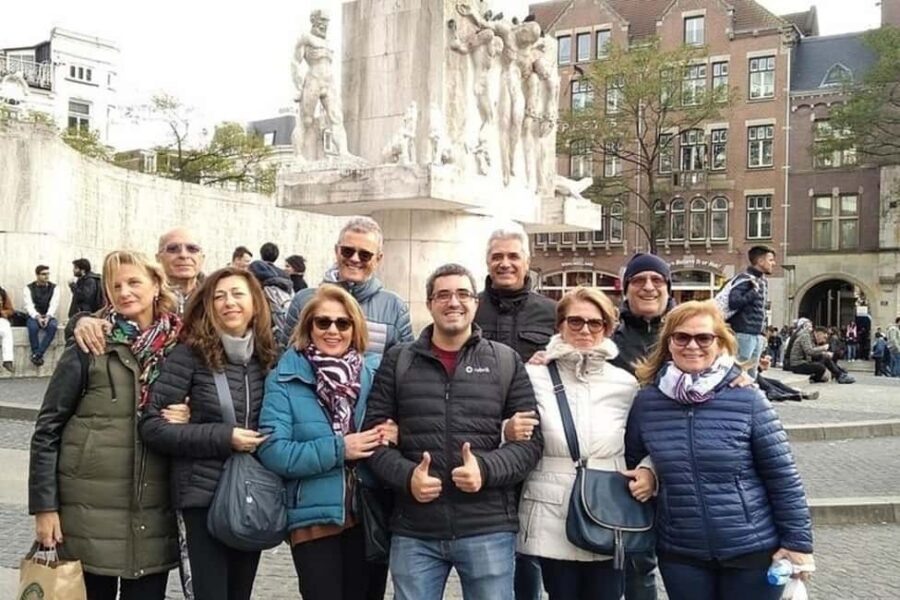
- Dam Square first-person energy: Monuments and story-heavy buildings give you the city’s big picture fast.
- Chinatown with practical tips: You get guidance for what to try for shopping and meals in the area.
- St. Nicholas Church stop: A focused architectural moment where the guide connects past and present.
- Red Light District photo-stop pacing: You see the area and keep moving without turning it into a spectacle.
- Nieuwmarkt’s market atmosphere: A centuries-old market zone with a strong night-and-day identity.
- Guides who adapt: From Adam’s small-group flexibility to Christophe’s hotel pick-up, the best versions of this tour match your pace.
Start at Nieuwebrugsteeg 13 and get your bearings
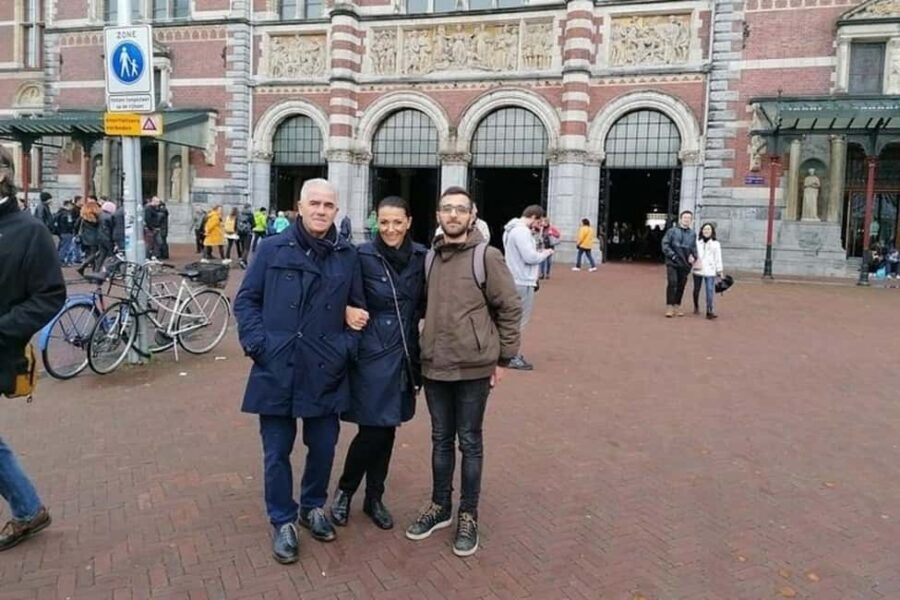
This tour meets at Nieuwebrugsteeg 13, with the walk organized around several short segments. That structure matters in Amsterdam. You’re not stuck with one long, tiring slog, and you’re not forced into a strict museum-style rhythm either.
You’ll also be with a live guide in English, French, Spanish, or Italian. That’s a big deal here, because the value isn’t just where you stand—it’s why those places matter. A guide who can explain how Amsterdam’s past still shows up in the street plan helps you make sense of the city much faster.
And yes, you’ll do photo stops. Each highlighted location is given a moment so you can actually capture what you’re seeing—rather than sprinting for a quick selfie and hoping it works out.
You can also read our reviews of more walking tours in Amsterdam



Chinatown on foot: more than a photo stop
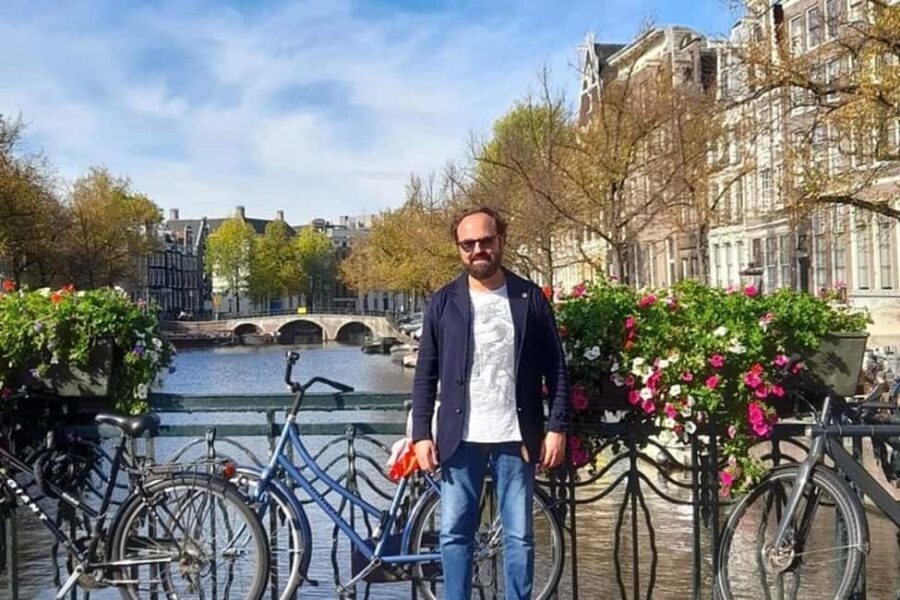
Chinatown is the kind of area where it’s easy to treat Amsterdam like it’s just scenery. A walking tour changes that. You’re led through the streets with time for a photo stop and a short guided look, and you come away with a clearer sense of the neighborhood’s modern mix.
What I like about this stop is the practical angle. The tour includes insider guidance on shopping and dining, which is what most people really want when they reach a new neighborhood. You don’t have to wander aimlessly trying to guess what’s worth your time.
Also, this is where you’ll feel how Amsterdam’s identity isn’t one note. The guide’s stories connect the area to the city’s wider character, so Chinatown isn’t just a themed district—it’s part of Amsterdam’s everyday cultural mosaic.
St. Nicholas Church in the old center: architecture you can read
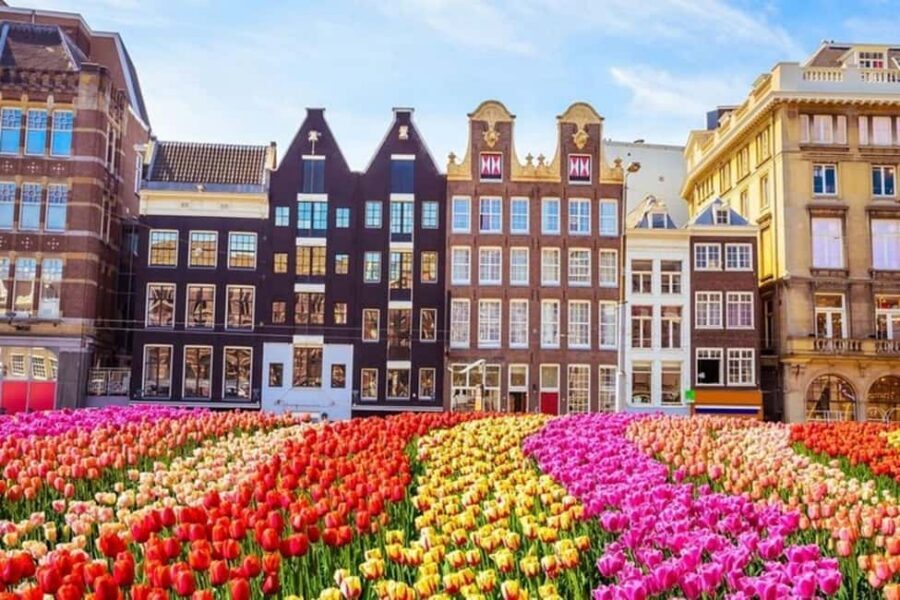
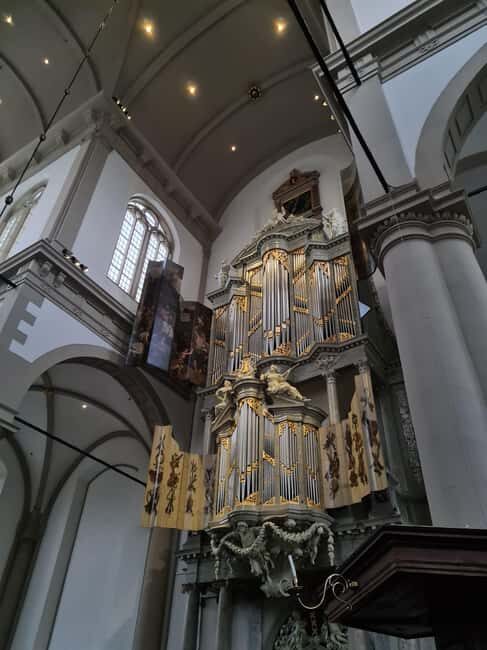
Next up is the St. Nicholas Church stop in the old center. Churches in Europe can feel like they’re all the same until someone points out what to look for. Here, you get that help, because the guide ties the building to Amsterdam’s ongoing story.
This is also a smart pacing choice. After street-level walking through a lively neighborhood, a church stop gives you a chance to reset your focus. You get a guided visit window, and the guide’s commentary helps you see the details as clues, not decoration.
If you enjoy learning through buildings—how shapes, placement, and style reflect changing eras—you’ll probably rate this stop highly. One guide named Christophe was praised for knowing the Netherlands and Amsterdam history through buildings and for explaining it in a way that felt natural, not like a lecture.
Red Light District: see it, understand it, stay respectful
You’ll also pass through the Red Light District area with a photo stop and guided commentary. This is a sensitive zone, so I’m glad the format is “walk-and-explain” instead of “stand-and-stare.”
The value here is the guide putting the neighborhood in context. You’re not left guessing why this part of the city looks the way it does today. Instead, you get a framework for what you’re seeing and how it fits into Amsterdam’s past-and-present story.
A practical note: keep your camera ready, but keep your posture respectful. Two hours is short; you don’t want to spend it arguing with social cues or getting flustered by the street atmosphere. Let the guide lead, take your photo, and move on with confidence.
Nieuwmarkt Square: a market with a long memory

Then you hit Nieuwmarkt Square, one of the most recognizable parts of the route. The tour highlights its nightlife identity and connects it to a centuries-old market. That combination is why this stop works so well on a guided walk.
On your own, Nieuwmarkt can feel like a grab-bag: restaurants here, shops there, crowds shifting by hour. With a guide, you get a clearer sense of what you’re walking through and what to pay attention to. You’re also in a better position to decide what you want to do after the tour—because you’ve already been given the neighborhood’s logic.
This stop is also where the tour’s “insider tips” payoff becomes obvious. The guide’s suggestions for shopping and dining help you turn curiosity into a plan. If you’re the type who likes to eat where the streets make sense, this is a strong time to ask what to try next.
And because the walking segments are paced, you’re not rushed. You get to look around without feeling like you’re being dragged from one spot to the next.
You can also read our reviews of more historical tours in Amsterdam





Dam Square: monuments that anchor the city
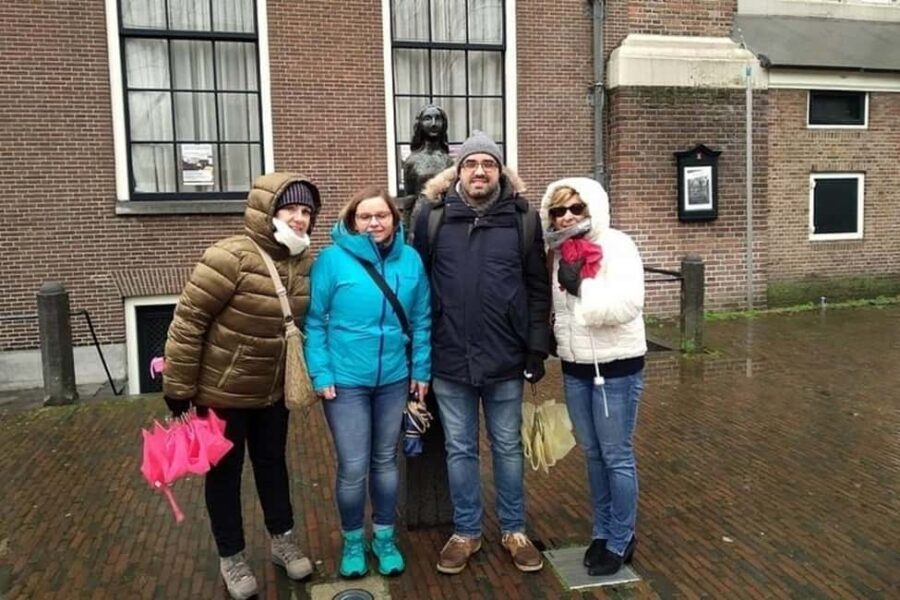
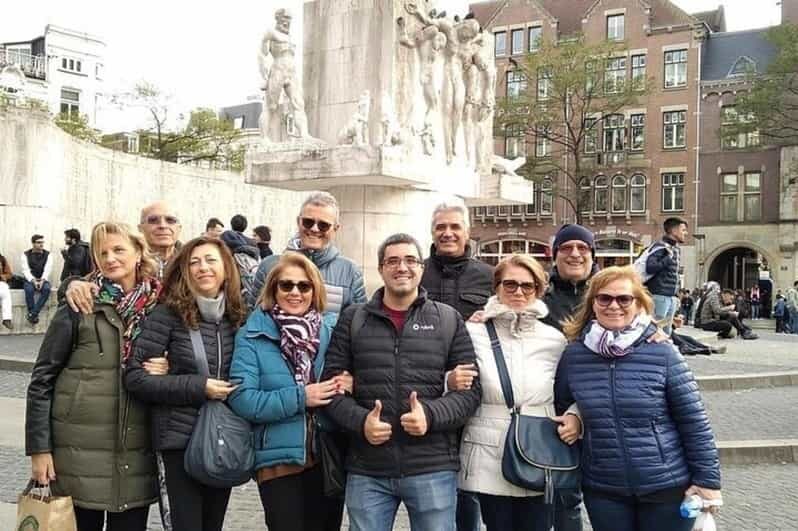
Finally, the walk returns you to the center of the action with Dam Square. This is where the city’s history and public life collide in the open. The tour uses Dam Square as a “heart of the city” stop, focusing on its notable buildings and monuments.
For me, the main value of Dam Square on a guided walk is orientation. You look at the surrounding architecture and landmarks with your guide’s explanations in your head, so you start to understand the city’s center as a living system—not just a big plaza for pictures.
This is also the moment when the guide’s ability to answer questions really shows. Reviews praise guides who adjust to what the group wants. One guest highlighted that their guide listened to their proposals and adapted if they requested changes. Another praised Christophe for creating a relaxed atmosphere while sharing lots of interesting information. That kind of flexibility matters most at a major hub like Dam Square, where people often have many follow-ups.
If you’re new to Amsterdam, Dam Square is a great place to end your guided portion because it leaves you with a map in your mind. You’ll know where to go next, and you’ll know what not to ignore.
Private or shared: how group style changes the experience
This tour can run as private or shared, depending on the option you choose, and a private group is available. That choice affects the experience more than most people expect.
In a shared group, you’ll often get a smooth, structured explanation. In a private setting, you’re more likely to get a guide who matches your questions and pace. Reviews back this up with real examples: Adam was specifically thanked for accepting a visit with just two people, and Fernando’s feedback mentioned the guide always considered their proposals and adjusted when requested.
If you’re traveling with friends who have different interests—history people plus food people—private can be a good call. If you’re traveling solo and just want reliable orientation, shared can be fine too. Either way, the tour is only 2 hours, so you’re not committing to half a day of one-size-fits-all storytelling.
Price and value: why $31 can make sense
At $31 per person for a 2-hour guided walk, the math depends on what you expect from Amsterdam. If you’re hoping for a quick “see the highlights” loop, this is priced like a practical orientation tool—not a full-day deep study.
But for many first-timers, that’s exactly the point. Two hours is enough time to:
- get your bearings in multiple neighborhoods,
- understand how major landmarks connect to the city’s story,
- and leave with concrete next steps for wandering and eating.
You’re also paying for a live guide who can explain what you’re looking at while you’re walking. And based on reviews, the best part isn’t just facts—it’s the guide’s attitude. Maribel was praised for being gentle, available, and prepared, and Christophe was praised for answering questions with precision and for taking the tour in a relaxed direction.
Think of this as a guided “shortcut” to city sense. If you’ll use that sense immediately afterward—by picking a direction, a meal, or a street to explore—you’ll feel like the cost paid off.
What to do with the tips: turn a tour into an actual plan
A walking tour can be fun, but the real win is how you use it afterward. This one is built around neighborhoods and practical advice: Chinatown shopping and dining suggestions, plus what to look for around market territory and central monuments.
After the tour, I recommend using your guide’s pointers immediately while you’re still in the same mindset. If you’re deciding what to eat, choose from the guide’s suggestions rather than defaulting to the most obvious tourist option. If you’re shopping, focus on the area you were just guided through—because you’ll already understand what kind of places you’re walking into.
If you want a simple strategy: take one photo stop as “reference,” not “decoration.” After your walk, return to the most interesting stop and explore nearby streets at a slower pace. You’ll get the benefit of guidance without sacrificing the freedom that makes Amsterdam enjoyable in the first place.
Timing, pace, and comfort (so you can enjoy it)
This experience runs for 2 hours, and the route includes multiple short walks plus visits. That means the pace is active, but it isn’t designed to be exhausting.
Still, Amsterdam days can turn into surprise weather, lots of stairs, and fast-moving crowds. Wear comfortable shoes you already trust. Bring water if you tend to get thirsty easily. And keep your phone charged—photo stops happen during the route, not at the end.
One more detail that matters: the tour is wheelchair accessible. If you’re using a wheelchair or mobility aid, it’s worth planning your Amsterdam day around routes that feel manageable to you. Since this is an on-foot walking format, you’ll want to be comfortable with steady movement for the full period.
Should you book this Amsterdam historic center walking tour?
Book it if you want a structured way to connect Amsterdam’s center neighborhoods in a short time. This tour is especially good when you want both landmarks and neighborhood feel—Dam Square for orientation, Nieuwmarkt for market energy, and Chinatown for multicultural streets and practical dining/shopping ideas.
Skip it (or consider a longer option) if you dislike rapid transitions between districts or you need a lot of quiet time at each site. With only two hours on the clock, it’s built for motion and explanation, not slow wandering.
FAQ
Where is the meeting point?
Meet your guide at Nieuwebrugsteeg 13.
How long is the Amsterdam walking tour?
The duration is 2 hours.
How much does the tour cost?
The price is $31 per person.
Is this tour private or shared?
It can be private or shared, depending on the option you choose, and a private group is available.
What languages are available for the live guide?
The live tour guide is available in English, French, Spanish, and Italian.
Is the tour wheelchair accessible?
Yes, it is wheelchair accessible.
What is included in the price?
A private or shared walking tour and a guide are included.
Can I cancel and get a full refund?
You can cancel up to 24 hours in advance for a full refund.
Can I reserve without paying right away?
Yes. You can reserve now and pay later.